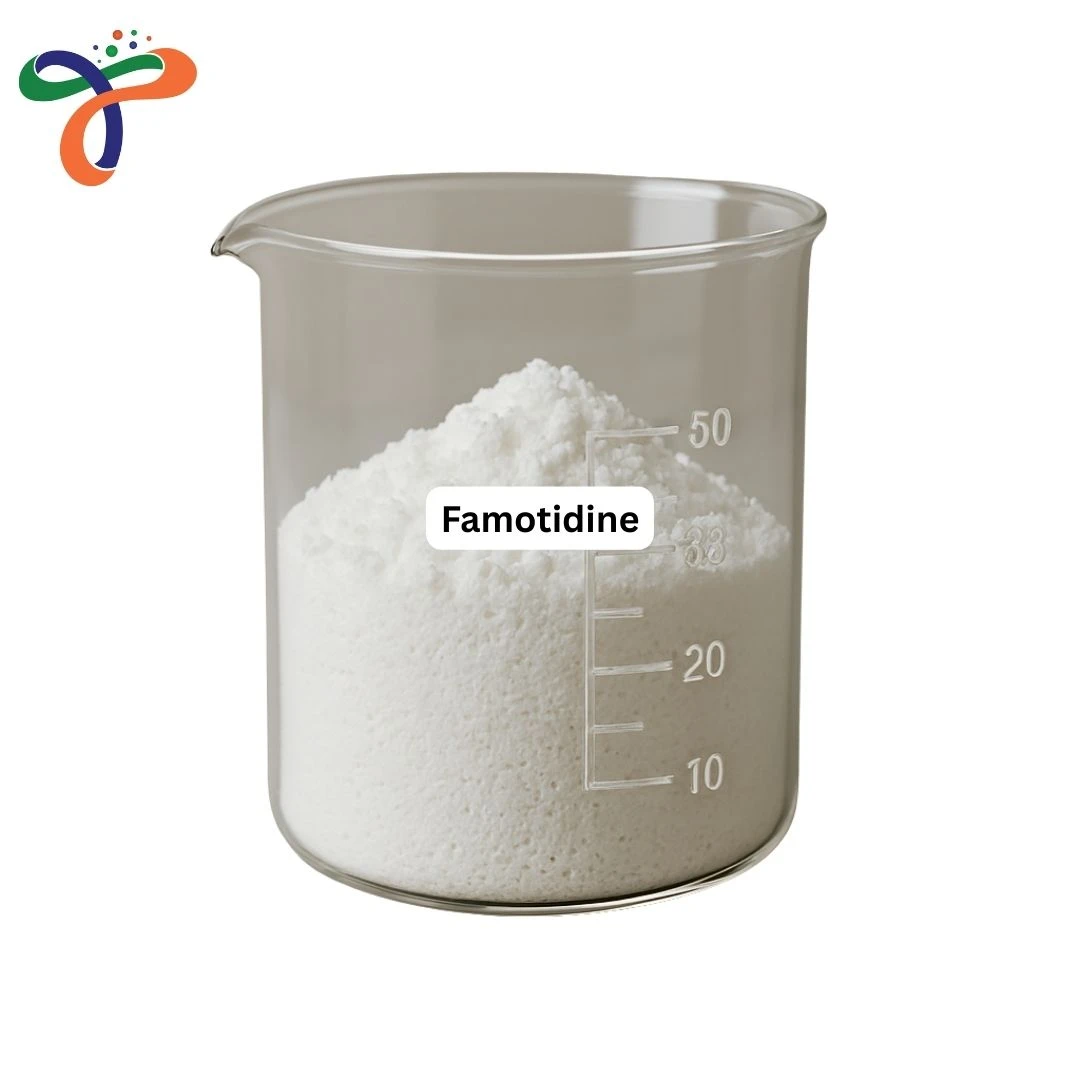
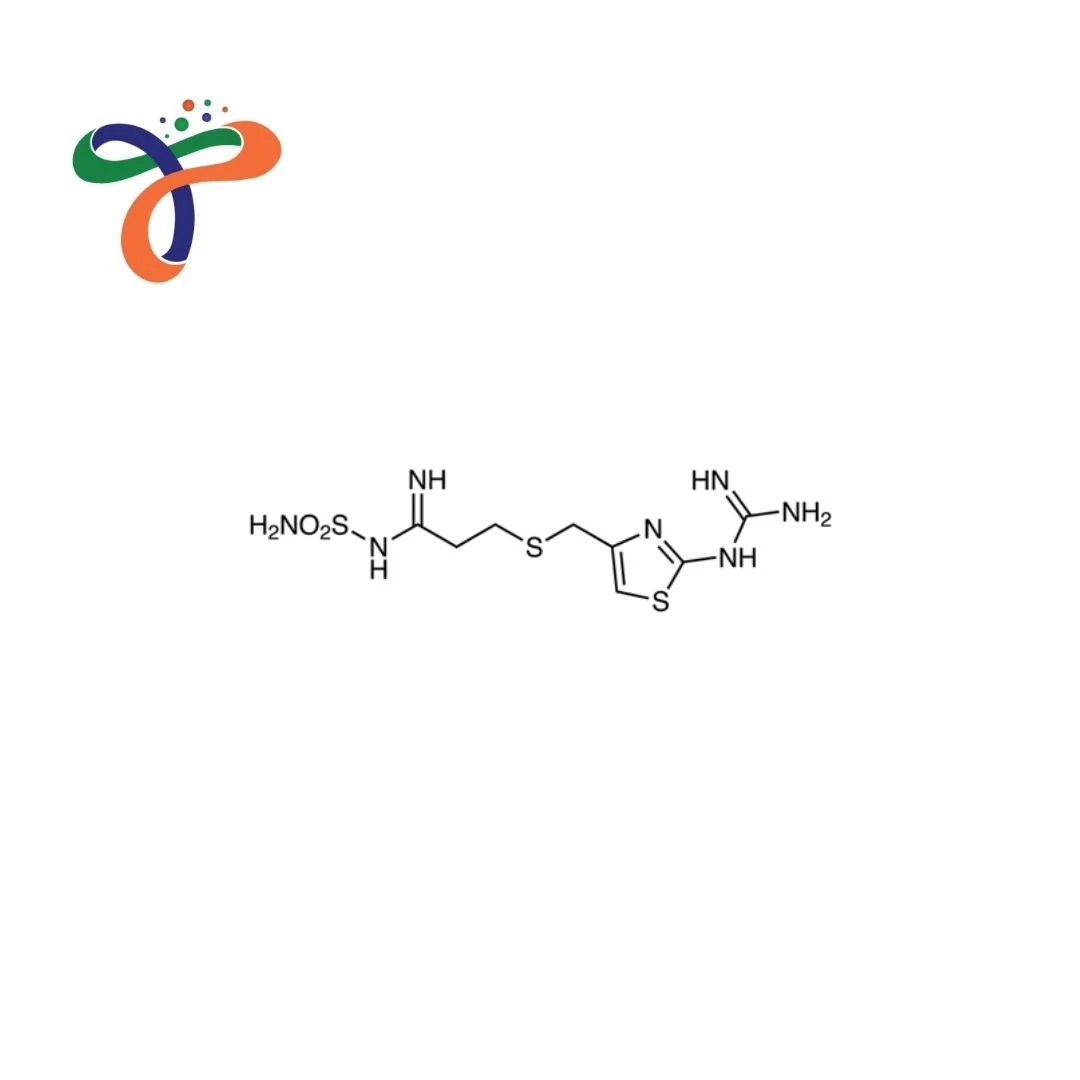
Famotidine | 76824-35-6
Cas No :
76824-35-6
Form :
Powder
Molecular Weight :
337.43 G/mol
Molecular Formula :
C8H15N7O2S3
Boiling Point :
430 °c
Melting Point :
171 °c
Flash Point :
230 °c
Solubility :
Soluble In Water; Soluble In Ethanol
Description :
Overview of Famotidine
Famotidine is an off-white to white crystalline powder which belongs to the H2-receptor antagonist class of substances. It is used extensively in healthcare and pharmaceutical industries to treat stomach ulcers and gastroesophageal reflux disorder (GERD) as well as heartburn. The drug works by blocking the action of histamine on H2 receptors within the stomach lining. This lowers acid production and reduces irritation to the gastrointestinal tract. Famotidine is well-known due to its powerful potency as well as its rapid and effective action, with low drug interactions, which makes it among the top prescribed drugs for disorders involving acid. With excellent stability, solubility, and pharmacological performance, Famotidine is suitable for oral, injectable, and combination drug formulations. Complementary ingredients like Disodium Succinate and Ethyl Oleate are often used in related pharmaceutical preparations for enhanced formulation quality. It is available in bulk and pharmaceutical-grade packaging — contact us to get the best price for your order.
Applications of Famotidine
Pharmaceutical Industry
Famotidine is primarily used as an active pharmaceutical ingredient (API) in drugs designed to reduce stomach acid and relieve symptoms of indigestion, GERD, and ulcers.
Healthcare & Clinical Use
It is used in oral tablets, suspensions, and injectable forms to treat heartburn, acid reflux, and hyperacidity. Famotidine provides quick relief and promotes healing of the stomach and intestinal lining.
Combination Formulations
Often combined with antacids or pain relievers, Famotidine enhances efficacy in over-the-counter and prescription digestive health formulations.
Research & Development
Used in pharmaceutical R&D laboratories for studying histamine receptor blockers, acid regulation, and drug metabolism. Complementary pharmaceutical intermediates such as Phytol and Fenchyl Alcohol are also utilized in similar formulation and research applications.
Safety & Handling Guidelines
-
Always wear gloves, goggles, and protective clothing when handling Famotidine.
-
Avoid inhalation and contact with skin or eyes.
-
Handle in a well-ventilated area or under a fume hood.
-
Store in tightly closed containers in a cool, dry, and dark place, away from strong oxidizers and moisture.
-
Dispose of unused or contaminated materials according to pharmaceutical and environmental regulations.
Where to Buy Famotidine?
Where to Buy Famotidine?
Famotidine Manufacturer
Manufactured under GMP-certified conditions ensuring pharmaceutical-grade purity, consistency, and stability.
Famotidine Supplier & Distributor
ChemicalBull supplies high-quality Famotidine in bulk for pharma manufacturers, formulation plants, and global distributors. COA, MSDS, and export-ready packaging are provided on request.
Famotidine MSDS
For complete safety data, handling instructions, and toxicity details, request the official Material Safety Data Sheet (MSDS) for Famotidine from ChemicalBull.
Frequently Asked Questions
-
How does Famotidine work?
Famotidine acts by blocking histamine H2 receptors inside the stomach lining. This lowers the amount of acid that is produced. It also helps ease symptoms associated with ulcers, acid reflux, and heartburn. It also promotes recovery of the stomach's lining. -
How to take Famotidine?
Famotidine should be taken as directed by a healthcare professional, usually once or twice daily before meals or at bedtime. It can be taken with or without food, and the dosage depends on the condition being treated. -
What does Famotidine do?
Famotidine helps reduce excess stomach acid, providing relief from heartburn, acid indigestion, and GERD symptoms. It is also used to heal ulcers and prevent their recurrence.
ChemicalBull supplies Famotidine across India, serving customers in Andhra Pradesh, Arunachal Pradesh, Assam, Bihar, Chhattisgarh, Goa, Gujarat, Haryana, Himachal Pradesh, Jharkhand, Karnataka, Kerala, Madhya Pradesh, Maharashtra, Manipur, Meghalaya, Mizoram, Nagaland, Odisha, Punjab, Rajasthan, Sikkim, Tamil Nadu, Telangana, Tripura, Uttar Pradesh, Uttarakhand, and West Bengal, as well as the Union Territories of Andaman & Nicobar Islands, Chandigarh, Dadra & Nagar Haveli and Daman & Diu, Delhi, Jammu & Kashmir, Ladakh, Lakshadweep, and Puducherry. We serve pharmaceutical, chemical, research, academic, laboratory, manufacturing, and industrial customers with reliable nationwide delivery.