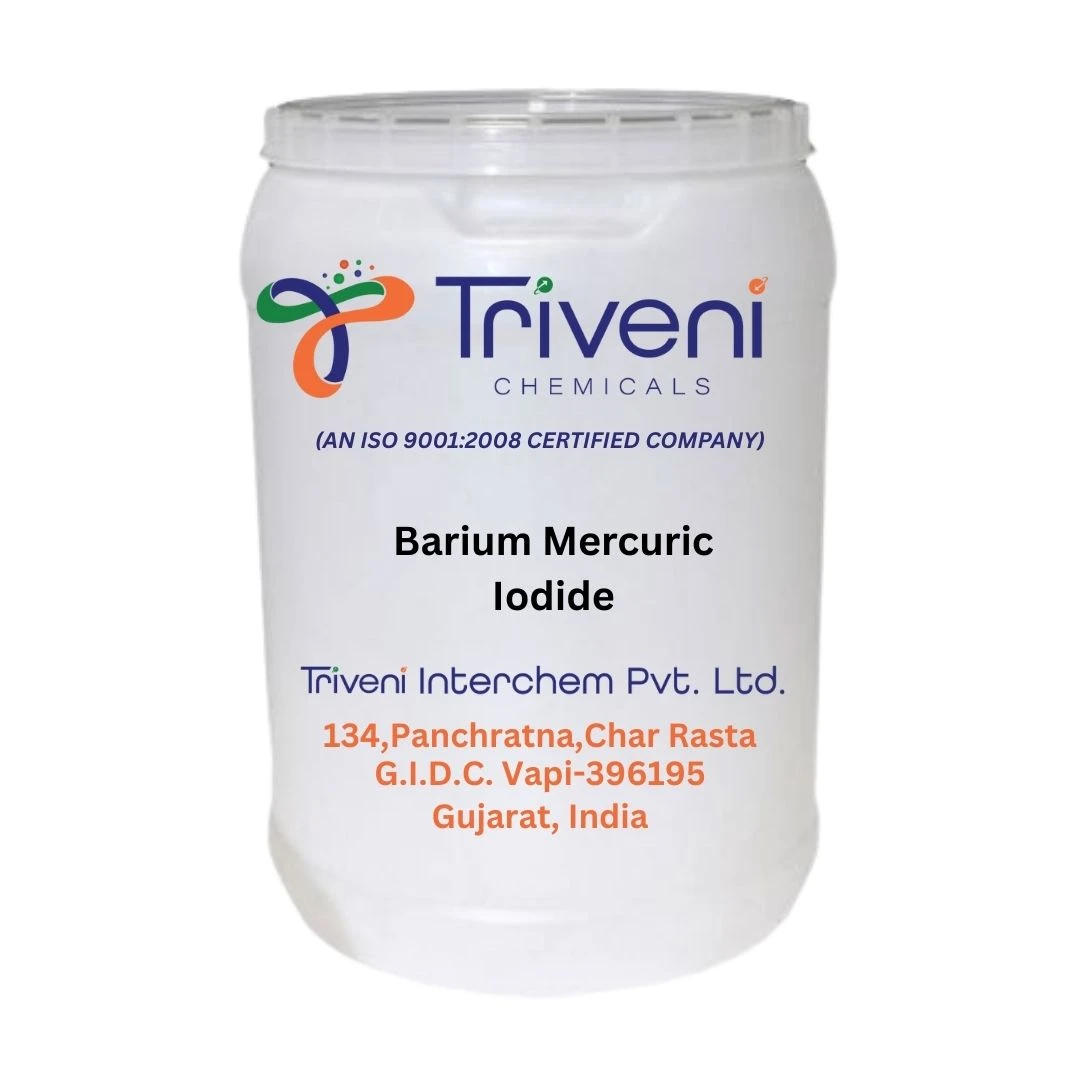
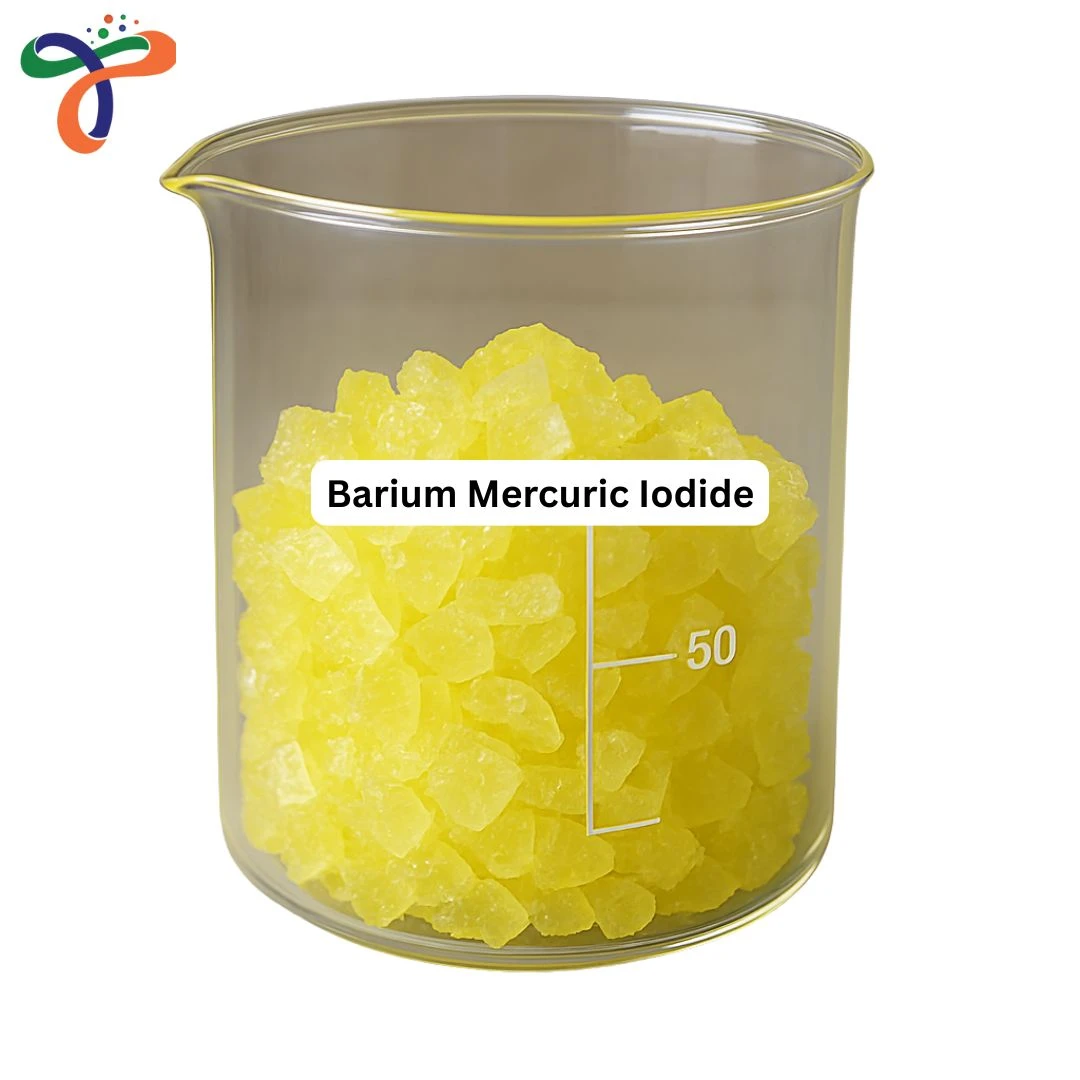
Barium Mercuric Iodide | 10048-99-4
Cas No :
10048-99-4
Form :
Solid
Molecular Weight :
845.53 G/mol
Boiling Point :
600 °c
Melting Point :
180 °c
Flash Point :
300 °c
Solubility :
Poorly Soluble In Water
Description :
Overview of Barium Mercuric Iodide
Barium Mercuric Iodide (CAS: 7787-34-0) is an inorganic coordination compound commonly used in analytical chemistry, laboratory reagents, and specialty chemical formulations. It generally appears as a reddish-brown to dark crystalline solid and is valued for its chemical reactivity in iodide-based analytical systems. The compound is formed through the interaction of barium salts and mercuric iodide, resulting in a complex iodide compound used mainly in chemical analysis and reagent preparation.
Due to its chemical properties, Barium Mercuric Iodide has been historically used in analytical reagents, detection chemistry, and laboratory test formulations. In analytical and inorganic chemistry, compounds such as Mercuric Iodide, Potassium Iodide, and Barium Iodide are also commonly used for iodide chemistry, reagent preparation, and chemical testing applications.
Applications of Barium Mercuric Iodide
Analytical Chemistry
Barium Mercuric Iodide is widely used in analytical laboratory chemistry.
-
Used in preparation of analytical reagents
-
Supports iodide-based detection chemistry
-
Applied in chemical qualitative analysis
-
Useful in laboratory analytical testing
Chemical Reagent Formulations
The compound is used in specialized reagent mixtures for laboratory use.
-
Used in iodide reagent preparation
-
Applied in analytical test solutions
-
Supports chemical indicator and reagent chemistry
Laboratory & Research Applications
Barium Mercuric Iodide is useful in academic and industrial research laboratories.
-
Used in inorganic chemistry research
-
Applied in chemical compound analysis
-
Suitable for laboratory experimental work
-
Supports chemical testing and reagent development
Specialty Chemical Applications
The compound may also be used in specialized chemical formulations.
-
Used in chemical reference standards
-
Supports development of analytical chemicals
-
Applied in specialty inorganic chemical synthesis
Safety & Handling Guidelines
-
Avoid contact with skin, eyes, and clothing
-
Use protective gloves, goggles, and lab safety equipment
-
Handle in well-ventilated areas or chemical fume hoods
-
Store in tightly sealed containers away from moisture
-
Avoid exposure to strong acids and oxidizing agents
-
Follow COA and MSDS instructions carefully
Where to Buy Barium Mercuric Iodide?
Barium Mercuric Iodide Manufacturer
ChemicalBull supplies high-purity Barium Mercuric Iodide suitable for analytical chemistry, laboratory reagent preparation, and specialty chemical research applications.
Barium Mercuric Iodide Supplier & Distributor
-
Available in laboratory-scale and industrial packaging
-
Suitable for analytical reagents and research laboratories
-
Ideal for inorganic chemical applications
-
COA, MSDS, and technical specifications available
Barium Mercuric Iodide MSDS
-
Toxic if ingested or inhaled
-
May cause serious irritation to skin and eyes
-
Mercury compounds may pose environmental and health hazards
-
Use proper PPE and ventilation while handling
-
Store in cool, dry conditions away from incompatible chemicals
-
Refer to full MSDS for spill response and emergency procedures
Frequently Asked Questions (FAQs)
-
What is the molecular formula of Barium Mercuric Iodide?
Molecular Formula: BaHgI₄
Molecular Weight: 844.93 g/mol -
What is Barium Mercuric Iodide used for?
It is mainly used in analytical chemistry reagents, laboratory testing, and inorganic chemical research. -
Which industries use Barium Mercuric Iodide?
It is primarily used in chemical laboratories, research institutions, analytical chemistry facilities, and specialty chemical manufacturing. -
Is Barium Mercuric Iodide hazardous?
Yes. Since it contains mercury, it is toxic and should be handled carefully with proper protective equipment and safety protocols. -
Why is it important in analytical chemistry?
Because it participates in iodide-based chemical reactions, making it useful in analytical reagent preparation and laboratory testing.
ChemicalBull supplies Barium Mercuric Iodide across India, serving customers in Andhra Pradesh, Arunachal Pradesh, Assam, Bihar, Chhattisgarh, Goa, Gujarat, Haryana, Himachal Pradesh, Jharkhand, Karnataka, Kerala, Madhya Pradesh, Maharashtra, Manipur, Meghalaya, Mizoram, Nagaland, Odisha, Punjab, Rajasthan, Sikkim, Tamil Nadu, Telangana, Tripura, Uttar Pradesh, Uttarakhand, and West Bengal, as well as the Union Territories of Andaman & Nicobar Islands, Chandigarh, Dadra & Nagar Haveli and Daman & Diu, Delhi, Jammu & Kashmir, Ladakh, Lakshadweep, and Puducherry. We serve pharmaceutical, chemical, research, academic, laboratory, manufacturing, and industrial customers with reliable nationwide delivery.