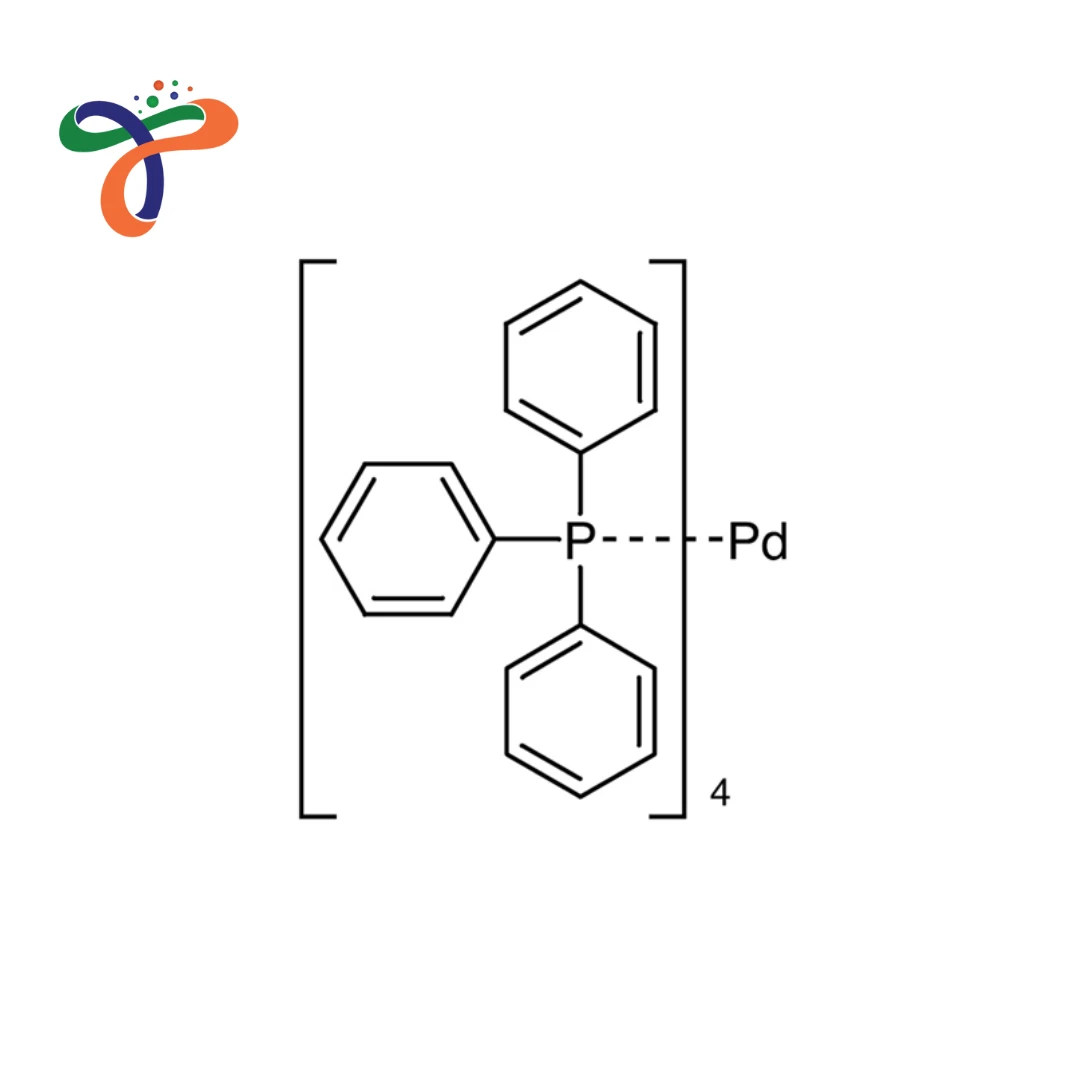
Tetrakis-triphenylphosphine Palladium | 4500157
Cas No :
4500157
Form :
Solid
Molecular Weight :
1155.58 G/mol
Molecular Formula :
C72H60P4PD
Boiling Point :
360 °c
Melting Point :
170 °c
Flash Point :
120 °c
Solubility :
Soluble In Nonpolar Solvents (toluene, Benzene); Insoluble In Water
Description :
Overview of Tetrakis-Triphenylphosphine Palladium
Tetrakis-Triphenylphosphine Palladium is a widely used homogeneous palladium catalyst in industrial organic synthesis. It is a palladium zero-valent complex that is coordinated with four triphenylphosphine ligands, which makes it extremely effective in carbon-carbon and carbon-heteroatom coupling reactions.
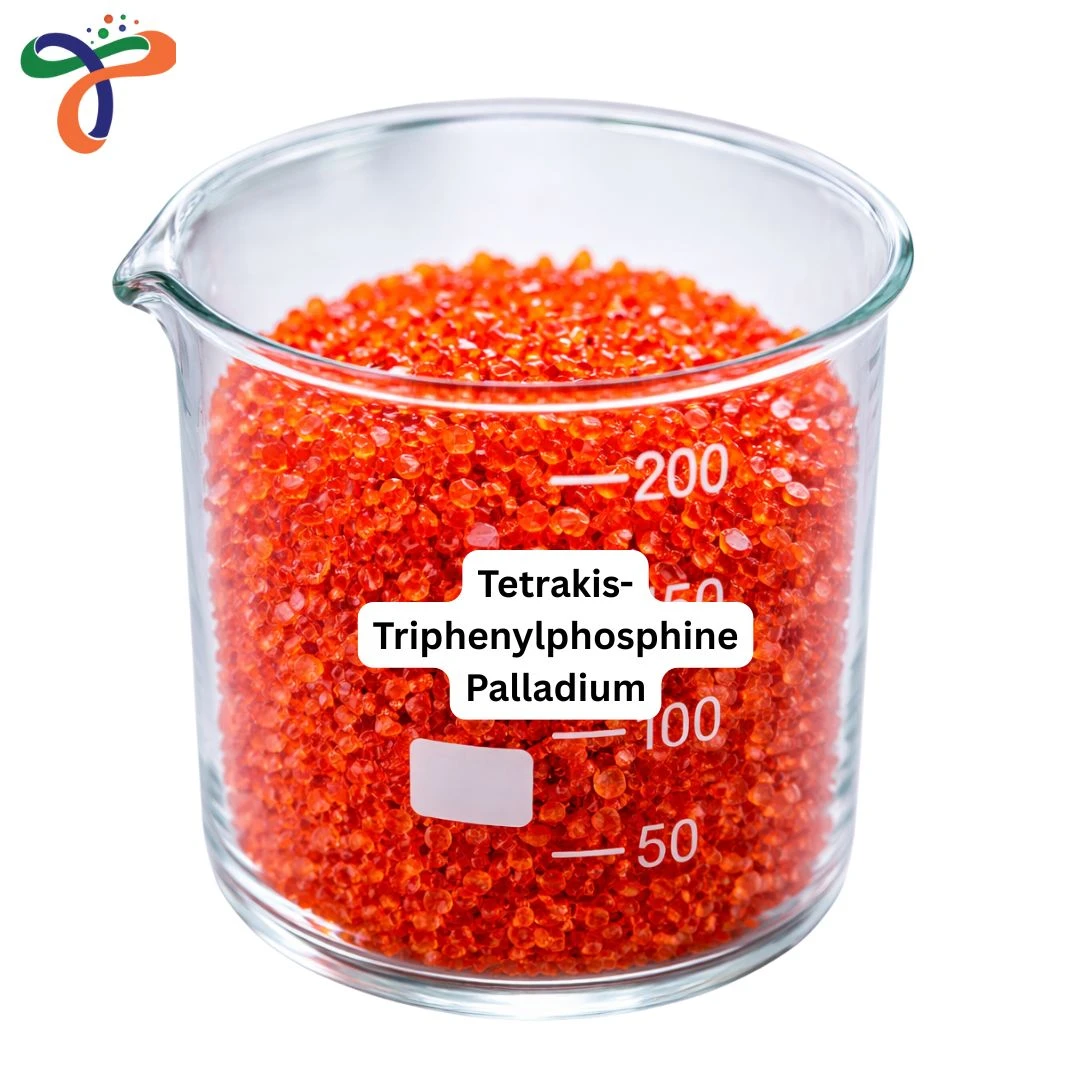
As an industrial chemical, Tetrakis-Triphenylphosphine Palladium is used in pharmaceutical intermediates, fine chemicals, agrochemical synthesis, and advanced material production. It is usually sold as a yellow powder that is packaged in controlled, moisture-free containers to protect catalytic activity.
Applications of Tetrakis-Triphenylphosphine Palladium
Cross-Coupling Reactions
Tetrakis-Triphenylphosphine Palladium is extensively used in Suzuki, Heck, and Sonogashira coupling reactions. It facilitates the formation of carbon–carbon bonds in industrial-scale organic synthesis.
It is often processed alongside Triphenylphosphine, Bromobenzene, and Phenylboronic Acid in structured catalytic systems.
Pharmaceutical & API Intermediate Manufacturing
The catalyst is used in the synthesis of complex pharmaceutical intermediates where high selectivity and efficiency are required. Its homogeneous catalytic nature ensures controlled reaction conditions and high product purity.
It supports regulated industrial chemical manufacturing.
Fine Chemicals & Specialty Materials
Tetrakis-Triphenylphosphine Palladium is applied in the preparation of specialty aromatic compounds and advanced materials requiring palladium-catalyzed transformations.
It contributes to high-value chemical production systems.
Research & Development Applications
The compound is widely used in industrial R&D laboratories for reaction optimization and process development prior to large-scale manufacturing.
Safety & Handling Guidelines
- Store in a cool, dry, and inert environment
- Be sure to protect yourself from air and moisture exposure
- Beware of inhaling dust.
- Avoid contact with eyes and skin
- Use gloves, goggles, and appropriate laboratory protective equipment
- Handle under controlled industrial or laboratory conditions
- Dispose of palladium-containing waste according to regulatory guidelines
Always consult the MSDS before industrial handling.
Where to Buy Tetrakis-Triphenylphosphine Palladium?
Tetrakis-Triphenylphosphine Palladium Manufacturer
Tetrakis-Triphenylphosphine Palladium is manufactured under strict quality-controlled conditions to ensure high catalytic activity and purity for industrial chemical applications.
Tetrakis-Triphenylphosphine Palladium Supplier & Distributor
Tetrakis-Triphenylphosphine Palladium is available in controlled industrial packaging formats. Buy Tetrakis-Triphenylphosphine Palladium from Chemicalbull Pvt. Ltd., a trusted industrial chemicals supplier and distributor in India, providing reliable sourcing and compliant logistics support.
MSDS for Tetrakis-Triphenylphosphine Palladium
The MSDS for Tetrakis-Triphenylphosphine Palladium provides detailed information regarding hazard identification, handling precautions, storage requirements, exposure control, and emergency response procedures. It is recommended to review it prior to use in industrial settings.
Frequently Asked Questions (FAQs)
-
What is Tetrakis-Triphenylphosphine Palladium used for?
It is primarily used as a palladium catalyst in cross-coupling reactions such as Suzuki, Heck, and Sonogashira reactions for industrial organic synthesis. -
What is the formula for Tetrakis-Triphenylphosphine Palladium?
The chemical formula is Pd(PPh₃)₄, or molecularly expressed as C₇₂H₆₀P₄Pd. -
What is the structure of Tetrakis-Triphenylphosphine Palladium?
It consists of a central palladium(0) atom coordinated tetrahedrally to four triphenylphosphine ligands.
ChemicalBull supplies Tetrakis-triphenylphosphine Palladium across India, serving customers in Andhra Pradesh, Arunachal Pradesh, Assam, Bihar, Chhattisgarh, Goa, Gujarat, Haryana, Himachal Pradesh, Jharkhand, Karnataka, Kerala, Madhya Pradesh, Maharashtra, Manipur, Meghalaya, Mizoram, Nagaland, Odisha, Punjab, Rajasthan, Sikkim, Tamil Nadu, Telangana, Tripura, Uttar Pradesh, Uttarakhand, and West Bengal, as well as the Union Territories of Andaman & Nicobar Islands, Chandigarh, Dadra & Nagar Haveli and Daman & Diu, Delhi, Jammu & Kashmir, Ladakh, Lakshadweep, and Puducherry. We serve pharmaceutical, chemical, research, academic, laboratory, manufacturing, and industrial customers with reliable nationwide delivery.