Chemical Bull
99
06-Jul-2026
Introduction
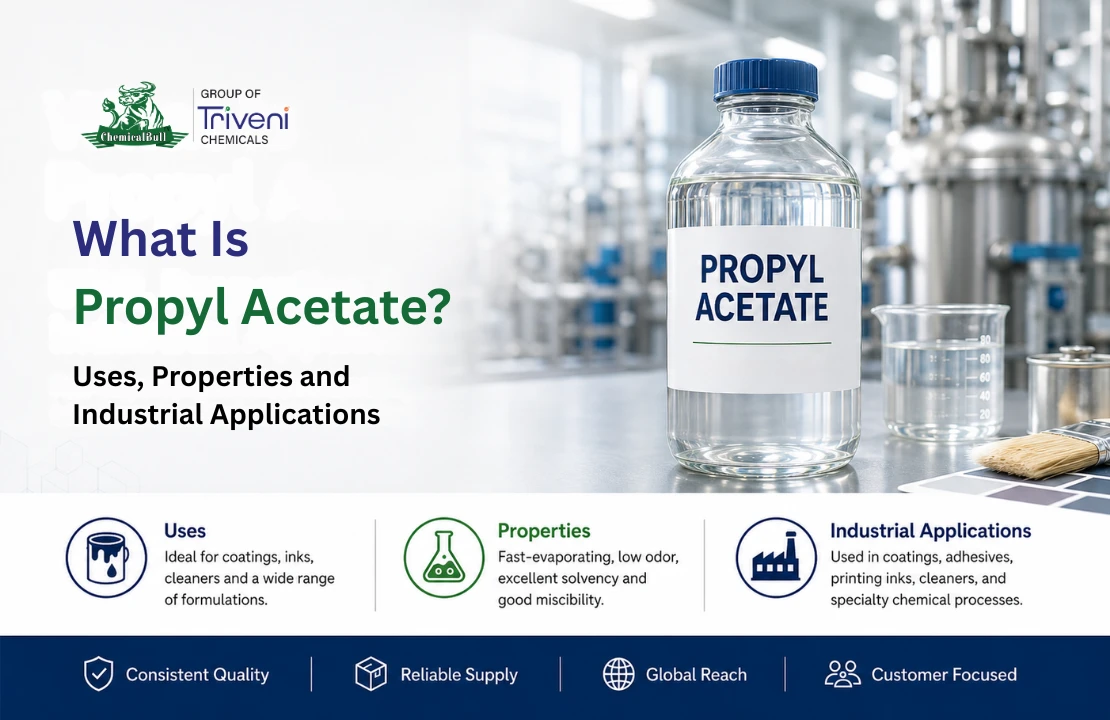
Propyl Acetate is an important ester solvent used in many industrial formulations where good solvency, controlled drying and smooth application are required. It is a clear, colorless liquid with a mild fruity odor and is commonly used in paints, coatings, printing inks, adhesives, cleaning products, cosmetics, fragrances and specialty chemical manufacturing.
Also known as n-Propyl Acetate, this solvent is valued because it can dissolve different resin systems while evaporating at a moderate rate. This balance makes it useful in applications where very fast drying may create surface defects and very slow drying may reduce production efficiency.
For industrial buyers, Propyl Acetate is usually evaluated based on purity, CAS number, application suitability, packaging, price, availability and technical documents such as COA, TDS, SDS and MSDS. Buyers searching for a reliable Propyl Acetate distributor should also check supply consistency, bulk quantity support and proper documentation before finalizing procurement. This guide explains what Propyl Acetate is, its properties, major uses, advantages, and key sourcing points for B2B buyers.
What Is Propyl Acetate?
Propyl Acetate is an organic ester solvent produced by the reaction of acetic acid with n-propyl alcohol. It belongs to the acetate solvent family and is widely used as a formulation solvent and process solvent.
Its chemical formula is C5H10O2, and its CAS number is 109-60-4. In industrial applications, Propyl Acetate is mainly selected for its resin compatibility, moderate evaporation rate and ability to support smooth film formation.
In simple words, Propyl Acetate helps dissolve ingredients, control viscosity and improve the way a formulation spreads, dries and performs after application.
Properties of Propyl Acetate
|
Property |
Details |
|
Chemical Name |
Propyl Acetate |
|
Common Name |
n-Propyl Acetate |
|
CAS No. |
109-60-4 |
|
Chemical Family |
Ester / Acetate Solvent |
|
Molecular Formula |
C5H10O2 |
|
Molecular Weight |
102.13 g/mol |
|
Appearance |
Clear, colorless liquid |
|
Odor |
Mild fruity odor |
|
Boiling Point |
Around 102°C |
|
Solubility |
Slightly soluble in water; miscible |
|
Main Function |
Industrial solvent |
|
Common Documents |
COA, TDS, SDS, MSDS |
Why Industries Prefer Propyl Acetate
Industries prefer Propyl Acetate because it gives a practical balance between solvency and drying performance. In many formulations, the solvent does more than simply dissolve raw materials. It affects viscosity, flow, drying time, surface appearance and final product quality.
Propyl Acetate is especially useful when formulators need a solvent that evaporates faster than heavier acetate solvents but more slowly than very fast solvents such as Ethyl Acetate. This middle evaporation profile makes it suitable for coatings, inks and adhesives where controlled drying is important.
It is also compatible with several resin systems and solvent blends, making it flexible for different industrial formulations.
Industrial Applications of Propyl Acetate
1. Paints and Coatings
Propyl Acetate is widely used in paints and coatings because it helps dissolve resins and supports smooth application. In coating systems, the solvent controls how the coating flows, spreads and dries after application.
If a coating dries too quickly, it may create poor leveling, brush marks, spray defects or uneven film formation. If it dries too slowly, production time increases. Propyl Acetate helps provide a balanced drying profile, making it useful in:
-
Industrial coatings
-
Wood coatings
-
Decorative paints
-
Automotive refinishing coatings
-
Metal coatings
-
Protective coatings
-
Lacquers and varnishes
Its ability to support good flow and leveling makes it valuable in formulations where surface finish is important.
2. Printing Inks
Printing inks require solvents that dissolve binders, control viscosity and dry at the right speed after printing. Propyl Acetate is used in flexographic, gravure, packaging and industrial printing inks because it supports print clarity and drying balance.
In high-speed printing, the solvent must evaporate quickly enough to prevent smudging but not so fast that it affects ink transfer or print consistency. Propyl Acetate offers this balance, especially in packaging ink systems.
Common uses include:
-
Flexible packaging inks
-
Gravure printing inks
-
Flexographic inks
-
Label printing inks
-
Industrial printing formulations
3. Adhesives
In solvent-based adhesives, Propyl Acetate works as a carrier solvent. It helps keep adhesive resins dissolved during application and allows controlled solvent release after bonding.
This is important because adhesives need proper viscosity, spreading and drying to create a strong bond. Propyl Acetate may be used in:
-
Packaging adhesives
-
Pressure-sensitive adhesives
-
Woodworking adhesives
-
Industrial bonding systems
-
Specialty adhesive formulations
Its compatibility with resin systems makes it useful for adhesive manufacturers looking for stable application performance.
4. Cleaning Products
Propyl Acetate can dissolve oils, greases and certain residues, making it useful in industrial cleaning formulations. It may be used for equipment cleaning, maintenance cleaning and surface preparation before coating or bonding.
In industrial cleaning, solvent selection depends on cleaning power, evaporation speed, residue level and material compatibility. Propyl Acetate is selected where moderate drying and effective solvency are required.
5. Cosmetic Manufacturing
Propyl Acetate is also used in selected cosmetic applications where solvent action is needed. It is commonly associated with nail care products and other solvent-based cosmetic formulations.
In this industry, usage depends on formulation requirements, quality standards and applicable regulations. Manufacturers should always verify suitability before using it in personal care or cosmetic products.
6. Fragrance and Aroma Applications
Because of its mild fruity odor and solvent behavior, Propyl Acetate can be used in selected fragrance and aroma chemical processing applications. It may help dissolve or carry ingredients in controlled formulations.
Its use in fragrance-related applications depends on purity, odor profile and compatibility with the final product.
7. Specialty Chemical Manufacturing
Propyl Acetate is used as a process solvent in specialty chemical manufacturing. It may support dilution, extraction, reaction processing, resin manufacturing and intermediate production.
In chemical processing, it is valued for its ability to mix with many organic solvents and support stable handling during production.
Major Industries That Use Propyl Acetate
|
Industry |
Typical Use |
|
Paints & Coatings |
Solvent for resin-based coatings |
|
Printing Inks |
Flexographic, gravure and packaging inks |
|
Adhesives |
Solvent-based bonding formulations |
|
Automotive |
Refinish coatings and lacquers |
|
Wood Finishing |
Varnishes, lacquers and sealers |
|
Cleaning Products |
Surface preparation and industrial cleaning |
|
Cosmetics |
Nail care and selected solvent-based products |
|
Fragrance |
Processing solvent in selected formulations |
|
Specialty Chemicals |
Process solvent and intermediate production |
How Propyl Acetate Improves Coating and Ink Performance
Propyl Acetate improves coating and ink performance by controlling how the formulation behaves before and after application. A good solvent system should dissolve the resin properly, maintain the right viscosity and allow the applied layer to dry evenly.
In coatings, Propyl Acetate helps improve:
-
Resin dissolution
-
Spray performance
-
Surface leveling
-
Film uniformity
-
Drying balance
-
Gloss and finish appearance
In printing inks, it supports:
-
Binder solubility
-
Pigment dispersion
-
Ink flow
-
Print transfer
-
Drying after printing
-
Reduced smudging
This is why Propyl Acetate is often selected in formulations where both processing speed and surface quality matter.
Advantages of Propyl Acetate
Propyl Acetate offers several advantages for industrial manufacturers and formulators:
-
Good solvency for many resin systems
-
Moderate evaporation rate
-
Supports smooth coating application
-
Helps improve surface finish
-
Useful in printing inks and adhesives
-
Compatible with several organic solvents
-
Suitable for solvent blends
-
Mild fruity odor
-
Useful in bulk industrial supply
-
Commonly available with COA, TDS, SDS and MSDS
Its performance balance makes it suitable for industries that need reliability, formulation flexibility and consistent drying behavior.
Factors to Consider Before Buying Propyl Acetate
Before buying Propyl Acetate, industrial buyers should evaluate both technical and commercial factors.
Product Purity
Purity should match the final application. Coatings, inks, adhesives, cosmetics and specialty chemical applications may require different quality expectations.
CAS Number
Buyers should verify CAS No. 109-60-4 to avoid confusion with similar acetate solvents.
Application Compatibility
The solvent should be tested with the resin, binder or formulation system before regular production use.
Moisture and Impurities
Moisture content and impurities can affect formulation stability, drying behavior and final performance.
Packaging Options
Common packaging may include drums, IBC tanks or bulk supply depending on order quantity and supplier capability.
Documentation
Buyers should ask for:
-
Certificate of Analysis
-
Technical Data Sheet
-
Safety Data Sheet
-
MSDS
-
Batch details
-
Packaging details
Price and Supply Reliability
Propyl Acetate price may vary depending on market conditions, quantity, purity, packaging and logistics. Buyers should consider both price and supplier reliability before finalizing bulk orders.
How to Source Quality Propyl Acetate
For industrial buyers, sourcing Propyl Acetate is not only about finding the lowest price. The right supplier should provide consistent material quality, proper documentation, packaging support and timely delivery.
A reliable Propyl Acetate supplier should offer:
-
Consistent product quality
-
Bulk supply availability
-
COA, TDS, SDS and MSDS support
-
Suitable packaging options
-
Competitive price support
-
Timely dispatch
-
Application-based assistance
-
Clear communication for industrial buyers
Chemical Bull supplies Propyl Acetate for coatings, printing inks, adhesives, cleaning products and specialty chemical applications with sourcing support for industrial requirements.
Frequently Asked Questions
-
What is Propyl Acetate?
Propyl Acetate is an ester solvent used in coatings, printing inks, adhesives, cleaning products, cosmetics and specialty chemical manufacturing. It is also known as n-Propyl Acetate. -
What is the CAS number of Propyl Acetate?
The CAS number of Propyl Acetate is 109-60-4. -
What is Propyl Acetate used for?
Propyl Acetate is mainly used as a solvent in paints, coatings, inks, adhesives, cleaning formulations, fragrance processing and specialty chemical production. -
Why is Propyl Acetate used in coatings?
It is used in coatings because it helps dissolve resins, control viscosity, improve leveling and support balanced drying. -
Is Propyl Acetate used in printing inks?
Yes, Propyl Acetate is used in flexographic, gravure, packaging and industrial printing inks because it supports viscosity control, drying and print quality. -
What is the difference between Propyl Acetate and Butyl Acetate?
Propyl Acetate generally evaporates faster than Butyl Acetate. Butyl Acetate is often preferred where slower drying and better leveling are required, while Propyl Acetate is useful for balanced drying systems. -
What documents should buyers ask for while purchasing Propyl Acetate?
Buyers should ask for COA, TDS, SDS, MSDS, and packaging information.
Conclusion
Propyl Acetate is a versatile industrial ester solvent used in coatings, printing inks, adhesives, cleaning products, cosmetics, fragrances and specialty chemical manufacturing. Its good solvency, moderate evaporation rate and compatibility with many resin systems make it valuable for formulation and process applications.
For manufacturers, it helps improve application quality, drying balance and product consistency. For procurement teams, important buying factors include CAS No. 109-60-4, purity, packaging, availability, price and documentation such as COA, TDS, SDS and MSDS.
As industries continue to demand better coating finishes, clear printing performance and reliable adhesive systems, Propyl Acetate remains a practical solvent choice for modern industrial formulations.
Industrial buyers looking for a dependable Propyl Acetate supplier can consider Chemical Bull for sourcing support, documentation and bulk supply assistance.

Comment Section