
Chemical Bull
129
30-Jun-2026
Introduction
Food products often contain ingredients that do not naturally stay mixed together. Oil, fat, water, proteins, starches, sugars, air, and solids can separate or create uneven texture if the formulation does not have proper emulsification support. This is why emulsifiers play an important role in modern food manufacturing.
Sorbitan Monostearate is a non-ionic emulsifier used in selected food emulsions to improve product structure, smoothness, fat distribution, and stability. It is especially useful in food systems where texture, mouthfeel, appearance, processing performance, and batch consistency are important.
For food processors, manufacturers, formulation companies, and export chemical buyers, Sorbitan Monostearate is selected for its ability to support stable emulsions, improve finished product quality, and maintain consistency during manufacturing and storage.
Quick Answer: Why Is Sorbitan Monostearate Used in Food Emulsions?
Sorbitan Monostearate is used in food emulsions to support smooth texture, fat dispersion, emulsion stability, aeration, and uniform product consistency. It is used in selected bakery, dairy, confectionery, whipped topping, processed food, and fat-based systems where oil, water, fat, air, and solids need better balance.
Understanding Sorbitan Monostearate as a Food Emulsifier
Sorbitan Monostearate is an ester of sorbitan and stearic acid. It is also commonly known as Span 60 in formulation and emulsifier discussions. It is a low-HLB non-ionic emulsifier, which makes it useful in fat-rich systems and water-in-oil emulsion support.
In food applications, Sorbitan Monostearate helps improve the interaction between fat, oil, water, and other ingredients. It may be used alone or with other emulsifiers depending on the product type, required texture, and emulsion balance.
|
Property |
Importance in Food Emulsions |
|
Chemical type |
Non-ionic emulsifier |
|
Common name |
Span 60 |
|
Food additive reference |
Commonly associated with E491 |
|
Main role |
Emulsion stability and texture support |
|
HLB nature |
Low-HLB emulsifier |
|
Useful in |
Fat-based and water-in-oil systems |
|
Key benefit |
Better smoothness, stability, and ingredient distribution |
Main Functions of Sorbitan Monostearate in Food
Food emulsions need proper ingredient balance. Without emulsifier support, oil and water phases may separate, fat may not distribute evenly, texture may become uneven, and the finished product may lose stability during storage.
|
Function |
How It Helps |
|
Emulsification |
Helps oil, fat, and water phases stay better distributed |
|
Fat dispersion |
Supports uniform fat distribution |
|
Texture support |
Helps improve smoothness and mouthfeel |
|
Aeration support |
Helps maintain air structure in selected systems |
|
Stability improvement |
Helps reduce separation and uneven structure |
|
Processing support |
Supports mixing and product handling |
|
Finished product consistency |
Helps maintain batch-to-batch uniformity |
Sorbitan Monostearate in Bakery Applications
Bakery products often contain flour, fat, water, sugar, air, and other ingredients that need proper distribution. During mixing, baking, cooling, and storage, the product structure can change. Emulsifier support helps maintain better texture and consistency.
Sorbitan Monostearate can support fat dispersion and structure in selected bakery systems. It may help improve batter stability, dough handling, crumb softness, and uniform texture depending on the complete formulation.
|
Bakery Application |
Role of Sorbitan Monostearate |
|
Bread systems |
Supports dough handling and crumb consistency |
|
Cakes |
Helps improve batter stability and texture |
|
Muffins |
Supports uniform fat distribution |
|
Pastries |
Helps maintain fat balance |
|
Biscuits |
Supports processing and texture control |
|
Bakery fillings |
Helps reduce oil separation |
For large-scale bakery production, consistency is important. A suitable emulsifier system helps manufacturers reduce variation between batches and maintain expected product quality.
Sorbitan Monostearate in Dairy and Frozen Food Systems
Dairy and frozen food systems usually contain fat, water, proteins, sugars, stabilizers, and air. These products need a smooth mouthfeel, stable texture, and controlled fat structure.
Sorbitan Monostearate may help support fat distribution, aeration, and creamy texture in selected dairy and frozen dessert applications. It is especially useful where the final product needs stable structure and uniform appearance.
|
Dairy / Frozen Application |
Functional Role |
|
Ice cream |
Supports fat structure and smooth texture |
|
Frozen desserts |
Helps improve product stability |
|
Whipped toppings |
Supports aeration and foam structure |
|
Dairy creams |
Helps maintain emulsion consistency |
|
Cream-based fillings |
Helps reduce separation |
|
Dairy desserts |
Supports mouthfeel and texture |
In these systems, emulsifier selection depends on fat content, processing temperature, stabilizer system, and storage conditions. Final performance should always be checked through trial batches.
Sorbitan Monostearate in Processed Foods and Confectionery
Processed foods can contain complex ingredient systems. Oils, fats, starches, proteins, seasonings, water, stabilizers, and sweeteners may be present together. Without proper support, the final product may show oil separation, uneven texture, poor spreadability, or weak processing stability.
Sorbitan Monostearate helps improve uniform ingredient distribution in selected processed foods and fat-based products. It can support product structure, reduce phase separation, and improve handling during production.
|
Processed Food Type |
Benefit |
|
Sauces and dressings |
Supports emulsion balance |
|
Cream fillings |
Helps reduce oil separation |
|
Fat-based blends |
Supports uniform fat distribution |
|
Toppings |
Helps maintain structure |
|
Confectionery fillings |
Supports smoother texture |
|
Coatings and spreads |
Helps improve consistency and spreadability |
|
Prepared food systems |
Helps improve processing stability |
In confectionery and fat-based foods, Sorbitan Monostearate may be used in selected fillings, coatings, creams, and spreads where smoothness, controlled fat behavior, and stable appearance are important.
Benefits of Sorbitan Monostearate for Food Manufacturers
Sorbitan Monostearate gives practical benefits to food processors that need stable, smooth, and consistent finished products.
|
Benefit |
Why It Matters |
|
Better texture |
Supports smooth mouthfeel |
|
Improved stability |
Helps reduce separation |
|
Better fat control |
Supports uniform fat distribution |
|
Processing performance |
Helps mixing and handling |
|
Product appearance |
Supports uniform visual quality |
|
Batch consistency |
Helps maintain repeatable production results |
|
Shelf stability support |
Helps maintain product structure during storage |
Sorbitan Monostearate vs Other Food Emulsifiers
Different food emulsifiers are selected based on product type, fat content, water content, processing method, texture target, and stability requirement. Sorbitan Monostearate is mainly valued for fat-based and low-HLB emulsification needs.
|
Emulsifier |
Common Use |
Key Difference |
|
Sorbitan Monostearate |
Fat-based and W/O systems |
Better suited for low-HLB emulsification |
|
Polysorbate 60 |
O/W systems and aerated foods |
More water-dispersible |
|
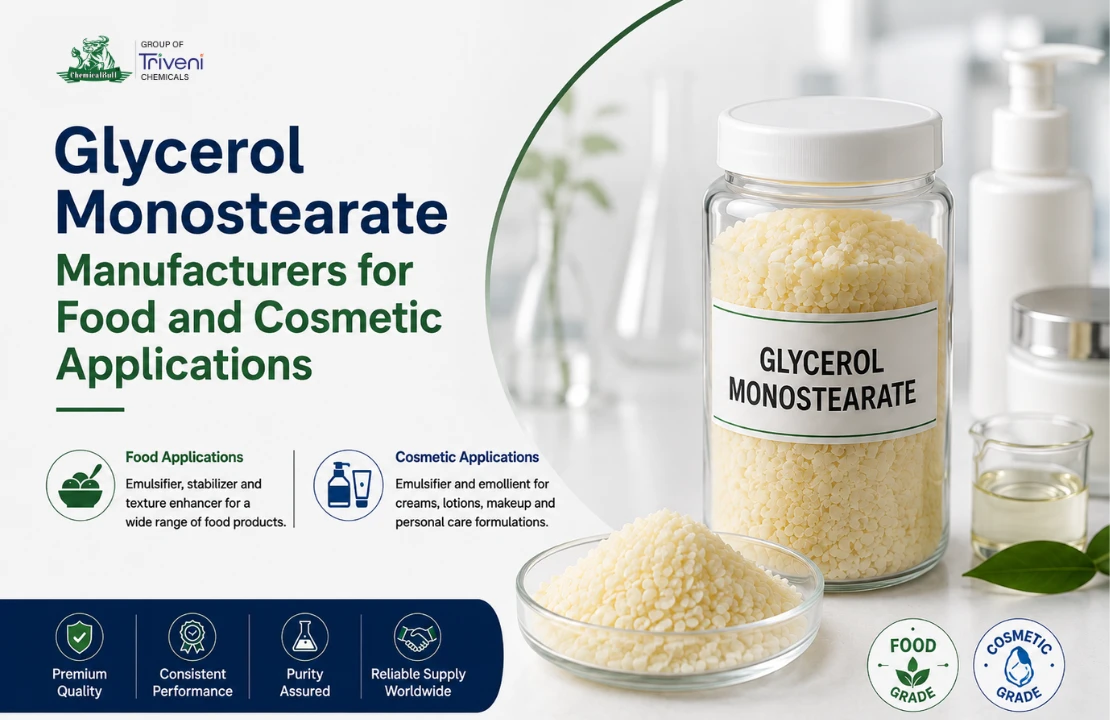
Glycerol Monostearate |
Bakery and dairy systems |
Commonly used for texture support |
|
Lecithin |
Chocolate and bakery products |
Helps with flow and dispersion |
|
Mono- and Diglycerides |
Bakery and processed foods |
Widely used for texture and shelf stability |
Sorbitan Monostearate is not always used alone. In many food systems, formulators combine emulsifiers to achieve the right HLB balance, texture, aeration, and product stability.
How Food Manufacturers Select Sorbitan Monostearate
Food manufacturers should select Sorbitan Monostearate based on product type, food-grade suitability, emulsification requirement, HLB need, fat content, processing temperature, product texture, and storage stability.
Before bulk approval, buyers should check technical documents, batch quality, packing details, and trial performance. For export and manufacturing requirements, consistency and documentation are as important as price.
|
Buying Check |
Why It Is Important |
|
Food-grade suitability |
Confirms application relevance |
|
COA |
Shows batch quality |
|
TDS |
Gives technical product details |
|
SDS |
Supports safe handling |
|
Appearance |
Helps confirm physical quality |
|
Acid value |
Supports quality evaluation |
|
Saponification value |
Helps assess product consistency |
|
Packing size |
Matches production requirement |
Final approval should be based on actual product trials. The selected grade must match the intended food system, processing condition, shelf-life expectation, and regulatory requirement in the target market.
Sorbitan Monostearate Price and Bulk Sourcing Factors
Sorbitan Monostearate price depends on grade, purity, packing size, order quantity, documentation, supplier reliability, and market availability. Buyers should not compare only price because poor grade selection can affect product quality, production consistency, and application performance.
For bulk sourcing, buyers should confirm whether the material is suitable for the intended product category. They should also ask for COA, TDS, SDS, packing details, sample support, and batch consistency information before commercial purchase.
Where to Buy Sorbitan Monostearate for Food Emulsions
Sorbitan Monostearate is sourced by manufacturers, food processors, formulation companies, chemical traders, and export buyers that need consistent emulsifier quality with documentation support. The right supplier should provide technical information, packing details, quality documents, and reliable bulk supply.
Chemical Bull supports Sorbitan Monostearate sourcing with product details, documentation support, and bulk supply assistance as a reliable Sorbitan Monostearate Supplier for buyers using emulsifiers in food, cosmetic, and industrial applications.
Frequently Asked Questions
-
What is Sorbitan Monostearate used for in food?
Sorbitan Monostearate is used in food as an emulsifier, texture support ingredient, fat dispersing agent, and stability aid. It is used in selected bakery, dairy, confectionery, whipped topping, processed food, and fat-based systems. -
Why is Sorbitan Monostearate used in bakery products?
Sorbitan Monostearate is used in bakery products to support fat dispersion, batter stability, dough handling, texture, and finished product consistency. -
Why is Sorbitan Monostearate used in dairy products?
It is used in selected dairy and frozen dessert systems to support fat structure, smooth mouthfeel, aeration, and stability. Suitability depends on the final product system. -
Can Sorbitan Monostearate be used with other emulsifiers?
Yes, Sorbitan Monostearate can be used with other emulsifiers to improve emulsion balance, texture, and stability. The combination depends on the required HLB value and product system. -
What should buyers check before purchasing Sorbitan Monostearate?
Buyers should check food-grade suitability, COA, TDS, SDS, appearance, acid value, saponification value, packing size, batch consistency, and application compatibility.
Conclusion
Sorbitan Monostearate is an important emulsifier for food systems where texture, fat dispersion, emulsion balance, and product consistency matter. It is useful in selected bakery, dairy, confectionery, processed food, whipped topping, and fat-based applications.
For manufacturers and export buyers, the value of Sorbitan Monostearate comes from stable performance, smooth mouthfeel, better processing support, and repeatable quality. The right grade should be selected based on technical documents, trial performance, food-grade suitability, and final product requirements.
Chemical Bull helps buyers source Sorbitan Monostearate with documentation support, sample assistance, and bulk supply options for diverse formulation and manufacturing needs.



Comment Section