Chemical Bull
55
15-Jul-2026
Introduction
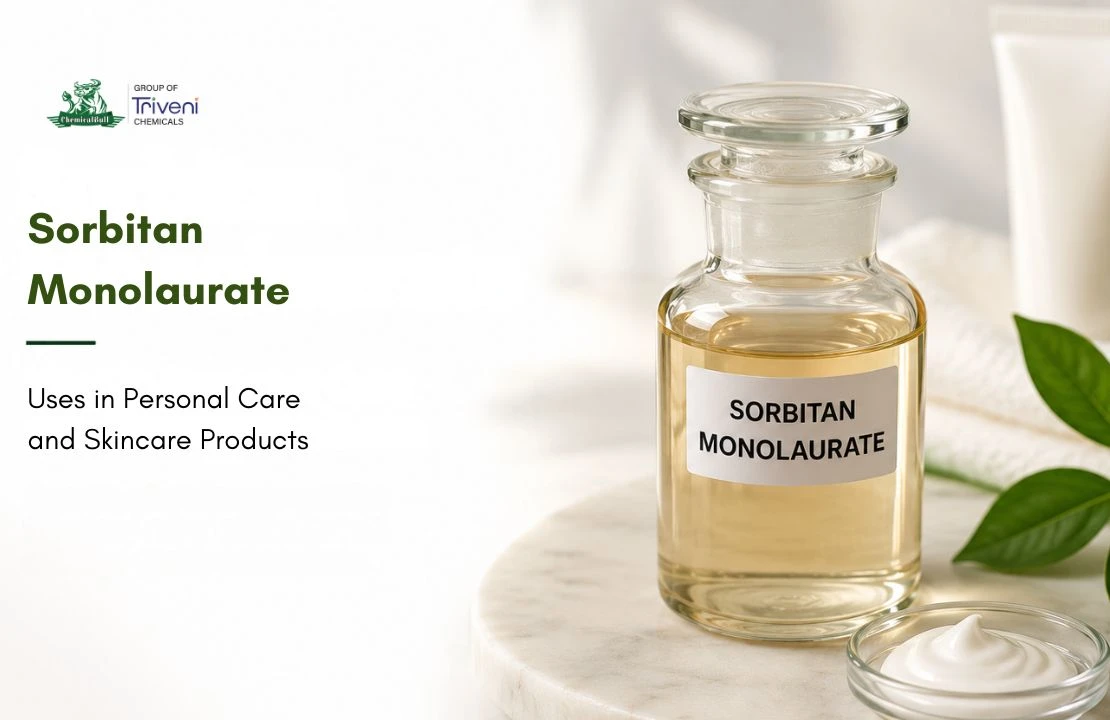
Sorbitan Monolaurate, known in the cosmetic industry by its INCI name Sorbitan Laurate and frequently referred to as Span 20 in industrial circles, is a highly versatile, plant-derived, non-ionic surfactant. It serves as a fundamental ingredient for formulators aiming to create stable, high-performance skincare and personal care products. Derived through the esterification of sorbitol with lauric acid, this lipophilic emulsifier plays a critical role in modern formulation science.
If you are looking to source high-purity ingredients for your next production batch, you can explore professional options through a reliable sorbitan monolaurate supplier to ensure consistent quality and performance. Its unique chemical structure, characterized by a Hydrophilic-Lipophilic Balance (HLB) value of approximately 8.6, allows it to effectively bridge the gap between oil and water phases.
Understanding the Chemistry
At its core, Sorbitan Monolaurate (CAS 1338-39-2) is a non-ionic surfactant that maintains excellent compatibility with a wide range of ingredients, including preservatives, active agents, and other surfactants.
The "Span" series is defined by its lipophilic nature. With an HLB of 8.6, Sorbitan Monolaurate is strategically positioned to stabilize water-in-oil (W/O) emulsions and often serves as a key co-emulsifier for oil-in-water (O/W) systems when paired with higher-HLB surfactants like Polysorbates.
Chemical Properties at a Glance
|
Property |
Technical Specification |
|
Appearance |
Light yellow to amber viscous liquid |
|
HLB Value |
Approximately 8.6 |
|
Solubility |
Highly soluble in oils; slightly soluble in water |
|
Function |
Emulsifier, Stabilizer, Dispersant, Wetting Agent |
Core Functions in Personal Care Formulations
Formulators prioritize Sorbitan Monolaurate for several technical reasons that directly impact the end-user experience:
1. Emulsification and Stability
The primary challenge in creating lotions and creams is preventing the separation of oil and water over time. Sorbitan Monolaurate functions by aligning itself at the interface of these two phases. By reducing interfacial tension and forming stable micelles, it prevents droplet coalescence, ensuring that your product remains homogenous from the first use to the last.
2. Texture and Sensory Modification
Beyond its technical role in stability, it contributes significantly to the "skin feel." It helps build a consistent, spreadable structure that allows a cream to glide smoothly over the skin. Unlike some heavier emulsifiers that can leave a sticky or tacky residue, Sorbitan Monolaurate is favored for creating lightweight, elegant formulations that absorb beautifully.
3. Pigment Dispersion
In color cosmetics such as liquid foundations, concealers, and primers, maintaining a uniform color is vital. Sorbitan Monolaurate acts as a wetting and dispersing agent, ensuring that pigments remain evenly suspended and do not settle or streak upon application.
4. Mild Cleansing Action
Because it is a mild non-ionic surfactant, it provides gentle cleansing properties. It effectively breaks down oil-based impurities, makeup, and debris without stripping the skin of its essential natural moisture, making it a popular choice for "gentle" or "hydrating" cleanser formulations.
Common Applications in Skincare
|
Product Category |
Primary Role of Sorbitan Monolaurate |
|
Face Creams & Moisturizers |
Creates stable emulsions and enhances skin absorption. |
|
Liquid Foundations |
Keeps pigments suspended for even coverage. |
|
Sunscreens |
Stabilizes UV filters and improves spreadability. |
|
Cleansing Balms & Micellar Waters |
Gently emulsifies oil-based impurities and makeup. |
|
Hair Conditioners |
Acts as a conditioning agent to detangle and smooth strands. |
Safety, Regulatory Compliance, and Skin Compatibility
For any cosmetic brand, the safety profile of an ingredient is paramount. Sorbitan Monolaurate is widely regarded as safe (GRAS) and non-irritating when used within standard levels (typically 3% to 5%).
- Sensitive Skin Safety: Due to its mildness, it is a staple in hypoallergenic and baby care products.
- Sensitization Risk: The risk of skin sensitization is remarkably low. However, formulators should always conduct patch testing, as cross-reactivity may occur in rare individuals with extreme sensitivity to sorbitan derivatives.
Why Formulators Choose Sorbitan Monolaurate from ChemicalBull
For a cosmetic or industrial product to be successful, it must be stable, safe, and consistent. Choosing high-purity Span 20 from ChemicalBull addresses these critical needs:
- High Stability: Maintains the physical integrity of W/O emulsions throughout the product's shelf life.
- Synergistic Performance: Our consistent batch quality ensures perfect synergy when paired with Polysorbate 20 (Tween 20) for O/W systems.
- Safety Profile: Our product meets industry standards and is safe for topical use, even in sensitive skin applications.
- Versatility: Ideal for a wide range of categories, from heavy night creams to lightweight micellar waters.
Comparison with Other Common Emulsifiers
Choosing the right emulsifier depends on your desired HLB value.
|
Emulsifier |
HLB Value |
Best Use Case |
|
Sorbitan Monolaurate |
8.6 |
W/O Emulsions |
|
16.7 |
O/W Emulsions |
|
|
Variable |
Natural/Food Emulsions |
Overcoming Formulation Challenges
Even highly effective ingredients present challenges. Here is how experts handle them:
- Limited Water Solubility: If your emulsion is "water-heavy," do not rely on Span 20 alone. Pair it with a high-HLB emulsifier (like a Tween) to balance the system.
- Viscosity Issues: If your product is too thin, adjust your oil phase ratio. Sorbitan Monolaurate performs best when the oil phase is properly supported.
- Temperature Sensitivity: Ensure both your oil and water phases are heated to 70-80°C and use high-shear mixing during the cooling phase to achieve the smallest possible droplet size.
Future Trends
As the demand for sustainable, bio-derived surfactants grows, Sorbitan Monolaurate is at the forefront of "green chemistry" in cosmetics. Innovations are focusing on refining the esterification process to minimize waste and maximize purity.
When sourcing, prioritize:
- Purity Standards: Always request the Certificate of Analysis (COA).
- Consistency: Ensure your supplier maintains rigorous quality control across all batches.
- Technical Support: A good supplier does more than ship drums; they provide the technical data sheets (TDS) and formulation advice you need.
Frequently Asked Questions (FAQ)
-
Why is batch consistency critical for Span 20?
Small variations in purity can cause phase separation. High-purity, COA-verified batches from ChemicalBull ensure stability across your entire production cycle. -
What is the main difference between Span 20 and Tween 20?
Span 20 is lipophilic (low HLB), while Tween 20 is hydrophilic (high HLB). They are frequently paired to stabilize O/W emulsions. -
Is Span 20 compatible with multi-active formulas?
Yes. Its non-ionic nature prevents negative interactions with active ingredients or preservatives, ensuring a stable, sophisticated final product. -
Is it compatible with standard cosmetic preservatives?
Absolutely. It is compatible with parabens, organic acids, and alcohols, allowing for a robust and effective preservation system. -
What are the best storage practices?
Store in a cool, dry, dark place. Keep containers tightly sealed to avoid moisture-induced hydrolysis, which degrades emulsification performance. -
Why is an HLB of 8.6 important?
This intermediate value is ideal for stabilizing W/O emulsions and provides formulators with the control needed to fine-tune product texture.
Conclusion
Skincare and personal care formulation depends on the right selection of emulsifiers, surfactants, co-emulsifiers, and stabilizing agents. These ingredients work together to provide emulsion stability, smooth spreadability, pigment dispersion, and skin hydration.
Sorbitan Monolaurate (Span 20) is one of the key non-ionic surfactants used where stable W/O (Water-in-Oil) emulsions and lightweight skin-feel are required. Along with suitable co-emulsifiers like Polysorbates, it helps manufacturers create high-performance cosmetic and industrial formulations.
For cosmetic chemists, personal care manufacturers, and export buyers, chemical selection should be based on performance, compatibility, technical documentation, and supplier reliability. ChemicalBull supports the sourcing of premium Sorbitan Monolaurate (Span 20) with complete technical documents (TDS/COA), sample assistance, and consistent bulk supply to help your brand succeed.
Comment Section