Chemical Bull
18
29-Sep-2026
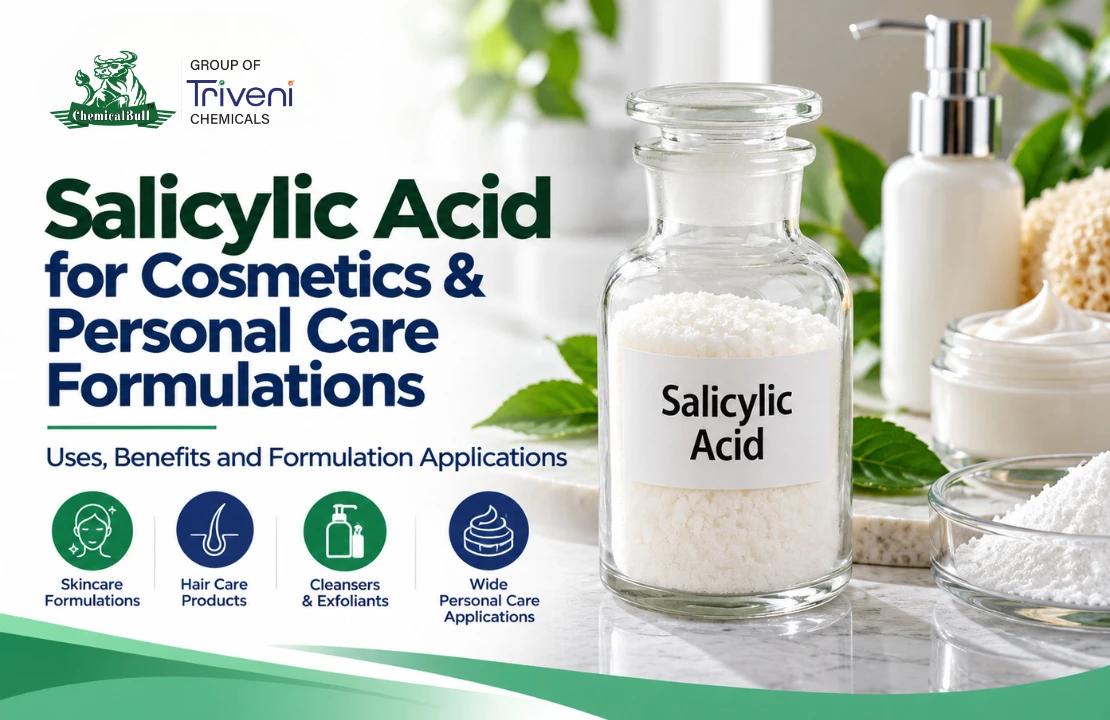
Salicylic Acid for Cosmetics & Personal Care Formulations
Salicylic Acid is one of the most widely used in the active ingredients in cosmetics and personal care, valued for its ability to exfoliate skin, unclog pores, and support clearer-looking complexions. As a beta hydroxy acid (BHA), it works differently from the alpha hydroxy acids (AHAs) commonly found in skincare, giving formulators a distinct tool for oil-prone and blemish-prone skin formulations.
Because purity and particle consistency directly affect formulation performance and regulatory compliance, working with an established salicylic acid manufacturer helps cosmetic and personal care manufacturers maintain reliable, consistent results across production batches.
Chemical Identity & Properties
|
Property |
Detail |
|
CAS Number |
69-72-7 |
|
Chemical Formula |
C₇H₆O₃ |
|
Molar Mass |
138.12 g/mol |
|
Appearance |
White crystalline powder |
|
Classification |
Beta hydroxy acid (BHA) |
|
Common Cosmetic Concentrations |
Typically 0.5% to 2% in leave-on and rinse-off products |
What Is Salicylic Acid?
Salicylic Acid is a beta hydroxy acid derived originally from willow bark, though it's now produced commercially through chemical synthesis for consistent purity and supply. Unlike water-soluble AHAs, Salicylic Acid is oil-soluble, which allows it to penetrate into pores and interact with the oil and debris that contribute to clogged pores and blemishes.
What Does Salicylic Acid Do in Skincare Formulations?
-
Exfoliation:
Helps loosen the bonds between dead skin cells on the skin's surface, supporting a smoother, more even texture. -
Pore Clearing:
Its oil solubility allows it to penetrate into pores, where it can help clear out oil and debris. -
Formulation Versatility:
Works well across cleansers, toners, spot treatments, and leave-on serums, depending on concentration and formulation pH.
Does Salicylic Acid Remove Dead Skin?
Yes, exfoliation is one of Salicylic Acid's primary functions in cosmetic formulations. It works by helping to loosen the bonds holding dead skin cells together on the skin's surface, which supports their natural shedding process. This is why it's commonly found in exfoliating cleansers, toners, and chemical peel products.
Benefits of Salicylic Acid in Personal Care Products
-
Supports Clearer-Looking Skin:
Its pore-clearing action makes it a popular choice in formulations targeting oily and blemish-prone skin. -
Gentle, Controlled Exfoliation:
At cosmetic-approved concentrations, it offers consistent exfoliation without the need for physical scrubbing. -
Oil-Soluble Penetration:
Reaches into pores in a way that water-soluble acids typically can't. -
Multi-Product Versatility:
Suitable for use across a wide range of product formats, from rinse-off cleansers to leave-on treatments. -
Anti-Dandruff Applications:
Also used in scalp and hair care formulations for its keratolytic and scalp-clarifying properties.
Common Applications in Cosmetics and Personal Care
-
Facial Cleansers:
Used in rinse-off formulations targeting oily and acne-prone skin. -
Toners:
Incorporated into leave-on toners for ongoing gentle exfoliation. -
Spot Treatments:
Used at higher, targeted concentrations for localized application. -
Chemical Peels:
A key active in professional and at-home peel formulations. -
Anti-Dandruff Shampoos:
Used for its scalp-clarifying and keratolytic properties. -
Body Care Formulations:
Applied in body washes and lotions targeting body acne or rough texture.
When to Apply Salicylic Acid
Salicylic Acid products are commonly used once daily or every other day, depending on the product's concentration and formulation, with many brands recommending application in the evening as part of a skincare routine. Because it can increase the skin's sensitivity to sunlight, daytime use is often paired with sunscreen, and formulators typically include usage guidance specific to their product's concentration and intended frequency on the label.
What to Use With Salicylic Acid
-
Sunscreen:
Since Salicylic Acid can increase sun sensitivity, pairing it with daily SPF is a commonly recommended practice in finished product guidance. -
Moisturizers:
Often paired with hydrating formulations to offset the potential dryness associated with exfoliating actives. -
Gentle, Non-Exfoliating Cleansers:
Many routines pair a salicylic acid treatment with a mild, non-exfoliating cleanser to avoid over-exfoliation. -
Caution with Other Actives:
Combining Salicylic Acid with other strong exfoliating acids or retinoids in the same routine is generally approached carefully, since layering multiple active ingredients can increase irritation risk.
Is Salicylic Acid Safe?
At the concentrations typically approved for cosmetic use, Salicylic Acid has a long history of use in personal care formulations. As with any active ingredient, individual skin sensitivity varies, and formulators typically include usage guidance, patch-testing recommendations, and any relevant cautions (such as during pregnancy, where lower concentrations or medical guidance is often advised) as part of their product labeling and regulatory compliance process.
Does Clean & Clear Have Salicylic Acid?
Some Clean & Clear products, particularly those marketed for acne-prone or oily skin, do contain Salicylic Acid as an active ingredient. Formulations vary across their product range, so checking the ingredient list or active ingredient panel on the specific product is the most reliable way to confirm concentration and formulation details.
What to Look for in a Salicylic Acid Supplier
-
Cosmetic-Grade Purity:
Confirm the material meets relevant cosmetic ingredient purity standards for your target market. -
Batch Documentation:
Request a Certificate of Analysis (CoA) and Safety Data Sheet (SDS) for each batch. -
Particle Size Consistency:
For formulations requiring specific dissolution behavior, confirm particle size distribution matches your process needs. -
Regulatory Compliance:
Confirm the material supports compliance with cosmetic regulations relevant to your target market and product category.
Salicylic Acid vs. Glycolic Acid: BHA vs. AHA
Formulators often compare Salicylic Acid to Glycolic Acid, since both are popular exfoliating acids but work through different mechanisms:
|
Factor |
Salicylic Acid (BHA) |
Glycolic Acid (AHA) |
|
Solubility |
Oil-soluble |
Water-soluble |
|
Best Suited For |
Oily, blemish-prone, and congested skin |
Dry, sun-damaged, or dull-looking skin |
|
Mechanism |
Penetrates into pores to help clear oil and debris |
Works primarily on the skin's surface |
|
Common Formats |
Cleansers, toners, spot treatments |
Toners, serums, peels |
Many personal care formulations combine both acid types to address multiple skin concerns within a single routine, though formulators typically balance total exfoliating acid concentration carefully to avoid over-exfoliation.
Formulation Considerations for Cosmetic Manufacturers
- pH Range: Salicylic Acid's effectiveness as an exfoliant depends on formulating within an appropriate pH range, typically on the more acidic side.
- Solubility Challenges: Because it's oil-soluble rather than water-soluble, formulators often need co-solvents or specific delivery systems to achieve stable, even distribution in water-based formulations.
- Concentration Limits: Regulatory frameworks in different markets set maximum allowable concentrations for cosmetic use, so formulators should confirm current limits for their target region before finalizing a product.
- Stability Testing: As with any active ingredient, stability testing across the product's intended shelf life helps confirm the Salicylic Acid remains at its labeled concentration over time.
Frequently Asked Questions
-
What is Salicylic Acid?
It is a beta hydroxy acid (BHA) used in cosmetics and personal care products for its exfoliating and pore-clearing properties, commonly found in cleansers, toners, and spot treatments. -
What does Salicylic Acid do for skin?
It helps exfoliate dead skin cells, penetrates into pores due to its oil solubility, and supports a smoother, clearer-looking complexion at cosmetic-approved concentrations. -
What are the benefits of Salicylic Acid?
Benefits include gentle chemical exfoliation, pore-clearing action, oil-soluble penetration, and versatility across cleansers, toners, treatments, and even anti-dandruff formulations. -
Is Salicylic Acid safe to use?
At cosmetic-approved concentrations, it has a long history of safe use, though individual sensitivity varies and product-specific usage guidance should always be followed. -
When should Salicylic Acid be applied?
Usage frequency depends on the specific product's concentration and formulation, with many products recommending evening use and daytime sunscreen due to increased sun sensitivity.
Conclusion
Salicylic Acid's exfoliating and pore-clearing properties make it a foundational active ingredient across cosmetics and personal care formulations. Selecting a supplier who can provide consistent cosmetic-grade purity, proper documentation, and regulatory support helps manufacturers maintain quality and compliance across their product lines.

Comment Section



