Chemical Bull
13
29-Sep-2026
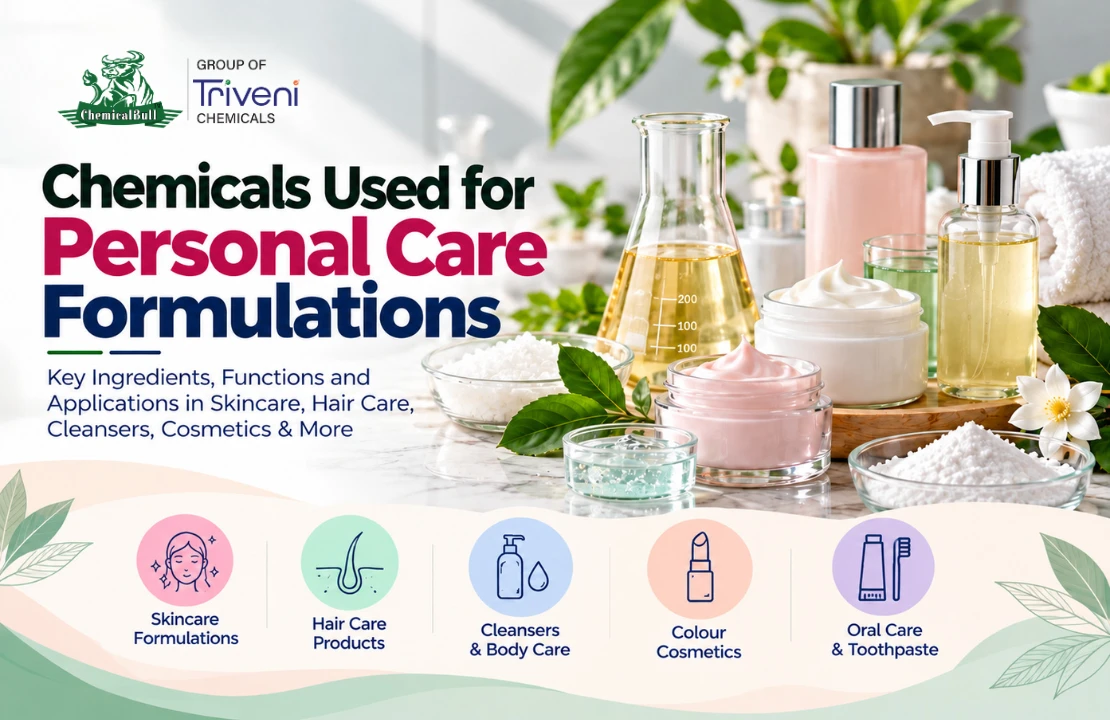
Personal care manufacturers use different chemicals to make shampoos, body washes, face washes, creams, lotions, soaps, toothpaste and cosmetics. Some ingredients cleanse or condition. Others help oil and water mix, adjust pH, control thickness or improve how a finished product feels.
The right raw material depends on the product and the role the ingredient must perform. A surfactant selected for shampoo does a different job from an emulsifier selected for body lotion. This guide explains the main chemicals used for personal care formulations, their manufacturing applications and what buyers should check before ordering in bulk.
What Ingredients Are Used in Personal Care Products?
Personal care formulations commonly contain surfactants, emulsifiers, emollients, conditioning agents, thickeners and pH adjusters. Depending on the product, they may also need fragrance, preservatives or ingredients for a specific finished-product function.
If you are sourcing for a confirmed production requirement, contact Chemical Bull with the chemical name, application, required grade and quantity. The team can check supply details against your enquiry.
|
Ingredient function |
Examples |
Common product types |
|
Cleansing and foam |
Shampoo, face wash, body wash |
|
|
Emulsification |
Glycerol Monostearate, Sorbitan Monostearate, Polysorbate 80 |
Creams, lotions, conditioners |
|
Emollience |
Lotions, creams, cosmetics |
|
|
Conditioning |
Shampoo, conditioner, body wash |
|
|
Thickening and texture |
Toothpaste, gels, pearlised cleansers |
|
|
pH adjustment |
Selected cleansers, creams and lotions |
|
|
Fragrance solubilisation |
Sprays and fragranced water-based products |
These are examples of ingredient functions, not complete formulas. One ingredient can have different roles depending on the formulation.
Surfactants for Shampoo, Face Wash and Body Wash
Shampoo and body wash manufacturers are a strong starting point for bulk personal care sourcing. Their formulas may require several ingredients for cleansing, foam, conditioning, texture and pH control. Production schedules also make consistent specifications important for repeat purchases.
Surfactants help water contact oily soil so it can be removed during rinsing. Manufacturers choose a cleansing system according to the foam, mildness, viscosity and after-feel required.
Cocamidopropyl Betaine is an amphoteric surfactant used in shampoos, facial cleansers, body washes and liquid hand washes. It is commonly combined with other cleansing ingredients. Cocamidopropyl Hydroxysultaine is another amphoteric option for cleansing formulations, including products designed for a mild feel.
Cocamide DEA has been used to boost foam and build viscosity in rinse-off cleansers. Its suitability should be reviewed by the manufacturer’s formulation and regulatory teams for the intended product and sales market. PEG-7 Glyceryl Cocoate is used in selected shampoos, face washes and body washes when formulators want to adjust the product’s feel.
For a bulk surfactant purchase, the ingredient name alone is insufficient. Buyers should compare active matter, pH, appearance and the specification approved by R&D. Two supplies offered under the same general ingredient name may differ in concentration. Chemical Bull’s personal care surfactant sourcing guide covers these procurement checks in more detail.
Conditioning and Appearance Ingredients for Hair Care
Cleansing is only one part of shampoo performance. Manufacturers may also want the hair to feel a certain way during washing and after rinsing. Polyquaternium-7 is used as a conditioning ingredient in shampoos and other suitable hair care products. It may also be used in selected body washes.
Appearance matters as well. Ethylene Glycol Distearate can give a suitable liquid shampoo or body wash a pearly look. Citric Acid may be used to adjust the pH of a hair care formulation. Xanthan Gum can help build viscosity in selected gels and cleansing products.
These materials serve separate purposes. Polyquaternium-7 does not replace the cleansing surfactant, and a pearling ingredient does not determine whether a shampoo cleans well. Describing each ingredient by its actual function helps procurement teams request the correct material.
Emulsifiers for Creams, Lotions and Conditioners
Cream and lotion manufacturers are another important audience for bulk personal care ingredients. Many of their products contain both an oil phase and a water phase. Emulsifiers help bring those phases together and support the intended texture.
Glycerol Monostearate is used in creams, lotions, moisturisers and suitable hair conditioners as an emulsifying and texture-building ingredient. Sorbitan Monostearate and Sorbitan Monooleate are used in selected cosmetic emulsions. Sorbitan Monolaurate and Glycerol Monooleate may also be evaluated for appropriate formulations. Polysorbate 60 and Polysorbate 80 can serve emulsifying functions in suitable systems.
Stearic Acid can contribute structure to creams and lotions. Triethanolamine may be used for pH adjustment or neutralisation when required by the formula. Manufacturers also use specified polyethylene glycol grades, including PEG-400 and higher molecular weight grades, for different formulation roles. The grades are not interchangeable simply because they share the PEG name.
An emulsifier does not guarantee a stable cream by itself. Formulators consider the oils used, phase proportions, processing method, viscosity and the performance expected from the finished product. Buyers should therefore request the specific grade approved by R&D, along with the required quality parameters.
Emollients for Skin Feel and Spreadability
Emollients contribute to how a cream, lotion or cosmetic product spreads and feels on the skin. The desired result may be a lighter feel, a richer texture or easier application. Selection depends on the complete product brief.
2-Ethylhexyl Palmitate, 2-Ethylhexyl Cocoate, 2-Ethylhexyl Oleate and 2-Ethylhexyl Stearate are ester examples used in personal care formulations. Manufacturers may evaluate them for creams, body lotions, skincare products and cosmetics where spreadability and skin feel matter.
When replacing an existing emollient, purchasing teams should provide the approved material name and specification. A similar-sounding ingredient may produce a different result in the finished product. Quality and formulation teams should review a proposed alternative before it enters regular production.
Fragrance Solubilisers for Sprays and Cleansers
A water-based body spray, cleanser or other fragranced product may need help incorporating a small amount of fragrance. PEG-40 Hydrogenated Castor Oil and Polysorbate 20 are commonly evaluated as solubilisers for this purpose.
A solubiliser is selected according to the fragrance, the amount used, the desired appearance and the other ingredients in the formula. It should be assessed in the complete product. An ingredient that works in one clear spray may not give the same result with a different fragrance or cleanser system.
For repeat manufacturing, buyers should specify the approved solubiliser grade and the quality parameters their team checks on receipt. This allows quotations to be compared against the material actually used in production.
Chemicals for Soap, Deodorant and Shaving Products
Personal care manufacturing also includes soap, deodorant sticks and shaving products. Sodium Stearate is used in soap and may help structure suitable deodorant sticks. Sodium Oleate is used in soap and cleansing formulations. Stearic Acid is relevant to soap manufacturing and selected shaving cream systems.
The finished product should always be stated in a sourcing enquiry. An ingredient sold for soap making should not automatically be assumed suitable for a deodorant stick or a liquid cleanser. Its grade, specification and intended function still need to match the formulation.
Ingredients for Toothpaste and Oral Care
Toothpaste is another personal care product that manufacturers may make with ingredients from this list. Xanthan Gum can help build viscosity and support a consistent paste texture. A suitable PEG-400 grade may serve a formulation role in an oral care product. Citric Acid may be used for pH adjustment where appropriate to the finished formula.
These are supporting ingredients. Xanthan Gum is not a tooth-cleaning active, and their presence alone does not establish a dental benefit or product claim. Oral care manufacturers should specify the intended use and request a grade suitable for their approved formulation. Their technical and regulatory teams must assess the complete toothpaste before production.
Ingredients for Skincare, Scalp Care and Makeup
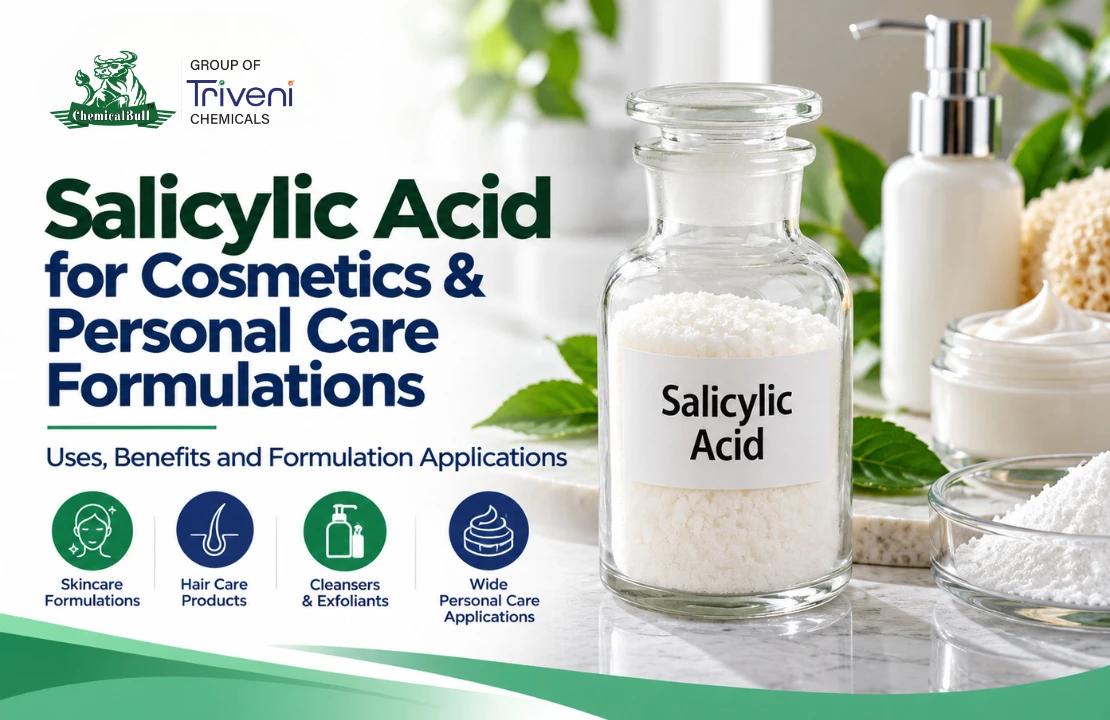
Lactic Acid is used in selected skincare products for pH adjustment and exfoliating formulations. Salicylic Acid is used in certain skincare and scalp care products. Its concentration, intended use and finished-product claims need to be assessed for the market where the product will be sold.
Xanthan Gum can build viscosity in selected skincare gels, face washes and lotions. Magnesium Stearate may be used in pressed powders and compact cosmetics to support texture and powder performance.
Sunscreen products may also contain ingredients that affect texture or spreadability. Such an ingredient is not automatically a UV filter. Buyers should distinguish its formulation role from a sun-protection claim made for the finished product.
How Manufacturers Should Select a Personal Care Raw Material
Start with the finished product and the ingredient’s required function. A sourcing brief should say whether the material is for shampoo, body wash, cream, toothpaste, soap, makeup or another application. It should identify the grade or specification already approved by the formulation team.
Then check the details relevant to that material:
-
Identity: Confirm the chemical name and applicable INCI name.
-
Grade and specification: Match the offered material to the approved application.
-
Active matter: For relevant liquid surfactants, compare concentration as well as price.
-
Quality parameters: Check important values such as pH, appearance or viscosity where applicable.
-
Documents: Request available COA, TDS and SDS documents for review.
-
Packing: Confirm that the pack size suits storage and production requirements.
These details give procurement, R&D and quality teams a common basis for reviewing a supply offer. They also reduce delays caused by requesting a quotation with only a broad product name.
Buying Personal Care Chemicals in Bulk
Bulk buying calls for the right grade, consistent specification, suitable packing and dependable replenishment. This matters to shampoo and body wash manufacturers buying surfactants repeatedly, as well as cream and lotion manufacturers maintaining an approved emulsion system.
When requesting a quotation, provide the exact chemical or approved INCI name, finished product application, required quantity, delivery location and any specification that must be met. Include the required active matter for a surfactant if it forms part of your approval. For repeat production, share expected monthly demand and preferred packing.
Chemical Bull supplies personal care ingredients to B2B buyers and supports enquiries with information on availability, packing and relevant documentation. Manufacturers can compare those details with their internal requirements before placing an order.
Frequently Asked Questions
1. Which chemicals are commonly used in shampoo manufacturing?
A shampoo may use Cocamidopropyl Betaine or Cocamidopropyl Hydroxysultaine in its cleansing system, Polyquaternium-7 for conditioning, Ethylene Glycol Distearate for a pearly appearance and Citric Acid to adjust pH. The exact combination depends on the formulation.
2. What chemicals are used to make creams and lotions?
Creams and lotions may use emulsifiers such as Glycerol Monostearate or Sorbitan Monostearate and emollients such as 2-Ethylhexyl Palmitate. Formulators select them according to the oil phase, intended texture and desired skin feel.
3. Are solubilisers and emulsifiers the same?
They perform related but different tasks. A solubiliser can help incorporate a small amount of an oil-soluble material, such as fragrance, into a water-based product. An emulsifier helps form a product containing oil and water phases.
4. Which of these ingredients may be used in toothpaste?
Xanthan Gum may help build toothpaste texture. A suitable PEG-400 grade may serve a formulation role, and Citric Acid may be considered for pH adjustment where appropriate. The manufacturer must assess the complete formula and oral care suitability of each grade.
5. What should I provide when requesting a bulk quote?
Provide the ingredient name, finished product application, approved grade or specification, quantity, packing preference and delivery location. Include documentation requirements and expected repeat demand if relevant.
Source Personal Care Ingredients for Your Manufacturing Requirement
The best raw material choice starts with a clear application and an approved specification. Whether you need a surfactant for shampoo, an emulsifier for lotion or a texture ingredient for toothpaste, share your requirement with Chemical Bull to receive relevant information on grade, availability, documentation, packing and bulk supply.
Comment Section