Chemical Bull
57
04-Nov-2026
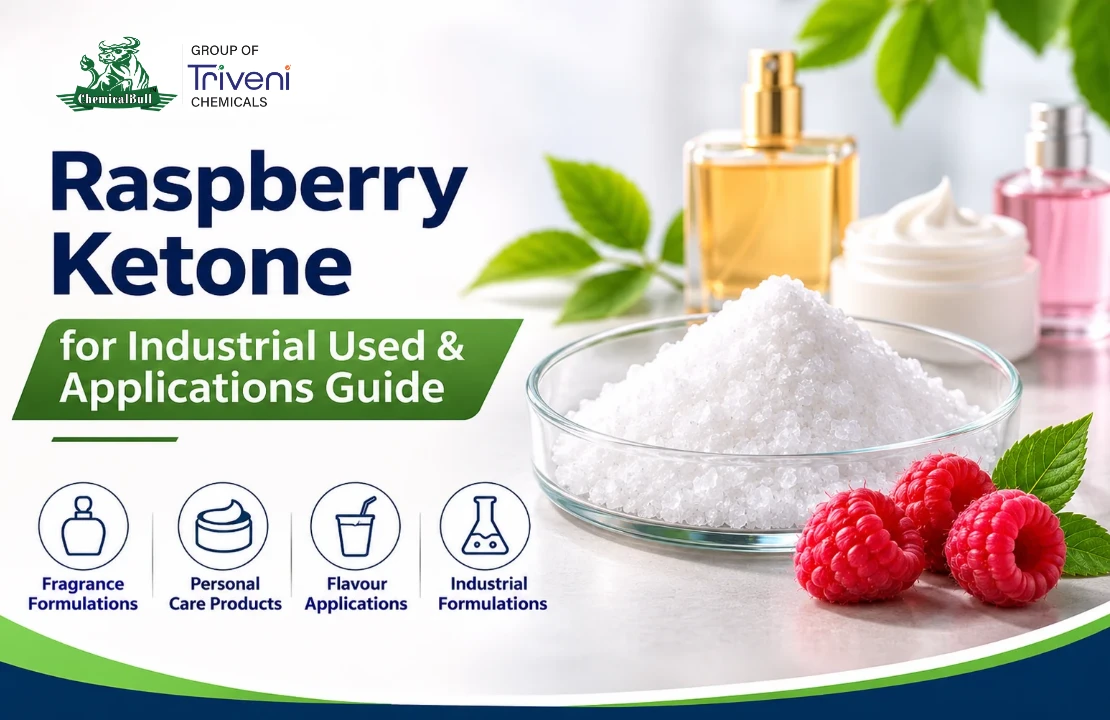
Raspberry Ketone for Industrial Use & Applications
Raspberry Ketone is the aroma compound that gives raspberries their sweet, fruity scent. Beyond the fruit itself, the ingredient is widely used in the flavor and fragrance industries, where it adds a rich, jammy raspberry character to food, beverages, perfumes, and personal care products.
Because natural raspberries contain only tiny amounts, nearly all commercial supply is produced industrially, and purity and odor quality vary by source. Buying Raspberry Ketone from a dependable supplier helps formulators keep flavor and scent profiles consistent. Chemical Bull supplies Raspberry Ketone in bulk quantities with competitive pricing for industrial and formulation buyers.
Chemical Identity & Properties
|
Property |
Detail |
|
Chemical Name |
4-(4-Hydroxyphenyl)butan-2-one |
|
CAS Number |
5471-51-2 |
|
Chemical Formula |
C₁₀H₁₂O₂ |
|
Molar Mass |
164.20 g/mol |
|
Appearance |
White to off-white crystalline solid |
|
Odor |
Sweet, fruity, raspberry-like |
|
Melting Point |
About 82°C to 84°C |
|
Solubility |
Slightly soluble in water; soluble in ethanol and many organic solvents |
What Is Raspberry Ketone?
Raspberry Ketone is a phenolic ketone found naturally in red raspberries, but only at very low levels, roughly a few milligrams per kilogram of fruit. Because extracting it from fruit is costly and low-yield, most commercial material is made by chemical synthesis and is chemically identical to the natural compound.
Industrial Applications of Raspberry Ketone
- Flavors: Used at very low levels to build raspberry, berry, and mixed fruit flavors in beverages, confectionery, bakery fillings, dairy desserts, and chewing gum.
- Fragrance and Perfumery: Adds a sweet, fruity-floral note to fine fragrance, soaps, candles, and home fragrance.
- Cosmetics and Personal Care: Used as a fragrance and flavor component in lip products, lotions, shampoos, and body care, within recommended usage limits.
- Insect Monitoring Lures: A closely related derivative, raspberry ketone acetate, is used in lures that attract certain fruit fly species for pest monitoring programs.
- Dietary Supplement Ingredient: Sold as a supplement ingredient in some markets, which is a regulated area (see the notes below).
- Chemical Intermediate: Used as a starting material for related aroma and specialty chemicals.
Why Formulators Choose Raspberry Ketone
|
Factor |
Why It Matters |
|
Authentic Raspberry Character |
Delivers the signature note that other fruit flavors cannot replicate |
|
High Impact at Low Dosage |
Small amounts provide a noticeable effect, which keeps cost per batch low |
|
Stable Solid Form |
Easy to store, weigh, and dissolve into flavor or fragrance carriers |
|
Natural-Identical |
Chemically the same compound found in raspberries |
|
Broad Compatibility |
Works in alcohol-based, oil-based, and water-based systems when dissolved correctly |
Raspberry Ketone vs. Related Fruity Aroma Chemicals
|
Aroma Chemical |
Scent Character |
Typical Role |
|
Raspberry Ketone |
Sweet, jammy raspberry |
Berry flavors and fruity fragrance notes |
|
Ethyl Maltol |
Sweet, caramel-cotton candy |
Sweetness enhancer and candy notes |
|
Gamma Decalactone |
Creamy, peach-like |
Peach and stone fruit flavors |
|
Benzaldehyde |
Almond, cherry |
Cherry and almond notes |
Flavorists often combine these to build more realistic, layered fruit profiles.
Basic Flavor and Fragrance Blending Approach
- Prepare a Stock Solution: Dissolve the crystalline powder in ethanol, propylene glycol, or another suitable carrier.
- Build the Fruit Profile: Combine with other fruity and sweet notes to create a complete raspberry or mixed-berry character.
- Dose Carefully: Start at very low levels, because the aroma is strong.
- Test in the Final Base: Check odor or taste, color, and stability in the actual product.
- Run Shelf-Life Checks: Confirm the profile holds up over time and across storage temperatures.
Manufacturing Process Overview
Most Raspberry Ketone is made in two steps: 4-hydroxybenzaldehyde is reacted with acetone to form an unsaturated intermediate, which is then hydrogenated to give 4-(4-hydroxyphenyl)butan-2-one. The product is purified and crystallized to reach the required assay and odor quality. Natural-labeled material, produced through biotechnology or extraction routes, is available in smaller volumes at a higher cost.
Grade Selection Guidance
|
Application |
What to Prioritize |
|
Food and beverage flavors |
Food-grade documentation, high purity, and clean odor |
|
Fine fragrance |
Low off-notes and consistent scent |
|
Cosmetics |
Cosmetic-suitable purity and documentation |
|
Technical and intermediate use |
Cost efficiency and consistent assay |
What to Check When Sourcing Raspberry Ketone in Bulk
- Assay and Odor Profile: Confirm purity and approve an odor sample before bulk orders.
- Origin and Grade: Clarify whether the material is synthetic or natural-labeled, and whether food-grade is available.
- Impurity Limits: Check residual solvents and by-products that could affect scent or safety.
- Batch Documentation: Request a Certificate of Analysis (CoA) and Safety Data Sheet (SDS) for every shipment.
- Regulatory Support: Confirm the supplier can provide documents for your target market and product category.
- Packaging and Lead Times: Confirm pack sizes that match your volumes and a reliable delivery schedule.
Storage and Handling Considerations
Store Raspberry Ketone in tightly closed containers in a cool, dry place away from heat, light, and strong oxidizers. Use gloves, eye protection, and dust control when handling the powder, as it can irritate the skin, eyes, and respiratory tract. Always review the current Safety Data Sheet.
Regulatory Notes for Food, Cosmetic, and Supplement Use
- Flavor Use: Food use requires food-grade material and compliance with applicable flavoring rules in your market.
- Fragrance and Cosmetics: Follow IFRA guidance and local cosmetic regulations for usage limits.
- Dietary Supplements: Raspberry Ketone is often marketed for weight management, but robust human evidence for such claims is limited, and regulators in some regions have acted against unsupported claims. Brands should avoid unsubstantiated health claims and follow local supplement rules.
Supply Chain and Sourcing Considerations
- Raw Material Links: Pricing can follow phenol-based and acetone feedstock markets.
- Lead Time Planning: Plan reorders ahead of seasonal flavor and fragrance production peaks.
- Volume-Based Pricing: Ask about tiered pricing for larger recurring orders to stabilize costs.
- Consistent Quality: Staying with one supplier and grade keeps flavor and scent profiles uniform.
Common Buyer Mistakes to Avoid
- Skipping Sample Approval: Always approve odor and taste before ordering in bulk.
- Ignoring Grade Differences: Technical grade is not suitable for food use.
- Overlooking Claim Rules: Health-related marketing claims can create legal risk.
- Poor Storage: Heat and light can slowly affect aroma quality.
Frequently Asked Questions
-
What is Raspberry Ketone used for?
It is used in flavors, fragrances, cosmetics, insect monitoring lures, and as a supplement ingredient. -
Is Raspberry Ketone natural?
It occurs naturally in raspberries in tiny amounts, but most commercial supply is made synthetically. -
What is the CAS number of Raspberry Ketone?
The CAS number is 5471-51-2. -
Is Raspberry Ketone proven for weight loss?
No, human evidence for weight-loss claims is limited, so supplement brands should follow local claim rules. -
Does Chemical Bull supply Raspberry Ketone in bulk?
Yes, Chemical Bull supplies Raspberry Ketone in bulk quantities with competitive pricing.
Conclusion
Raspberry Ketone gives flavor and fragrance makers an authentic, high-impact raspberry note in a stable, easy-to-handle form. Sourcing it from a supplier with consistent quality, clear documentation, and reliable bulk supply helps manufacturers keep every batch tasting and smelling the same.

Comment Section