Chemical Bull
27
24-Nov-2026
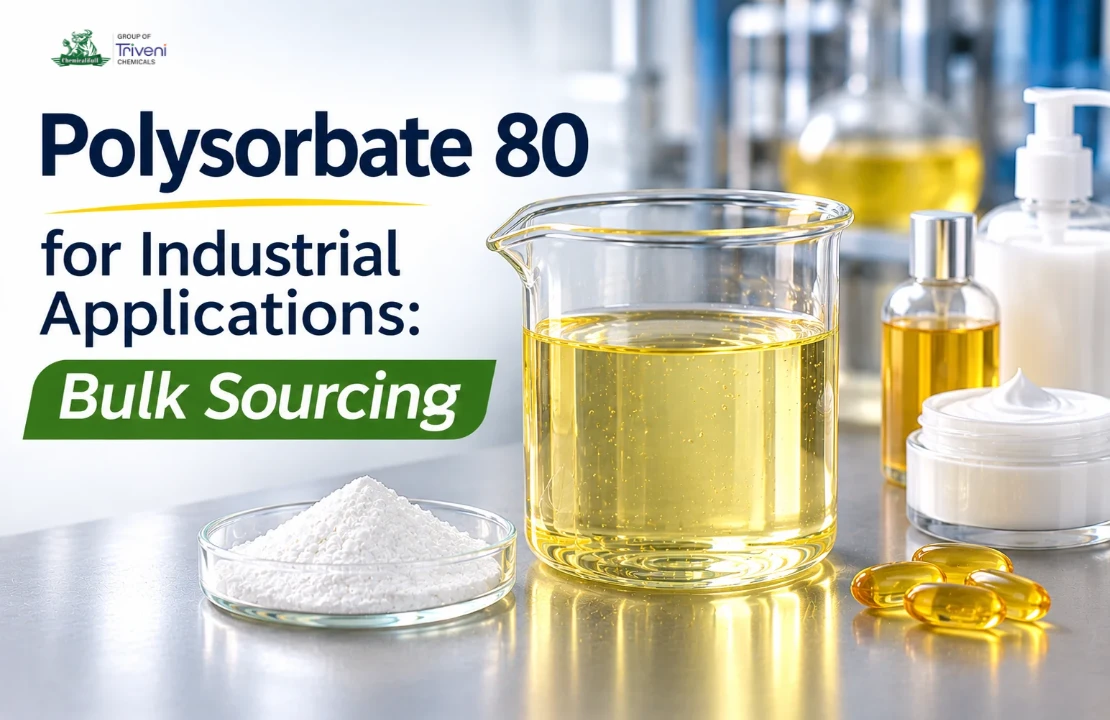
Polysorbate 80 for Industrial Applications: Bulk Sourcing
Polysorbate 80 is a widely used non-ionic surfactant and emulsifier that helps combine oil and water in different industrial formulations. It is valued for its emulsifying, solubilising, wetting and dispersing properties, making it useful in personal care, cosmetics, pharmaceutical formulations, food processing and other industries where suitable grades are permitted.
For manufacturers and industrial buyers in India, selecting the right Polysorbate 80 grade is important for achieving formulation stability, consistent product quality and reliable processing performance.
This guide explains the properties, applications, industrial benefits, quality considerations and bulk sourcing requirements of Polysorbate 80.
What Is Polysorbate 80?
Polysorbate 80, also known as Tween 80, is a non-ionic surfactant produced through the ethoxylation of sorbitan monooleate. It contains hydrophilic polyethylene oxide chains and a lipophilic fatty acid component, allowing it to help stabilise mixtures of oil and water.
It is commonly used as an emulsifier, solubiliser and dispersing agent in formulations that require uniform distribution of oil-based ingredients in aqueous systems.
Polysorbate 80 is available in different commercial grades depending on its intended application. Buyers should select a grade according to the technical specifications, purity requirements and applicable industry standards.
Basic Chemical Information
|
Parameter |
Details |
|
Chemical Name |
Polysorbate 80 |
|
Common Name |
Tween 80 |
|
CAS Number |
9005-65-6 |
|
Chemical Type |
Non-ionic surfactant |
|
Chemical Nature |
Polyoxyethylene sorbitan monooleate |
|
Main Function |
Emulsifier and solubiliser |
|
Appearance |
Typically yellow to amber liquid |
|
Solubility |
Dispersible or soluble in water, depending on conditions |
|
HLB Value |
Approximately 15 |
|
Primary Applications |
Personal care, cosmetics, pharmaceuticals, food and industrial formulations |
Key Properties and Characteristics of Polysorbate 80
Polysorbate 80 is selected for formulations because of its ability to support the mixing and distribution of ingredients with different solubility characteristics.
1. Non-Ionic Surfactant
Polysorbate 80 is a non-ionic surfactant, meaning it does not carry a permanent electrical charge in solution. This property makes it useful in many formulation systems where compatibility with other ingredients is important.
2. Emulsifying Ability
It helps stabilise oil-in-water emulsions by reducing interfacial tension between oil and water. This supports more uniform distribution of oil-based ingredients throughout a formulation.
3. Solubilising Properties
Polysorbate 80 can help incorporate certain oil-soluble ingredients, fragrances and other hydrophobic materials into water-based systems.
4. Wetting and Dispersing Performance
It can improve the wetting and distribution of selected ingredients in liquid formulations, depending on the formulation composition and processing conditions.
5. Broad Formulation Compatibility
Its non-ionic nature allows it to be used in several types of formulations. However, compatibility and stability should always be evaluated through formulation testing.
Industrial Applications of Polysorbate 80
Polysorbate 80 has applications across multiple industries because it performs several functions within liquid and semi-solid formulations.
1. Personal Care and Cosmetics Industry
In personal care and cosmetic formulations, Polysorbate 80 is used as an emulsifier and solubilising agent. It helps incorporate oils, fragrances and other oil-soluble ingredients into water-based products.
Common applications include:
-
Creams and lotions
-
Moisturisers
-
Body washes
-
Cleansing formulations
-
Hair care products
-
Fragrance-based formulations
-
Cosmetic emulsions
Its ability to support the distribution of oil-based ingredients makes it useful in products where a uniform formulation is required.
2. Pharmaceutical Industry
Polysorbate 80 is used as an excipient in certain pharmaceutical formulations. Depending on the formulation and applicable regulatory requirements, it can function as a solubiliser, emulsifier or stabilising agent.
Potential applications include:
-
Selected oral formulations
-
Topical pharmaceutical preparations
-
Certain injectable formulations
-
Liquid drug delivery systems
-
Formulations containing poorly water-soluble ingredients
Pharmaceutical applications require suitable pharmaceutical-grade material and compliance with the relevant pharmacopoeial and regulatory specifications. Not every commercial grade is suitable for pharmaceutical use.
3. Food Processing Industry
Certain food-grade Polysorbate 80 products are used as emulsifiers in permitted food applications, subject to applicable food regulations and usage limits.
Potential applications include:
-
Bakery products
-
Food emulsions
-
Selected dessert formulations
-
Whipped toppings
-
Food ingredient preparations
It can help improve the distribution of ingredients and support emulsion stability. Food manufacturers must verify the permitted application, grade, purity and maximum usage level under applicable FSSAI requirements.
4. Industrial Chemical Formulations
Polysorbate 80 can be used in selected industrial formulations where emulsification, wetting or solubilisation is required.
Examples include:
-
Speciality cleaning formulations
-
Industrial liquid preparations
-
Oil-in-water emulsions
-
Fragrance-containing formulations
-
Selected dispersing systems
Its suitability depends on the chemical composition, operating conditions and performance requirements of the final formulation.
5. Agricultural and Agrochemical Formulations
Certain agrochemical formulations use surfactants to improve the wetting, dispersion or distribution of active ingredients. Polysorbate 80 may be considered in selected formulation systems where its properties are suitable.
Potential formulation functions include:
-
Wetting support
-
Emulsification
-
Dispersion of selected ingredients
-
Incorporation of oil-based components
The final suitability must be established through formulation testing and compliance with applicable agricultural chemical regulations. Polysorbate 80 should not be assumed to be a universal replacement for specialised agrochemical adjuvants.
Benefits of Using Polysorbate 80 in Industrial Formulations
The selection of Polysorbate 80 can provide several formulation advantages when it is compatible with the other ingredients.
|
Benefit |
Industrial relevance |
|
Emulsification |
Helps combine oil and water phases |
|
Solubilisation |
Supports the incorporation of selected oil-soluble ingredients |
|
Wetting |
Helps liquids spread over certain surfaces or ingredients |
|
Dispersion |
Supports uniform distribution of selected components |
|
Formulation flexibility |
Can be used in different types of formulation systems |
|
Non-ionic nature |
Offers compatibility advantages in suitable formulations |
The actual performance depends on concentration, temperature, pH, ingredient compatibility, processing conditions and the quality of the supplied material.
Polysorbate 80 vs Other Polysorbates
Polysorbates are a family of non-ionic surfactants. Different members have different fatty acid components and formulation characteristics.
|
Product |
Main fatty acid component |
Common formulation applications |
|
Polysorbate 20 |
Laurate |
Fragrance solubilisation and personal care |
|
Polysorbate 40 |
Palmitate |
Emulsification and selected cosmetic formulations |
|
Polysorbate 60 |
Stearate |
Creams, lotions and food formulations where permitted |
|
Polysorbate 80 |
Oleate |
Emulsification and solubilisation in various formulations |
Polysorbate 80 is often selected when an oleate-based non-ionic surfactant is required. However, the most suitable product depends on the formulation's required HLB, oil phase, stability and end-use conditions.
Important Quality Specifications to Check Before Buying Polysorbate 80
Industrial buyers should evaluate the technical specifications before selecting a supplier. Product quality can affect processing behaviour, formulation stability and the consistency of the final product.
Important parameters include:
1. Appearance
Check whether the material matches the supplier's stated appearance and colour specifications. Significant variations may require further investigation.
2. Hydroxyl Value
The hydroxyl value is an important analytical parameter used in the characterisation and quality assessment of Polysorbate 80.
3. Acid Value
Acid value helps assess the free fatty acid content of the material and should be compared with the applicable product specification.
4. Saponification Value
This parameter is used as part of the chemical quality assessment and helps verify material consistency.
5. Moisture Content
Water content can influence product handling, stability and suitability for certain formulations.
6. Viscosity
Viscosity affects handling, pumping, mixing and processing. Buyers should check whether the supplied material meets their process requirements.
7. Quality Documentation
Before purchasing, industrial buyers should request relevant documents, including:
-
Certificate of Analysis (COA)
-
Safety Data Sheet (SDS)
-
Technical Data Sheet (TDS)
-
Applicable grade or compliance documentation
-
Batch details and manufacturing information
Specifications should be checked against the intended application rather than relying only on the product name.
Bulk Sourcing of Polysorbate 80 in India
Bulk sourcing is important for manufacturers that use Polysorbate 80 regularly in their production processes. A consistent supply arrangement helps businesses plan inventory, manage procurement and maintain production schedules.
Before placing a bulk order, buyers should evaluate the following factors.
1. Identify the Required Grade
First, determine whether the material is required for personal care, cosmetics, pharmaceuticals, food processing or general industrial applications. Each application may require different quality and compliance specifications.
2. Confirm Technical Requirements
Share the required specifications with the supplier, including appearance, viscosity, analytical values, grade and applicable standards.
3. Check COA and SDS
Review the batch-specific Certificate of Analysis and Safety Data Sheet. These documents help buyers assess product quality, handling requirements and safety information.
4. Evaluate Packaging Requirements
Polysorbate 80 is generally supplied in suitable industrial containers, such as drums or other bulk packaging. The exact packaging should be confirmed according to order quantity, transport conditions and storage requirements.
5. Compare Commercial Terms
Evaluate quotations based on:
-
Price per kilogram
-
Minimum order quantity
-
Packaging
-
Delivery location
-
Dispatch timeline
-
Payment terms
-
Availability and repeat supply
6. Plan Long-Term Procurement
For regular consumption, buyers should discuss estimated monthly requirements and expected delivery schedules. This helps establish a more organised procurement process.
Businesses interested in Polysorbate 80 bulk supply can contact ChemicalBull to discuss product availability, specifications, packaging and quantity requirements.
Storage and Handling of Polysorbate 80
Proper storage and handling help maintain the quality of Polysorbate 80 during warehousing and industrial use.
Recommended precautions include:
-
Store the material in tightly closed containers.
-
Keep it in a cool, dry and well-ventilated storage area.
-
Protect it from contamination and unnecessary exposure to moisture.
-
Avoid excessive heat and direct sunlight.
-
Follow the storage temperature and handling instructions provided in the supplier's SDS and TDS.
-
Use suitable personal protective equipment during handling.
-
Keep containers properly labelled.
The manufacturer's storage recommendations should always take priority because requirements may vary by grade and packaging.
Related Products Used in Industrial Formulations
Manufacturers may also evaluate other surfactants and solubilising ingredients depending on their formulation requirements.
1. Polysorbate 20
Polysorbate 20 is a non-ionic surfactant commonly used for solubilising fragrances and selected oil-soluble ingredients in personal care and cosmetic formulations.
2. Polysorbate 60
Polysorbate 60 is used as an emulsifier in selected creams, lotions, food formulations and other systems where its formulation characteristics are suitable.
3. PEG-40 Hydrogenated Castor Oil
PEG-40 Hydrogenated Castor Oil is a non-ionic solubiliser used to incorporate fragrances, essential oils and other oil-soluble ingredients into aqueous formulations.
4. Lauryl Glucoside
Lauryl Glucoside is a non-ionic surfactant used in cleansing products, personal care formulations and household cleaning products. It is valued for its cleansing and foaming properties.
5. Cocamidopropyl Betaine (CAPB)
Cocamidopropyl Betaine is an amphoteric surfactant widely used in shampoos, body washes, liquid soaps and other cleansing formulations. It can contribute to foam quality and formulation mildness.
These products are not direct substitutes for Polysorbate 80. Their selection depends on the required function, formulation compatibility and final product specifications.
Why Choose ChemicalBull for Polysorbate 80 Sourcing?
Choosing a suitable chemical sourcing partner is important for businesses that require consistent product availability and reliable procurement coordination.
ChemicalBull supports industrial buyers with chemical sourcing and supply enquiries across different application segments.
Businesses can approach ChemicalBull for:
-
Polysorbate 80 product availability enquiries
-
Bulk quantity requirements
-
Product specifications and technical documentation enquiries
-
Packaging and dispatch coordination
-
Commercial quotations
-
Sourcing support for related industrial chemicals
ChemicalBull works as a chemical supplier and sourcing partner, coordinating product requirements with relevant supply sources rather than claiming to manufacture the material.
Frequently Asked Questions About Polysorbate 80
1. What is Polysorbate 80 mainly used for?
Polysorbate 80 is mainly used as a non-ionic emulsifier and solubiliser. It helps combine oil and water phases and supports the incorporation of selected oil-soluble ingredients in personal care, cosmetics, pharmaceutical, food and industrial formulations.
2. Is Polysorbate 80 a non-ionic surfactant?
Yes. Polysorbate 80 is a non-ionic surfactant. It does not carry a permanent electrical charge in solution and is used in different formulations where emulsification, solubilisation or wetting properties are required.
3. What is the difference between Polysorbate 20 and Polysorbate 80?
Polysorbate 20 contains a laurate fatty acid component, whereas Polysorbate 80 contains an oleate fatty acid component. They have different formulation characteristics and are selected according to the required emulsification and solubilisation performance.
4. Is Polysorbate 80 suitable for pharmaceutical applications?
Certain pharmaceutical-grade Polysorbate 80 products are used as excipients in pharmaceutical formulations. However, buyers must verify the applicable pharmacopoeial specifications, grade, regulatory requirements and suitability for the intended use.
5. Where can businesses source Polysorbate 80 in bulk in India?
Businesses can contact chemical suppliers and sourcing partners such as ChemicalBull to enquire about Polysorbate 80 availability, bulk quantities, specifications, packaging and commercial terms. Buyers should confirm the grade and documentation before placing an order.
6. What documents should be checked before purchasing Polysorbate 80?
Industrial buyers should request the Certificate of Analysis (COA), Safety Data Sheet (SDS) and Technical Data Sheet (TDS). Additional grade-specific or regulatory documentation may be required depending on the intended application.
7. How should Polysorbate 80 be stored?
Polysorbate 80 should be stored in tightly closed containers under the conditions recommended by the supplier. It should be protected from contamination, excessive heat and unsuitable storage conditions. Always follow the product SDS and TDS.
Source Polysorbate 80 for Your Industrial Requirements
Polysorbate 80 is an important non-ionic surfactant used in multiple formulation industries because of its emulsifying, solubilising and dispersing properties. From personal care and cosmetics to selected pharmaceutical, food and industrial applications, its performance depends on choosing the right grade and maintaining suitable formulation conditions.
For manufacturers and industrial buyers in India, checking product specifications, documentation, packaging and supplier reliability is essential before purchasing in bulk.
Explore Polysorbate 80 bulk supply from ChemicalBull or contact the team to discuss your product requirements and sourcing enquiries.
Comment Section