Chemical Bull
589
21-May-2026
Introduction
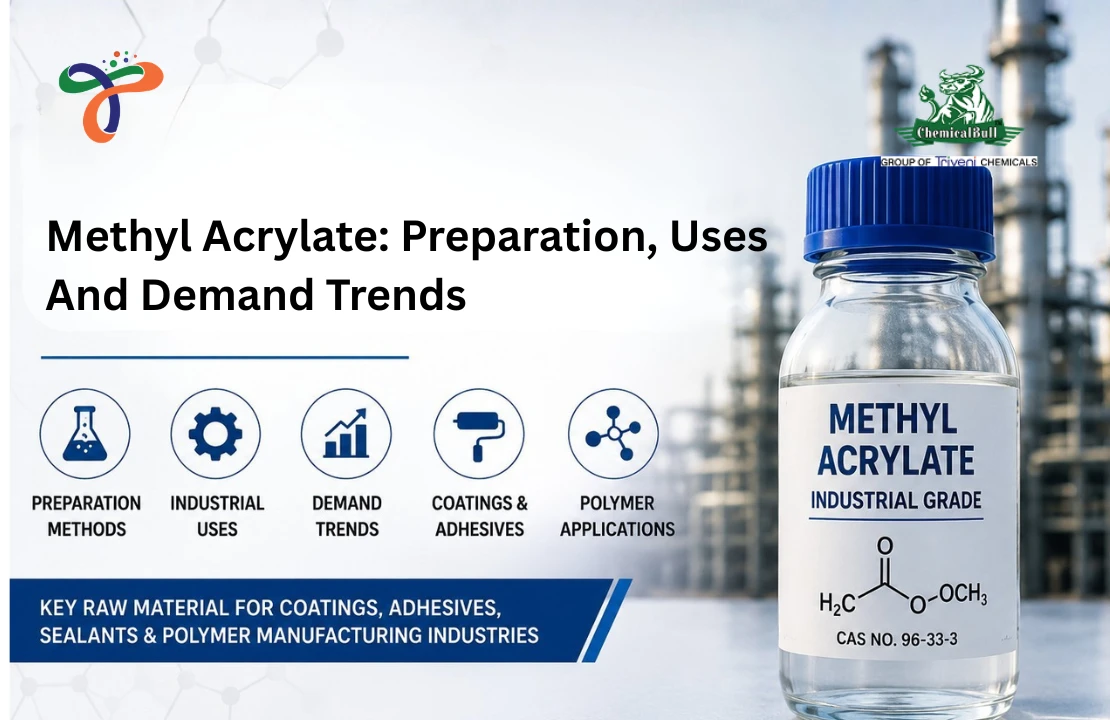
Methyl Acrylate is an important industrial chemical widely used in the production of polymers, coatings, adhesives, textiles, and specialty chemical intermediates. It belongs to the acrylate ester family and is known for its high reactivity, making it a key raw material in many chemical manufacturing processes.
Due to its versatility, methyl acrylate has become a core compound in modern polymer chemistry and industrial formulations. The demand for this chemical continues to grow globally because of expanding applications in paints, plastics, and construction materials.
In this blog, we will cover everything about methyl acrylate, including methyl acrylate CAS No, solubility behavior, preparation methods, pricing trends, industrial usage, and common technical questions.
What is Methyl Acrylate?
Methyl Acrylate is a clear, colorless liquid with a strong characteristic odor. It is an ester derived from acrylic acid and methanol and is highly reactive in polymerization reactions.
- Chemical Formula: C₄H₆O₂
- CAS No: methyl acrylate, CAS No: 96-33-3
- Chemical Category: Acrylate ester monomer
- Nature: Highly flammable, reactive organic compound
Because of its fast polymerization ability, methyl acrylate is widely used as a building block in the production of acrylic resins and emulsions.
Industrial Applications of Methyl Acrylate
The demand for methyl acrylate is driven by its broad industrial applications.
1. Paints and Coatings Industry
Methyl acrylate is used in coatings to improve flexibility, durability, and resistance to weather conditions. It enhances surface performance and longevity.
2. Adhesives and Sealants
It is widely used in adhesive formulations where strong bonding and elasticity are required.
3. Textile Industry
In textiles, methyl acrylate improves fiber finishing, softness, and chemical resistance.
4. Plastic and Polymer Manufacturing
It is a key monomer in the production of acrylic polymers, copolymers, and specialty plastics.
5. Chemical Intermediates
Methyl acrylate is also used as a raw material for synthesizing various downstream chemicals.
Methyl Acrylate Solubility
The methyl acrylate solubility property plays an important role in its industrial applications.
- Slightly soluble in water
- Highly soluble in organic solvents like alcohols, ethers, and hydrocarbons
- Compatible with many polymer systems
Because of this solubility behavior, methyl acrylate is widely used in solvent-based coatings and emulsion polymer systems.
How to Prepare Methyl Acrylate
The industrial production process answers the question: how to prepare methyl acrylate.
Methyl acrylate is typically produced through esterification of acrylic acid with methanol in the presence of an acid catalyst. The process includes:
- Reaction of acrylic acid with methanol
- Acid catalyst addition
- Controlled temperature reaction
- Separation and purification
- Stabilization for safe storage
This process must be carefully controlled because methyl acrylate is highly reactive and can polymerize easily if not stabilized properly.
Does Shellac Contain Methyl Acrylate?
A common industrial question is: Does shellac contain methyl acrylate
The answer is No. Shellac is a natural resin derived from lac insects and does not contain methyl acrylate. However, in modern coatings, synthetic acrylate-based polymers may be used as substitutes or performance enhancers compared to natural resins like shellac.
Methyl Acrylate Price Trends
The methyl acrylate price is influenced by several global and regional factors:
- Cost of raw materials like acrylic acid and methanol
- Crude oil price fluctuations
- Demand from coatings, adhesives, and polymer industries
- Supply chain and production capacity
- Import-export dynamics
In general, methyl acrylate prices are highly sensitive to petrochemical market conditions. When raw material costs rise, the methyl acrylate price also increases accordingly.
Global Market Overview
The global demand for methyl acrylate continues to grow steadily due to its strong presence in industrial applications.
Key growth drivers include:
- Expansion of the construction industry
- Growth in automotive coatings
- Increasing demand for flexible plastics
- Rising use in adhesives and sealants
Asia-Pacific is the leading region for methyl acrylate consumption due to rapid industrialization and strong manufacturing sectors.
Safety and Handling Information
Methyl acrylate is a highly flammable and reactive chemical, so proper handling is necessary:
- Store in cool, dry, and well-ventilated areas
- Avoid exposure to heat or open flames
- Use proper protective equipment during handling
- Prevent polymerization by using stabilizers
Proper safety measures ensure safe industrial usage and storage.
👉 You can also buy chemical product from our methyl acrylate supplier page for bulk supply and industrial procurement needs.
Frequently Asked Questions (FAQs)
1. What is methyl acrylate used for?
Methyl acrylate is used in coatings, adhesives, textiles, plastics, and polymer production.
2. What is the methyl acrylate CAS number?
The methyl acrylate CAS No is 96-33-3.
3. What is methyl acrylate solubility?
It is slightly soluble in water and highly soluble in organic solvents.
4. How is methyl acrylate prepared?
It is prepared through the esterification of acrylic acid with methanol using an acid catalyst.
5. Does shellac contain methyl acrylate?
No, shellac does not naturally contain methyl acrylate.
Comment Section