Chemical Bull
2044
19-Aug-2025
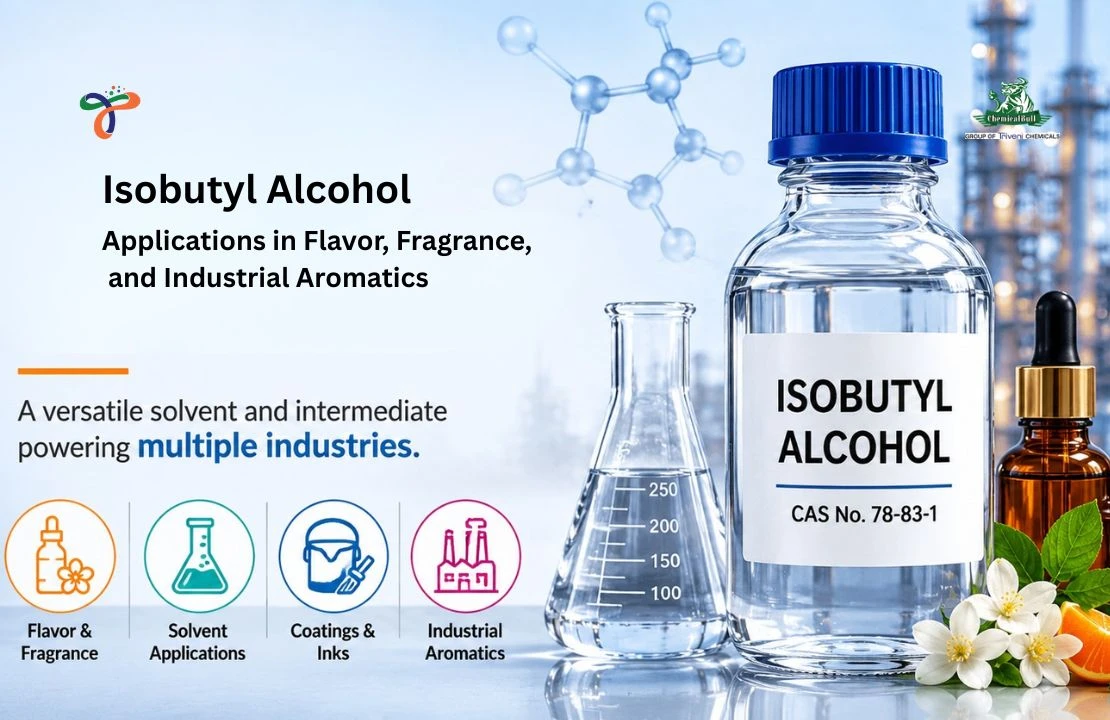
Isobutyl Alcohol: Applications in Flavor, Fragrance, and Industrial Aromatics
The "Must-Read" Guide for Industrial Formulators
In the world of fine chemicals, Isobutyl Alcohol (CAS 78-83-1), also known as isobutanol, is a versatile primary alcohol and a critical industrial intermediate. At Chemical Bull, we recognize that while it is often noted for its sharp, musty scent, its true value lies in its role as a high-performance solvent and a fundamental precursor for the aroma industry. For procurement managers, process engineers, and formulators, understanding the technical nuances of isobutanol is key to optimizing production and ensuring formulation stability.
What is Isobutyl Alcohol?
Isobutyl Alcohol is a branched-chain primary alcohol with the chemical formula CH32CHCH2OH. Physically, it appears as a clear, colorless, and mobile liquid. Unlike straight-chain alcohols (like n-butanol), the branched structure of isobutanol confers unique physical properties, including moderate volatility and enhanced solvency power. It serves as a vital component in both fine chemical synthesis and heavy-duty industrial applications.
Why Use Isobutyl Alcohol & Where is it Used?
The decision to utilize isobutyl alcohol is driven by its exceptional performance-to-cost ratio in solvent-based systems.
-
Why Use It? It provides a "sweet spot" evaporation profile—slower than isopropyl alcohol but faster than heavier alcohols—which is critical for high-quality film formation. Its ability to act as a latent solvent makes it a preferred choice for complex resin systems.
-
Where is it Used? It is extensively used in the manufacturing of high-performance coatings, pharmaceutical extraction, chemical synthesis of esters, adhesives, and cleaning formulations.
Key Characteristics: Technical Overview
|
Property |
Typical Value/Description |
|
Appearance |
Clear, Colorless Liquid |
|
Boiling Point |
108∘C |
|
Purity |
99.5% |
|
Solubility |
Partial in water, Complete in organic solvents |
|
Molecular Weight |
74.12 g/mol |
Core Benefits for Industrial Operations
Modern manufacturing facilities prioritize high-purity isobutanol for several operational advantages:
-
Superior Leveling: It promotes uniform surface tension in paints and coatings, eliminating defects like "orange peel" or pinholes.
-
Enhanced Fragrance Stability: In the aroma industry, it ensures that volatile fruity notes don’t degrade or separate over time.
-
Cost-Efficient Extraction: Its low viscosity and moderate volatility allow for high-efficiency liquid-liquid extraction, reducing cycle times in pharmaceutical synthesis.
-
Predictable Reactivity: As a reliable precursor for esters, it provides consistent yields, helping factories maintain high throughput.
The Chemistry of Aroma: A Strategic Deep Dive
Isobutyl alcohol is a "hidden" powerhouse in the flavor and fragrance sector:
-
Foundation for Fruity Esters: It is the primary building block for synthesizing fruity esters (such as Isobutyl Acetate and Isobutyl Formate via esterification. These esters are essential for creating authentic banana, berry, and apple notes.
-
Bridging & Diffusion: It acts as a crucial "bridging agent," harmonizing diverse scent molecules and ensuring a smooth, uniform fragrance profile.
-
Sillage & Longevity: Due to its evaporation profile, it provides a "lift" to delicate floral notes, significantly improving the longevity and diffusion (sillage) of perfumes.
Industrial Versatility: The "Workhorse" Solvent
Beyond the fragrance lab, isobutanol’s physical properties make it indispensable:
-
Paints & Coatings: Used as a latent solvent in automotive lacquers and wood finishes, preventing blushing even in high-humidity conditions.
-
Pharmaceuticals: Its balanced hydrophilic/hydrophobic nature makes it an ideal extraction solvent for antibiotics and other active pharmaceutical ingredients (APIs).
-
Lubricant Engineering: Acts as a reactive component in creating high-performance anti-wear additives, essential for engine and machine longevity.
Market Application Matrix
|
Application Sector |
Role of Isobutyl Alcohol |
|
Paints & Inks |
Solvent, Leveling Agent |
|
Precursor for Fruity Esters |
|
|
Pharmaceuticals |
Extraction & Reaction Solvent |
|
Adhesives |
Resin Viscosity Modifier |
Global Procurement & Supply Chain Excellence
As dedicated Isobutyl Alcohol manufacturers, we ensure lot-to-lot reproducibility, which is essential for industrial-scale operations. Our supply chain is built for reliability; we act as your primary Isobutyl Alcohol suppliers for all raw material feedstocks, while our network of expert Isobutyl Alcohol distributors provides the localized technical support you need. For large-scale manufacturing units, we serve as high-capacity Isobutyl Alcohol wholesalers to ensure your production lines never face downtime. Every batch is accompanied by a technical COA (Certificate of Analysis) to guarantee purity standards (99.5%).
Safety, Handling, and Regulatory Compliance
-
Storage: Store in a cool, dry, well-ventilated warehouse, kept strictly away from heat, sparks, or open flames.
-
Safety Protocols: Always use non-sparking tools and appropriate PPE (nitrile gloves, eye protection).
-
Compliance: We ensure full adherence to REACH and IFRA guidelines for all chemical shipments.
Related Products
To streamline your broader factory procurement, cross-source these highly compatible compounds:
-
n-Propanol: A premium primary alcohol carrier for high-purity applications.
-
Butyl Acrylate: Used in adhesives to impart strength and elasticity.
-
Ethyl Acetate: A common fruity ester often paired with isobutyl derivatives.
-
Isobutyraldehyde: The essential precursor for synthesizing high-value fruity esters.
Frequently Asked Questions (FAQ)
-
What is the primary industrial role of isobutyl alcohol?
It is a versatile solvent in coatings, adhesives, and inks, and a precursor for fruity esters. -
Is it used directly in perfumes?
No, it acts as a carrier, solvent, and blending agent to improve scent diffusion. -
Why is it called an "Aroma Enhancer"?
Because it is a building block for the fruity esters used in food and fragrance. -
Is it safe for food applications?
Yes, it is permitted as a flavoring agent under regulatory guidelines, provided it meets strict purity standards. -
How do I ensure quality?
Always source from verified Isobutyl Alcohol manufacturers who provide a COA and adhere to global safety standards.
Conclusion: Driving Performance with High-Purity Isobutyl Alcohol
In the competitive landscape of chemical manufacturing, selecting the right raw material is a strategic choice for performance. From its critical role as a precursor in the production of vibrant fruity esters to its utility as a leveling solvent in high-end coatings, High Purity Isobutyl Alcohol remains a cornerstone of modern efficiency. By leveraging its balanced evaporation profile, superior solvency, and reactive versatility, manufacturers can achieve tighter control over their formulation outcomes. Elevate your formulation standards today by sourcing from proven industry leaders.
Comment Section