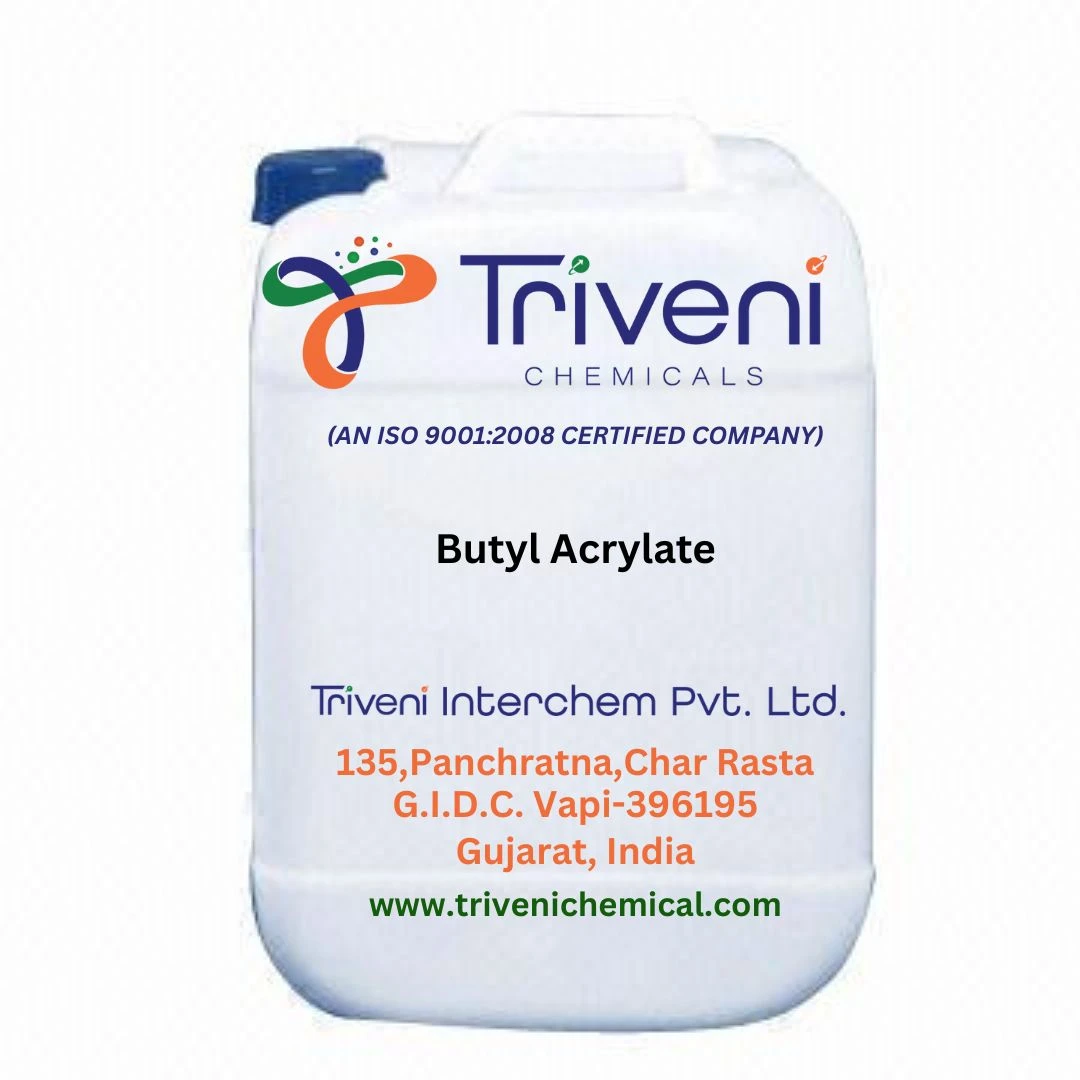
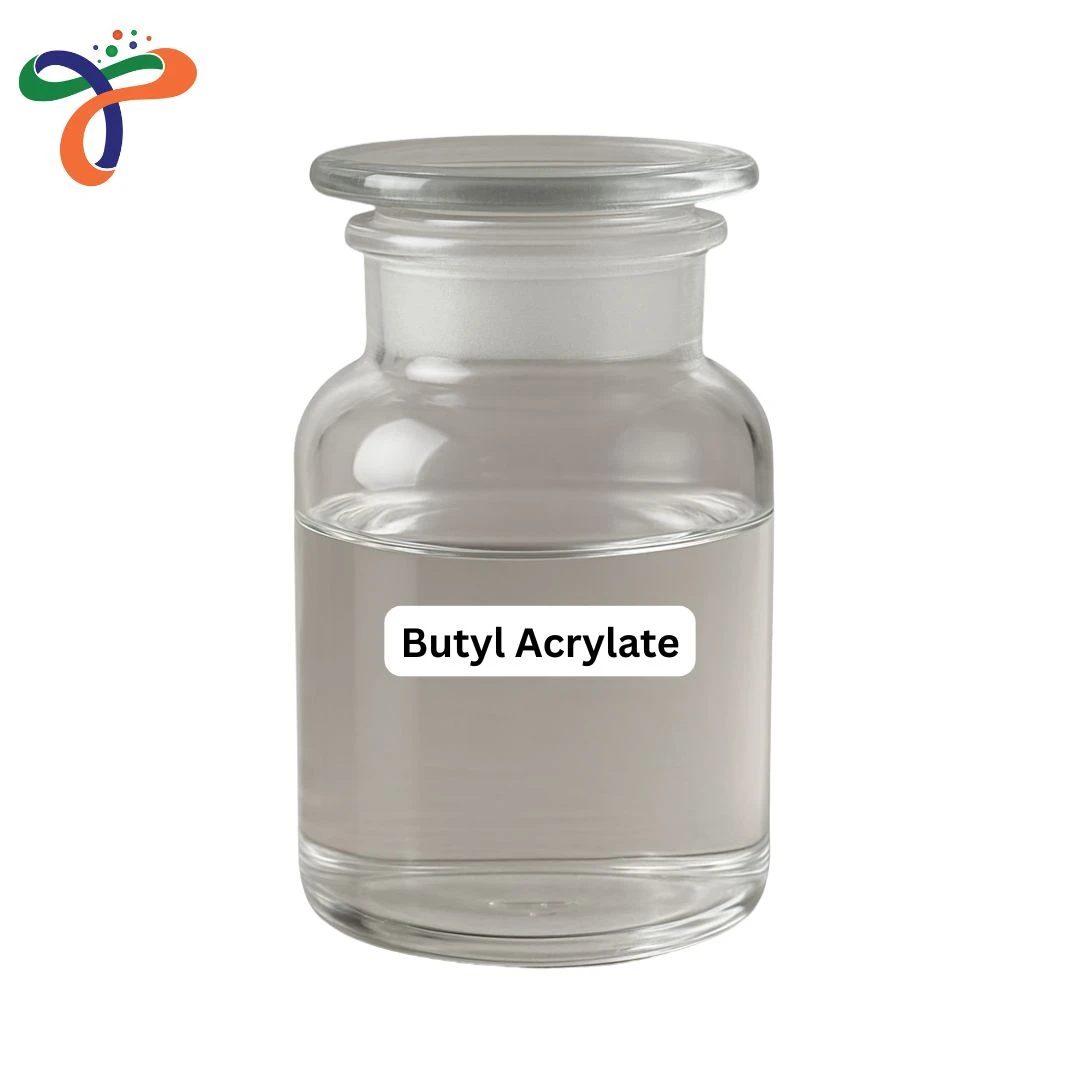
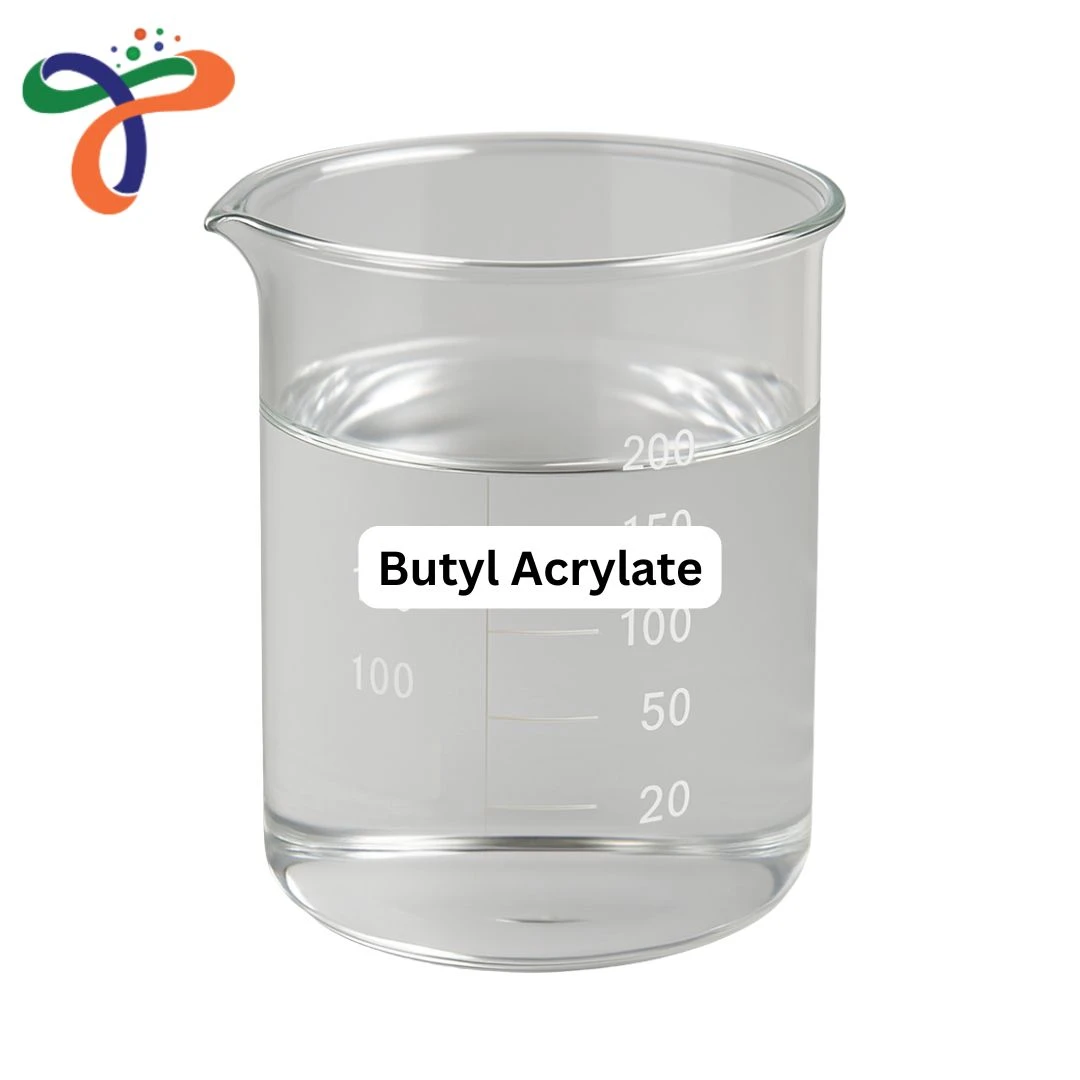
Butyl Acrylate | 141-32-2
Cas No :
141-32-2
Synonyms :
Molecular Weight :
128.17
Molecular Formula :
C7H12O2 / CH2=CHCOOC4H9
Boiling Point :
145 °c
Melting Point :
-64 °c
Flash Point :
37 °c
Solubility :
Alcohol, Acetone, Ether
Grade :
Liquid
Description :
Butyl Acrylate Suppliers, Manufacturers & Distributors for Industrial Use
Overview:
Chemical Bull is a trusted Butyl Acrylate supplier, manufacturer, and distributor providing high-quality bulk Butyl Acrylate to industrial buyers across India and internationally.
Butyl Acrylate is an essential chemical used in the plastics and rubber industry, particularly in the production of acrylic resins, adhesives, coatings, and elastomers. We provide industrial-grade Butyl Acrylate to meet your specific production requirements.
With competitive pricing, reliable quality, and fast delivery, Chemical Bull ensures sourcing Butyl Acrylate is safe, efficient, and hassle-free. For safety and handling guidance, buyers can refer to the MSDS (Material Safety Data Sheet).
Why Choose Chemical Bull for Butyl Acrylate?
-
Trusted B2B Supplier & Trader:
Connecting manufacturers, distributors, and wholesalers with high-quality Butyl Acrylate. -
Bulk Supply for Industrial Needs:
Flexible packaging and bulk shipments available. -
Verified Quality:
ISO standards compliance ensures reliable industrial-grade products. -
Fast & Secure Delivery:
Efficient logistics with secure packaging for all orders. -
Competitive Pricing:
Flexible payment options for bulk buyers.
Applications of Butyl Acrylate
Butyl Acrylate is widely used in the plastics and rubber industry:
-
Plastics Industry:
Used in acrylic resins and polymers for enhanced flexibility and durability -
Rubber Industry:
Improves the elasticity and processing of synthetic rubber and elastomers -
Adhesives & Coatings:
Key ingredient in high-performance adhesives, paints, and coatings -
Chemical Intermediates:
Used in the synthesis of acrylate copolymers and other industrial chemicals
B2B Buyers We Serve
We cater to:
- Plastic & Rubber Manufacturers needing bulk Butyl Acrylate for production
- Distributors & Wholesalers sourcing high-quality industrial chemicals
- Industrial Units requiring a consistent supply for elastomer, resin, and adhesive manufacturing
Frequently Asked Questions (FAQ)
Q1: What is Butyl Acrylate used for?
A: Butyl Acrylate is used in the plastics and rubber industry for acrylic resins, synthetic rubber, adhesives, coatings, and as a chemical intermediate in polymer production.
Q2: Is Butyl Acrylate harmful to the body?
A: Industrial-grade Butyl Acrylate is hazardous if inhaled, ingested, or comes into contact with skin. Proper handling, storage, and MSDS guidance should always be followed.
Q3: Is Butyl Acrylate safe in food?
A: No, Butyl Acrylate is strictly an industrial chemical and should not be used in food applications.
Related Products
You may also be interested in other industrial chemicals from Chemical Bull, such as Methyl Acrylate, Ethyl Acrylate, Acrylic Acid, and Dioctyl Phthalate (DOP), all available in bulk with trusted quality and fast delivery.
Request Your Quote Today
Ensure an uninterrupted supply of bulk Butyl Acrylate for your plastics and rubber manufacturing needs.
Request Bulk Quote | Contact Us for Inquiry
ChemicalBull supplies Butyl Acrylate across India, serving customers in Andhra Pradesh, Arunachal Pradesh, Assam, Bihar, Chhattisgarh, Goa, Gujarat, Haryana, Himachal Pradesh, Jharkhand, Karnataka, Kerala, Madhya Pradesh, Maharashtra, Manipur, Meghalaya, Mizoram, Nagaland, Odisha, Punjab, Rajasthan, Sikkim, Tamil Nadu, Telangana, Tripura, Uttar Pradesh, Uttarakhand, and West Bengal, as well as the Union Territories of Andaman & Nicobar Islands, Chandigarh, Dadra & Nagar Haveli and Daman & Diu, Delhi, Jammu & Kashmir, Ladakh, Lakshadweep, and Puducherry. We serve pharmaceutical, chemical, research, academic, laboratory, manufacturing, and industrial customers with reliable nationwide delivery.