Chemical Bull
31
25-Jul-2026
Why Ethylene Glycol Monostearate Matters in Personal Care Formulations
Modern cosmetic and personal care formulations are judged as much on look and feel as on performance. A shampoo that lathers well but looks thin and watery, or a lotion that feels rich but appears dull, often fails to meet consumer expectations. This is where visual and textural modifiers like Ethylene Glycol Monostearate come in.
Ethylene Glycol Monostearate (EGMS) is a widely used pearlescent and opacifying agent that gives shampoos, lotions, and creams their signature shine, body, and premium visual appeal. For cosmetic formulators and procurement teams sourcing a reliable Ethylene Glycol Monostearate Supplier, understanding its function, applications, and handling requirements is essential to building consistent, high-quality formulations.
Quick Answer
Ethylene Glycol Monostearate is a wax-like cosmetic ingredient commonly listed under the INCI name Glycol Stearate. It is used in shampoos, conditioners, body washes, liquid soaps, lotions, and creams to create opacity, develop a pearl-like appearance, and contribute to formulation body and texture under suitable processing conditions.
Quick Overview
|
Property |
Description |
|
INCI Name |
Glycol Stearate |
|
Common Name |
Ethylene Glycol Monostearate (EGMS) |
|
CAS Number |
111-60-4 |
|
Ingredient Type |
Pearlescent agent, opacifier, viscosity modifier |
|
Primary Functions |
Pearlescence, opacifying, thickening, emulsion stabilization |
|
Common Applications |
Shampoos, conditioners, body washes, lotions, creams, liquid soaps |
|
Typical Users |
Cosmetic manufacturers, personal care brands, contract manufacturers, formulation labs |
What Is Ethylene Glycol Monostearate?
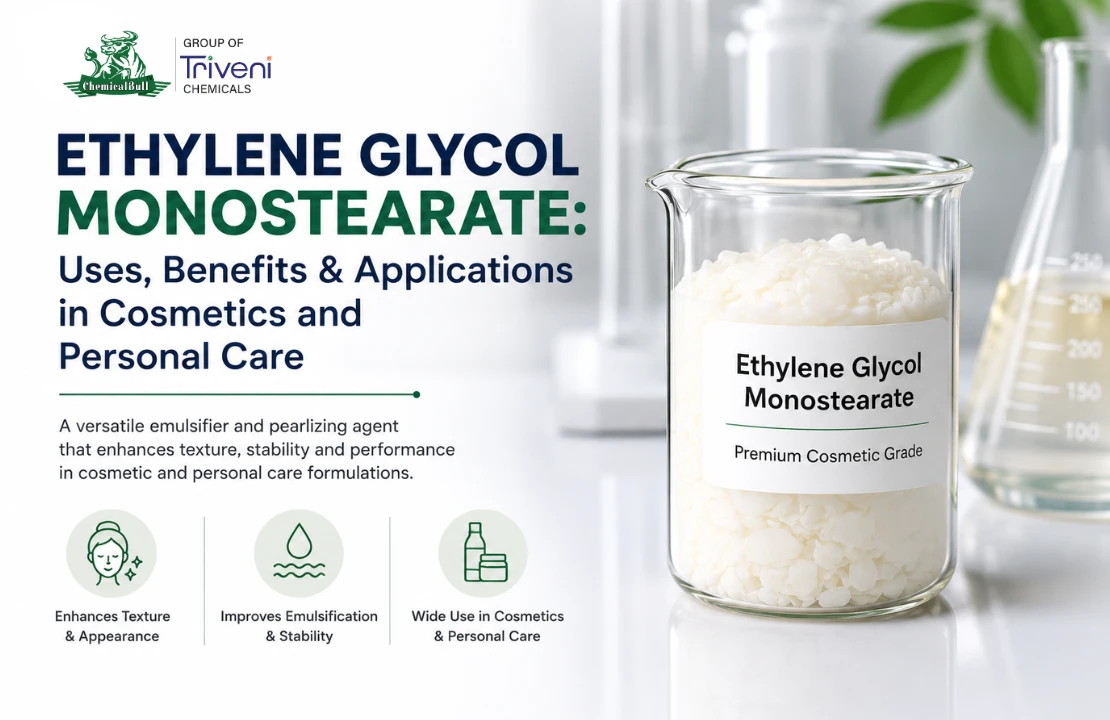
Ethylene Glycol Monostearate is an ester produced from ethylene glycol and stearic acid. It generally appears as a white to off-white waxy solid and is valued in cosmetic formulations for its ability to form fine crystalline structures that scatter light.
This light-scattering effect produces the soft, pearl-like appearance commonly seen in shampoos, body washes, liquid soaps, and selected lotion systems.
Beyond its visual role, EGMS may contribute to opacity, formulation body, viscosity, and emulsion structure. Its actual performance depends on the material grade, monoester-to-diester ratio, surfactant system, emulsifier system, dosage, and manufacturing process.
Commercial Glycol Stearate grades may contain varying proportions of monoester, diester, free stearic acid, or self-emulsifying components. Formulators should therefore review the supplier’s specification and Technical Data Sheet rather than relying only on the common ingredient name.
What Is Ethylene Glycol Monostearate Used For?
Ethylene Glycol Monostearate is used in personal care formulations to create a pearlescent or creamy appearance, reduce transparency, and support product texture. It is commonly evaluated in shampoos, conditioners, body washes, liquid soaps, lotions, and creams where visual richness and consistent formulation body are important.
Ethylene Glycol Monostearate vs Glycol Distearate
Formulators often confuse EGMS (a monoester) with Glycol Distearate (a diester), since both are used as pearlescent agents. The table below outlines the key differences.
|
Formulation Factor |
Ethylene Glycol Monostearate |
Glycol Distearate |
|
Ester Type |
Monoester of stearic acid |
Diester of stearic acid |
|
Pearl Intensity |
Moderate, softer pearl effect |
Stronger, more defined pearl effect |
|
Viscosity Contribution |
Moderate thickening |
Higher thickening potential |
|
Typical Use Level |
Slightly higher dosing needed for visible pearl |
Lower dosing achieves similar pearl effect |
|
Common Applications |
Shampoos, lotions, creams, liquid soaps |
Shampoos, shower gels, high-pearl formulations |
Both ingredients are frequently evaluated together during formulation trials, and the choice often depends on the desired pearl intensity and final product viscosity target.
Core Functions of EGMS in Formulations
Pearlescence
EGMS crystallizes into fine platelets upon cooling, scattering light to create the pearl or lustrous sheen consumers associate with premium shampoos, body washes, and lotions.
Opacifying
In clear surfactant bases, EGMS is used to convert a transparent formulation into an opaque, cream-like appearance without altering the core cleansing or conditioning system.
Viscosity Building
The waxy structure of EGMS contributes to formulation thickness, supporting a richer, more substantial texture in shampoos and lotions.
Emulsion Stabilization
In leave-on products such as creams and lotions, EGMS supports emulsion stability by reinforcing the structure of the oil-in-water system.
How EGMS Performs Across Different Formulation Types
Shampoos and Conditioners
EGMS is widely evaluated in shampoos and conditioners to create opacity and a pearl-like finish. It may also contribute to a richer product appearance and support formulation thickness.
EGMS is generally melted and dispersed during the heated processing stage. Its characteristic pearlescent structure develops during controlled cooling.
Body Washes and Liquid Soaps
In body wash formulations, EGMS is used to build opacity and a creamy visual appearance, helping differentiate premium products from clear, basic formulations. It also supports a slightly richer foam texture when combined with primary surfactants.
Lotions and Creams
In leave-on emulsions, EGMS functions less as a pearlizing agent and more as a co-emulsifier and viscosity modifier, helping stabilize the cream structure and improve spreadability. These benefits are formulation-dependent and require a suitable primary emulsifier, oil phase, stabilizer system, and processing method.
Formulator's Note
EGMS performance is strongly influenced by manufacturing conditions.
It should generally be incorporated under heated conditions above the melting range stated in the supplier’s Technical Data Sheet. Many commercial grades may be processed within an approximate range of 55°C to 70°C, but the exact temperature should be confirmed from the product specification.
The material should be fully melted and dispersed before controlled cooling begins.
Cooling rate can affect crystal formation and final appearance. Slow and controlled cooling may help develop a more uniform pearl effect, while uncontrolled or rapid cooling may lead to uneven appearance, larger crystals, or graininess.
Performance should also be validated in low-pH systems because acidity, surfactant composition, heat exposure, and storage conditions may influence long-term ester stability, viscosity, and pearl appearance.
Benefits for Personal Care Manufacturers
When used correctly, EGMS may help manufacturers achieve:
- A richer and more premium product appearance
- Improved opacity
- Better control over pearl intensity
- More consistent visual quality
- Greater differentiation between clear and pearlized products
- Support for product body and texture
- Improved batch-to-batch appearance when processing is controlled
Its commercial value is not limited to visual appeal. A consistent pearl finish can improve consumer perception and help personal care brands maintain uniformity across production runs.
Sourcing EGMS for Formulation Batches
Pearl consistency is one of the most visible quality indicators in a finished shampoo, body wash, or liquid soap. Uneven or dull appearance may quickly be identified during quality control.
Consistency begins with the selected raw material grade and supplier specification. Variations in ester composition, melting behaviour, purity, and physical form may influence processing and final formulation appearance.
Chemical Bull supplies Ethylene Glycol Monostearate subject to current availability and commercial confirmation for cosmetic manufacturers, personal care brands, contract manufacturers, and formulation laboratories.
Source Ethylene Glycol Monostearate for Personal Care Production
Contact Chemical Bull to request current availability, bulk packaging details, product documents, and a commercial quotation for Ethylene Glycol Monostearate.
Frequently Asked Questions
-
What does Ethylene Glycol Monostearate actually do in a formulation?
It builds the pearlescent visual effect and adds opacity and thickness, primarily through the crystalline platelets it forms as the formulation cools after processing. -
Is EGMS the same thing as Glycol Stearate?
Yes — Glycol Stearate is simply the INCI listing for Ethylene Glycol Monostearate. It's a separate compound from Glycol Distearate, a diester with a stronger, more concentrated pearl effect. -
At what stage of manufacturing is EGMS added?
During the hot-processing phase, above its melting point of roughly 55–60°C, so it disperses evenly before the batch is cooled to develop its pearl structure. -
Does EGMS work in leave-on products, or only rinse-off?
Both. In rinse-off products it's mainly a pearlizing agent; in leave-on lotions and creams it shifts role toward co-emulsifier and viscosity support. -
How much EGMS should go into a formulation?
Most formulations fall between 0.5% and 3.0%, though the right number depends on the pearl intensity you're targeting and the base you're formulating into — lab trials are the only way to confirm it for a specific batch. -
Where can I source EGMS in bulk for commercial production?
EGMS is available through cosmetic raw-material suppliers in bulk quantities, typically with supporting documentation such as a Technical Data Sheet and Certificate of Analysis. ChemicalBull supplies EGMS in bulk for manufacturers, and formulation labs — reach out for current stock and quotation.
Conclusion
Ethylene Glycol Monostearate is widely evaluated in shampoos, conditioners, body washes, liquid soaps, lotions, and creams to create opacity, pearlescence, and a richer product appearance.
Depending on the selected grade and formulation, it may also contribute to viscosity, product body, and emulsion structure. Consistent performance depends on raw-material composition, dosage, heating conditions, surfactant compatibility, and controlled cooling.
Manufacturers should confirm final use levels and processing conditions through laboratory trials and the supplier’s current technical documentation.
For bulk requirements, contact Chemical Bull to request product specifications, availability, packaging information, and a commercial quotation for Ethylene Glycol Monostearate.
Comment Section