Butyl Acetate: Properties,market,applications And Industrial Importance
Introduction
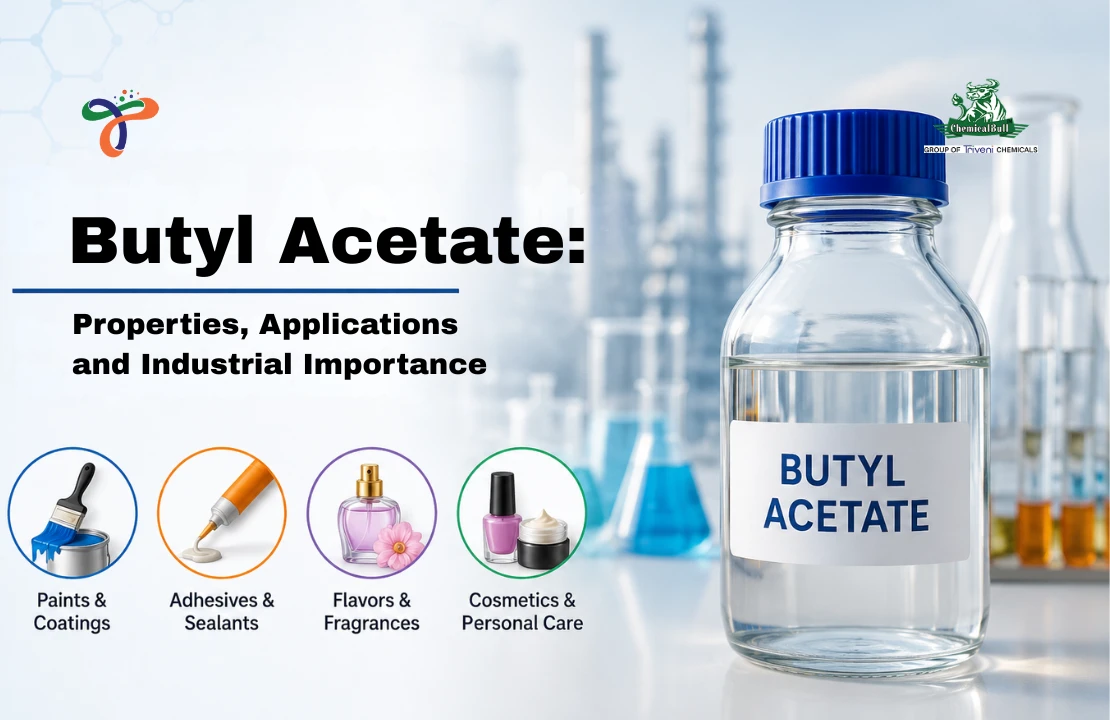
Butyl Acetate is one of the most important industrial solvents used across coatings, adhesives, fragrances, cosmetics, automotive refinishing, and specialty chemical manufacturing worldwide. Known for its strong solvency power, balanced evaporation rate, and broad industrial compatibility, Butyl Acetate plays a major role in improving formulation quality and manufacturing efficiency.
Industries prefer Butyl Acetate because it supports smooth application, controlled drying, stable processing, and superior finish performance across multiple industrial systems. From industrial paints and protective coatings to perfume manufacturing and cosmetic formulations, this versatile solvent continues to be an essential raw material in modern manufacturing operations.
With growing demand from coatings, automotive, and specialty chemical industries, the global Butyl Acetate market continues to expand significantly across industrial sectors.
What is Butyl Acetate?
Butyl Acetate, also known as n-Butyl Acetate, is an organic ester solvent produced through the reaction of butanol and acetic acid. It appears as a clear, colourless liquid with a characteristic fruity odour and is widely recognised for its excellent dissolving properties.
It is commonly used in formulations that require:
- Fast yet controlled drying
- Strong resin compatibility
- Smooth film formation
- Stable processing performance
- High-quality surface finish
Its balanced evaporation behaviour makes it highly suitable for industrial coating systems, adhesives, fragrances, and cosmetic applications.
General specification of Butyl Acetate
The Butyl Acetate structure belongs to the ester family, which contributes to its strong solvency characteristics and broad industrial compatibility. It is recognised for its clear appearance, fruity odour, and strong dissolving properties.
Chemical Characteristics:
|
Property |
Details |
|
Chemical Name |
Butyl Acetate |
|
Chemical Family |
Ester Solvent |
|
Appearance |
Clear Colourless Liquid |
|
Odour |
Fruity |
|
Solubility |
Slightly Soluble in Water |
|
Industrial Function |
Solvent |
Its controlled evaporation profile allows manufacturers to achieve smooth processing and improved formulation consistency across industrial applications.
Industrial Manufacturing Overview for Butyl Acetate
Importance in Paints & Coatings
The paints and coatings industry is one of the largest consumers of Butyl Acetate. It is widely used because it improves resin solubility, coating flow, leveling, and surface finish quality.
Manufacturers commonly use Butyl Acetate in:
- Automotive coatings
- Industrial paints
- Wood finishes
- Decorative coatings
- Protective coatings
Its balanced drying behaviour supports smooth film formation and enhanced gloss development during application.
Applications in Adhesives & Sealants
Butyl Acetate is also extensively used in adhesive and sealant manufacturing where controlled drying and strong solvency are required.
Benefits in Adhesive Systems
- Improved formulation consistency
- Better workability
- Smooth application performance
- Enhanced drying control
Its compatibility with multiple polymer systems makes it suitable for industrial adhesive manufacturing.
Automotive Refinishing Insights
The automotive refinishing sector requires solvents capable of delivering smooth coating application, consistent drying, and premium finish quality. Butyl Acetate is commonly used in automotive paint formulations because it supports high-performance coating systems.
Why Automotive Manufacturers Use Butyl Acetate
■ Improved Surface Finish
It enhances coating smoothness and gloss appearance.
■ Controlled Evaporation
Balanced drying helps reduce coating defects and supports uniform finish quality.
■ Better Resin Compatibility
It works efficiently with multiple automotive coating resin systems.
As automotive refinishing technologies continue to evolve, the demand for reliable industrial solvents remains strong.
Flavors & Fragrances Applications
Butyl Acetate is widely used in flavors and fragrance formulations due to its fruity odour profile and excellent solvency characteristics.
Role in Aroma Manufacturing
It is commonly used in:
- Fragrance blending
- Aroma compound formulations
- Flavor processing
- Perfume manufacturing
Advantages in Fragrance Systems
- Good ingredient compatibility
- Stable formulation support
- Efficient blending performance
- Smooth evaporation characteristics
Its versatility makes it valuable in both industrial fragrance and specialty aroma applications.
Cosmetics & Personal Care Applications
The cosmetics and personal care industry uses Butyl Acetate in specialty formulations requiring fast drying and smooth application properties.
Common Cosmetic Uses
- Nail polish formulations
- Nail care products
- Cosmetic coatings
- Specialty beauty formulations
Cosmetic Performance Benefits
● Fast Drying
Supports quick application and finish setting.
● Smooth Film Formation
Improves product appearance and consistency.
● Stable Formulation Performance
Supports long-term product quality.
Its solvent efficiency makes it useful in specialty cosmetic manufacturing.
Global Market Insights for Butyl Acetate
Global demand for Butyl Acetate continues to rise due to expansion in:
- Paint and coating industries
- Adhesive manufacturing
- Fragrance production
- Cosmetic manufacturing
- Industrial processing
- Packaging and printing industries
Increasing industrialisation and manufacturing growth continue to support rising solvent consumption worldwide.
Demand from Emerging Markets
Rapid industrial expansion in developing economies is increasing the requirement for high-performance solvents used in coatings, cosmetics, fragrances, and industrial formulations.
Importance of Reliable Raw Material Supply
Consistent solvent quality is important for maintaining stable formulation performance and efficient industrial manufacturing operations. Variations in purity and evaporation behaviour can directly affect production efficiency and final product quality.
Many industrial buyers therefore prefer experienced Butyl Acetate suppliers capable of providing dependable quality standards, technical documentation, bulk availability, and global export support for industrial manufacturing operations.
Future Outlook of Butyl Acetate
The future demand for Butyl Acetate is expected to remain strong due to growth in advanced coatings, industrial adhesives, fragrance manufacturing, and cosmetic formulations.
Emerging industrial trends include:
- High-performance automotive coatings
- Premium fragrance formulations
- Advanced cosmetic products
- Specialty industrial adhesives
- Industrial process optimisation
As manufacturing industries continue to focus on product quality and formulation performance, Butyl Acetate will remain an important industrial solvent across multiple sectors worldwide.
Frequently Asked Questions (FAQs)
-
What is Butyl Acetate mainly used for?
Butyl Acetate is mainly used as a solvent in paints, coatings, adhesives, fragrances, cosmetics, printing inks, and industrial chemical manufacturing. -
Why is Butyl Acetate important in paints and coatings?
It improves coating flow, gloss development, drying performance, and surface finish quality. -
Can Butyl Acetate be used in fragrance manufacturing?
Yes, it is widely used in fragrance and aroma formulations because of its fruity odour and excellent solvency properties. -
Is Butyl Acetate used in cosmetic applications?
Yes, it is commonly used in nail polish and specialty cosmetic formulations because of its fast drying and smooth film-forming properties. -
What industries use Butyl Acetate?
Industries including paints, coatings, adhesives, fragrances, cosmetics, specialty chemicals, and industrial manufacturing extensively use Butyl Acetate.
Conclusion
Butyl Acetate continues to play an important role in modern industrial manufacturing because of its strong solvency power, balanced evaporation rate, and broad industrial compatibility. From coatings and adhesives to cosmetics, fragrances, and automotive refinishing systems, it supports stable formulation performance and efficient processing across multiple industries.
As industrial manufacturing technologies continue to evolve globally, Butyl Acetate will remain an essential solvent in advanced formulation and production systems worldwide.