Chemical Bull
2186
13-Jan-2026
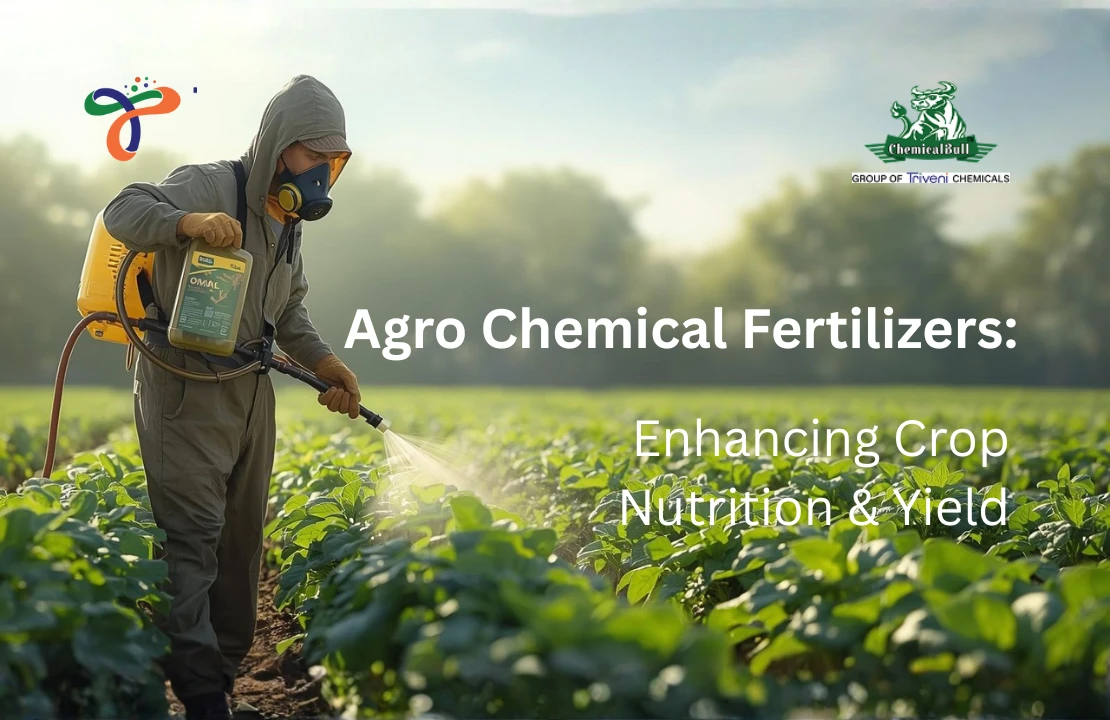
Modern agriculture is dependent on efficiently managing nutrients to ensure the productivity of crops and to meet world demand for food. Agrochemical fertilizers are vital tools to support healthy crops, maximising yields and guaranteeing consistent production across different farming methods.
For manufacturers of agrochemicals, knowing the chemical composition of fertilizers as well as application techniques is essential to serve the agriculture industry effectively.
What is Agro Chemical Fertilizers?
Agrochemical fertilisers are nutritional formulations that are designed to enhance the fertility of soils and supply crop plants with vital elements needed to ensure the best development. These scientifically created products offer precise levels of essential nutrients required by plants in various stages of growth.
A key component in agricultural chemicals, Fertilizers help with pest control and growth regulators for plants to aid in the implementation of a comprehensive system for managing crops.
Primarily, nutrients offered through agrochemical fertilizers are :
- N (N) to promote the growth of plants and for protein production
- Phosphorus (P) to encourage root growth as well as energy transfer
- Potassium (K) helps with the prevention of disease and water regulation
- Secondary nutrients such as magnesium, calcium and sulfur
- Micronutrients that include the minerals iron, zinc and manganese
Why Agro Chemical Fertilizers Matter
The soils of agricultural land under constant cultivation suffer from nutrient loss, which leads to lower crop yield. If fertilisation is not adequate, the most advanced farming techniques are not able to produce optimal results.
Fertilizers made of agrochemicals tackle the most pressing agricultural issues:
- Replenishing depleted soil nutrients effectively
- Correcting specific nutrient deficiencies
- Supporting intensive crop production systems
- Enabling greater yields per hectare
In those in the Agrochemical business creating fertiliser solutions that work is the top priority for ensuring the global security of food.
Different types of Chemical Fertilisers
Nitrogen-Based Fertilizers
Nitrogen fertilizers stimulate plant growth as well as the synthesis of protein in the plants. They are crucial for vegetables, cereals and commercial crops in which rapid growth of the leaf is crucial.
Common forms include:
- Urea (46% N)
- Ammonium nitrate (33-34% N)
- Ammonium sulfate (21% N)
- Calcium ammonium nitrate
Phosphorus-Based Fertilizers
The phosphorus helps to support the development of roots as well as energy transfer and reproductive functions. Fertilizers containing phosphorus are essential for seedlings during the development and the flowering stage.
Key products include:
- Single Super Phosphate (SSP)
- Triple Super Phosphate (TSP)
- Diammonium Phosphate (DAP)
- Monoammonium Phosphate (MAP)
Potassium-Based Fertilizers
Potassium increases resistance to disease as well as water control and improves overall quality of crops. Potassium Schoenite is an essential potent source of potassium and magnesium that can provide a myriad of nutrients.
Some other forms that are commonly used are:
- Muriate of Potash (MOP)
- Potash Sulfate (SOP)
- Potassium nitrate
Complex and compound Fertilizers
NPK fertilizers mix various nutrients in precise amounts that meet the requirements of crops. They provide convenience and balanced nutrition with just a few application.
The most popular formulations are:
- 10-26-26 to promote balanced growth
- 20-20-20 for general purposes
- 19-19-19 for vegetable crops
- Blends that are custom-made based on soil tests
Micronutrient Fertilizers
Although they are required in lesser amounts but micronutrients are crucial to perform specific functions in plants. Deficiencies could have a major impact on the health of crops, even if sufficient macronutrients are available.
Essential micronutrients include:
- Zn (Zn) as catalyst for activating enzymes
- Iron (Fe) to form chlorophyll
- Manganese (Mn) for photosynthesis
- Copper (Cu) for growth in reproduction
- Boron (B) to assist in the development of cells.
Specialty Fertilizers
Seaweed Liquid and other bio-stimulant products contain amino acid, hormones as also trace elements that aid in nutrition absorption as well as enhance the ability of plants to handle the effects of stress.
Benefits include:
- Improves the effectiveness of the absorption of nutrients
- Capacity for stress is increased
- Better root development
- More beneficial function of microbes
What is the function of Agrochemical Fertilizers?
Agrochemical fertilisers work by providing abundant nutrients which plants take in through their roots. Different formulas release nutrients at different amounts, which allows farmers to adjust the availability of nutrients to the demand for their crops.
Other release mechanism:
- Water-soluble fertilizers provide immediate availability
- Slow-release formulas finish the nutrient supply over a period of weeks
- Controlled-release products control the release of soil-based conditions
- Foliar fertilizers supply the nutrients directly to the absorption of leaf matter
Effectiveness depends on:
- Proper application timing
- Dosage correct based upon soil tests
- Appropriate placement methods
- Soil pH and humidity conditions
The benefits Of Agro Chemical Fertilizers
Utilizing strategically Agrochemical fertilizers can bring significant benefits throughout the entire value chain for agricultural products.
Economic benefits:
- Improved yields on crops (30-50 percentage improvement could be potential)
- Enhances the quality of crops and its market worth
- Reduced production costs per unit output
- Greater Return on Investment
Agronomic benefits:
- Enhanced efficiency of nutrient usage
- More uniform crop growth in the fields
- Allow farming on soils with marginal fertility
- Support intensive agricultural systems
To the agrochemical industry within Gujarat, Vapi as well as across India producing consistently top-quality fertilizers is crucial to ensuring credibility among farmers and distributors.
Comprehensive Agro Chemical Products
Modern agriculture relies on an integrated approach that combines fertilisers with complementary products to protect crops and optimise growth.
Key agrochemical categories:
- NPK compounds and straight fertilizers
- Speciality nutrients and bio-stimulants
- 2-Chlorobenzonitrile as an agrochemical intermediate
- Seaweed Liquid for crops
This comprehensive approach to agrochemicals & crop science ensures crops receive both proper nutrition and adequate protection throughout their growth cycle.
Selecting the Right Fertilizer Products
Choosing appropriate agro chemical fertilizers requires understanding several critical factors.
Selection criteria:
- Soil testing to identify nutrient levels and deficiencies
- Crop-specific requirements at different growth stages
- Local soil types and climate conditions
- Product quality and nutrient concentrations
- Cost-effectiveness and availability
Working with established agrochemical manufacturers provides access to quality products, technical support, and application guidance.
Home Agro Chemicals and Fertilizers
The market for home agro chemicals and fertilizers has expanded as more individuals engage in home gardening and small-scale farming operations.
Products for home use:
- Small package sizes (500g to 5kg)
- Ready-to-use liquid formulations
- Specialised products for ornamentals and vegetables
- Lawn and turf nutrition products
Best practices for home users:
- Follow all label directions carefully
- Use appropriate protective equipment
- Securely store your products away from pets and children.
- Apply fertilizers in accordance with the recommended rate
Application Best Practices
A proper use of fertilizers derived from agrochemicals maximizes their advantages while minimizing the environmental and cost.
Key practices include:
- Applications for timing to track your crop's growth ge
- Utilizing soil tests to establish the rates
- Incorporating fertilizers into soil to reduce losses
- Looking at split applications for more effectiveness
- Monitoring crop responses and adapting applications
In the field of agrochemicals, continuous education is essential to ensure that products can be effective across a variety of farming methods.
Environmental Considerations
Although Agrochemical fertilisers are crucial in modern farming, their the responsible use of them is crucial to ecological sustainability.
Environmental concerns:
- Runoff of nutrients to waters bodies
- Groundwater contamination
- Soil acidification
- Greenhouse gas emissions
Sustainable management practices:
- A precise application that is built on the needs of crops
- Using slow-release formulations
- Integrating organic matter
- Implementing proper irrigation management
- Adopting integrated nutrient approaches
The role of Quality Manufacturers
The efficiency of Agrochemical fertilizers rests greatly on the manufacturing process's quality and the consistency of their use.
What reliable manufacturers provide:
- Rigorous quality control systems
- Consistent nutrient concentrations
- Compliance with regulatory standards
- Technical support for distributors and farmers
- Transparent labelling and documentation
Triveni Chemicals works closely with the agrochemical industry to supply quality chemical inputs that support fertilizer manufacturing. Our commitment to consistency and reliable supply chains enables manufacturers to produce effective products that farmers can trust.
Future Trends in Fertilizer Technology
The fertilizer industry continues evolving in response to technological advances and environmental concerns.
Emerging innovations:
- Nano-fertilizers for improved efficiency
- Smart fertilizers with controlled release
- Bio-enhanced formulations
- Precision agriculture technologies
- Climate-resilient products
Conclusion
Agro chemical fertilizers are indispensable tools for modern agriculture, providing essential nutrients that crops need to produce abundant yields. Understanding the types of agro chemical fertilizers, their benefits, and proper application methods enables farmers and agricultural businesses to make informed decisions that improve productivity and profitability. For manufacturers, distributors, and farmers, partnering with reliable suppliers ensures access to quality products and technical expertise. As agriculture continues to evolve, agro chemical fertilizers will remain central to feeding a growing global population while supporting sustainable farming practices.
At Triveni Chemicals, we are the supplier of high-quality chemical inputs to the agrochemical industry, supporting manufacturers who produce the fertilisers and crop protection products that modern agriculture relies on.


Comment Section