Chemical Bull
92
09-Sep-2026
Home Care Chemicals for Cleaner Manufacturing
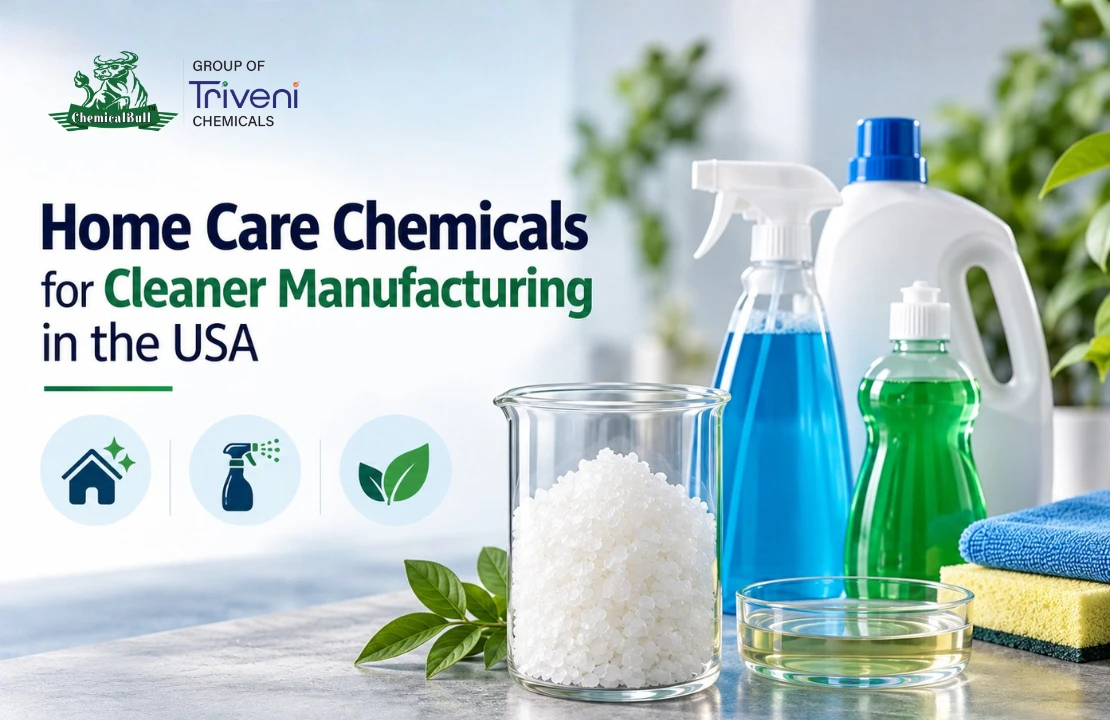
Formulating an effective surface cleaner, disinfectant, or degreaser starts with choosing the right combination of raw materials, surfactants for cleaning power, builders for alkalinity, and active ingredients for disinfection. US cleaner manufacturers rely on a consistent supply of these building-block chemicals to keep production running and finished products performing the way customers expect.
Chemical Bull supplies home care chemicals in bulk quantities with competitive pricing, and working with an established home care chemical distributor gives US formulators access to the surfactants, builders, and disinfectant actives their cleaner formulations depend on.
Top-Demand Home Care Chemicals for Cleaner Manufacturing
- Linear Alkyl Benzene Sulfonic Acid 96%: A primary anionic surfactant base widely used in surface cleaners and detergents for strong grease-cutting and cleaning performance.
- Sodium Dodecylbenzenesulfonate Powder: A versatile anionic surfactant used across dishwashing liquids, surface cleaners, and multipurpose cleaning formulations.
- Alpha Olefin Sulfonate 35-40%: Known for excellent foaming properties, commonly used in dishwashing and hand cleaning formulations.
- Sodium Tripolyphosphate Technical Grade: A builder chemical that enhances cleaning performance by softening water and boosting surfactant efficiency.
- Sodium Metasilicate 95%: Provides alkalinity and grease-cutting power, commonly used in heavy-duty and institutional cleaning formulations.
- Sodium Percarbonate Powder: An oxygen-based bleaching agent used in stain removers and color-safe cleaning formulations.
- Didecyldimethylammonium Chloride 80%: A quaternary ammonium compound widely used as a disinfectant active in surface sanitizers and disinfectant sprays.
- Sodium Dichloroisocyanurate Granules 60%: A stable chlorine-releasing disinfectant used in sanitizing and hard-surface disinfectant formulations.
- Calcium Hypochlorite Powder: A widely used bleaching and disinfecting agent in household and institutional cleaning products.
- Borax Powder: Used as a cleaning booster and mild alkaline agent in multipurpose cleaner and laundry formulations.
Choosing the Right Surfactant Blend for Your Cleaner Type
Not every cleaner formulation calls for the same surfactant combination, and getting this blend right affects both performance and cost efficiency:
- Heavy-duty degreasers: Typically lean on LABSA for strong grease-cutting power, often combined with a secondary surfactant to improve rinsability.
- Everyday multipurpose cleaners: Often use a milder SDBS-based system, balancing cleaning power with gentler surface compatibility.
- Dishwashing formulations: Prioritize foam-generating surfactants like AOS, since consumers strongly associate foam with perceived cleaning effectiveness.
- Low-foam institutional cleaners: Used in machine washing or specific commercial applications where excess foam can interfere with equipment performance, requiring a different surfactant selection strategy entirely.
Formulators developing a new product line often start with a base surfactant system and adjust the blend during small-batch testing to hit their target viscosity, foam profile, and cleaning performance before scaling to bulk production.
Understanding Builder Chemistry in Cleaner Formulations
Builders play a supporting but essential role in most cleaning formulations, and understanding how they function helps explain why certain raw materials show up repeatedly across different cleaner types:
- Water softening function: Builders like STPP and sodium metasilicate sequester calcium and magnesium ions in hard water, preventing them from interfering with surfactant performance.
- pH buffering: Alkaline builders help maintain a formulation's target pH range, which is often critical for both cleaning performance and product stability over shelf life.
- Soil suspension: Certain builders help keep dislodged dirt and grease suspended in the cleaning solution rather than redepositing onto the surface being cleaned.
- Cost efficiency: Because builders enhance surfactant efficiency, formulators can often achieve equivalent cleaning performance while using a lower overall surfactant load, which can meaningfully affect per-unit production cost at scale.
Disinfectant Actives: What US Formulators Should Know
Disinfectant and sanitizing products occupy a more regulated space than general-purpose cleaners, since their active ingredients need to meet specific efficacy standards:
- EPA registration considerations: Finished disinfectant products making germ-killing claims typically require EPA registration, and the specific active ingredient and concentration used affect the registration process.
- Quat-based systems (DDAC): Quaternary ammonium compounds are widely used in ready-to-use sprays and wipes due to their broad-spectrum efficacy and relatively favorable safety profile for consumer-facing products.
- Chlorine-based systems (SDIC, calcium hypochlorite): Offer strong, fast-acting disinfection, commonly used in institutional and food-service disinfecting applications where rapid kill times matter.
- Stability considerations: Disinfectant actives can degrade over time or under certain storage conditions, so formulators should confirm expected shelf-life performance with their raw material supplier before finalizing a product's stability claims.
Why These Chemicals Matter in Cleaner Formulations
|
Raw Material Category |
Functional Role |
Example Products |
|
Anionic Surfactants |
Provide primary cleaning and grease-cutting power |
LABSA, SDBS, AOS |
|
Builders |
Improve water hardness tolerance and boost surfactant efficiency |
STPP, Sodium Metasilicate, Borax |
|
Bleaching/Oxidizing Agents |
Remove stains and support whitening performance |
Sodium Percarbonate, Calcium Hypochlorite |
|
Disinfectant Actives |
Provide germ-killing and sanitizing performance |
DDAC, SDIC Granules |
Applications Across Home Care Cleaner Categories
-
Surface and Floor Cleaners:
Rely on anionic surfactants and builders to lift dirt, grease, and grime from hard surfaces. -
Disinfectant Sprays and Wipes:
Use quaternary ammonium compounds or chlorine-releasing actives to deliver germ-killing performance. -
Dishwashing Liquids:
Combine foaming surfactants like AOS with cleaning agents to cut through grease and food residue. -
Toilet Bowl and Bathroom Cleaners:
Use a mix of surfactants, acids, and disinfectant actives to remove stains, scale, and bacteria. -
Multipurpose and Institutional Cleaners:
Blend builders and surfactants for versatile cleaning power across commercial and residential surfaces.
What to Look for When Sourcing Home Care Chemicals
-
Consistent Active Content:
Confirm the supplier can maintain consistent active percentages (such as surfactant or available chlorine content) across repeat batches. -
Documentation Support:
Request a Certificate of Analysis (CoA), Safety Data Sheet (SDS), and Technical Data Sheet (TDS) for each raw material. -
Bulk Packaging Options:
Confirm the supplier can support drum, bag, or bulk tanker packaging suited to your production volume. -
Regulatory Compliance:
For disinfectant actives in particular, confirm the material meets applicable EPA registration and labeling requirements for your finished product category. -
Reliable Lead Times:
Since cleaner manufacturing often runs on continuous production schedules, confirm the supplier's track record for on-time bulk delivery. -
Sample Availability:
Request a trial quantity of a new raw material before committing to bulk volumes, allowing your team to validate performance in your specific formulation.
Frequently Asked Questions
-
What are the most commonly used chemicals in cleaner manufacturing?
Anionic surfactants like LABSA, SDBS, and AOS, along with builders like STPP and sodium metasilicate, and disinfectant actives like DDAC and SDIC, are among the most widely used raw materials. -
What role do builders play in cleaning formulations?
Builders improve water hardness tolerance and boost surfactant efficiency, helping cleaning formulations perform consistently across different water conditions while reducing overall surfactant load. -
Which chemicals are used for disinfectant formulations?
Quaternary ammonium compounds like DDAC and chlorine-releasing compounds like SDIC or calcium hypochlorite are commonly used as disinfectant actives in surface sanitizers. -
Do disinfectant products require EPA registration?
Finished products making disinfectant or germ-killing claims typically require EPA registration in the US, and the choice of active ingredient affects that registration process. -
Does Chemical Bull supply home care chemicals in bulk for US manufacturers?
Yes, Chemical Bull supplies home care chemicals in bulk quantities with competitive pricing, supporting US cleaner manufacturers with documentation and reliable supply. -
What documentation should I request when sourcing cleaning raw materials?
At minimum, request a Certificate of Analysis, Safety Data Sheet, and Technical Data Sheet for each raw material before use in your formulation.
Conclusion
Building an effective cleaner formulation starts with sourcing the right combination of surfactants, builders, and disinfectant actives from a reliable supplier. Chemical Bull supplies home care chemicals in bulk quantities with competitive pricing, helping US manufacturers source the raw materials their cleaning, disinfecting, and sanitizing formulations depend on.
Comment Section



