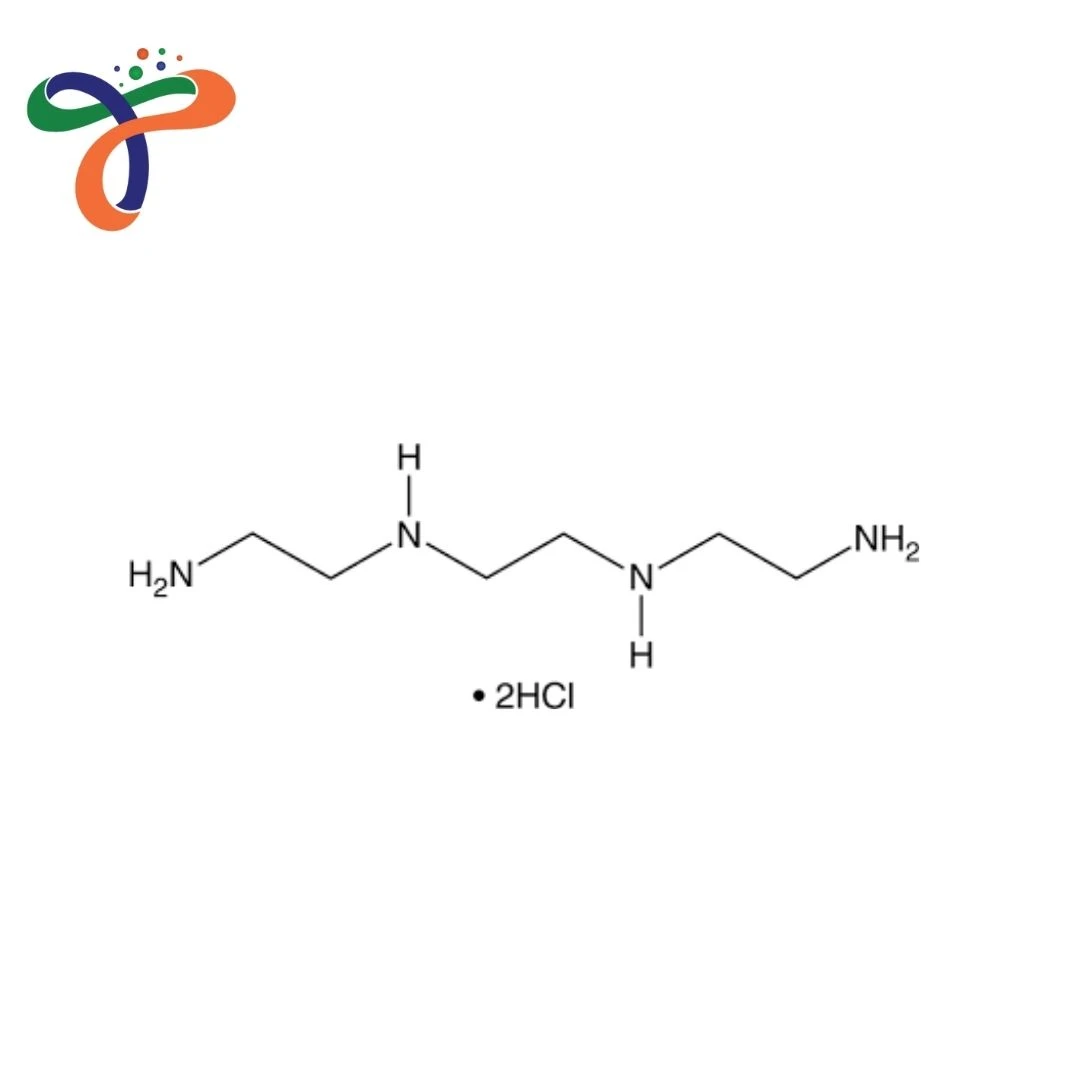
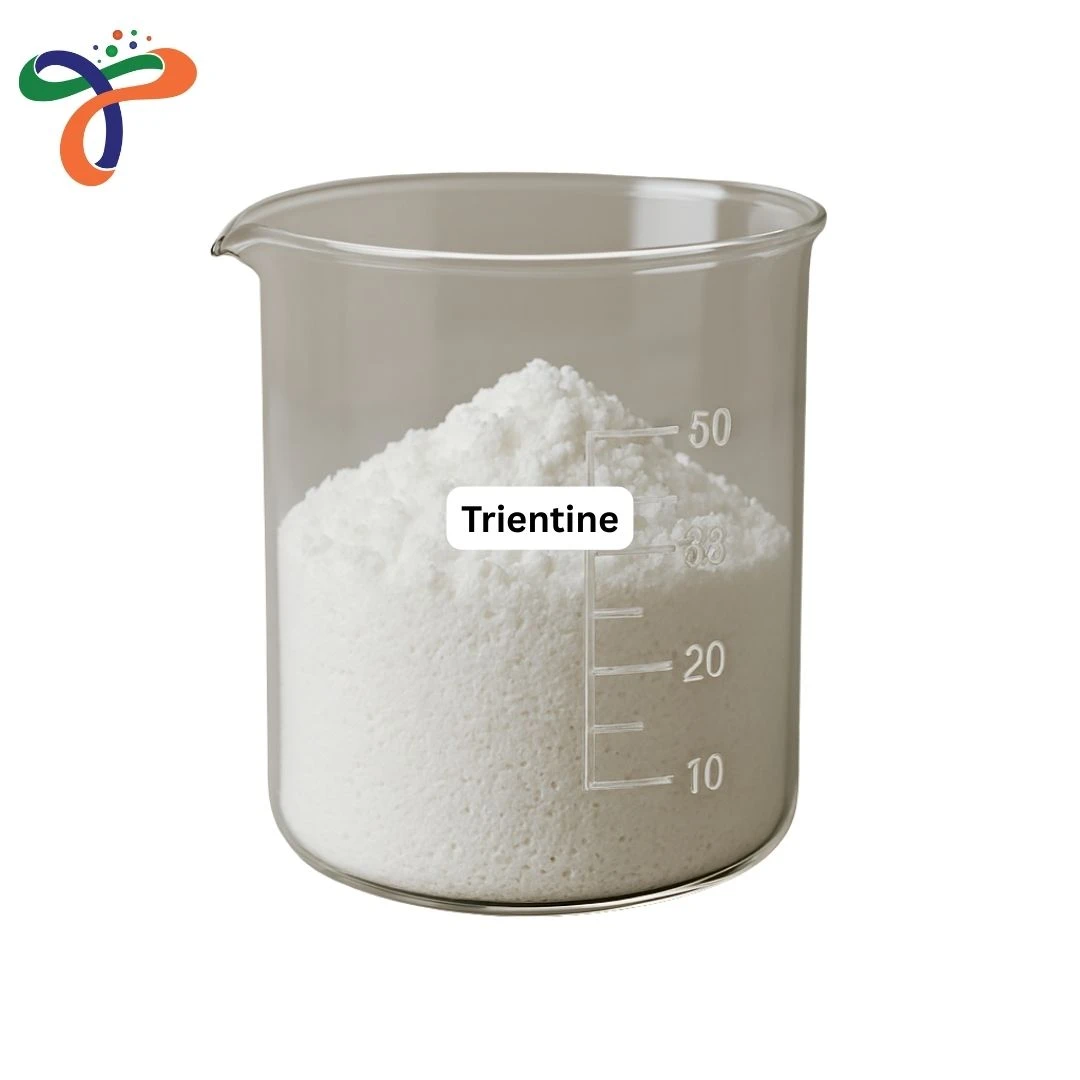
Trientine | 112-24-3
Cas No :
112-24-3
Form :
Powder
Molecular Weight :
146.24 G/mol
Molecular Formula :
C6H18N4
Boiling Point :
300 °c
Melting Point :
176 °c
Flash Point :
140 °c
Solubility :
Soluble In Water; Soluble In Ethanol
Description :
Trientine Suppliers & Manufacturers in India
Trientine is a copper-chelating compound used in pharmaceutical formulations for managing Wilson’s disease, a genetic disorder that causes excess copper to accumulate in the body. It works by binding copper and helping the body eliminate it through urine.
Also known as triethylenetetramine, Trientine is available in different chemical forms, including trientine dihydrochloride and trientine tetrahydrochloride. The specific form is important when evaluating product identity, purity, specifications, and suitability for pharmaceutical applications.
Trientine is an important pharmaceutical ingredient because of its copper-binding properties. Pharmaceutical manufacturers and procurement teams evaluate its quality specifications, assay, impurity profile, storage requirements, and supporting documentation before sourcing it for regulated applications.
Chemical Bull supports business enquiries for Trientine and pharmaceutical chemicals, helping buyers explore sourcing options based on their required grade, specifications, quantity, and documentation needs.
Applications of Trientine
1. Copper Chelation Formulations
Trientine is used in pharmaceutical formulations designed to manage excess copper in the body. Its chelating action enables it to bind copper ions and promote their elimination. The specific formulation and therapeutic use depend on the chemical form and applicable regulatory approvals.
2. Wilson’s Disease Treatment
Trientine is used in medicines for Wilson’s disease, a condition associated with impaired copper metabolism. Trientine dihydrochloride is an established treatment option, particularly for patients who cannot tolerate penicillamine, subject to the applicable product authorization and clinical guidance.
3. Pharmaceutical Formulation Development
Pharmaceutical research and formulation teams evaluate Trientine based on its chemical identity, purity, stability, and compatibility with the intended formulation. The selected grade and salt form must meet the relevant pharmaceutical specifications and regulatory requirements.
4. Chelation Research and Development
Trientine is also investigated in scientific research involving copper metabolism and related biological processes. Research applications require suitable material specifications, appropriate laboratory controls, and compliance with relevant research protocols.
5. Pharmaceutical Raw Material Procurement
Pharmaceutical manufacturers and procurement teams assess Trientine suppliers based on product specifications, batch consistency, quality documentation, packaging, and supply reliability. These considerations help buyers evaluate whether a material is suitable for their intended pharmaceutical requirements.
Trientine Specifications and Quality Considerations
When sourcing Trientine, buyers should confirm the exact chemical form and review the applicable product documentation before placing an order.
Important evaluation parameters include:
- Chemical identity: Confirm whether the requirement is for trientine dihydrochloride, trientine tetrahydrochloride, or another specified form.
- Purity and assay: Review the product specification and applicable acceptance limits.
- Impurity profile: Check relevant impurity limits and analytical requirements.
- Documentation: Request an available Certificate of Analysis (COA), Safety Data Sheet (SDS), and other relevant quality documents.
- Storage and packaging: Follow the product-specific storage conditions and recommended packaging requirements.
- Regulatory suitability: Confirm that the material meets the applicable pharmacopoeial, regulatory, and intended-use requirements.
The required specifications should be confirmed before procurement, as they may differ according to the chemical form, grade, and intended application.
Safety and Handling Guidelines for Trientine
Trientine should be handled according to its current Safety Data Sheet and the requirements of the facility where it is used.
- Store the material under the temperature and environmental conditions specified in the product documentation.
- Keep containers tightly closed and clearly labelled.
- Use appropriate personal protective equipment, including gloves and eye protection.
- Avoid generating or inhaling dust when handling powdered material.
- Use suitable ventilation and follow established handling procedures.
- Prevent contamination during sampling, transfer, and storage.
- Dispose of unused material and packaging in accordance with applicable regulations.
For pharmaceutical applications, follow the relevant quality procedures and site-specific handling requirements.
Where to Buy Trientine?
Trientine Supplier in India
Chemical Bull provides a sourcing point for businesses looking for Trientine and other pharmaceutical chemicals. Buyers can submit their requirements to enquire about product availability, the required chemical form, grade, specifications, packaging, and supporting documentation.
Whether you are a pharmaceutical procurement professional, formulation company, or research organisation, confirming the exact product specification is an important first step in identifying a suitable supply option.
Trientine Distributor for Bulk Requirements
Businesses sourcing Trientine for pharmaceutical or research applications can contact Chemical Bull to discuss their quantity requirements and sourcing needs. Availability, packaging options, pricing, lead time, and documentation should be confirmed for the specific product and order.
To request a quotation, share the required chemical form, grade, quantity, destination, and any applicable quality or regulatory specifications.
Why Contact Chemical Bull for Trientine?
- Support for pharmaceutical chemical sourcing enquiries
- Opportunity to specify the required chemical form and grade
- Enquiries for bulk and business-to-business requirements
- Product documentation requests, subject to availability
- Quotations based on product requirements and order quantity
Contact Chemical Bull to enquire about Trientine availability, specifications, and pricing for your business requirements.
MSDS / SDS for Trientine
The Safety Data Sheet (SDS), also commonly called the Material Safety Data Sheet (MSDS), provides information about chemical hazards, safe handling, storage, exposure controls, first aid, and emergency response procedures.
Before using Trientine, review the SDS applicable to the exact chemical form and product being supplied. Buyers should request the relevant documentation from their supplier and ensure that handling procedures comply with local regulations and workplace safety requirements.
Frequently Asked Questions (FAQs)
1. What is Trientine used for?
Trientine is a copper-chelating compound used in medicines for managing Wilson’s disease. Its therapeutic use depends on the specific chemical form and the applicable approved product information.
2. What is the mechanism of action of Trientine?
Trientine binds copper ions to form complexes that can be eliminated from the body, primarily through urine. This action helps reduce excess copper accumulation.
3. What is another name for Trientine?
Trientine is associated with the chemical name triethylenetetramine. Trientine dihydrochloride is also referred to as triethylenetetramine dihydrochloride. The exact chemical form should always be confirmed when sourcing the material.
4. What is the difference between Trientine and penicillamine?
Both are copper-chelating agents used in the management of Wilson’s disease, but they have different chemical structures and safety profiles. Treatment selection depends on clinical circumstances and the advice of a qualified healthcare professional.
5. What should buyers check before purchasing Trientine?
Buyers should confirm the chemical form, required grade, assay, impurity specifications, packaging, storage conditions, available quality documentation, and regulatory requirements relevant to their intended application.
6. Can I buy Trientine in bulk from Chemical Bull?
You can contact Chemical Bull to enquire about availability and bulk sourcing requirements. Share the required chemical form, quantity, destination, and specifications to help determine whether a suitable supply option is available.
7. What documents should be requested when purchasing Trientine?
Depending on the product and intended use, buyers may request a Certificate of Analysis, Safety Data Sheet, product specification, and other applicable quality or regulatory documents. Availability should be confirmed before ordering.
8. How can I request a quotation for Trientine?
Contact Chemical Bull with your required chemical form, grade, quantity, delivery destination, and documentation requirements. The quotation and supply details can then be evaluated against your specific procurement needs.
ChemicalBull supplies Trientine across India, serving customers in Andhra Pradesh, Arunachal Pradesh, Assam, Bihar, Chhattisgarh, Goa, Gujarat, Haryana, Himachal Pradesh, Jharkhand, Karnataka, Kerala, Madhya Pradesh, Maharashtra, Manipur, Meghalaya, Mizoram, Nagaland, Odisha, Punjab, Rajasthan, Sikkim, Tamil Nadu, Telangana, Tripura, Uttar Pradesh, Uttarakhand, and West Bengal, as well as the Union Territories of Andaman & Nicobar Islands, Chandigarh, Dadra & Nagar Haveli and Daman & Diu, Delhi, Jammu & Kashmir, Ladakh, Lakshadweep, and Puducherry. We serve pharmaceutical, chemical, research, academic, laboratory, manufacturing, and industrial customers with reliable nationwide delivery.