Roxithromycin | 80214-83-1
Cas No :
80214-83-1
Form :
Solid
Molecular Weight :
837,05 G/mol
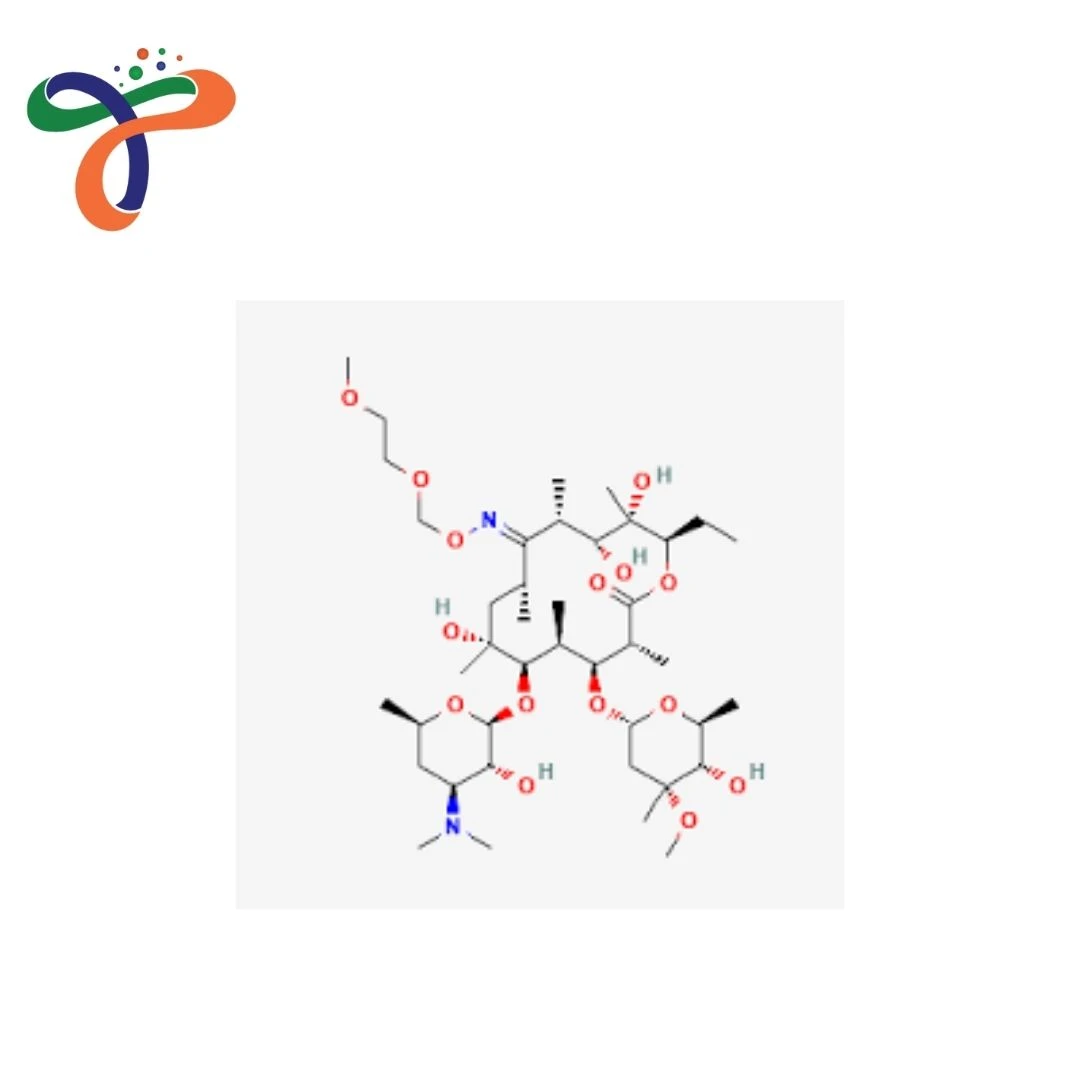
Molecular Formula :
C41H76N2O15
Melting Point :
120 °c
Description :
Overview of Roxithromycin
Roxithromycin is a semi-synthetic macrolide antibiotic used for treating respiratory tract infections, skin and soft tissue infections, and other bacterial infections. Known for its improved acid stability, better oral bioavailability, and convenient dosing compared to erythromycin, Roxithromycin is widely used in community-acquired infections and as an alternative for penicillin-allergic patients.
This API appears as a white to off-white crystalline powder with the characteristic properties of a macrolide antibiotic. Its mechanism—binding to the 50S ribosomal subunit of bacteria, inhibiting protein synthesis—provides bacteriostatic activity against a broad range of gram-positive and some gram-negative bacteria, as well as atypical organisms.
Related products include Azithromycin, Clarithromycin, Erythromycin, and other macrolide antibiotics used to treat respiratory and soft-tissue infections. It may be formulated with excipients such as Fructose to improve palatability in oral solutions.
Applications of Roxithromycin
Pharmaceutical API
- Used in antibacterial medications for respiratory tract infections
- Effective against community-acquired pneumonia, bronchitis, and sinusitis
- Applied to skin and soft tissue infections
- Used for treating sexually transmitted infections (chlamydia, mycoplasma)
- Alternative for penicillin-allergic patients
- Effective against atypical pathogens (Mycoplasma, Legionella, Chlamydia)
Formulation Development
- Used in immediate-release tablets and film-coated tablets
- Available in dispersible tablet formulations
- Oral suspension formulations for pediatric use
- Twice-daily dosing (150 mg) or once-daily (300 mg)
- Better acid stability than erythromycin
- Stable in solid dosage forms
Antibacterial Treatment
- Provides effective treatment for respiratory infections
- Good tissue penetration and intracellular concentration
- Lower incidence of GI side effects than erythromycin
- Suitable for outpatient treatment of mild to moderate infections
- Reduces treatment duration compared to some alternatives
- Good safety profile for pediatric use
Safety & Handling Guidelines
- Do not inhale fine powder
- Make sure you wear goggles, gloves, as well as protective clothes when handling
- Keep it in a dry, cool space away from light and humidity
- Be sure to follow COA and MSDS guidelines completely
Where to Buy Roxithromycin?
Roxithromycin Manufacturer
ChemicalBull supplies high-purity Roxithromycin API that meets IP/EP/USP quality standards for pharmaceutical formulations.
Roxithromycin Supplier & Distributor
- Available in bulk packing for formulation units
- Stable and high-purity grade for research and production
- COA, MSDS, and regulatory documents provided
MSDS
Includes detailed safety instructions, hazard identification, and storage guidelines.
Frequently Asked Questions (FAQs)
-
What is the Roxithromycin dosage?
Adults: 150 mg twice daily or 300 mg once daily; Children: dose based on body weight (5-8 mg/kg/day in divided doses). Duration typically 5-10 days, depending on the infection. -
What is Roxithromycin used for?
It is used for treating respiratory tract infections (pneumonia, bronchitis, pharyngitis), skin and soft tissue infections, urogenital infections, and infections caused by atypical bacteria. -
How does Roxithromycin compare to Azithromycin?
Both are macrolides with similar spectra; Azithromycin has once-daily dosing and tissue accumulation, while Roxithromycin may have better activity against some strains in established regimens.
ChemicalBull supplies Roxithromycin across India, serving customers in Andhra Pradesh, Arunachal Pradesh, Assam, Bihar, Chhattisgarh, Goa, Gujarat, Haryana, Himachal Pradesh, Jharkhand, Karnataka, Kerala, Madhya Pradesh, Maharashtra, Manipur, Meghalaya, Mizoram, Nagaland, Odisha, Punjab, Rajasthan, Sikkim, Tamil Nadu, Telangana, Tripura, Uttar Pradesh, Uttarakhand, and West Bengal, as well as the Union Territories of Andaman & Nicobar Islands, Chandigarh, Dadra & Nagar Haveli and Daman & Diu, Delhi, Jammu & Kashmir, Ladakh, Lakshadweep, and Puducherry. We serve pharmaceutical, chemical, research, academic, laboratory, manufacturing, and industrial customers with reliable nationwide delivery.