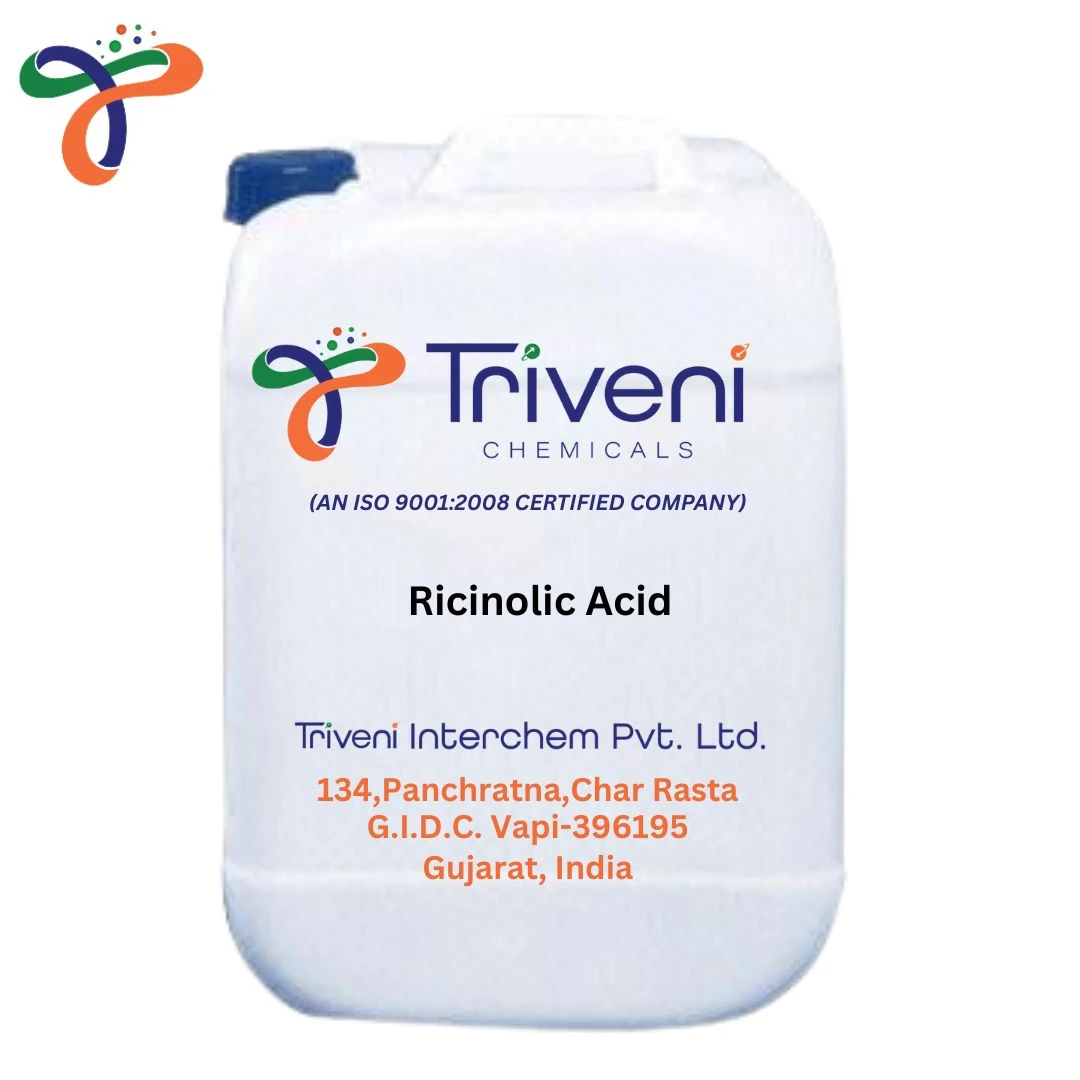
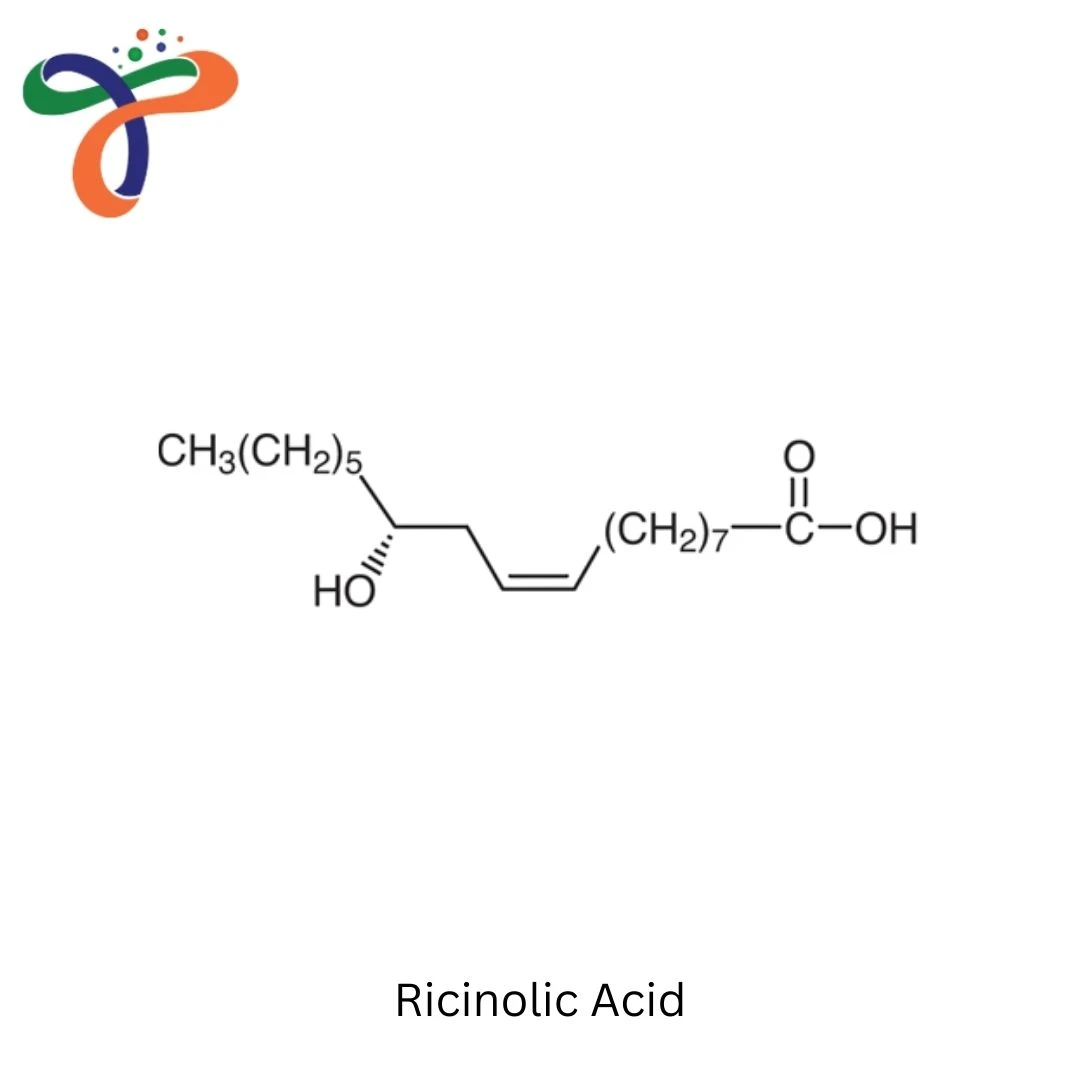
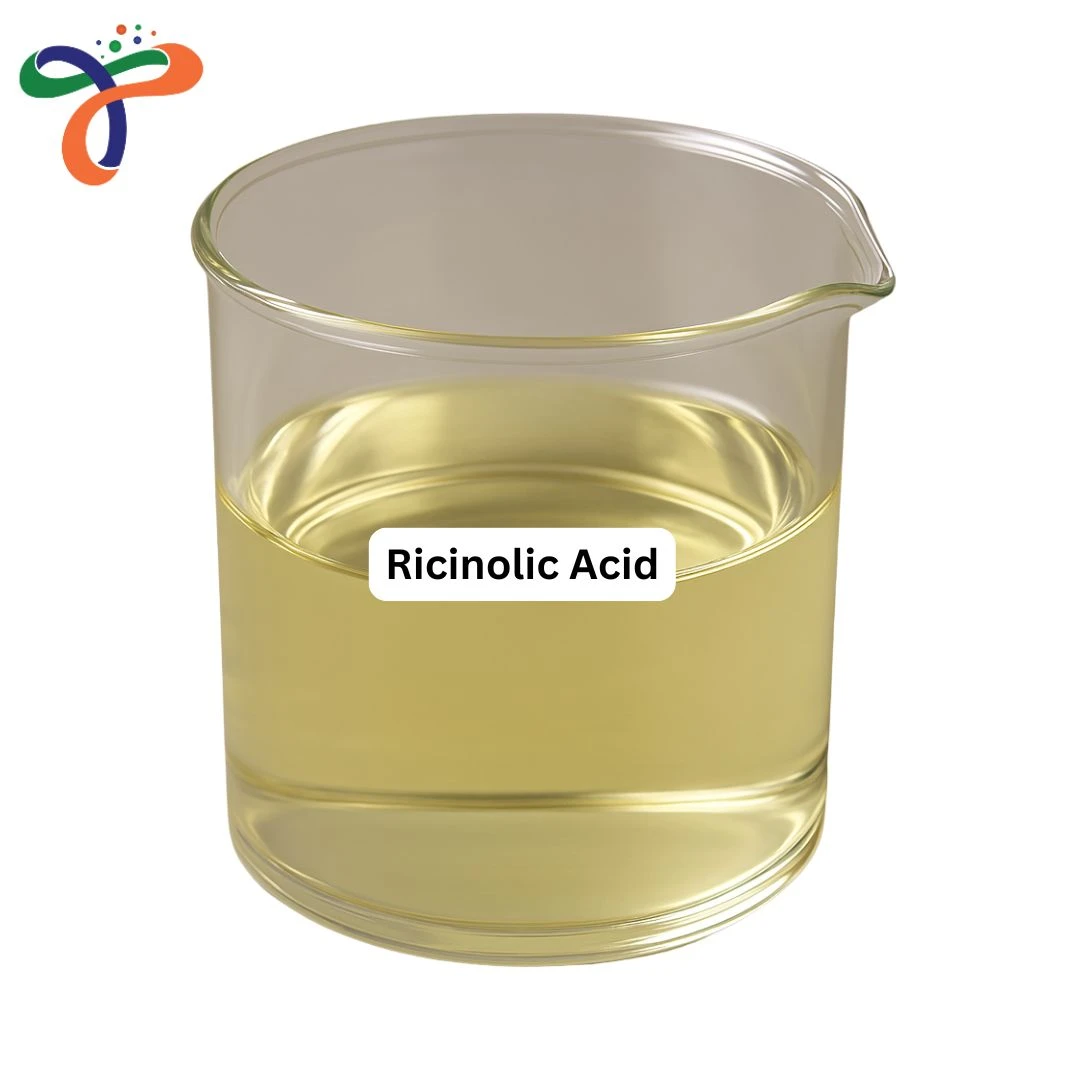
Ricinolic Acid | 141-22-0
Cas No :
141-22-0
Synonyms :
Form :
Liquid
Molecular Weight :
298.46 G/mol
Molecular Formula :
C18H34O3
Boiling Point :
245 °c
Melting Point :
22.5–24.5 °c
Flash Point :
248 °c
Solubility :
Soluble In Ethanol; Limited Solubility In Water
Description :
Overview of Ricinoleic Acid
Ricinoleic Acid is a hydroxylated fatty acid primarily derived from castor oil and widely used in personal care and home care formulations for its emollient, lubricating, and multifunctional chemical properties. It appears as a pale yellow, viscous liquid and is distinguished by its unique hydroxyl group, which provides enhanced reactivity and performance versatility.
In personal care products, Ricinoleic Acid is valued for its ability to improve skin conditioning, enhance solubility of actives, and support deodorising performance. It is commonly used in deodorants, creams, lotions, soaps, cleansing bars, and speciality cosmetic formulations. It is often formulated alongside Castor Oil, Oleic Acid, Linoleic Acid, Zinc Ricinoleate, and Glyceryl Esters to create effective and stable systems.
In home care applications, Ricinoleic Acid is used as a chemical intermediate, lubricant, and functional additive in cleaning agents, polishes, coatings, and speciality maintenance products. Its excellent lubricity and binding properties make it suitable for both household and industrial formulations.
ChemicalBull supplies quality-grade Ricinoleic Acid suitable for personal care and home care manufacturing, ensuring consistent purity, reliable performance, and dependable bulk supply.
Applications of Ricinoleic Acid
Deodorant & Odour-Control Products
-
Used in deodorant sticks, creams, and roll-ons
-
Helps neutralise and trap odour molecules
-
Often used as a precursor to Zinc Ricinoleate
Skin Care & Cosmetic Products
-
Applied in creams, lotions, and speciality emulsions
-
Provides emollient and conditioning benefits
-
Improves texture and spreadability
Soap & Cleansing Products
-
Used in soaps and cleansing bars
-
Enhances mildness and foam quality
-
Supports stable fatty acid systems
Home Care & Speciality Formulations
-
Used in polishes, lubricants, and coatings
-
Provides lubricity and binding properties
-
Acts as a functional fatty acid intermediate
Safety & Handling Guidelines
-
Store Ricinoleic Acid in a cool, dry, and well-ventilated area
-
Keep containers tightly sealed to prevent oxidation
-
Avoid prolonged exposure to heat and air
-
Use appropriate protective equipment during bulk handling
-
Follow standard industrial and cosmetic safety practices
Where to Buy Ricinoleic Acid?
Ricinoleic Acid Manufacturer
ChemicalBull supplies Ricinoleic Acid for personal care, cosmetic, and home care applications, meeting consistent quality and performance standards.
Ricinoleic Acid Supplier & Distributor
-
Bulk and customised packaging options available
-
Suitable for deodorant, cosmetic, and speciality product manufacturers
-
Reliable sourcing for domestic and international markets
-
Technical specifications and documentation provided
Explore other fatty acids and castor oil derivatives for advanced formulation solutions.
Ricinoleic Acid MSDS
The Material Safety Data Sheet (MSDS) for Ricinoleic Acid provides detailed guidance on safe handling, storage conditions, exposure controls, and emergency response measures. Users should always consult the official MSDS before handling or using the product in manufacturing and formulation processes.
Frequently Asked Questions (FAQs)
-
What is Ricinoleic Acid used for in personal care products?
It is used for skin conditioning, deodorising performance, and as a precursor for odour-control ingredients. -
Is Ricinoleic Acid derived from natural sources?
Yes, it is primarily derived from castor oil. -
Can Ricinoleic Acid be used in deodorants?
Yes, it is widely used in deodorant formulations, especially for odour neutralisation systems. -
Is Ricinoleic Acid suitable for home care products?
Yes, it is used in polishes, lubricants, and speciality cleaning formulations. -
Is Ricinoleic Acid safe for cosmetic use?
When used according to recommended guidelines and quality standards, it is considered safe for cosmetic applications.
ChemicalBull supplies Ricinolic Acid across India, serving customers in Andhra Pradesh, Arunachal Pradesh, Assam, Bihar, Chhattisgarh, Goa, Gujarat, Haryana, Himachal Pradesh, Jharkhand, Karnataka, Kerala, Madhya Pradesh, Maharashtra, Manipur, Meghalaya, Mizoram, Nagaland, Odisha, Punjab, Rajasthan, Sikkim, Tamil Nadu, Telangana, Tripura, Uttar Pradesh, Uttarakhand, and West Bengal, as well as the Union Territories of Andaman & Nicobar Islands, Chandigarh, Dadra & Nagar Haveli and Daman & Diu, Delhi, Jammu & Kashmir, Ladakh, Lakshadweep, and Puducherry. We serve pharmaceutical, chemical, research, academic, laboratory, manufacturing, and industrial customers with reliable nationwide delivery.