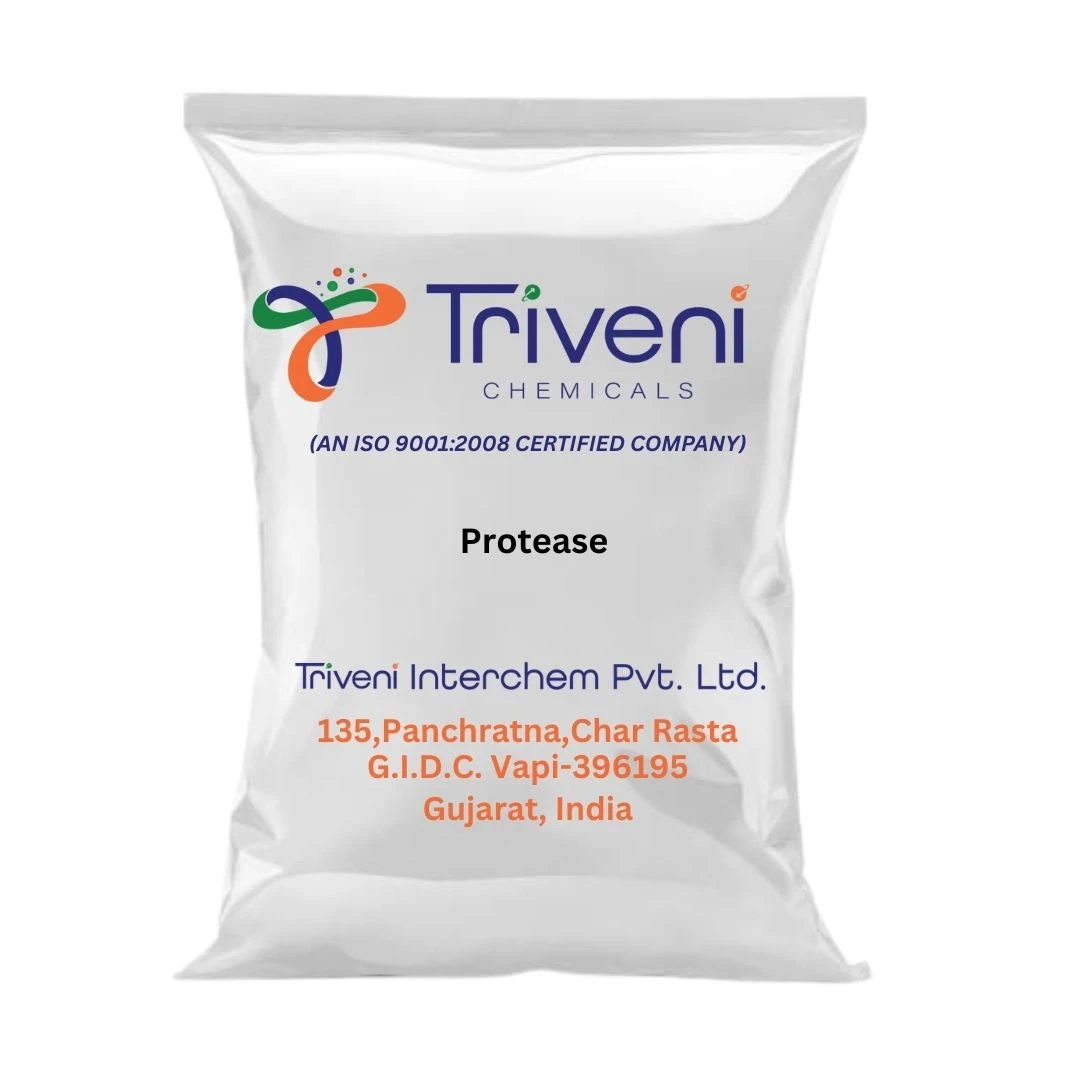
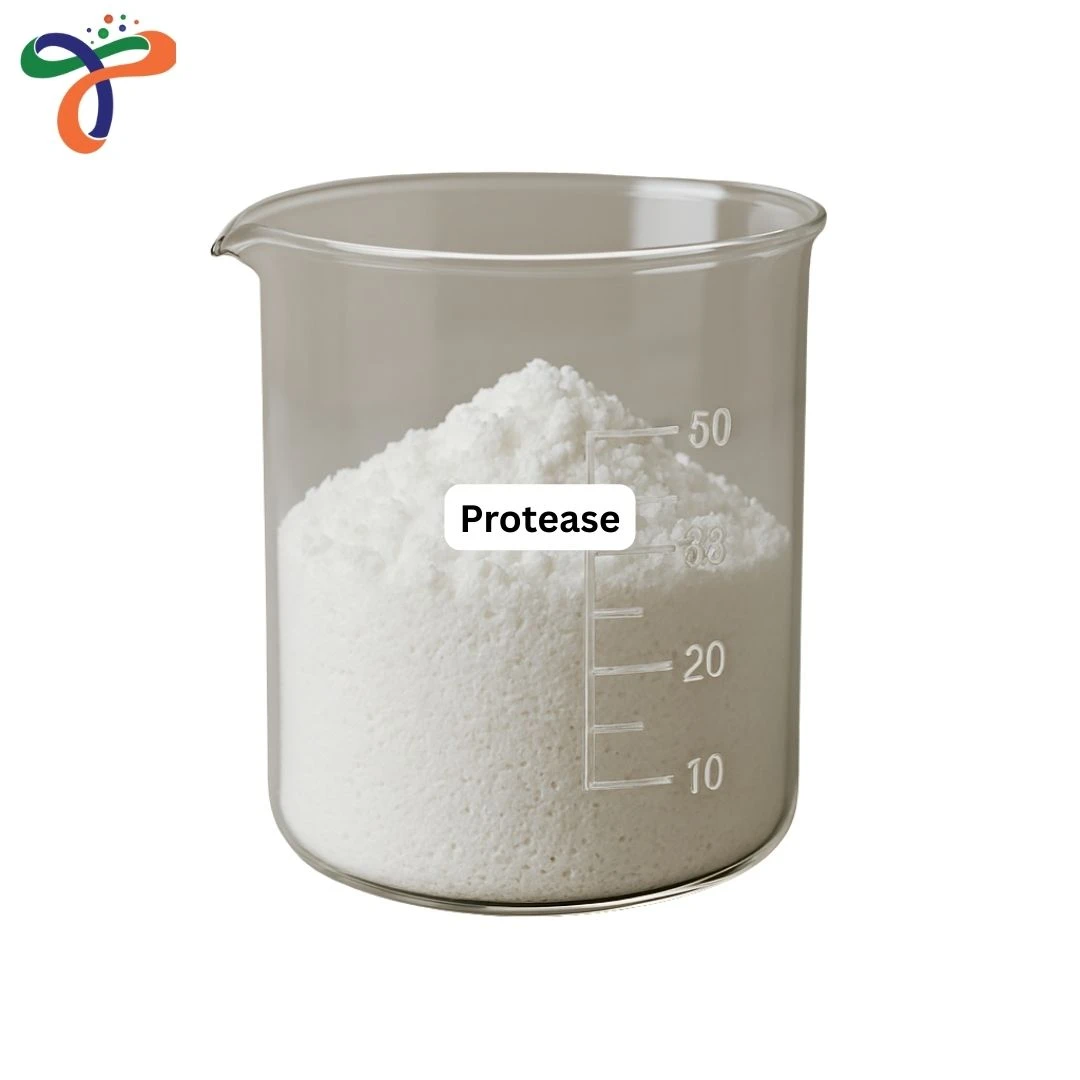
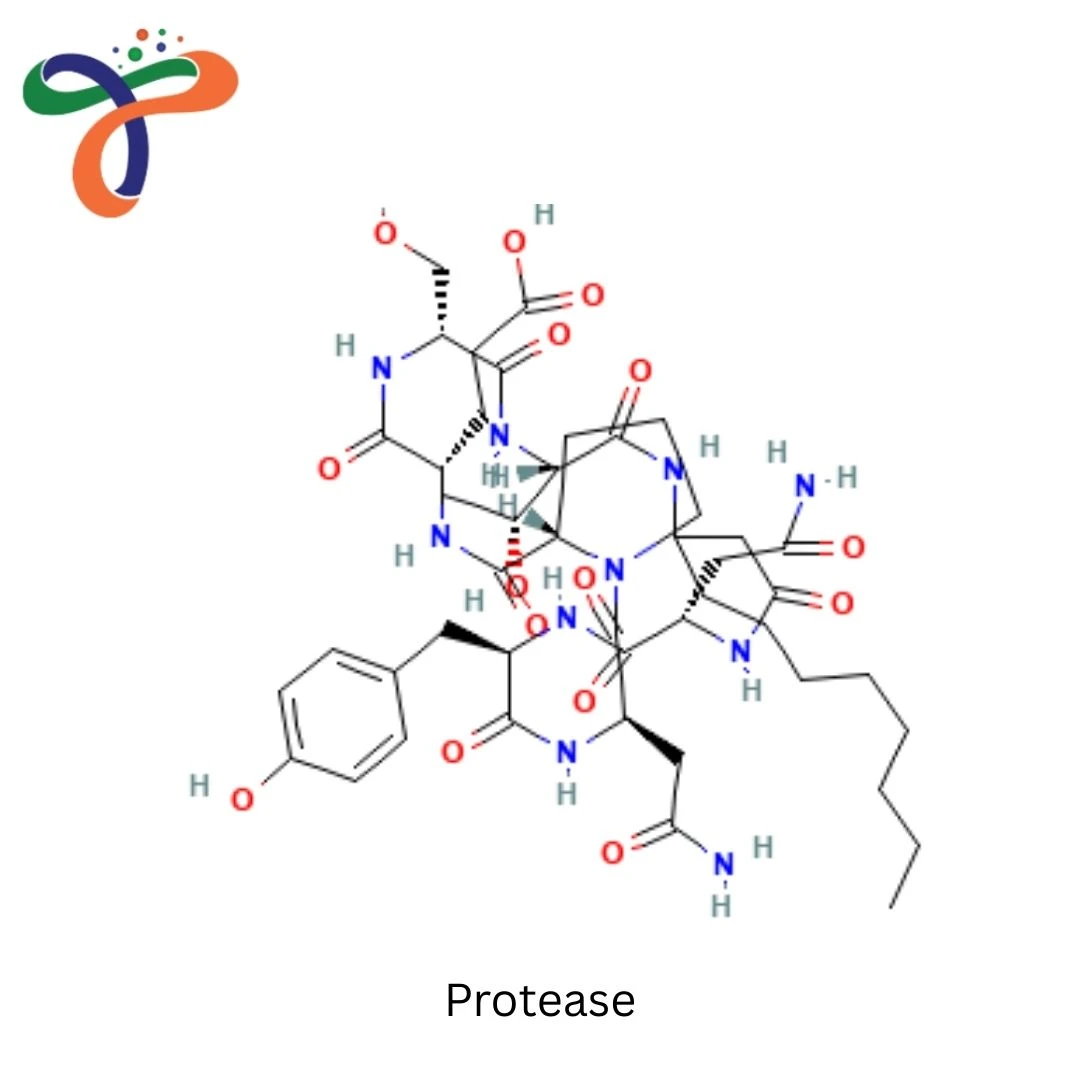
Protease | 2598337
Cas No :
2598337
Form :
Powder
Molecular Weight :
23000 G/mol
Molecular Formula :
C45H68N10O15
Boiling Point :
65 °c
Melting Point :
60 °c
Flash Point :
200 °c
Solubility :
Soluble In Water
Description :
Overview of Protease
Protease (CAS: 9001-92-7) is a biological enzyme widely used in food processing, detergent manufacturing, pharmaceuticals, and research applications. It is known for its ability to break down proteins into smaller peptides and amino acids. This enzyme appears as a colorless to pale yellow liquid or powder, depending on its source and form.
Proteases are important for their protein-degrading activity, which makes them essential in digestive processes, fermentation, and industrial enzymatic reactions. These enzymes are used in a variety of industries, including detergents, leather processing, food and beverage, and medical treatments. Related enzymes like Amylase, Lipase, and Cellulase are also applied for industrial and biotechnological applications.
Applications of Protease
Food & Beverage Industry
-
Used in protein hydrolysis for improving the texture of food products
-
Enhances flavor profiles in fermented foods and beverages like soy sauce, cheese, and beer
-
Applied in dairy products, especially in the production of whey protein and cheese curd
Pharmaceutical Applications
-
Used in the preparation of therapeutic protein formulations
-
Helps in protein digestion and absorption in medical treatments for pancreatic insufficiency
-
Applied in enzyme replacement therapies for digestive and metabolic diseases
Detergent Industry
-
Serves as a stain remover and cleaning agent in laundry and dishwashing detergents
-
Breaks down protein-based stains like blood, food, and sweat on fabrics
-
Enhances the cleaning power of automatic dishwashers and laundry products
Industrial & Biotechnology Applications
-
Employed in bioremediation and wastewater treatment for breaking down protein waste
-
Used in leather processing to remove unwanted protein materials from hides
-
Applied in brewing, winemaking, and other fermentation processes to enhance protein breakdown
Research & Development
-
Utilized in scientific research for studying protein structures, enzyme kinetics, and biotechnology processes
-
Essential for proteomics, protein sequencing, and other biological studies
-
Applied in clinical research to develop new enzyme-based therapies and treatments
Safety & Handling Guidelines
-
Protease is generally safe in controlled amounts, but exposure to concentrated forms may cause skin or eye irritation
-
Always use gloves, goggles, and protective clothing when handling concentrated enzyme preparations
-
Store in cool, dry conditions and keep away from extreme temperatures to preserve enzyme activity
-
Follow COA and MSDS guidelines for proper storage, handling, and disposal
Where to Buy Protease?
Protease Manufacturer
ChemicalBull supplies high-purity Protease enzymes for food, pharmaceutical, detergent, and industrial applications.
Protease Supplier & Distributor
-
Available in bulk and laboratory-scale packaging
-
Ideal for protein processing, enzymatic digestion, and fermentation industries
-
COA, MSDS, and detailed technical specifications provided
Protease MSDS
-
May cause irritation to skin and eyes in concentrated forms
-
Avoid direct inhalation of enzyme powders or aerosols
-
Store in air-tight containers in dry conditions to maintain enzyme stability
-
Refer to full MSDS for spill control, handling, and emergency procedures
Frequently Asked Questions (FAQs)
-
What is the molecular formula of Protease?
Protease is a protein enzyme, and its molecular formula varies depending on the source and specific type of protease (e.g., trypsin, pepsin). Its molecular weight can range from 20 kDa to over 100 kDa. -
What is Protease used for?
Proteases are primarily used to break down proteins in food processing, pharmaceutical formulations, detergents, and various industrial applications. -
Is Protease safe to use?
Protease is generally safe in controlled use but may cause irritation or allergic reactions in concentrated or undiluted forms. Use PPE to avoid exposure. -
Which industries use Protease?
Food & beverage, pharmaceuticals, detergents, biotechnology, and industrial processing industries rely on Protease for various enzymatic applications. -
Why is Protease important in food production?
Protease is used in fermentation, flavor enhancement, protein digestion, and texture modification, especially in products like cheese, beer, and soy sauce.
ChemicalBull supplies Protease across India, serving customers in Andhra Pradesh, Arunachal Pradesh, Assam, Bihar, Chhattisgarh, Goa, Gujarat, Haryana, Himachal Pradesh, Jharkhand, Karnataka, Kerala, Madhya Pradesh, Maharashtra, Manipur, Meghalaya, Mizoram, Nagaland, Odisha, Punjab, Rajasthan, Sikkim, Tamil Nadu, Telangana, Tripura, Uttar Pradesh, Uttarakhand, and West Bengal, as well as the Union Territories of Andaman & Nicobar Islands, Chandigarh, Dadra & Nagar Haveli and Daman & Diu, Delhi, Jammu & Kashmir, Ladakh, Lakshadweep, and Puducherry. We serve pharmaceutical, chemical, research, academic, laboratory, manufacturing, and industrial customers with reliable nationwide delivery.