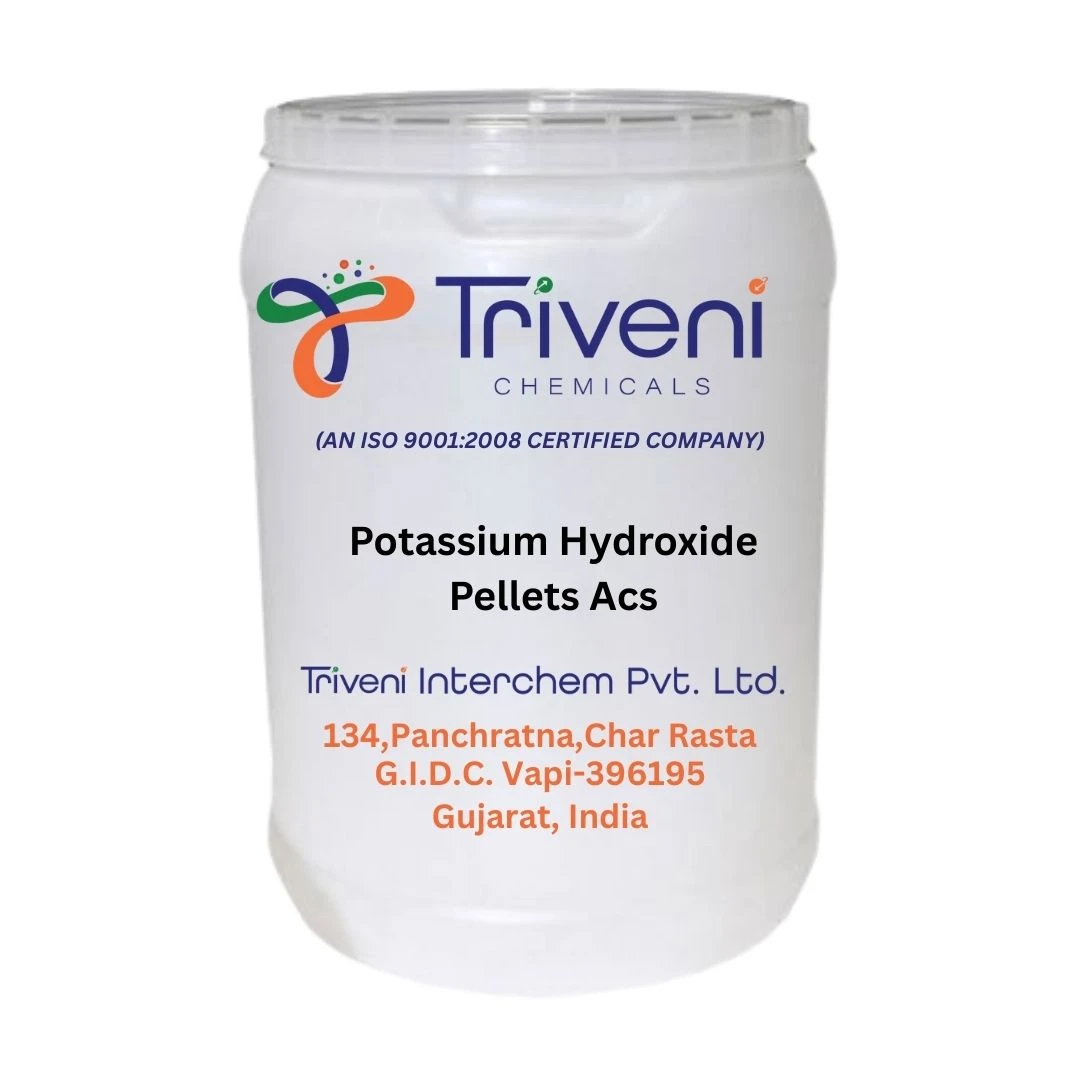
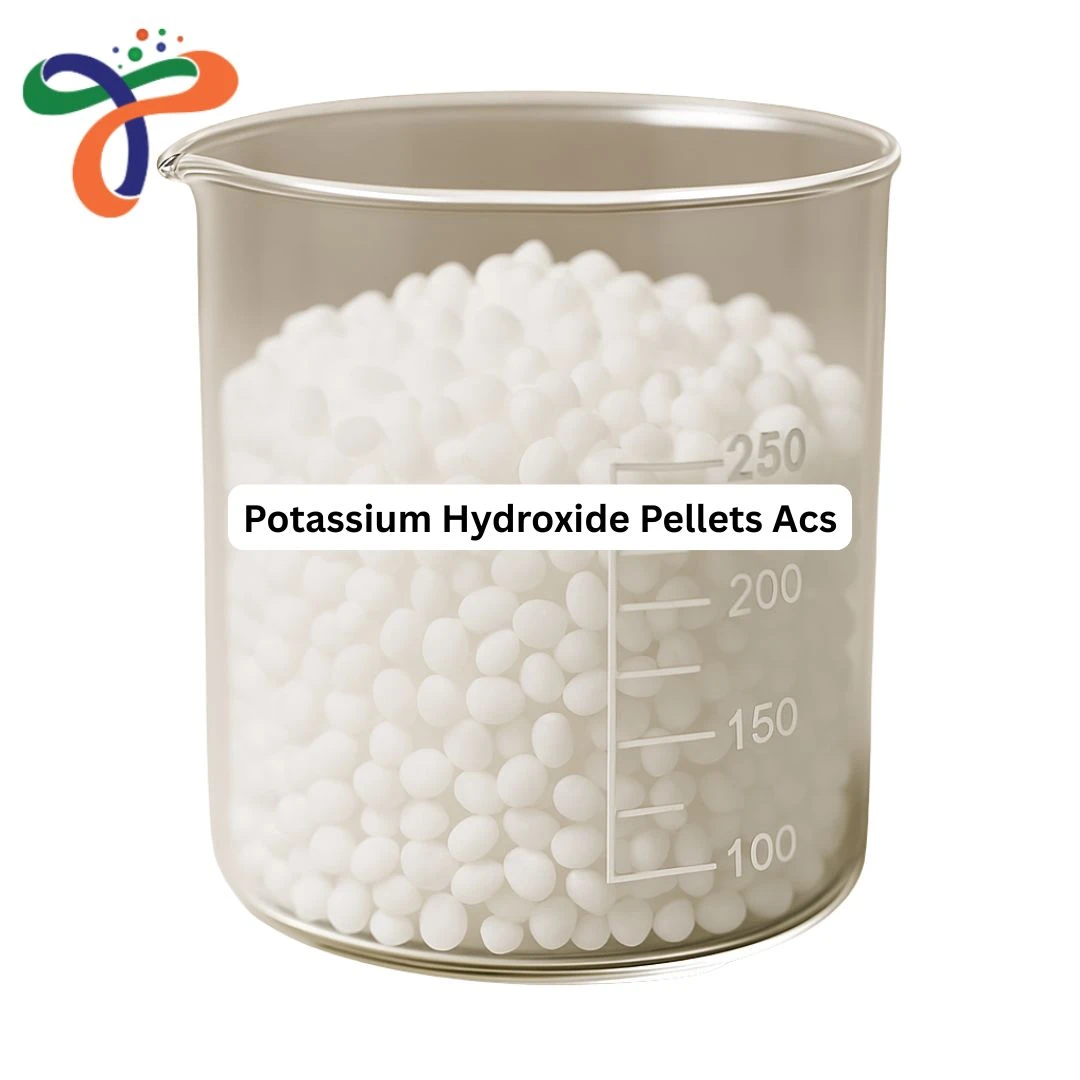
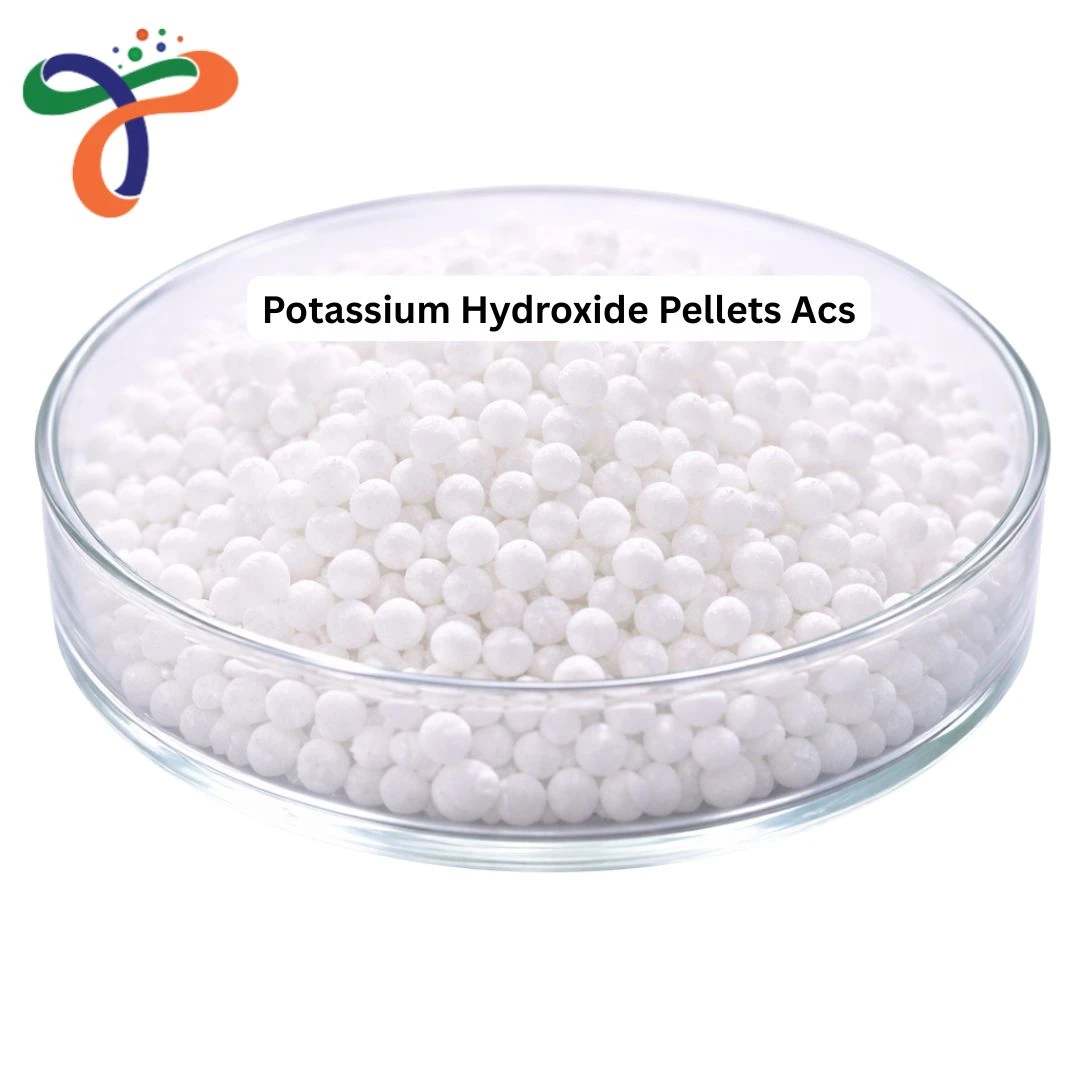
Potassium Hydroxide Pellets Acs
Form :
Solid
Molecular Weight :
56.11 G/mol
Boiling Point :
1320 °c
Melting Point :
360 °c
Solubility :
Very Soluble In Water
Description :
Overview of Potassium Hydroxide Pellets ACS
Potassium Hydroxide Pellets ACS is a highly pure inorganic compound commonly used as a strong alkaline base in chemical synthesis, laboratory analysis, and industrial manufacturing processes. It appears as white hygroscopic pellets and easily dissolves in water to produce a strongly alkaline solution. The ACS grade indicates that the material meets American Chemical Society purity standards, making it suitable for analytical laboratories, research, and high-purity industrial applications.
Potassium Hydroxide is widely used in pharmaceutical intermediates, biodiesel production, soap manufacturing, and pH adjustment processes. Due to its strong alkalinity, it is also applied in chemical synthesis, electrolyte preparation, and catalyst systems.
In chemical processing and industrial formulations, it is often used along with alkaline and base chemicals such as Sodium Hydroxide, Potassium Carbonate, and Calcium Hydroxide, which are commonly used in neutralization, pH control, and chemical manufacturing processes.
Applications of Potassium Hydroxide Pellets ACS
Chemical Manufacturing
-
Used as a strong base in organic and inorganic synthesis
-
Important reagent for production of potassium salts
-
Applied in catalytic reactions and chemical processing
Soap & Detergent Production
-
Key ingredient in liquid soap and soft soap manufacturing
-
Used for saponification of fats and oils
-
Improves cleaning efficiency in industrial detergent formulations
Biodiesel Production
-
Serves as a catalyst in transesterification reactions
-
Helps convert vegetable oils and fats into biodiesel fuel
-
Widely used in renewable fuel manufacturing
Laboratory & Analytical Use
-
ACS grade makes it suitable for analytical testing and research laboratories
-
Used in pH adjustment, titration, and reagent preparation
-
Important in chemical analysis and synthesis studies
Industrial Processing
-
Applied in battery electrolyte preparation
-
Used in food processing equipment cleaning and industrial degreasing
-
Helps maintain alkaline conditions in chemical systems
Safety & Handling Guidelines
-
Highly corrosive and alkaline compound
-
Avoid skin, eye, and respiratory contact
-
Always use gloves, protective clothing, and eye protection
-
Store in airtight containers to prevent moisture absorption
-
Handle only in well-ventilated areas or chemical processing environments
Where to Buy Potassium Hydroxide Pellets ACS?
Potassium Hydroxide Pellets ACS Manufacturer
ChemicalBull supplies high-purity Potassium Hydroxide Pellets ACS suitable for laboratory analysis, industrial chemical synthesis, biodiesel production, and specialty chemical manufacturing.
Potassium Hydroxide Pellets ACS Supplier & Distributor
-
Available in laboratory packs and bulk industrial quantities
-
Suitable for research laboratories, pharmaceutical intermediates, and industrial processing
-
COA, MSDS, and technical documentation available on request
Potassium Hydroxide Pellets ACS MSDS
-
Causes severe skin burns and eye damage
-
Hygroscopic; absorbs moisture from air
-
Reacts strongly with acids and some metals
-
Store in cool, dry, tightly sealed containers
-
Refer to complete MSDS documentation before industrial or laboratory use
Frequently Asked Questions (FAQs)
-
What is Potassium Hydroxide Pellets ACS used for?
It is widely used as a strong alkaline base in chemical synthesis, biodiesel production, soap manufacturing, and laboratory analysis. -
What does ACS grade mean for Potassium Hydroxide?
ACS grade indicates the product meets American Chemical Society purity standards, making it suitable for analytical and research applications. -
Is Potassium Hydroxide dangerous to handle?
Yes, it is highly corrosive and can cause severe burns. Proper PPE and safe handling procedures are required. -
Can Potassium Hydroxide be used in biodiesel production?
Yes, it is commonly used as a catalyst in biodiesel transesterification reactions. -
How should Potassium Hydroxide Pellets be stored?
Store in airtight containers in a cool and dry environment, as the pellets absorb moisture from air.
ChemicalBull supplies Potassium Hydroxide Pellets Acs across India, serving customers in Andhra Pradesh, Arunachal Pradesh, Assam, Bihar, Chhattisgarh, Goa, Gujarat, Haryana, Himachal Pradesh, Jharkhand, Karnataka, Kerala, Madhya Pradesh, Maharashtra, Manipur, Meghalaya, Mizoram, Nagaland, Odisha, Punjab, Rajasthan, Sikkim, Tamil Nadu, Telangana, Tripura, Uttar Pradesh, Uttarakhand, and West Bengal, as well as the Union Territories of Andaman & Nicobar Islands, Chandigarh, Dadra & Nagar Haveli and Daman & Diu, Delhi, Jammu & Kashmir, Ladakh, Lakshadweep, and Puducherry. We serve pharmaceutical, chemical, research, academic, laboratory, manufacturing, and industrial customers with reliable nationwide delivery.