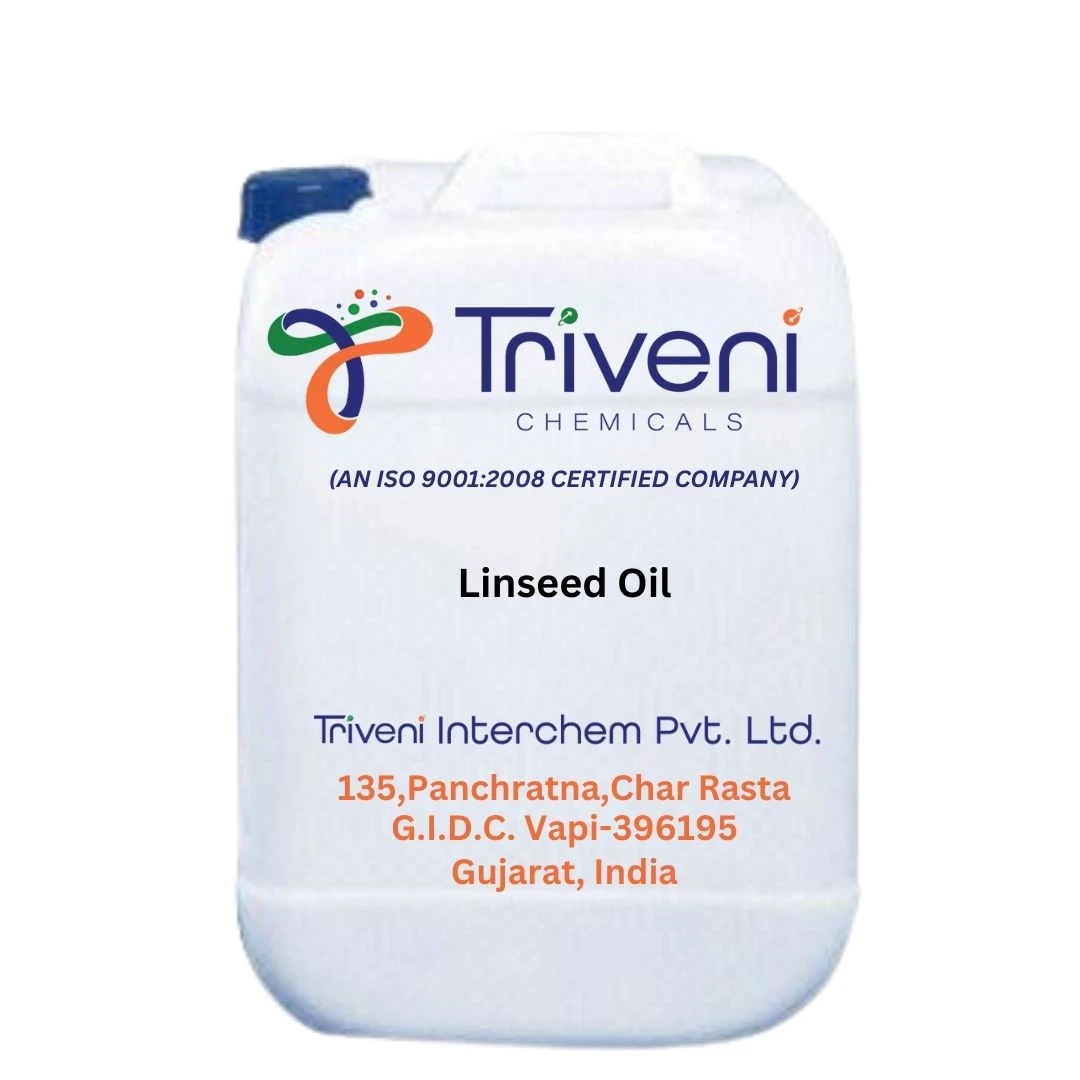
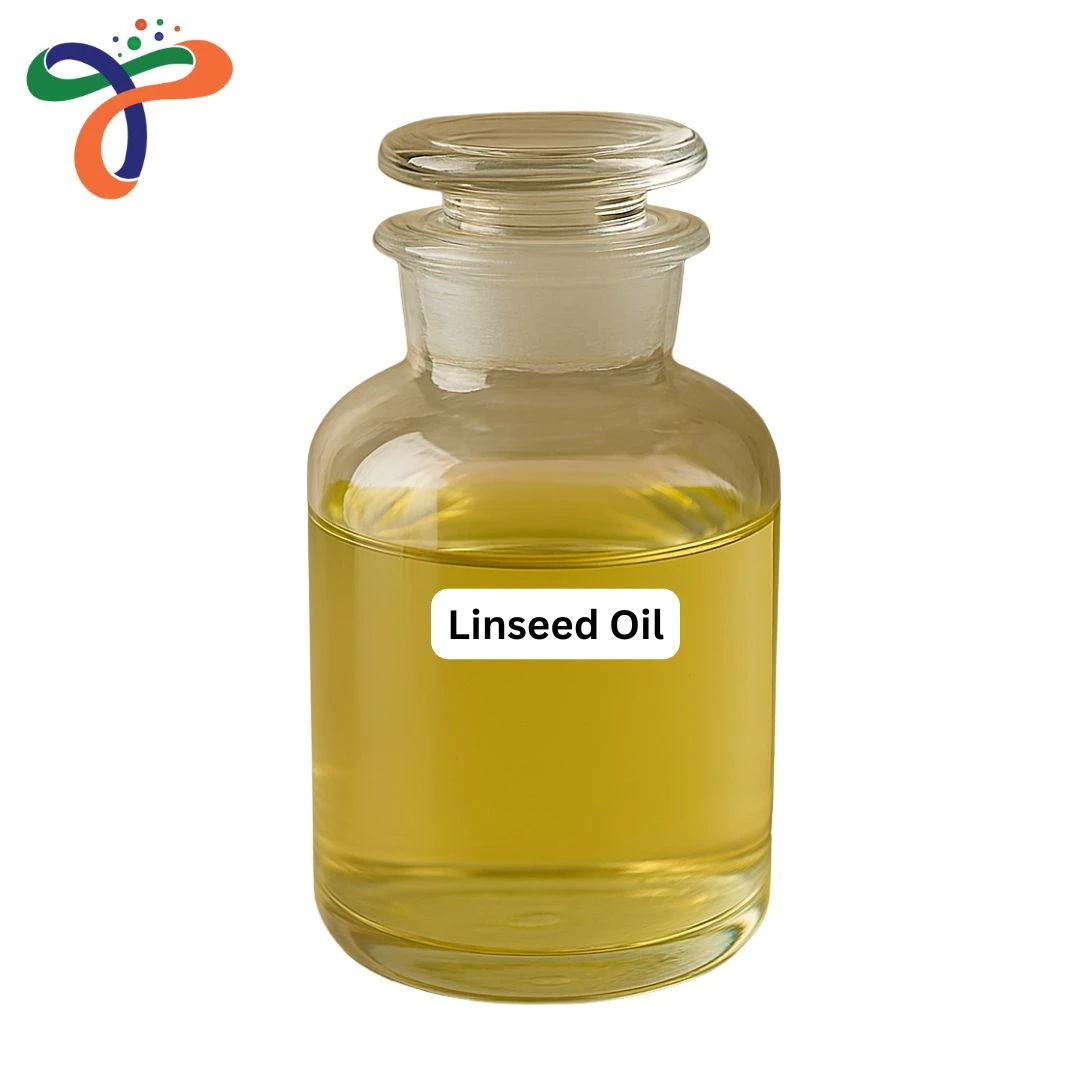
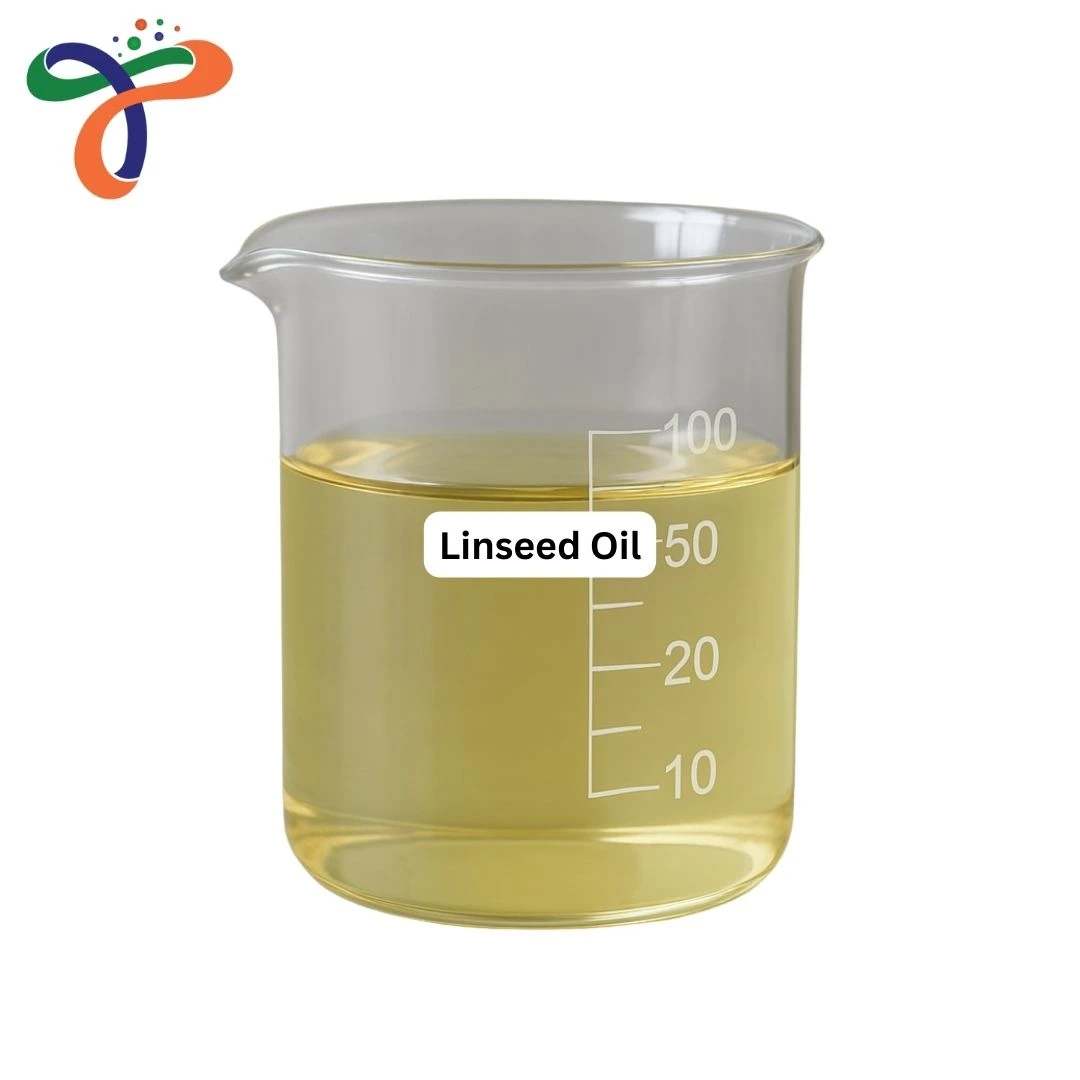
Linseed Oil
Synonyms :
Form :
Liquid
Molecular Weight :
880 G/mol
Boiling Point :
315 °c
Melting Point :
-20 °c
Flash Point :
230 °c
Solubility :
Insoluble In Water; Soluble In Nonpolar Organic Solvents (e.g., Hexane, Toluene)
Description :
Linseed Oil Manufacturers & Suppliers in India
Chemical Bull is one of the leading Linseed Oil manufacturers and suppliers in India, offering high-quality Linseed Oil in bulk with competitive pricing and reliable supply.
Linseed Oil, also known as Flaxseed Oil, is a naturally derived drying oil obtained from the seeds of the flax plant. It is widely used in industrial and formulation-based applications due to its high content of unsaturated fatty acids and excellent film-forming properties.
Both Linseed Oil and Flaxseed Oil refer to the same chemical product and are used interchangeably in technical documentation, safety data sheets, and commercial trade. As an industrial oil, Linseed Oil / Flaxseed Oil plays an important role in paints, coatings, inks, resins, and speciality industrial formulations.
Applications of Linseed Oil
Paints, Coatings & Varnishes
Linseed Oil is extensively used as a binder and drying oil in paints, varnishes, and surface coatings. It improves film formation, gloss, and durability and is often used alongside Castor Oil and Tall Oil in coating formulations.
Printing Inks & Pigment Dispersion
Flaxseed Oil is used in printing inks to enhance pigment dispersion and ink flow properties. It supports consistent ink performance and works effectively with materials such as Carbon Black and other pigment systems.
Wood Treatment & Surface Finishing
Linseed Oil is commonly used for wood finishing and protection. It penetrates wood surfaces, improves appearance, and enhances resistance to moisture and wear. It is frequently evaluated alongside Turpentine Oil and White Spirit in wood treatment applications.
Industrial & Speciality Applications
The oil is also used in the manufacture of linoleum, putty, sealants, and speciality resins. Its natural drying behaviour makes it suitable for environmentally aligned industrial formulations.
Safety & Handling Guidelines
-
Store in a cool, dry, and well-ventilated area
-
Keep containers tightly sealed
-
Protect from direct sunlight and heat
-
Avoid prolonged skin contact
-
Use appropriate PPE, including gloves and protective clothing
-
Handle oily rags carefully due to the risk of spontaneous combustion
-
Dispose of waste according to regulatory guidelines
Why Choose ChemicalBull as your Linseed Oil Manufacturer and supplier?
Linseed Oil Manufacturers in India
Linseed Oil is manufactured for industrial-grade applications requiring consistent quality, controlled viscosity, and reliable drying performance.
Linseed Oil Supplier & Distributor
Linseed Oil / Flaxseed Oil is supplied in bulk and industrial packaging formats for paints, coatings, ink, and speciality industrial users. As a trusted chemical supplier and reliable distributor, Chemicalbull Pvt. Ltd. supports customers with dependable sourcing, documentation, and compliant logistics across a wide range of industrial oils.
MSDS for Linseed Oil
The MSDS for Linseed Oil provides detailed information on hazards, safe handling practices, storage conditions, exposure controls, first-aid measures, and emergency response guidelines. Always review the MSDS before industrial use.
Frequently Asked Questions (FAQs)
-
Are Linseed Oil and Flaxseed Oil the same product?
Yes, both names refer to the same oil derived from flax seeds and are used interchangeably. -
What is Linseed Oil mainly used for in industry?
It is mainly used in paints, varnishes, coatings, printing inks, wood finishing, and specialty industrial applications. -
Is Linseed Oil a drying oil?
Yes, Linseed Oil is classified as a drying oil due to its ability to polymerise and form a solid film when exposed to air. -
Can Flaxseed Oil be used in coatings and inks?
Yes, Flaxseed Oil is widely used in coating and ink formulations for its film-forming and dispersion properties. -
Is Linseed Oil hazardous?
Linseed Oil itself is generally low in hazard, but oily rags can pose a fire risk. Proper handling and storage are essential. -
In what form is Linseed Oil supplied?
Linseed Oil is supplied as a liquid in various grades suitable for industrial and formulation use.
ChemicalBull supplies Linseed Oil across India, serving customers in Andhra Pradesh, Arunachal Pradesh, Assam, Bihar, Chhattisgarh, Goa, Gujarat, Haryana, Himachal Pradesh, Jharkhand, Karnataka, Kerala, Madhya Pradesh, Maharashtra, Manipur, Meghalaya, Mizoram, Nagaland, Odisha, Punjab, Rajasthan, Sikkim, Tamil Nadu, Telangana, Tripura, Uttar Pradesh, Uttarakhand, and West Bengal, as well as the Union Territories of Andaman & Nicobar Islands, Chandigarh, Dadra & Nagar Haveli and Daman & Diu, Delhi, Jammu & Kashmir, Ladakh, Lakshadweep, and Puducherry. We serve pharmaceutical, chemical, research, academic, laboratory, manufacturing, and industrial customers with reliable nationwide delivery.