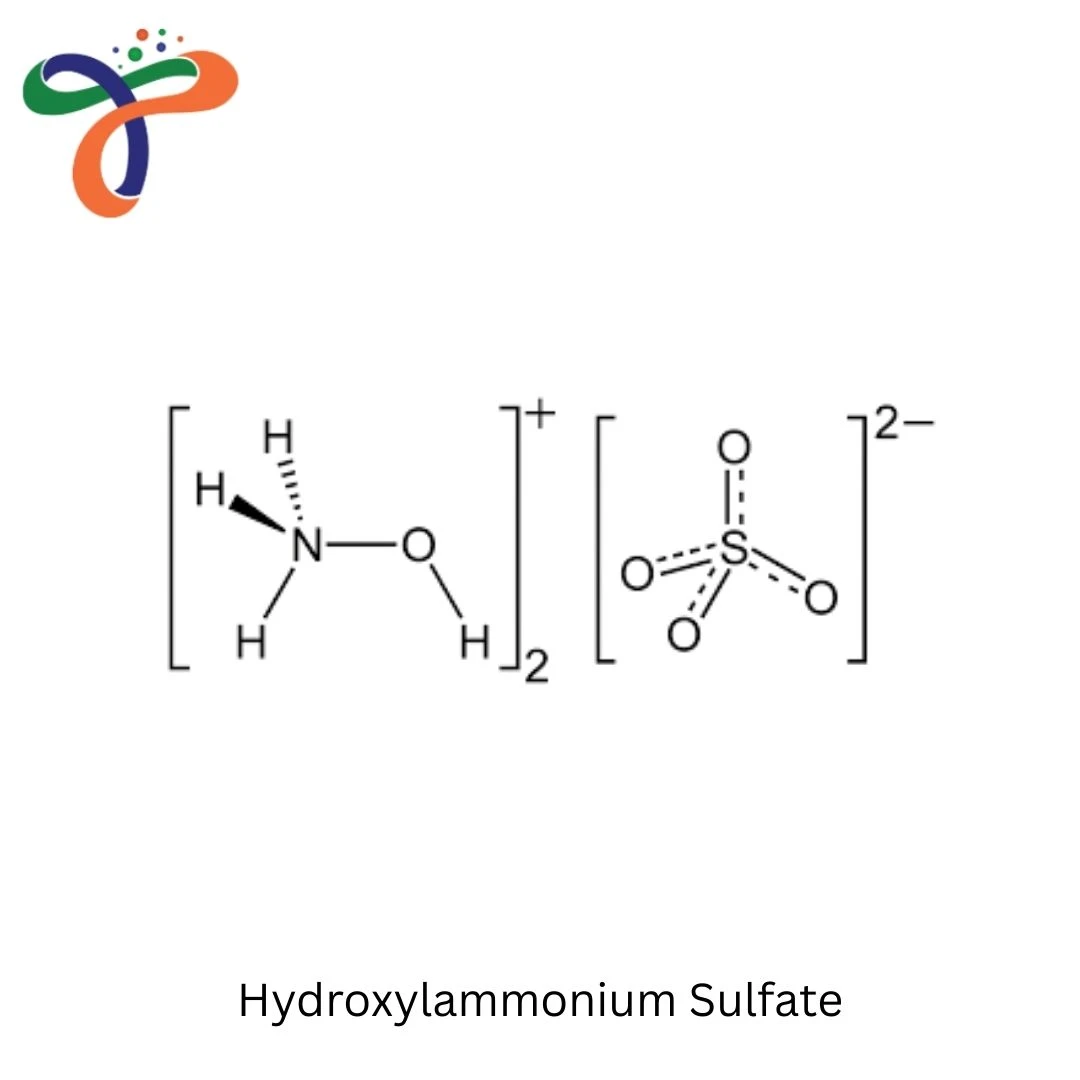
Hydroxylammonium Sulfate | 10039-54-0
Cas No :
10039-54-0
Synonyms :
Molecular Weight :
164.14 G/mol
Molecular Formula :
H8N2O6S
Boiling Point :
360 °c
Melting Point :
170 °c
Flash Point :
300 °c
Solubility :
Soluble In Water
Description :
Overview of Hydroxylammonium Sulfate
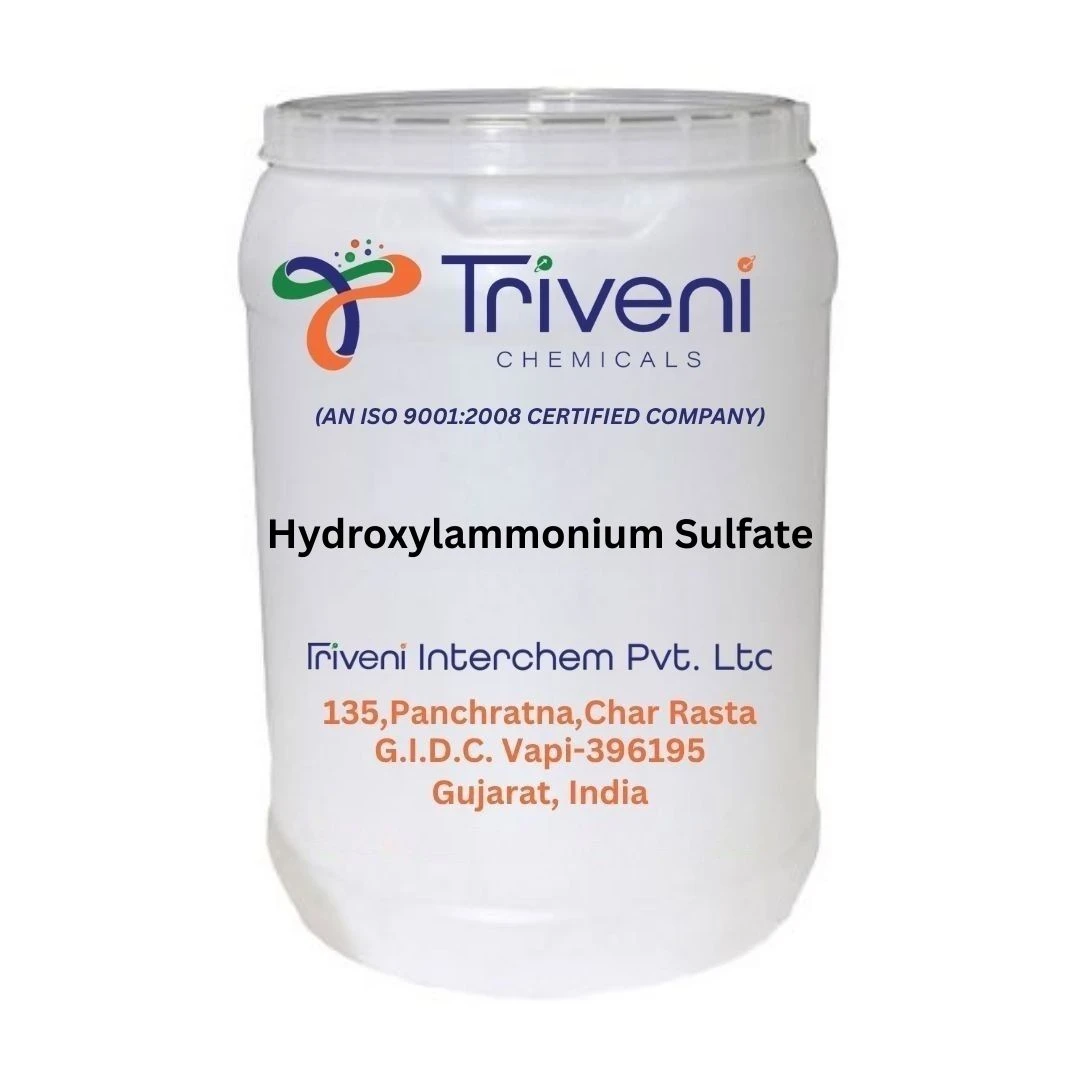
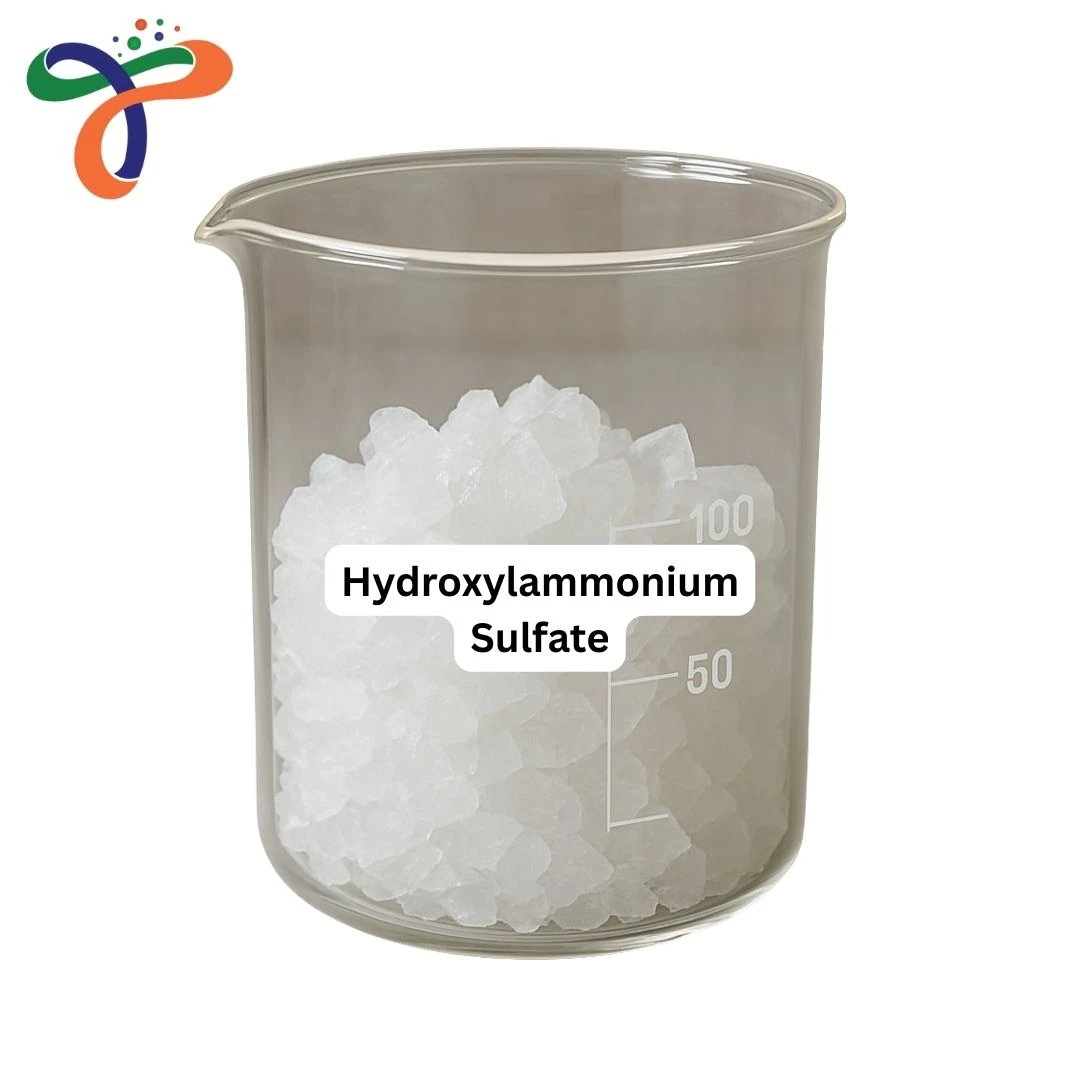
Hydroxylammonium Sulfate (CAS 10039-54-0) is an inorganic salt that is commonly utilized as a powerful reducing agent in a range of industrial and chemical processes. It is a white crystalline solid that is fluid in water.
Within the Plastic & Rubber Chemicals industry, Hydroxylammonium Sulfate is mainly utilized as an intermediary as well as a reducing agent for plastic processing in rubber additives, as well as chemical synthesis. It plays a significant part in controlling the oxidation reaction as well as improving the process stability for manufacturing.
It is also widely used in organic synthesis, pharmaceuticals, photographic chemicals, and polymer chemistry, where controlled reduction reactions are required.
Related products available on ChemicalBull include Hydroxylamine Hydrochloride, Ammonium Sulfate, Sodium Sulfite, and Reducing Agents – widely used in polymer production, rubber processing, and industrial chemical applications. Explore more on our Home Page, Plastic & Rubber Chemicals Category, and Applications Page for detailed industrial use cases.
Applications of Hydroxylammonium Sulfate
Plastic & Polymer Industry
- Used as a reducing agent in polymer synthesis
- Helps in controlling oxidation reactions during plastic processing
- Improves stability in specialty polymer formulations
- Used in the chemical modification of polymer intermediates
Rubber & Chemical Processing
- Acts as a process stabilizer in rubber manufacturing
- Helps control undesired oxidation during rubber compounding
- Improves the performance of rubber additives
- Used in specialty rubber chemical reactions
Organic Synthesis & Industrial Chemistry
- Widely used as a reducing agent in organic chemical reactions
- Important intermediate in fine chemical synthesis
- Helps in the controlled reduction of carbonyl compounds
- Used in laboratory and industrial-scale chemical production
Pharmaceutical & Agrochemical Industry
- Used in the synthesis of pharmaceutical intermediates
- Plays a role in active ingredient development
- Helps in controlled chemical transformations in drug synthesis
- Used in agrochemical formulation chemistry
Photographic & Specialty Chemical Applications
- Used in photographic chemical processing systems
- Helps in reduction reactions during image development
- Applied in specialty chemical formulations requiring controlled reduction
- Used in analytical and research chemistry
Safety & Handling Guidelines
- Make sure you wear appropriate personal protective equipment (PPE) like goggles and gloves.
- Beware of inhalation from dust or direct contact with skin
- Keep in a cool dry, well-ventilated space
- Be sure to stay clear of the strong acidic and oxidizing agents.
- Use under appropriate lab or industrial security requirements
Hydroxylammonium Sulfate MSDS
Hydroxylammonium Sulfate may cause irritation to the skin, eyes, and respiratory system. Proper handling procedures, ventilation, and protective equipment are required as per MSDS guidelines.
Where to Buy Hydroxylammonium Sulfate?
Hydroxylammonium Sulfate Manufacturer
ChemicalBull supplies high-quality Hydroxylammonium Sulfate suitable for polymer chemistry, rubber processing, organic synthesis, and industrial applications.
Hydroxylammonium Sulfate Supplier & Distributor
- Available in bulk and laboratory packaging
- Suitable for plastic, rubber, pharmaceutical, and chemical industries
- COA, MSDS, and technical specifications available
Frequently Asked Questions (FAQs)
-
What is the molecular formula of Hydroxylammonium Sulfate?
Molecular Formula: H₈N₂O₆S -
What is Hydroxylammonium Sulfate used for?
It is used as a reducing agent in plastic, rubber, organic synthesis, pharmaceuticals, and photographic chemicals. -
Is Hydroxylammonium Sulfate hazardous?
Yes, it may cause irritation to the skin, eyes, and respiratory system, so proper safety measures are required.
ChemicalBull supplies Hydroxylammonium Sulfate across India, serving customers in Andhra Pradesh, Arunachal Pradesh, Assam, Bihar, Chhattisgarh, Goa, Gujarat, Haryana, Himachal Pradesh, Jharkhand, Karnataka, Kerala, Madhya Pradesh, Maharashtra, Manipur, Meghalaya, Mizoram, Nagaland, Odisha, Punjab, Rajasthan, Sikkim, Tamil Nadu, Telangana, Tripura, Uttar Pradesh, Uttarakhand, and West Bengal, as well as the Union Territories of Andaman & Nicobar Islands, Chandigarh, Dadra & Nagar Haveli and Daman & Diu, Delhi, Jammu & Kashmir, Ladakh, Lakshadweep, and Puducherry. We serve pharmaceutical, chemical, research, academic, laboratory, manufacturing, and industrial customers with reliable nationwide delivery.