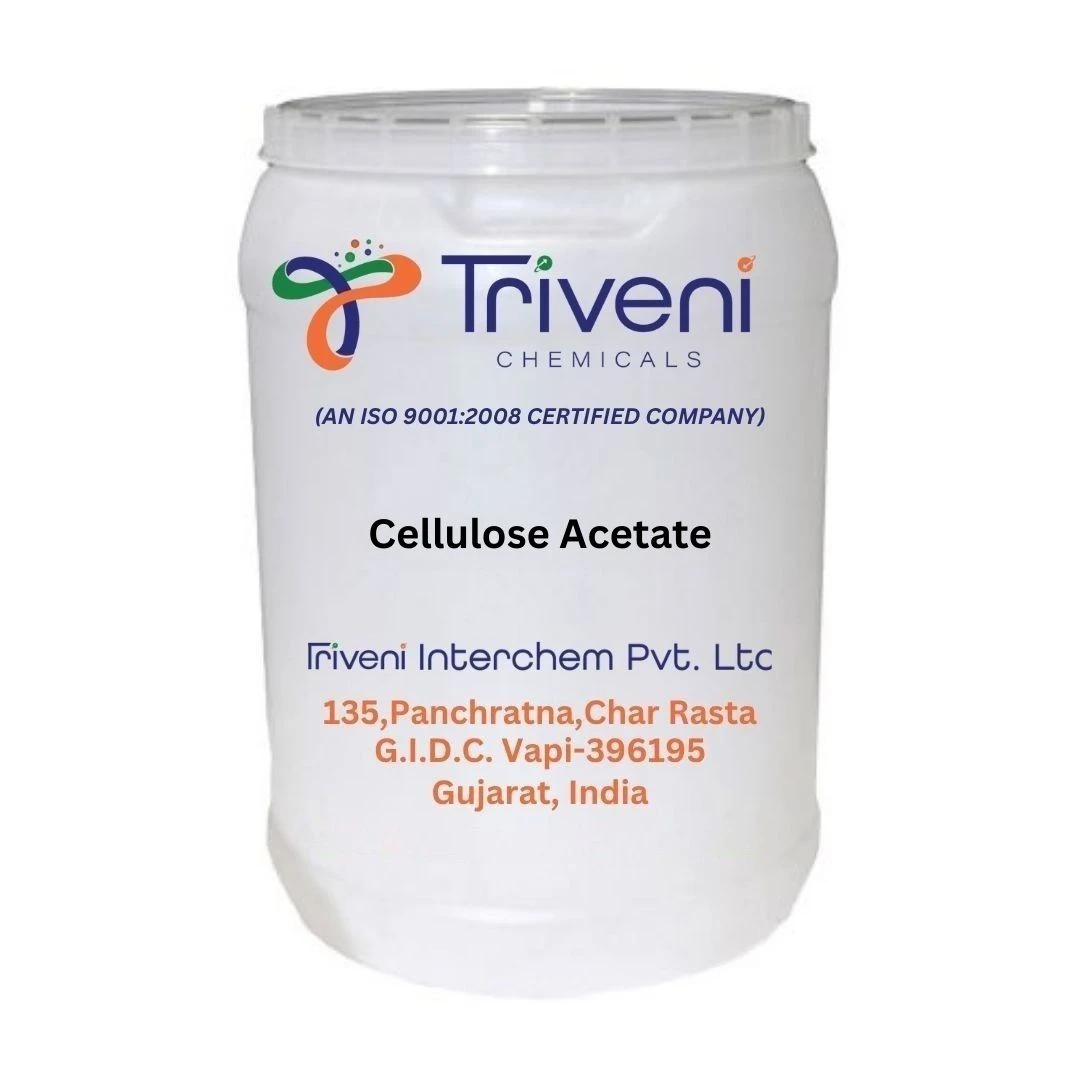
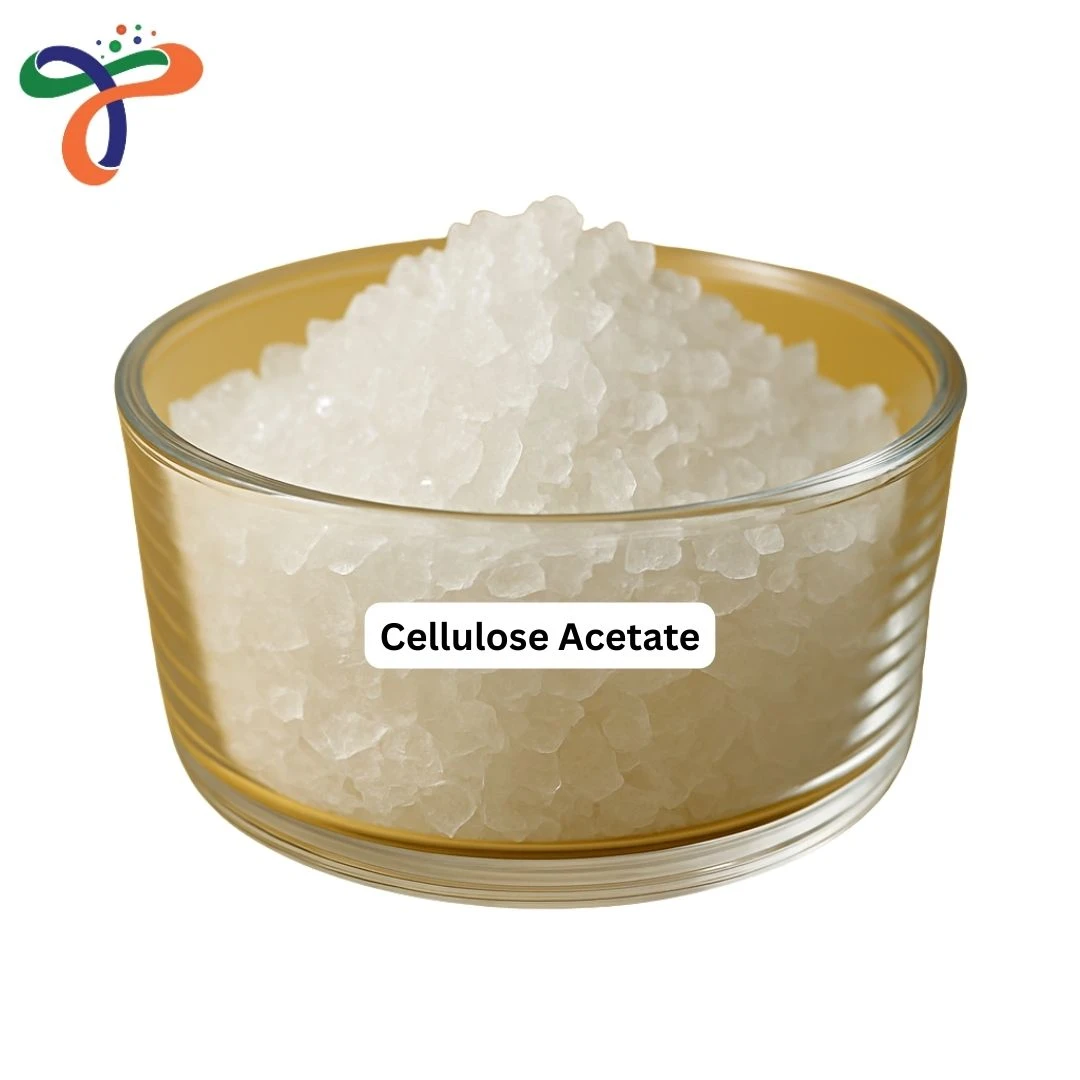
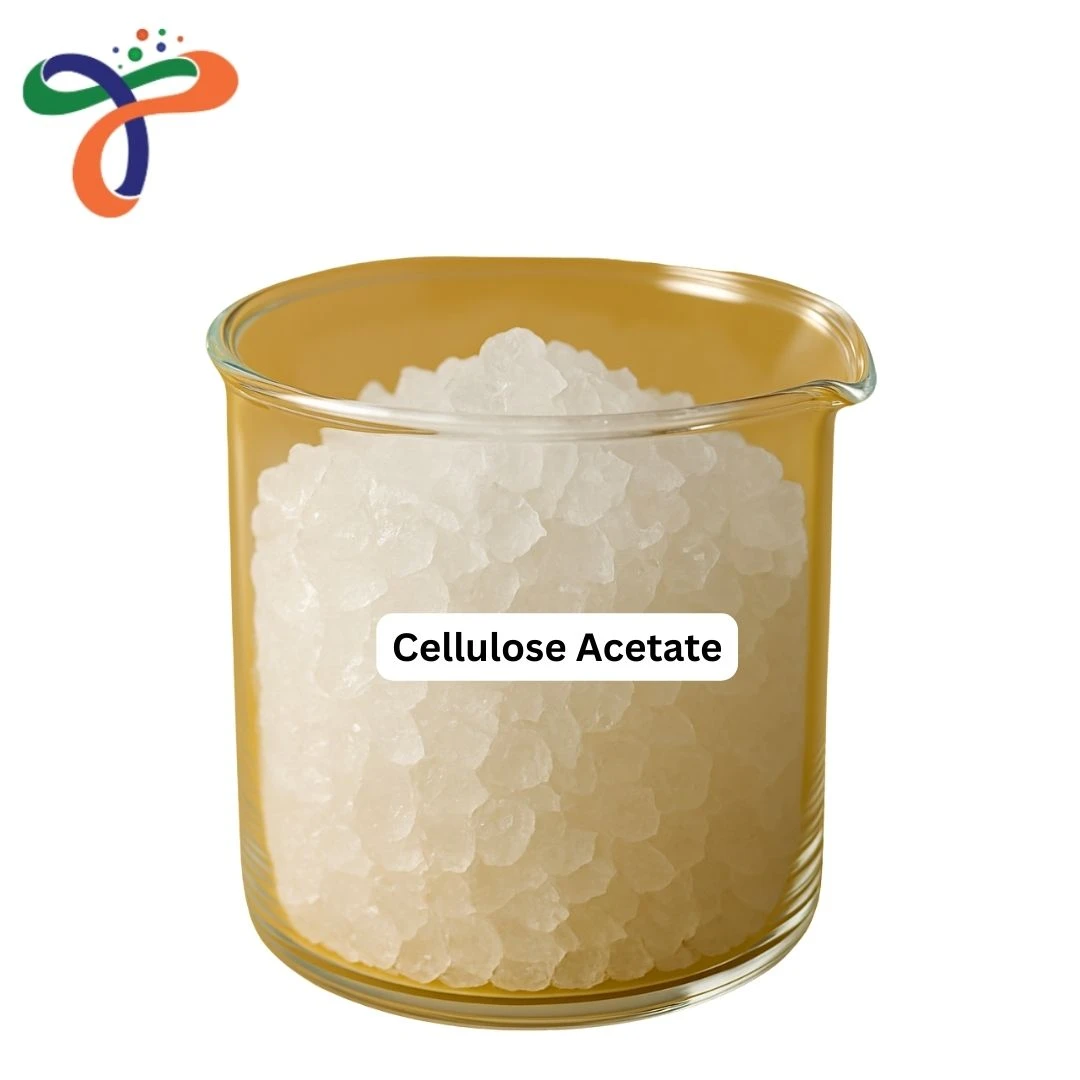
Cellulose Acetate | 9004-35-7
Cas No :
9004-35-7
Synonyms :
Form :
Solid
Molecular Weight :
200000 G/mol
Boiling Point :
360 °c
Flash Point :
230 °c
Solubility :
Insoluble In Water; Soluble In Acetone, Ethyl Acetate, Methylene Chloride
Description :
Cellulose Acetate Manufacturers & Suppliers in India
Chemical Bull is one of the leading Cellulose Acetate manufacturers and suppliers in India, offering high-quality Cellulose Acetate (CAS 9004-35-7) for industrial applications.
A semi-synthetic, synthetic polymer derived from the natural substance cellulose is extensively used in the manufacturing of plastics, fibres, and specialty materials. In many industry applications, it's well-known for its durability, clarity as well as its smooth surface and the ease to process.
For non-technical consumers, cellulose acetate is a natural polymer that has been modified to combine the advantages of plant-based raw materials with the functionality of engineered plastics. Both fibre-based and plastic-based end uses can benefit from its balanced qualities.
Cellulose Acetate is classified under cellulose-based polymers and speciality plastic materials, supporting applications where appearance, processability, and controlled performance are essential.
Applications of Cellulose Acetate
Plastics & Moulded Product Manufacturing
Cellulose Acetate is used extensively as a plastic for the manufacture of moulded sheets, components and films. It is transparent, has good dimension stability and excellent surface quality, which makes it suitable for use in products for the consumer market, technical components as well as decorative applications.
Fibres, Textiles & Filtration Media
Cellulose Acetate is used to manufacture fibres for textiles, cigarette filters, and filtration products. It provides softness, controlled strength, and consistent fibre formation, supporting applications where uniformity and performance are required.
Optical, Film & Speciality Applications
Cellulose Acetate is prized for its smooth surface and clearness in the making of optical films and speciality sheets. It is commonly used in display overlays, protective materials, and photographic films.
Polymer Processing & Speciality Formulations
In the process of processing polymers, Cellulose Acetate is blended or modified in order to obtain specific flexibility, hardness or solubility qualities. The material is compatible with the plasticisers as well as processing aids that are used in specific polymer formulations.
Safety & Handling Guidelines
- Store in a cool, dry, and well-ventilated area
- Keep the material away from extreme heat and moisture.
- Steer clear of dust while processing.
- Wear the proper safety gear and protective gloves.
- Keep away from open flames and ignition sources
- Follow standard polymer material handling practices
- Dispose of waste and packaging according to local regulations
Why Choose ChemicalBull as your Cellulose Acetate supplier in India?
Cellulose Acetate Manufacturers in India
Cellulose Acetate is manufactured for use in plastics, fibres, films, and speciality polymer applications requiring consistent quality, controlled acetyl content, and reliable processing performance.
Cellulose Acetate Supplier & Distributor
Cellulose Acetate is supplied in bulk and industrial-grade quantities for plastic processors, fibre manufacturers, film producers, and speciality material companies.
As a trusted supplier of polymer raw materials, an established bulk distributor and industrial supplier, we provide producers with constant access to the cellulose-based polymers that guarantee consistency in quality, scalable quantities, and efficient procurement.
Cellulose Acetate MSDS
The Material Safety Data Sheet (MSDS) of Cellulose Acetate offers comprehensive details on safe handling, storage conditions, exposure controls, and emergency response protocols.
Frequently Asked Questions (FAQs)
-
What type of polymer is Cellulose Acetate?
Cellulose Acetate is a semi-synthetic plastic that is derived from natural cellulose by chemical modifications. -
Is Cellulose Acetate considered a natural fibre?
It is not a fully natural fibre; it is a modified cellulose-based material used to produce synthetic fibres. -
Is Cellulose Acetate biodegradable?
Cellulose Acetate has limited biodegradability. -
What industries commonly use Cellulose Acetate plastic?
It is extensively used in plastics, fibres, films, products for filtration, and other speciality applications. -
Can Cellulose Acetate be processed using standard plastic manufacturing methods?
Yes, it can be processed using conventional moulding and extrusion techniques with suitable processing controls.
ChemicalBull supplies Cellulose Acetate across India, serving customers in Andhra Pradesh, Arunachal Pradesh, Assam, Bihar, Chhattisgarh, Goa, Gujarat, Haryana, Himachal Pradesh, Jharkhand, Karnataka, Kerala, Madhya Pradesh, Maharashtra, Manipur, Meghalaya, Mizoram, Nagaland, Odisha, Punjab, Rajasthan, Sikkim, Tamil Nadu, Telangana, Tripura, Uttar Pradesh, Uttarakhand, and West Bengal, as well as the Union Territories of Andaman & Nicobar Islands, Chandigarh, Dadra & Nagar Haveli and Daman & Diu, Delhi, Jammu & Kashmir, Ladakh, Lakshadweep, and Puducherry. We serve pharmaceutical, chemical, research, academic, laboratory, manufacturing, and industrial customers with reliable nationwide delivery.