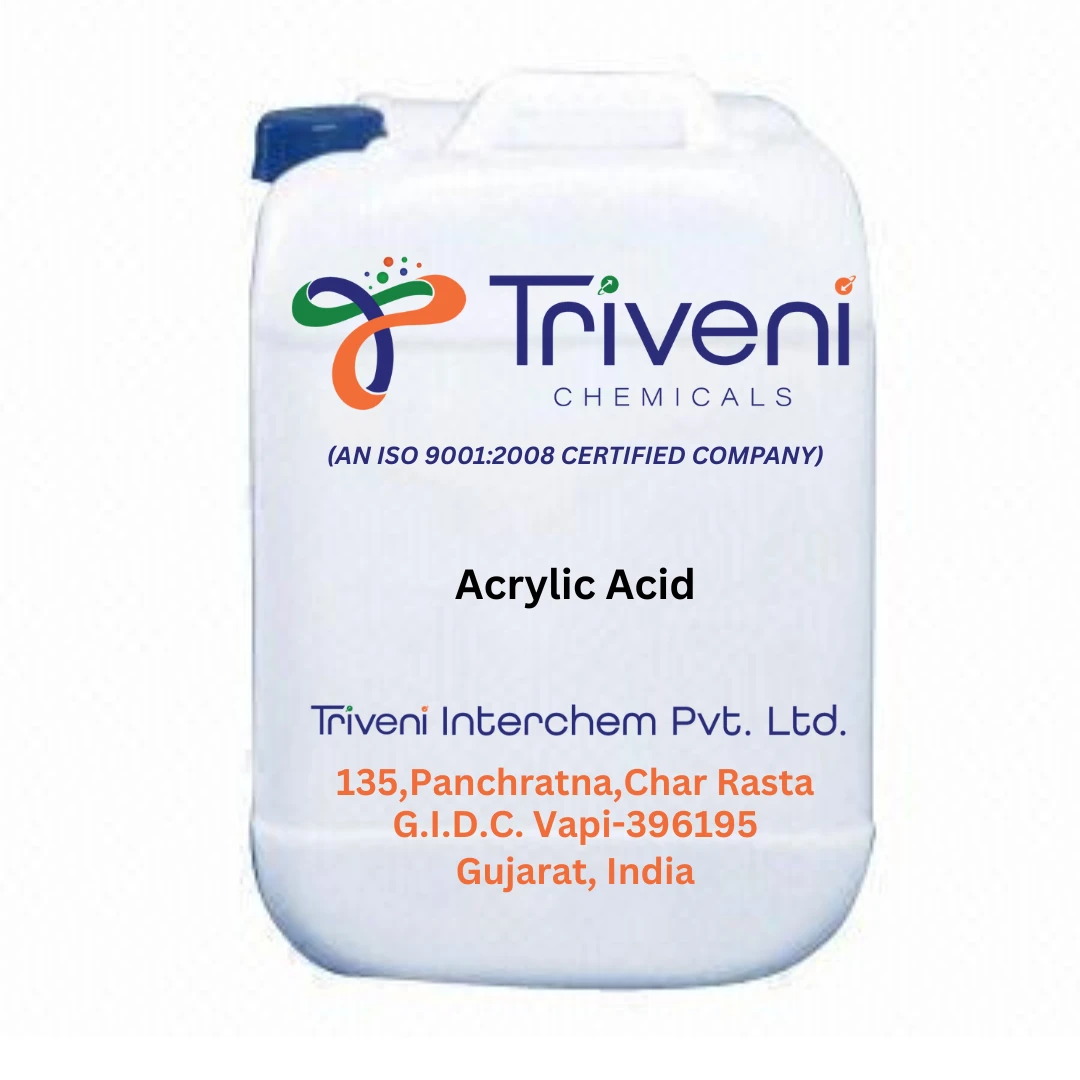
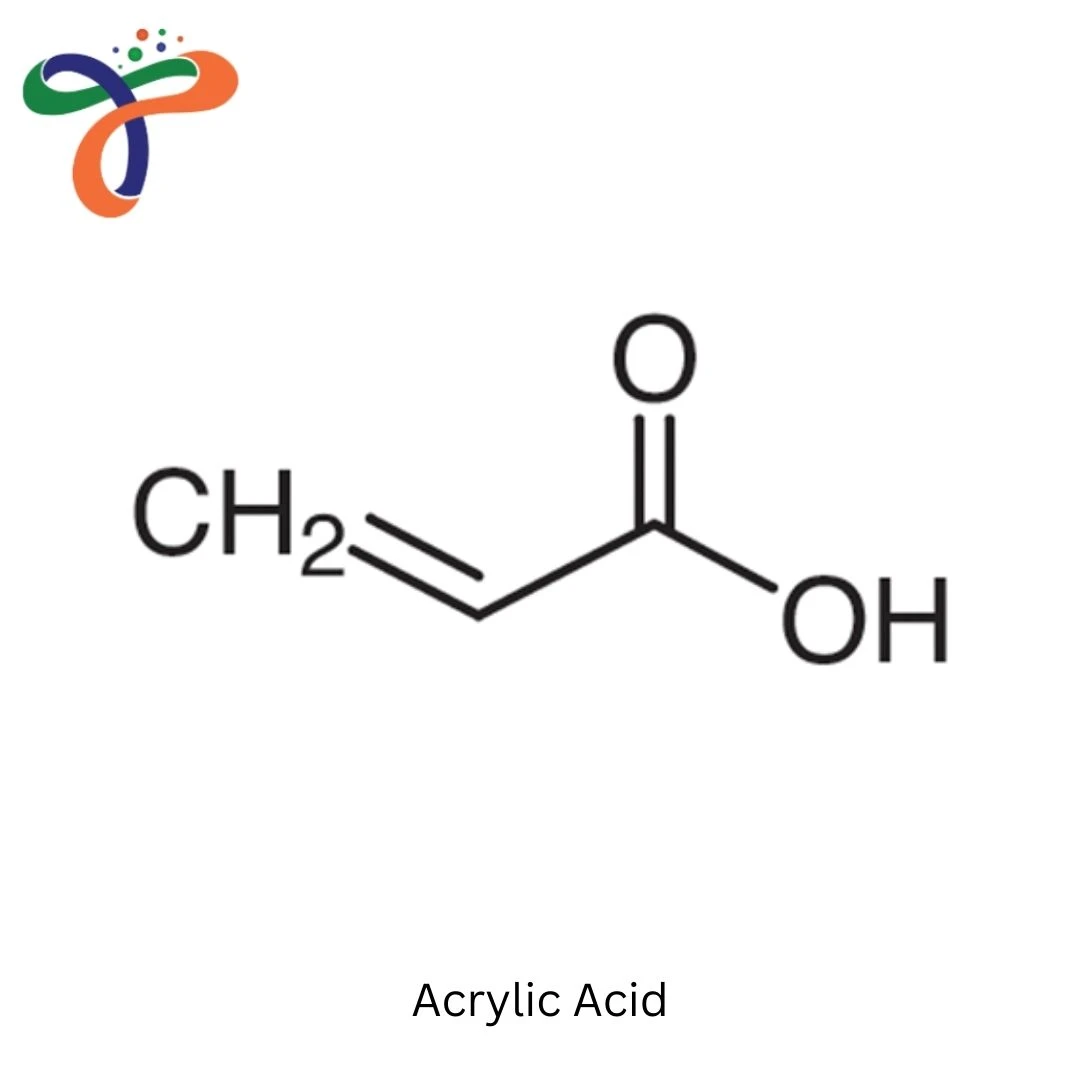
Acrylic Acid | 79-10-7
Cas No :
79-10-7
Form :
Liquid
Molecular Weight :
72.06
Molecular Formula :
C3H4O2
Boiling Point :
141 °c
Melting Point :
13 °c
Flash Point :
48,5 °c
Solubility :
Chloroform (sparingly), Dmso (slightly), Ethyl Acetate (slightly), Methanol (sli
Description :
Overview of Acrylic Acid
Acrylic Acid (CAS: 79-10-7) is a clear, colorless liquid with a sharp, acrid odor, widely used as a key raw material in the Plastic & Rubber Chemicals industry. It is an unsaturated carboxylic acid that easily polymerizes, making it highly valuable in the production of acrylic polymers, resins, and elastomers.
Acrylic acid is an important building block for acrylic polymers, resins, and superabsorbent materials in the chemical industry. Reliable quality from trusted suppliers makes sure that pharmaceutical, industrial, and research applications all work the same way every time.
Acrylic acid is an important building block for acrylic polymers, resins, and superabsorbent materials in the chemical industry. Reliable quality from trusted suppliers makes sure that pharmaceutical, industrial, and research applications all work the same way every time.
Applications of Acrylic Acid
Polymer & Resin Manufacturing
- It is used to make polyacrylic acid, acrylates, and superabsorbent polymers.
- It acts as a monomer in making adhesives and coatings.
- 4-Hydroxybenzophenone often used alongside acrylic acid for specialty coatings and UV protection
Industrial & Chemical Use
- It is a raw material for making specialty chemicals and intermediates.
- It is a key ingredient in water treatment chemicals and ion-exchange resins.
- 4-Methylmorpholine N-Oxide can be used in reactions with acrylic acid for enhanced polymer performance
Laboratory Applications
- It is used in small-scale research and to make acrylic esters and related compounds.
- It is a reactive compound used in coatings, adhesives, paints, and other applications.
- 4-Nitroaniline can also be used in research processes that involve acrylic acid.
Safety & Handling Guidelines
- Handle with chemical-resistant gloves and safety goggles
- Avoid breathing in fumes and prevent skin contact.
- Store acrylic acid in a cool, dry, and well-ventilated place, away from oxidizers and heat sources.
- Keep containers tightly closed when not in use
- Follow standard industrial safety procedures and MSDS instructions
Where to Buy Acrylic Acid?
Acrylic Acid Manufacturer
- ChemicalBull supplies high-quality acrylic acid with guaranteed purity for industrial and laboratory applications
Acrylic Acid Distributor & Supplier
- We offer both bulk and customized packaging options.
- Export-grade material with COA, TDS & MSDS
- Reliable supply for research institutions and manufacturing industries
- Explore other related chemicals in Home, Categories, and Applications sections for complete sourcing
Acrylic Acid MSDS
The Material Safety Data Sheet (MSDS) provides information on safe handling, storage, health hazards, and emergency measures. Always consult the MSDS before use.
Frequently Asked Questions (FAQs)
-
What is Acrylic Acid used for?
Acrylic acid is used to make polymers, coatings, adhesives, specialty chemicals, and in laboratory work. -
Is Acrylic Acid soluble in water?
Yes, acrylic acid dissolves very well in water. -
Is Acrylic Acid safe to handle?
Acrylic acid is safe to handle if you follow the recommended safety guidelines and MSDS instructions.
ChemicalBull supplies Acrylic Acid across India, serving customers in Andhra Pradesh, Arunachal Pradesh, Assam, Bihar, Chhattisgarh, Goa, Gujarat, Haryana, Himachal Pradesh, Jharkhand, Karnataka, Kerala, Madhya Pradesh, Maharashtra, Manipur, Meghalaya, Mizoram, Nagaland, Odisha, Punjab, Rajasthan, Sikkim, Tamil Nadu, Telangana, Tripura, Uttar Pradesh, Uttarakhand, and West Bengal, as well as the Union Territories of Andaman & Nicobar Islands, Chandigarh, Dadra & Nagar Haveli and Daman & Diu, Delhi, Jammu & Kashmir, Ladakh, Lakshadweep, and Puducherry. We serve pharmaceutical, chemical, research, academic, laboratory, manufacturing, and industrial customers with reliable nationwide delivery.