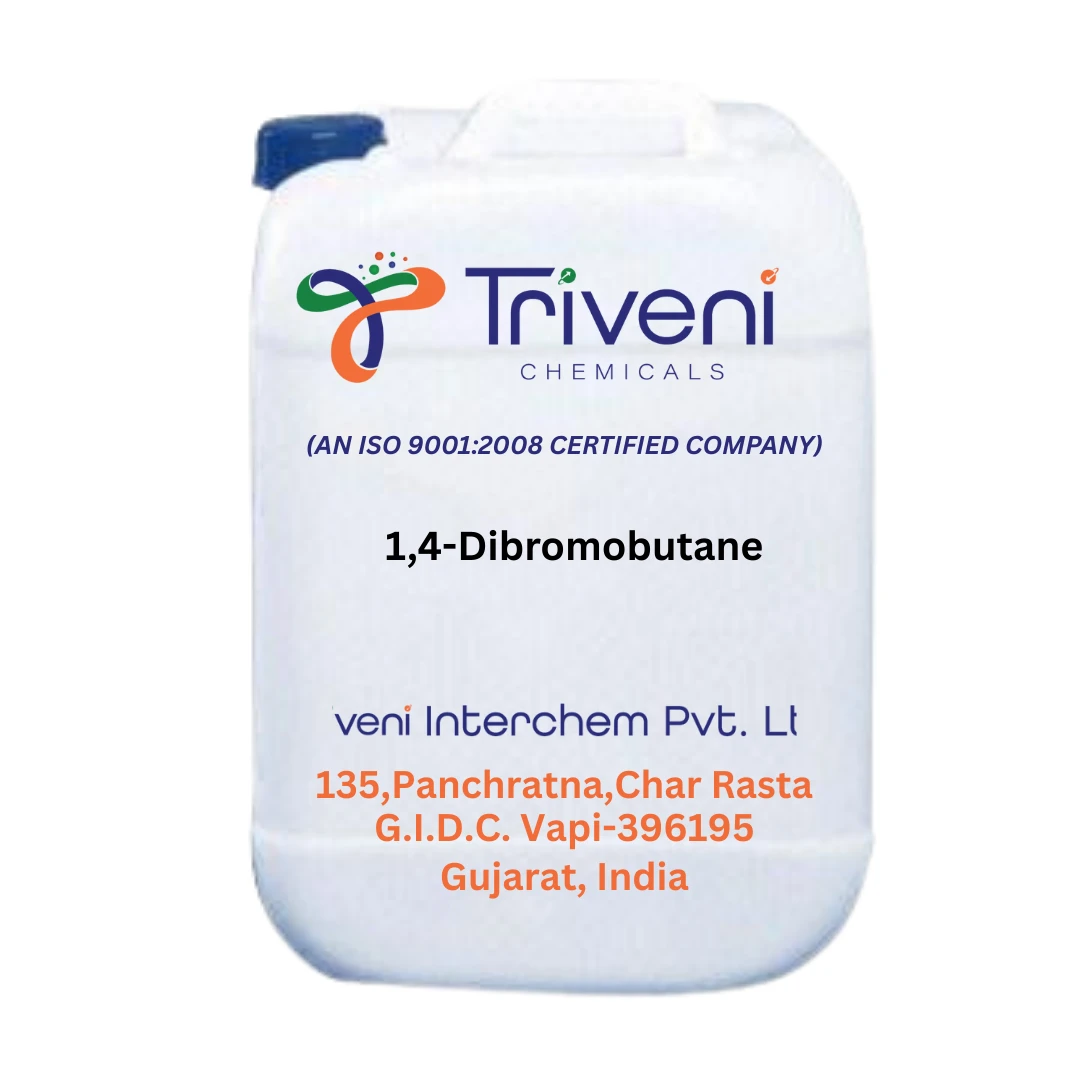
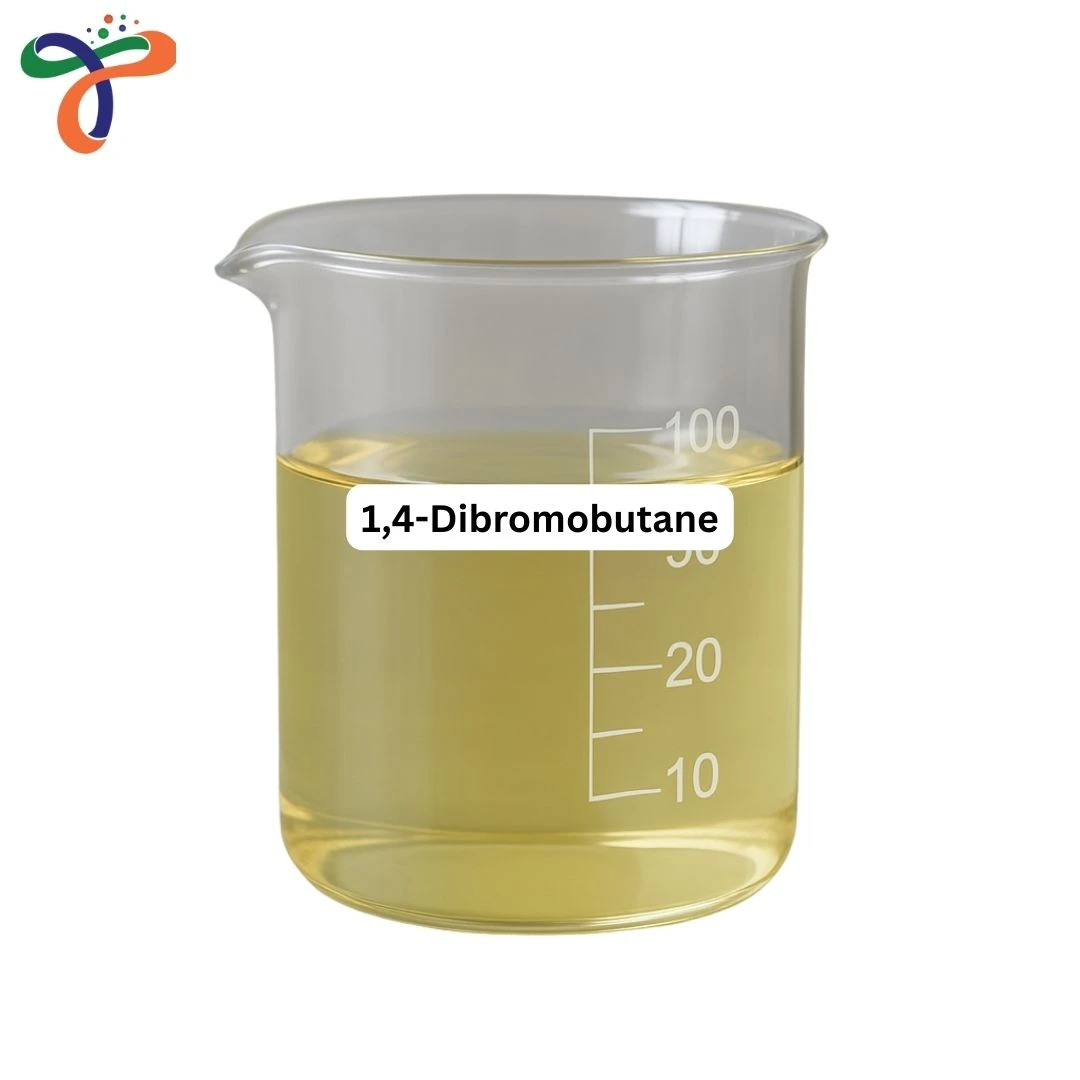
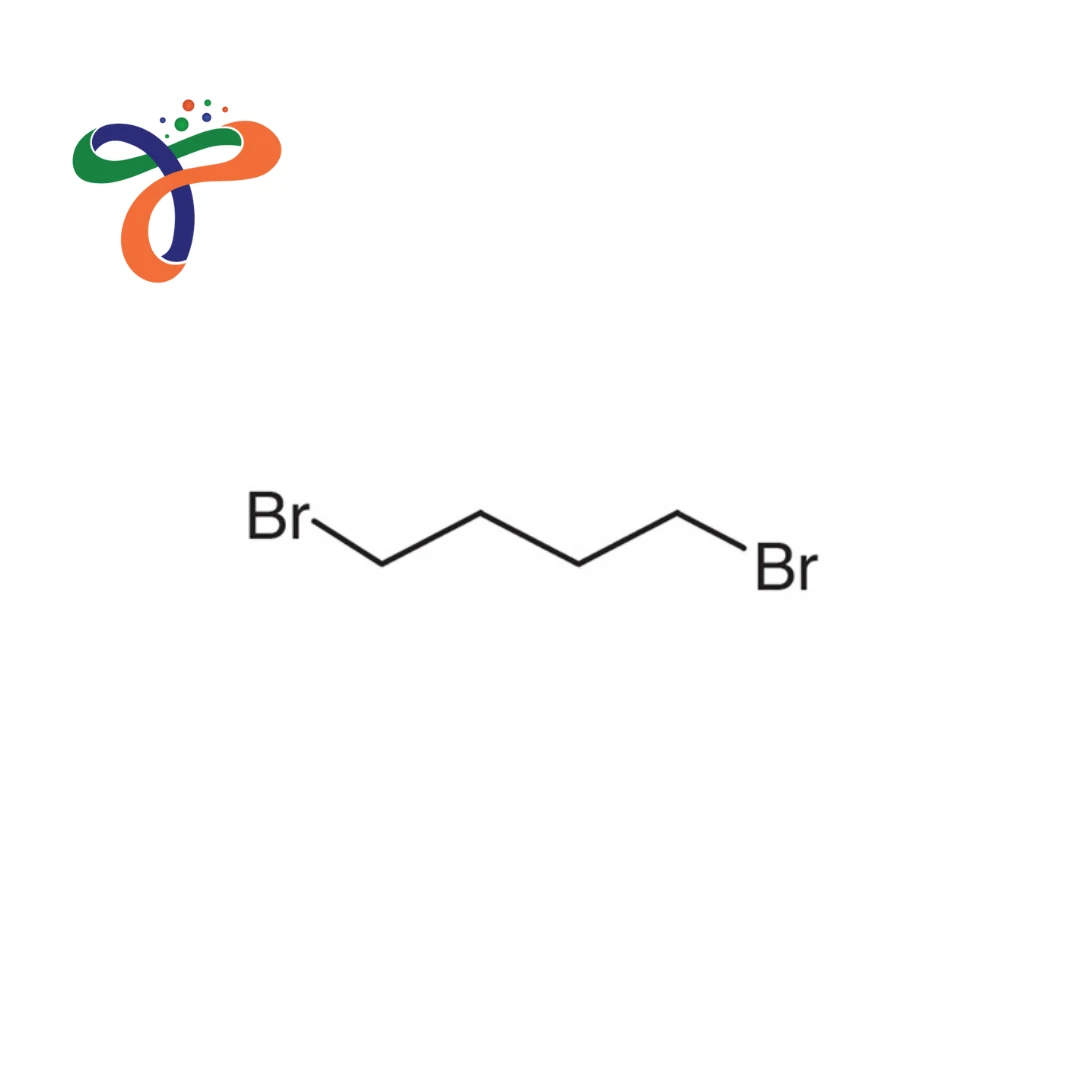
1,4-dibromobutane | 110-52-1
Cas No :
110-52-1
Synonyms :
Form :
Liquid
Molecular Weight :
213.90 G/mol
Molecular Formula :
C4H8BR2
Boiling Point :
230 °c
Melting Point :
-30 °c
Flash Point :
120 °c
Solubility :
Insoluble In Water; Soluble In Organic Solvents Such As Dichloromethane And Chloroform
Description :
Overview of 1,4-Dibromobutane
1,4-Dibromobutane (CAS: 110-52-1) is a di-halogenated aliphatic compound widely used in organic synthesis, polymer chemistry, pharmaceutical intermediates, and specialty chemical production. It appears as a colorless to pale yellow liquid and is valued for its high reactivity in nucleophilic substitution, cyclization, and cross-linking reactions.
This compound is commonly employed as a building block for heterocyclic compounds, polymer cross-linkers, and fine chemical intermediates. Its bifunctional bromide groups make it ideal for industrial chemical synthesis and laboratory-scale organic transformations.
In industrial applications, similar halogenated compounds like 1,2-Dibromoethane, 1,6-Dibromohexane, and 1,3-Dibromopropane are also used for organic synthesis, polymer intermediates, and specialty chemical manufacturing.
Applications of 1,4-Dibromobutane
Pharmaceutical & Fine Chemicals
-
Used as an intermediate in API synthesis and medicinal chemistry
-
Supports the construction of heterocyclic rings and cyclic compounds
-
Applied in the production of bioactive molecules and specialty reagents
Polymer & Material Chemistry
-
Acts as a cross-linking agent in polymer synthesis
-
Used in polyurethane, epoxy, and resin modifications
-
Supports development of high-performance polymeric materials
Organic Synthesis & Specialty Chemicals
-
Serves as a reagent for nucleophilic substitution and cyclization reactions
-
Useful in preparing brominated intermediates for industrial applications
-
Applied in research labs for fine chemical synthesis and experimental reactions
Laboratory & Research Applications
-
Utilized in academic and industrial research labs
-
Supports organic synthesis studies and chemical development projects
-
Applied in synthesis of heterocyclic and functionalized compounds
Safety & Handling Guidelines
-
Avoid contact with skin, eyes, and clothing
-
Use gloves, goggles, and protective clothing
-
Handle in well-ventilated areas or fume hoods
-
Store in tightly sealed containers away from heat, moisture, and strong oxidizers
-
Follow COA and MSDS instructions carefully
Where to Buy 1,4-Dibromobutane?
1,4-Dibromobutane Manufacturer
ChemicalBull supplies high-purity 1,4-Dibromobutane suitable for organic synthesis, polymer chemistry, and specialty chemical production.
1,4-Dibromobutane Supplier & Distributor
-
Available in bulk and laboratory-scale packaging
-
Ideal for industrial chemical synthesis, polymer cross-linking, and fine chemical intermediates
-
COA, MSDS, and detailed technical specifications provided
1,4-Dibromobutane MSDS
-
May cause irritation to skin, eyes, and respiratory system
-
Flammable—keep away from heat, sparks, and open flames
-
Avoid inhalation of vapors and prolonged exposure
-
Store in cool, dry, ventilated conditions
-
Refer to full MSDS for spill control and emergency response procedures
Frequently Asked Questions (FAQs)
-
What is the molecular formula of 1,4-Dibromobutane?
Molecular Formula: C₄H₈Br₂
Molecular Weight: 187.91 g/mol -
What is 1,4-Dibromobutane used for?
Used as a building block in organic synthesis, polymer cross-linking, heterocyclic compound synthesis, and specialty chemical intermediates. -
Which industries use 1,4-Dibromobutane?
Common industries include chemical manufacturing, polymer production, pharmaceuticals, and research laboratories. -
Is 1,4-Dibromobutane hazardous?
Yes. It is flammable and irritant. Proper PPE and safety precautions must be followed. -
Why is it important in organic synthesis?
Its bifunctional bromide groups make it ideal for cyclization, cross-linking, and nucleophilic substitution reactions in industrial and laboratory applications.
ChemicalBull supplies 1,4-dibromobutane across India, serving customers in Andhra Pradesh, Arunachal Pradesh, Assam, Bihar, Chhattisgarh, Goa, Gujarat, Haryana, Himachal Pradesh, Jharkhand, Karnataka, Kerala, Madhya Pradesh, Maharashtra, Manipur, Meghalaya, Mizoram, Nagaland, Odisha, Punjab, Rajasthan, Sikkim, Tamil Nadu, Telangana, Tripura, Uttar Pradesh, Uttarakhand, and West Bengal, as well as the Union Territories of Andaman & Nicobar Islands, Chandigarh, Dadra & Nagar Haveli and Daman & Diu, Delhi, Jammu & Kashmir, Ladakh, Lakshadweep, and Puducherry. We serve pharmaceutical, chemical, research, academic, laboratory, manufacturing, and industrial customers with reliable nationwide delivery.