Chemical Bull
680
27-May-2026
Introduction
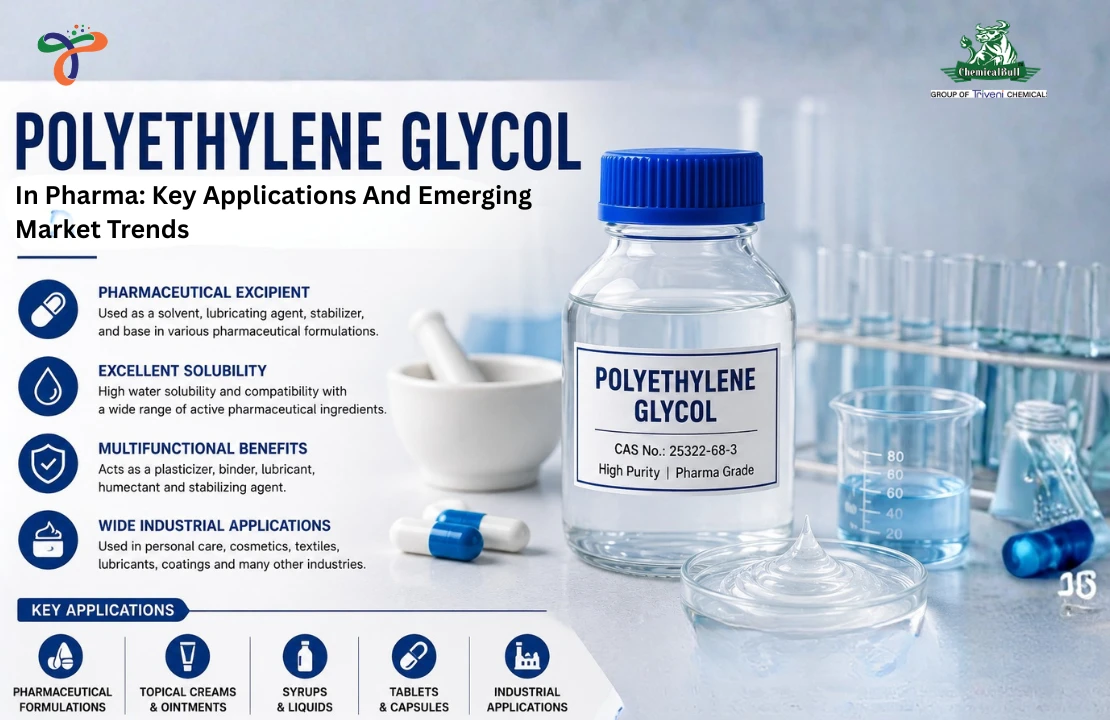
Polyethylene Glycol, commonly known as PEG, is one of the most widely used compounds in the pharmaceutical chemicals industry. Due to its excellent solubility, low toxicity, lubrication properties, and formulation stability, Polyethylene Glycol plays a vital role in pharmaceutical, cosmetic, industrial, and personal care applications.
Manufacturers and formulation companies worldwide rely on trusted Polyethylene Glycol supplier sources to ensure consistent product quality and stable formulation performance. Demand for increasing quantities of special chemical excipients for pharmaceutical use and other ingredients has dramatically driven up the consumption worldwide of polyethylene glycol.
PEG is used extensively in ointments and tablets as well as creams, syrups, capsules, laxatives and cosmetic formulations due to its multiple functions and its compatibility with pharmaceutical active components.
What is Polyethylene Glycol?
Polyethylene Glycol is a polyether compound produced through the polymerization of ethylene oxide. It is available in multiple molecular weights, ranging from liquid grades to solid wax-like forms.
Different PEG grades are selected depending on formulation requirements and industrial applications.
Key Characteristics:
- Excellent water solubility
- Low toxicity profile
- Good lubrication properties
- Stable chemical nature
- Compatible with many pharmaceutical ingredients
These properties make PEG highly valuable across pharmaceutical and industrial manufacturing sectors.
Major Applications of Polyethylene Glycol
1. Pharmaceutical Industry
The pharmaceutical sector is the largest consumer of Polyethylene Glycol.
PEG is widely used in:
- Tablet formulations
- Capsule manufacturing
- Ointments and creams
- Liquid syrups
- Laxative products
- Topical drug delivery systems
It functions as:
- Solvent
- Plasticizer
- Lubricant
- Stabilizer
- Pharmaceutical excipient
Its versatility makes it essential for modern pharmaceutical manufacturing.
2. Personal Care & Cosmetic Applications
Polyethylene Glycol is commonly used in:
- Moisturizers
- Shampoos
- Toothpaste
- Creams and lotions
- Skin care formulations
It improves:
- Product texture
- Moisture retention
- Product spreadability
- Emulsion stability
3. Industrial Applications
Apart from pharmaceuticals, PEG is also used in:
- Textile processing
- Lubricants
- Paints and coatings
- Chemical intermediates
- Industrial surfactants
Its multifunctional chemical properties make it suitable for various industrial processes.
Importance of Polyethylene Glycol in Pharmaceutical Chemicals
The pharmaceutical industry requires ingredients that are stable, safe, and formulation-friendly. Polyethylene Glycol fulfills all these requirements efficiently.
PEG helps manufacturers achieve:
- Better formulation consistency
- Improved ingredient solubility
- Enhanced drug stability
- Controlled viscosity
Because of these advantages, PEG remains one of the most preferred pharmaceutical excipients globally.
Different Grades of Polyethylene Glycol
Polyethylene Glycol is available in multiple grades based on molecular weight.
Low Molecular Weight PEG
- Mostly liquid form
- Used in syrups and solvents
Medium Molecular Weight PEG
- Used in creams, ointments, and cosmetic products
High Molecular Weight PEG
- Solid or wax-like appearance
- Used in tablets and industrial applications
Selecting the right PEG grade is important for achieving desired formulation performance.
Global Market Overview
The global Polyethylene Glycol market is witnessing steady growth because of rising pharmaceutical production and increasing healthcare demand worldwide.
Major Market Regions
- Asia-Pacific
- North America
- Europe
Asia-Pacific continues to dominate due to expanding pharmaceutical manufacturing industries in India and China.
Current Market Trends
1. Growth in Pharmaceutical Manufacturing
Increasing medicine production globally is directly increasing PEG consumption.
2. Expansion of the Personal Care Industry
The demand for high-performance cosmetic ingredients is supporting PEG market growth.
3. Increasing Use in Drug Delivery Systems
PEG is widely used in advanced pharmaceutical formulations and drug delivery technologies.
4. Demand for Multifunctional Ingredients
Manufacturers prefer ingredients that improve stability, texture, lubrication, and solubility simultaneously.
PEG fulfills all these formulation requirements efficiently.
Price Trend Analysis
The pricing of Polyethylene Glycol depends on:
- Ethylene oxide prices
- Crude oil market trends
- Pharmaceutical industry demand
- Manufacturing and transportation costs
Recent market trends indicate moderate price fluctuations due to global raw material and logistics conditions.
Industrial Demand Drivers
Pharmaceutical Industry
Increasing medicine manufacturing remains the biggest market driver.
Healthcare Sector Growth
Global healthcare expansion is increasing pharmaceutical raw material consumption.
Cosmetic & Personal Care Market
PEG demand continues to rise in skincare and beauty formulations.
Industrial Manufacturing
Industrial lubricants, coatings, and textile applications also contribute to market growth.
Challenges in the Market
Despite strong demand, the market faces certain challenges:
- Raw material price volatility
- Environmental regulations
- Competition from bio-based alternatives
- Supply chain fluctuations
However, stable pharmaceutical demand continues to support long-term market growth.
Future Outlook
The future of Polyethylene Glycol looks highly promising because of:
- Rising pharmaceutical production
- Growing healthcare investments
- Increasing personal care product demand
- Expansion of specialty chemical manufacturing
Asia-Pacific is expected to remain a dominant market region over the coming years.
Conclusion
Polyethylene Glycol is one of the most important pharmaceutical chemicals used across medicine manufacturing, personal care products, industrial formulations, and specialty chemical applications.
Its excellent solubility, stability, lubrication properties, and compatibility with active ingredients make it highly valuable for modern pharmaceutical formulations.
Manufacturers seeking high-quality Polyethylene Glycol for pharmaceutical formulations can explore ChemicalBull's Polyethylene Glycol product range.
Comment Section



