Chemical Bull
312
09-Jul-2026
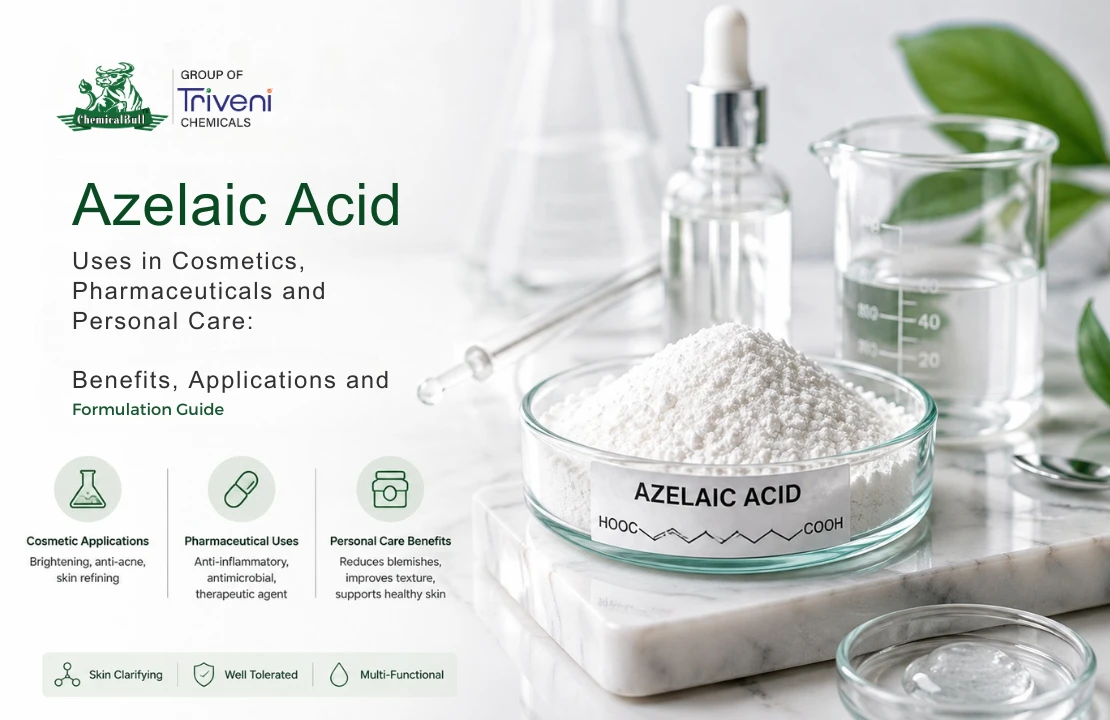
Azelaic Acid: Applications in Cosmetics, Pharmaceuticals & Personal Care
Azelaic Acid has become one of the most widely recognized multifunctional ingredients used across skincare, dermatology and pharmaceutical formulations. Naturally found in grains such as wheat, rye and barley and also produced synthetically for commercial use, it is valued for its antibacterial, anti-inflammatory and skin-brightening properties.
Whether used in dermatological formulations, cosmetic formulations or professional skincare products, Azelaic Acid offers multiple benefits without being overly harsh on the skin. For businesses looking for consistent quality raw materials, Chemical Bull is among the trusted azelaic acid manufacturers in india, supplying material for cosmetic, pharmaceutical and industrial applications.
This guide explains what Azelaic Acid is, how it works, its major applications, technical properties and why it has become an important ingredient in modern skincare and healthcare formulations.
What is Azelaic Acid Used For?
Azelaic Acid is mainly used in cosmetics, pharmaceuticals, and personal care products for acne care, pigmentation control, uneven skin tone improvement, and reducing visible redness. It is valued because of its antibacterial, anti-inflammatory, and skin-brightening properties.
What Is Azelaic Acid?
Azelaic Acid is a naturally occurring dicarboxylic acid with the molecular formula C₉H₁₆O₄. Although it occurs naturally in cereals, most commercial-grade Azelaic Acid is manufactured through controlled industrial processes to achieve high purity and consistent quality.
Unlike many exfoliating acids, Azelaic Acid works through several mechanisms simultaneously. It helps reduce acne-causing bacteria, minimizes inflammation, regulates abnormal skin cell production and reduces excess melanin formation. This multifunctional action makes it suitable for both cosmetic and pharmaceutical formulations.
Today, formulators include Azelaic Acid in creams, gels, lotions, serums and medicated skincare products designed for various skin concerns.
Technical Overview of Azelaic Acid
|
Property |
Details |
|
Chemical Name |
Azelaic Acid |
|
CAS Number |
123-99-9 |
|
Molecular Formula |
C₉H₁₆O₄ |
|
Molecular Weight |
188.22 g/mol |
|
Chemical Family |
Dicarboxylic Acid |
|
Appearance |
White crystalline powder |
|
Melting Point |
106°C to 109°C |
|
Solubility |
Slightly soluble in water; soluble in alcohols and certain organic solvents |
|
Primary Industries |
Cosmetics, Pharmaceuticals, Personal Care |
|
Chemical Structure |
contains two terminal carboxylic acid groups connected by a seven-carbon hydrocarbon chain |
Why Is Azelaic Acid Widely Used?
The popularity of Azelaic Acid comes from its ability to address several skin concerns with a single active ingredient. Instead of targeting only one issue, it provides multiple functional benefits that make formulation simpler and more effective.
Unlike stronger exfoliating acids that may increase skin sensitivity, Azelaic Acid is generally considered suitable for a wider range of skin types when used at recommended concentrations. This versatility has contributed to its growing use in both over-the-counter and specialized dermatological formulations.
Azelaic Acid Applications in Cosmetics
The cosmetics industry is the largest commercial consumer of Azelaic Acid. It is incorporated into formulations designed to improve skin clarity, texture and overall appearance.
Acne Care Products
One of the most common cosmetic applications of Azelaic Acid is acne management. It helps reduce the growth of acne-causing bacteria while minimizing inflammation associated with breakouts.
Because it also supports normal skin cell turnover, it helps prevent clogged pores that often contribute to acne formation.
Common cosmetic products include:
- Acne treatment creams
- Facial gels
- Spot treatment formulations
- Anti-blemish serums
Skin Brightening Products
Azelaic Acid is widely used in brightening formulations because it helps reduce excess melanin production without functioning as a bleaching agent.
Many cosmetic brands include it in products formulated for:
- Uneven skin tone
- Dark spots
- Post-acne marks
- Sun-induced pigmentation
Its gradual action makes it suitable for long-term skincare routines.
Anti-Aging Skincare
Although Azelaic Acid is not classified as a traditional anti-aging ingredient, it contributes to healthier-looking skin by improving texture and reducing inflammation.
When combined with ingredients such as Niacinamide, Hyaluronic Acid or Ceramides, it supports smoother and more even-looking skin.
Common cosmetic formulations include:
|
Cosmetic Product |
Purpose |
|
Face Serum |
Brightening and texture improvement |
|
Moisturizing Cream |
Skin conditioning |
|
Night Cream |
Pigmentation management |
|
Facial Gel |
Acne-prone skin care |
|
Spot Treatment |
Localized blemish reduction |
Cosmetic formulators select Azelaic Acid based on concentration, product type, stability requirements, and compatibility with other active ingredients. In cosmetics, Azelaic Acid is commonly used in creams, gels, emulsions, and serums for acne-prone skin, uneven skin tone, pigmentation, dark spots, and visible redness.
Azelaic Acid Applications in Pharmaceuticals
Beyond cosmetics, Azelaic Acid is widely recognized in dermatology for its therapeutic benefits. Pharmaceutical formulations often contain higher concentrations and are developed under medical guidance for specific skin conditions.
Use in Acne-Focused Formulations
Azelaic Acid is commonly used in formulations designed for the management of mild to moderate acne. It helps reduce acne-causing bacteria, minimizes inflammation, and supports healthy skin cell turnover, making it a valuable ingredient in dermatological formulations.
Unlike some treatments that focus on a single pathway, Azelaic Acid offers a broader mechanism of action, which contributes to its continued use in dermatological formulations.
Rosacea Management
Azelaic Acid is also used in pharmaceutical products formulated for rosacea. Its anti-inflammatory properties help reduce redness and visible bumps associated with this chronic skin condition.
Formulations containing Azelaic Acid are generally well tolerated across a range of skin types when used at recommended concentrations
Azelaic Acid Applications in Personal Care
Personal care manufacturers increasingly use Azelaic Acid in products designed to improve overall skin appearance while supporting a gentle skincare routine. Its multifunctional properties allow formulators to develop products that address multiple concerns without relying on several active ingredients.
Unlike ingredients that primarily exfoliate the skin, Azelaic Acid works by helping maintain clearer-looking skin, supporting an even complexion, and reducing visible redness. This makes it suitable for products intended for daily or regular use, depending on the formulation.
Today, it is commonly found in facial creams, serums, lotions, and skin-correcting treatments marketed for consumers seeking brighter and healthier-looking skin.
Although Azelaic Acid is often compared with chemical exfoliants, it works differently from ingredients such as Glycolic Acid or Salicylic Acid.
Common Personal Care Products Containing Azelaic Acid
|
Product Type |
Primary Purpose |
|
Face Serums |
Improve skin tone and texture |
|
Daily Moisturizers |
Support healthy-looking skin |
|
Brightening Creams |
Reduce the appearance of dark spots |
|
Facial Gels |
Help manage acne-prone skin |
|
Corrective Creams |
Improve overall skin clarity |
Industrial Importance of Azelaic Acid
Although Azelaic Acid is best known for skincare and pharmaceutical applications, it also has industrial significance. High-purity Azelaic Acid is used as an intermediate in the production of specialty chemicals, lubricants, plasticizers, and certain polymer materials.
These applications require consistent quality and controlled manufacturing standards to ensure reliable downstream processing.
Compared to the cosmetic market, industrial demand is smaller, but it remains important in selected specialty chemical sectors.
Key Benefits of Azelaic Acid
One reason Azelaic Acid continues to gain popularity is its ability to deliver several skincare benefits through a single active ingredient. This helps formulators simplify ingredient lists while maintaining product performance.
Some of its key advantages include:
- Helps improve the appearance of acne-prone skin.
- Supports a more even-looking skin tone.
- Reduces the appearance of post-acne marks.
- Helps minimize visible redness associated with sensitive skin.
- Suitable for many cosmetic and pharmaceutical formulations.
- Compatible with several commonly used skincare ingredients.
Azelaic Acid vs Other Popular Skincare Acids
Many people compare Azelaic Acid with ingredients such as Salicylic Acid, Glycolic Acid, and Lactic Acid. While these ingredients all support skin improvement, they work through different mechanisms.
|
Ingredient |
Primary Function |
Common Applications |
|
Azelaic Acid |
Anti-inflammatory, brightening, antibacterial |
Acne, pigmentation, rosacea |
|
Oil-soluble exfoliant |
Oily and acne-prone skin |
|
|
Chemical exfoliation |
Skin resurfacing |
|
|
Gentle exfoliation |
Dry and sensitive skin |
Rather than replacing these ingredients, Azelaic Acid is often included alongside them in carefully balanced formulations to achieve complementary skincare benefits.
Factors to Consider When Formulating with Azelaic Acid
Successful formulation depends on selecting the appropriate concentration, delivery system, and supporting ingredients. Product developers also evaluate stability, pH compatibility, texture, and the intended application before incorporating Azelaic Acid into cosmetic or pharmaceutical products.
Proper formulation helps ensure consistent product performance while maintaining user comfort and stability throughout the product's shelf life.
Safety and Handling
Commercial-grade Azelaic Acid should be handled according to the manufacturer's Safety Data Sheet (SDS).
For industrial users, recommended practices include:
- Store in a cool, dry place.
- Keep containers tightly sealed after use.
- Avoid unnecessary moisture exposure.
- Wear appropriate personal protective equipment during handling.
- Follow local regulatory and workplace safety requirements.
Finished cosmetic and pharmaceutical products should always be formulated and tested according to applicable regulations before being introduced to the market.
Growing Demand Across Industries
The global demand for multifunctional skincare ingredients continues to increase as consumers look for products that address several concerns with fewer active ingredients.
Azelaic Acid fits this trend because it is used across:
- Dermatology
- Clinical skincare
- Cosmetic formulations
- Premium personal care products
- Specialty pharmaceutical products
As skincare innovation continues, formulators are expected to incorporate Azelaic Acid into an even wider range of creams, serums, emulsions, and treatment products.
Request a Quote for Bulk Azelaic Acid
Whether you're manufacturing skincare products, cosmetic formulations, pharmaceutical preparations, or specialty chemical products, selecting a reliable raw material supplier is essential for consistent product quality.
Chemical Bull supplies high-quality Azelaic Acid with technical documentation, bulk packaging options, and dependable supply support for industrial buyers worldwide.
Request a Quote today to discuss your bulk Azelaic Acid requirements with our technical sales team.
Frequently Asked Questions
-
What is Azelaic Acid mainly used for?
Azelaic Acid is primarily used in cosmetics, pharmaceuticals, and personal care products to help manage acne-prone skin, uneven skin tone, pigmentation, and rosacea while improving overall skin appearance. -
What is the CAS number of Azelaic Acid?
The CAS number of Azelaic Acid is 123-99-9. -
Is Azelaic Acid used only in skincare?
No. Although skincare is its largest application, Azelaic Acid is also used in pharmaceutical formulations and selected industrial applications, including specialty chemical manufacturing. -
Can Azelaic Acid be used in cosmetic formulations?
Yes. Azelaic Acid is widely incorporated into creams, gels, lotions, and serums intended for cosmetic skincare products. The concentration depends on the intended application and local regulations. -
What industries use Azelaic Acid?
The primary industries include cosmetics, personal care, pharmaceuticals, and selected specialty chemical manufacturing sectors. -
What are the side effects of Azelaic Acid on the face?
Azelaic Acid is generally well tolerated, but some users may experience mild dryness, tingling, redness, itching, or a slight burning sensation when first using it. These effects are usually temporary. If irritation continues, users should reduce frequency or consult a dermatologist. -
Which is better — Vitamin C or Azelaic Acid?
Vitamin C is mainly used for antioxidant protection, glow, and brightening, while Azelaic Acid is commonly used for acne-prone skin, redness, pigmentation, and uneven tone. Neither is universally better; Vitamin C is preferred for dullness and antioxidant support, while Azelaic Acid is more useful for acne, rosacea-prone skin, and post-acne marks.
Conclusion
Azelaic Acid has become one of the most valuable multifunctional ingredients used across cosmetics, pharmaceuticals, and personal care products. Its ability to help improve acne-prone skin, reduce the appearance of pigmentation, support a more even skin tone, and address visible redness makes it a preferred ingredient for formulators and dermatology professionals alike.
Beyond skincare, Azelaic Acid also serves as a specialty chemical intermediate, highlighting its versatility across industries. As demand for scientifically backed and multifunctional ingredients continues to grow, Azelaic Acid is expected to remain an important component in next-generation skincare and pharmaceutical formulations.
Whether you are developing cosmetic formulations, pharmaceutical products, or personal care solutions, Chemical Bull supplies high-quality Azelaic Acid with technical documentation, consistent quality, and bulk supply support for industrial buyers across India and global markets.


Comment Section