Description :
Overview of Tyramine Hydrochloride
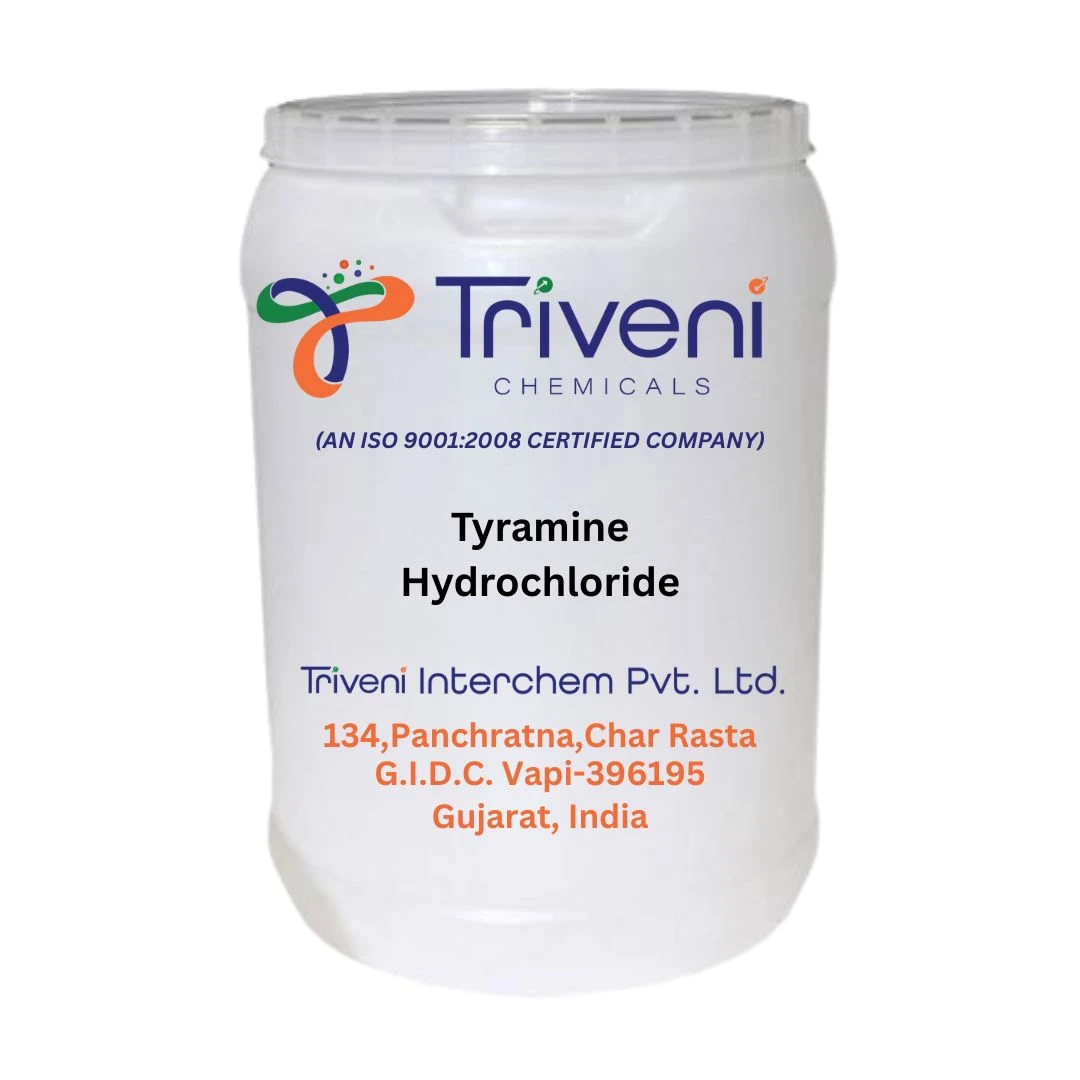
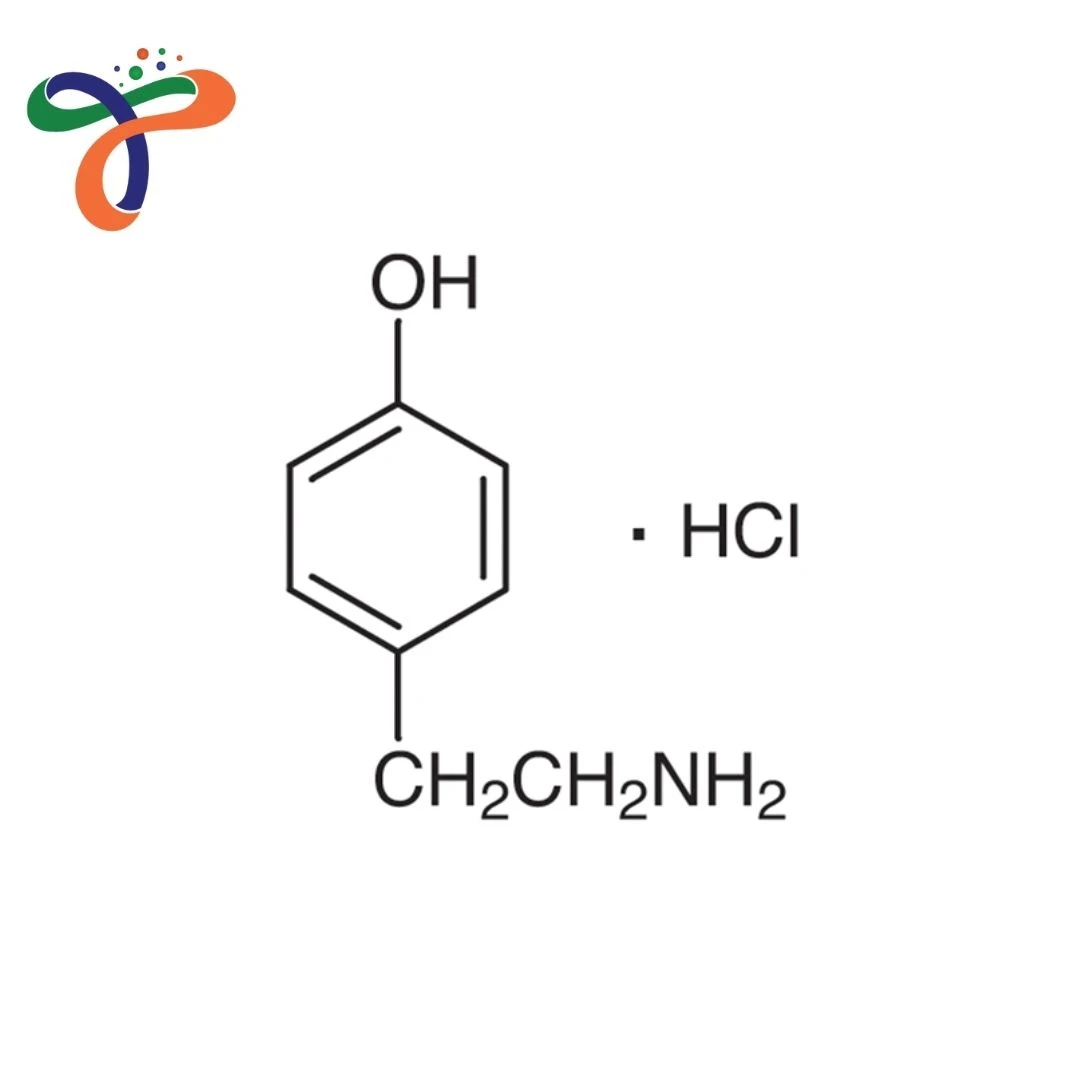
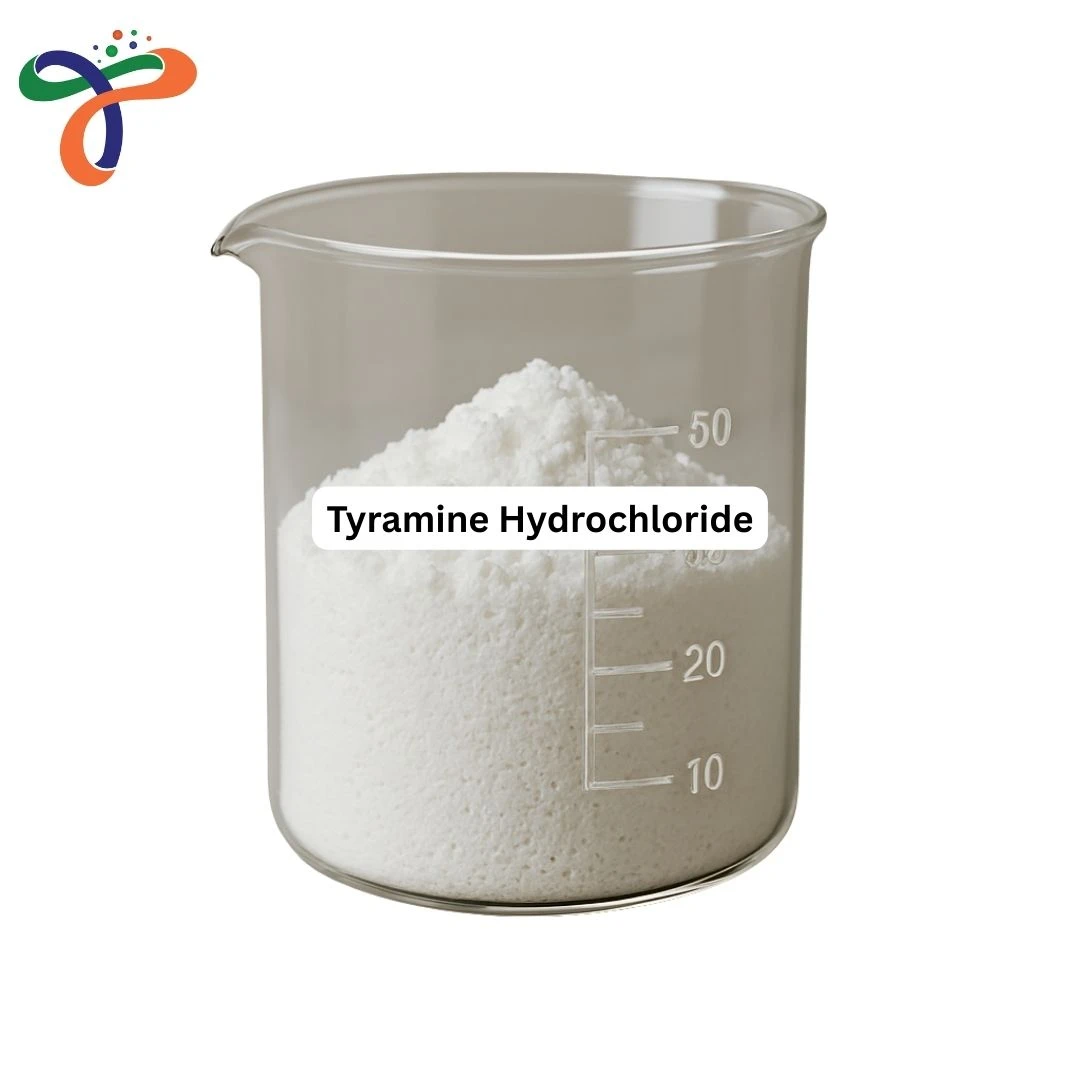
Tyramine Hydrochloride is a pharmaceutical-grade organic compound formed as the hydrochloride salt of tyramine, a naturally occurring monoamine derived from the amino acid tyrosine. It is primarily used in laboratory, research, and controlled pharmaceutical applications.
The hydrochloride salt form enhances stability and water solubility, making it suitable for formulation and analytical purposes. In regulated manufacturing environments, Tyramine Hydrochloride is produced under controlled quality standards to ensure purity, consistent composition, and reliable performance.
As a specialty pharmaceutical and research chemical, Tyramine Hydrochloride is mainly utilized in biochemical research and controlled experimental studies. It is often evaluated alongside related compounds such as Tyrosine, Dopamine Hydrochloride, and Phenylephrine Hydrochloride in neurotransmitter and sympathetic response research applications.
Applications of Tyramine Hydrochloride
Research & Laboratory Applications
Tyramine Hydrochloride is widely used in biochemical and pharmacological research to study neurotransmitter release mechanisms and sympathetic nervous system activity. It plays a role in experimental models examining catecholamine release and receptor response.
Analytical & Reference Standard Use
The compound may be used as a reference material in analytical testing and laboratory calibration procedures where precise composition and reproducibility are required.
Controlled Pharmaceutical Development
Tyramine Hydrochloride is manufactured under regulated conditions to maintain consistent purity and batch quality, making it suitable for research institutions and pharmaceutical development environments.
In research-focused portfolios, it is commonly considered along with Tyrosine, Dopamine Hydrochloride, and Phenylephrine Hydrochloride for comparative pharmacological evaluation.
Safety & Handling Guidelines
-
Store in a cool and dry place
-
Protect from moisture and direct light
-
Keep containers tightly sealed
-
Avoid inhalation of dust or powder
-
Avoid direct contact with eyes and skin
-
Use appropriate personal protective equipment (gloves, mask, safety glasses)
-
Ensure adequate ventilation in handling areas
-
Follow laboratory and pharmaceutical safety standards
Where to Buy Tyramine Hydrochloride?
Tyramine Hydrochloride Manufacturer
Tyramine Hydrochloride is manufactured for research and controlled pharmaceutical applications where consistent purity, stability, and regulatory documentation are required.
Tyramine Hydrochloride Supplier & Distributor
Laboratory-grade Tyramine Hydrochloride is supplied in suitable packaging for research institutions and formulation companies. As a specialty chemicals supplier and distributor, Chemicalbull Pvt. Ltd. supports reliable sourcing with standard documentation.
MSDS for Tyramine Hydrochloride
The MSDS for Tyramine Hydrochloride provides detailed information regarding safe handling, storage requirements, exposure controls, and emergency procedures. It should be reviewed before laboratory or industrial use.
Frequently Asked Questions (FAQs)
-
What is Tyramine Hydrochloride?
Tyramine Hydrochloride is the hydrochloride salt form of tyramine, a naturally occurring monoamine derived from tyrosine. It is primarily used in biochemical and pharmacological research applications.
-
What is Tyramine Hydrochloride used for?
Tyramine Hydrochloride is used in laboratory research to study neurotransmitter release, sympathetic nervous system responses, and related pharmacological mechanisms.
-
What is the solubility of Tyramine Hydrochloride?
Tyramine Hydrochloride is soluble in water due to its hydrochloride salt form, which enhances its compatibility in research and analytical applications.
ChemicalBull supplies Tyramine Hydrochloride across India, serving customers in Andhra Pradesh, Arunachal Pradesh, Assam, Bihar, Chhattisgarh, Goa, Gujarat, Haryana, Himachal Pradesh, Jharkhand, Karnataka, Kerala, Madhya Pradesh, Maharashtra, Manipur, Meghalaya, Mizoram, Nagaland, Odisha, Punjab, Rajasthan, Sikkim, Tamil Nadu, Telangana, Tripura, Uttar Pradesh, Uttarakhand, and West Bengal, as well as the Union Territories of Andaman & Nicobar Islands, Chandigarh, Dadra & Nagar Haveli and Daman & Diu, Delhi, Jammu & Kashmir, Ladakh, Lakshadweep, and Puducherry. We serve pharmaceutical, chemical, research, academic, laboratory, manufacturing, and industrial customers with reliable nationwide delivery.