
Tris 2-carboxyethyl Phosphine Hydrochloride
Description :
Overview of Tris 2-Carboxyethyl Phosphine Hydrochloride
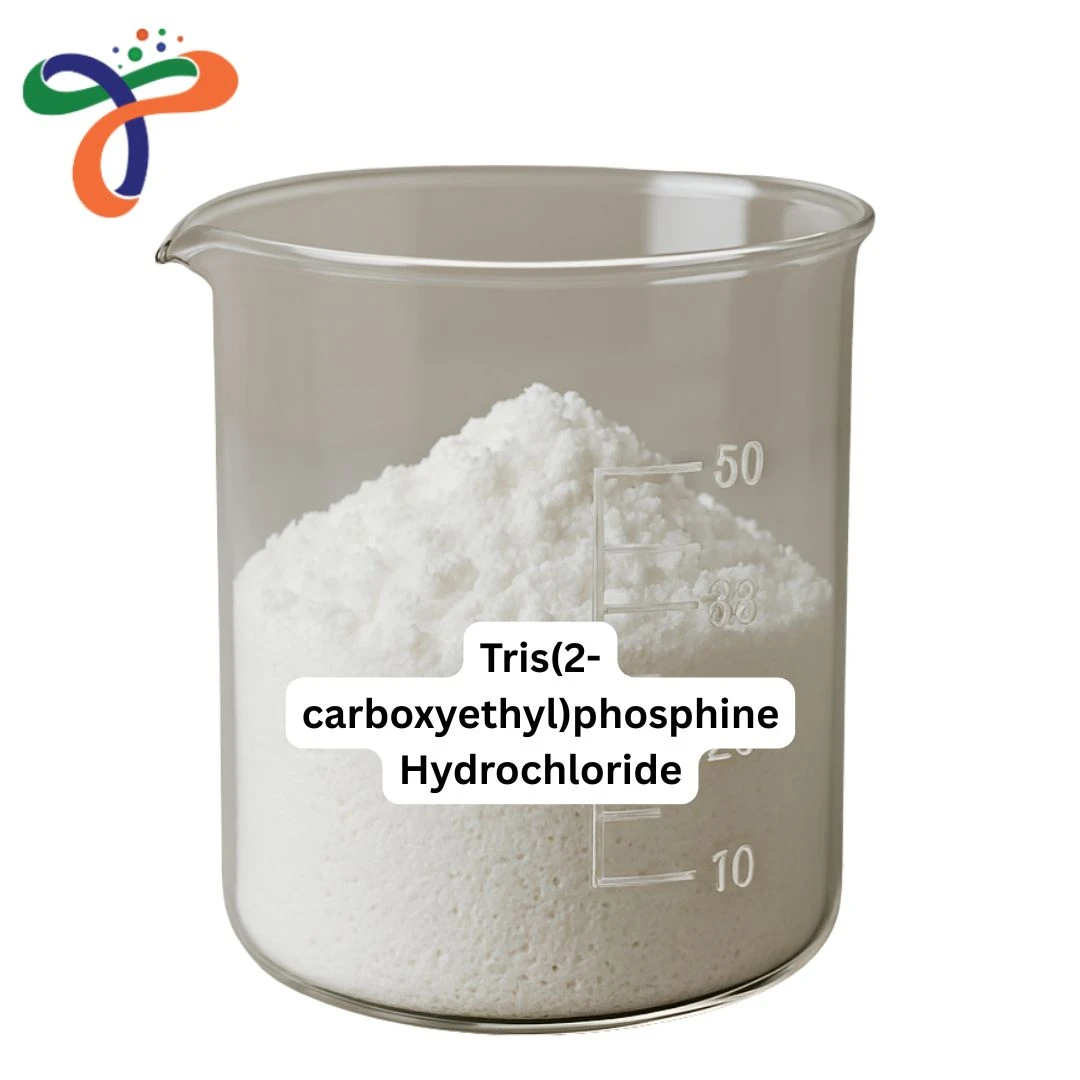
Tris 2-Carboxyethyl Phosphine Hydrochloride (TCEP-HCl) is a highly effective reducing agent commonly used in biochemical research and industrial applications. It is widely employed in the reduction of disulfide bonds in proteins, facilitating the study of protein structure and function. Additionally, TCEP-HCl plays a crucial role in the synthesis of various organic compounds, making it an essential tool in chemical laboratories, pharmaceutical development, and industrial chemical processes.
At ChemicalBull Pvt. Ltd., we provide high-quality Tris 2-Carboxyethyl Phosphine Hydrochloride for use in various industries, particularly in biochemistry and chemical manufacturing. TCEP-HCl is an essential reagent in both research and large-scale applications, and its reliability ensures high-performance results. It is commonly used alongside other chemicals such as Iron Bromide and Anthranilamide in advanced chemical formulations.
Applications of Tris 2-Carboxyethyl Phosphine Hydrochloride
Protein Chemistry
TCEP-HCl is used extensively in the reduction of disulfide bonds within proteins, aiding in protein denaturation and folding studies.
It helps maintain the integrity of protein structures during purification and analysis.
Pharmaceutical Manufacturing
Tris 2-Carboxyethyl Phosphine Hydrochloride is utilized in pharmaceutical synthesis, particularly in the production of drugs that involve sulfide bond reduction.
It plays a vital role in drug development by enabling the efficient manipulation of biomolecular interactions.
Organic Synthesis
TCEP-HCl is a powerful reducing agent, making it ideal for use in organic synthesis where precise and effective reduction reactions are necessary.
It is used in the synthesis of complex molecules for various chemical industries, including specialty chemicals and agrochemicals.
Biochemical Research
TCEP-HCl is widely used in biochemical laboratories for research applications, particularly in the study of proteins and enzymes.
It is essential in proteomics for the analysis of protein samples, supporting the development of targeted therapeutics and diagnostic tools.
Catalysis in Industrial Applications
Tris 2-Carboxyethyl Phosphine Hydrochloride also finds use as a catalyst in several industrial processes, enhancing reaction efficiency and selectivity.
It is a valuable chemical in polymer and resin production, where precise chemical control is critical.
Safety & Handling Guidelines
- Store TCEP-HCl in a cool, dry place, in a tightly sealed container to prevent contamination.
- Handle with care, using appropriate PPE (gloves, goggles, and lab coats) to avoid exposure.
- Avoid inhalation of dust and fumes; use TCEP-HCl in well-ventilated areas, preferably in a fume hood.
- Follow MSDS guidelines for handling, storage, and disposal to ensure safety and environmental compliance.
- In case of contact with skin or eyes, rinse thoroughly with water and seek medical attention if necessary.
Where to Buy Tris 2-Carboxyethyl Phosphine Hydrochloride?
TCEP-HCl Manufacturer
Produced under strict quality control to ensure consistency and high performance in biochemical and industrial applications.
TCEP-HCl Supplier & Distributor
ChemicalBull Pvt. Ltd. is a trusted supplier of Tris 2-Carboxyethyl Phosphine Hydrochloride, providing bulk quantities for research, pharmaceutical manufacturing, and industrial use.
TCEP-HCl MSDS
MSDS available upon request, containing detailed safety, handling, storage, and disposal instructions for Tris 2-Carboxyethyl Phosphine Hydrochloride.
Frequently Asked Questions
-
What is the primary use of Tris 2-Carboxyethyl Phosphine Hydrochloride?
TCEP-HCl is primarily used as a reducing agent in biochemical and organic chemistry to break disulfide bonds in proteins. -
How does TCEP-HCl help in protein studies?
It reduces disulfide bonds, facilitating protein denaturation and structure analysis in biochemical experiments. -
Can TCEP-HCl be used in pharmaceutical manufacturing?
Yes, it is employed in pharmaceutical synthesis for the reduction of sulfide bonds in drug development processes.
ChemicalBull supplies Tris 2-carboxyethyl Phosphine Hydrochloride across India, serving customers in Andhra Pradesh, Arunachal Pradesh, Assam, Bihar, Chhattisgarh, Goa, Gujarat, Haryana, Himachal Pradesh, Jharkhand, Karnataka, Kerala, Madhya Pradesh, Maharashtra, Manipur, Meghalaya, Mizoram, Nagaland, Odisha, Punjab, Rajasthan, Sikkim, Tamil Nadu, Telangana, Tripura, Uttar Pradesh, Uttarakhand, and West Bengal, as well as the Union Territories of Andaman & Nicobar Islands, Chandigarh, Dadra & Nagar Haveli and Daman & Diu, Delhi, Jammu & Kashmir, Ladakh, Lakshadweep, and Puducherry. We serve pharmaceutical, chemical, research, academic, laboratory, manufacturing, and industrial customers with reliable nationwide delivery.