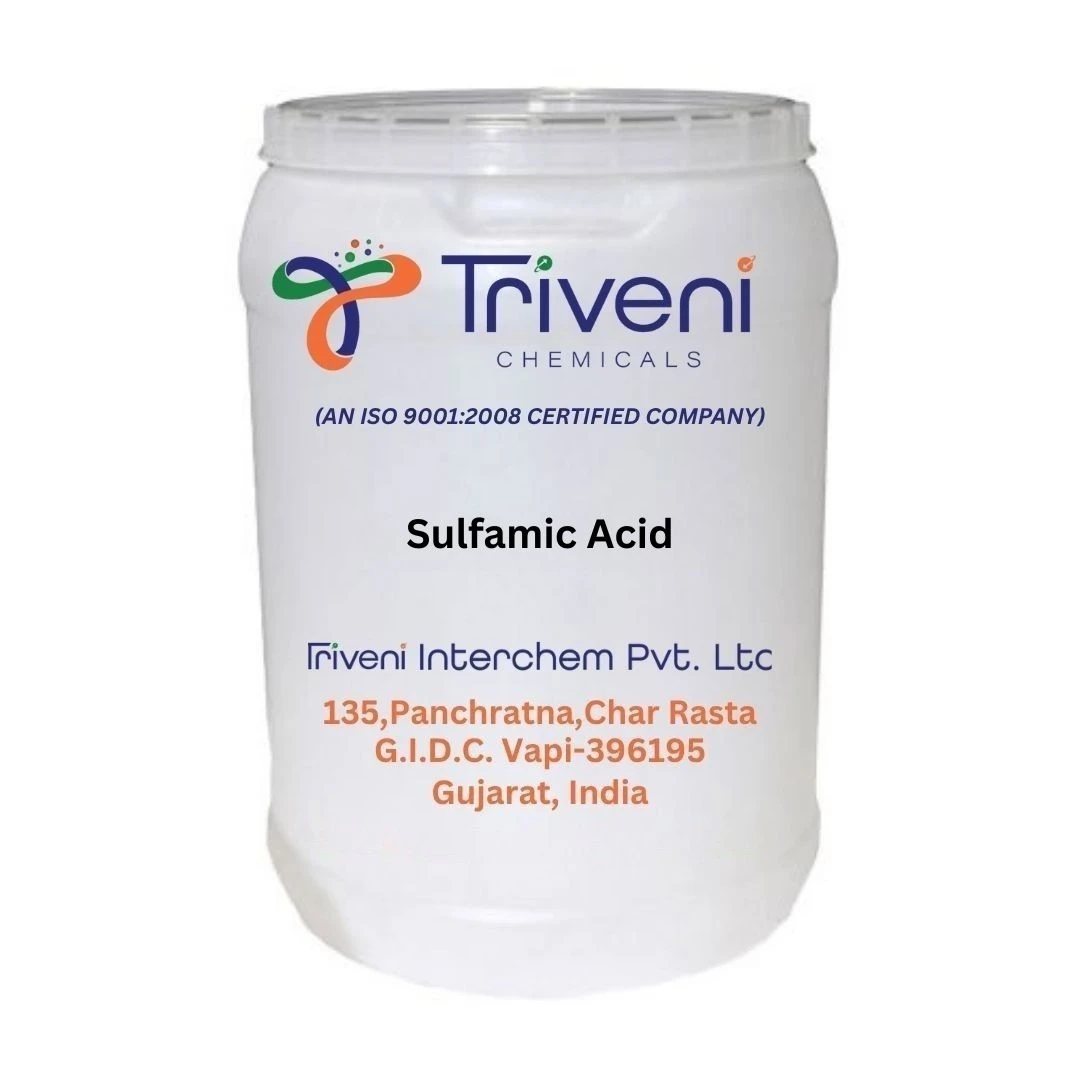
Sulfamic Acid | 5329-14-6
Cas No :
5329-14-6
Synonyms :
Form :
Solid
Molecular Weight :
97.12 G/mol
Molecular Formula :
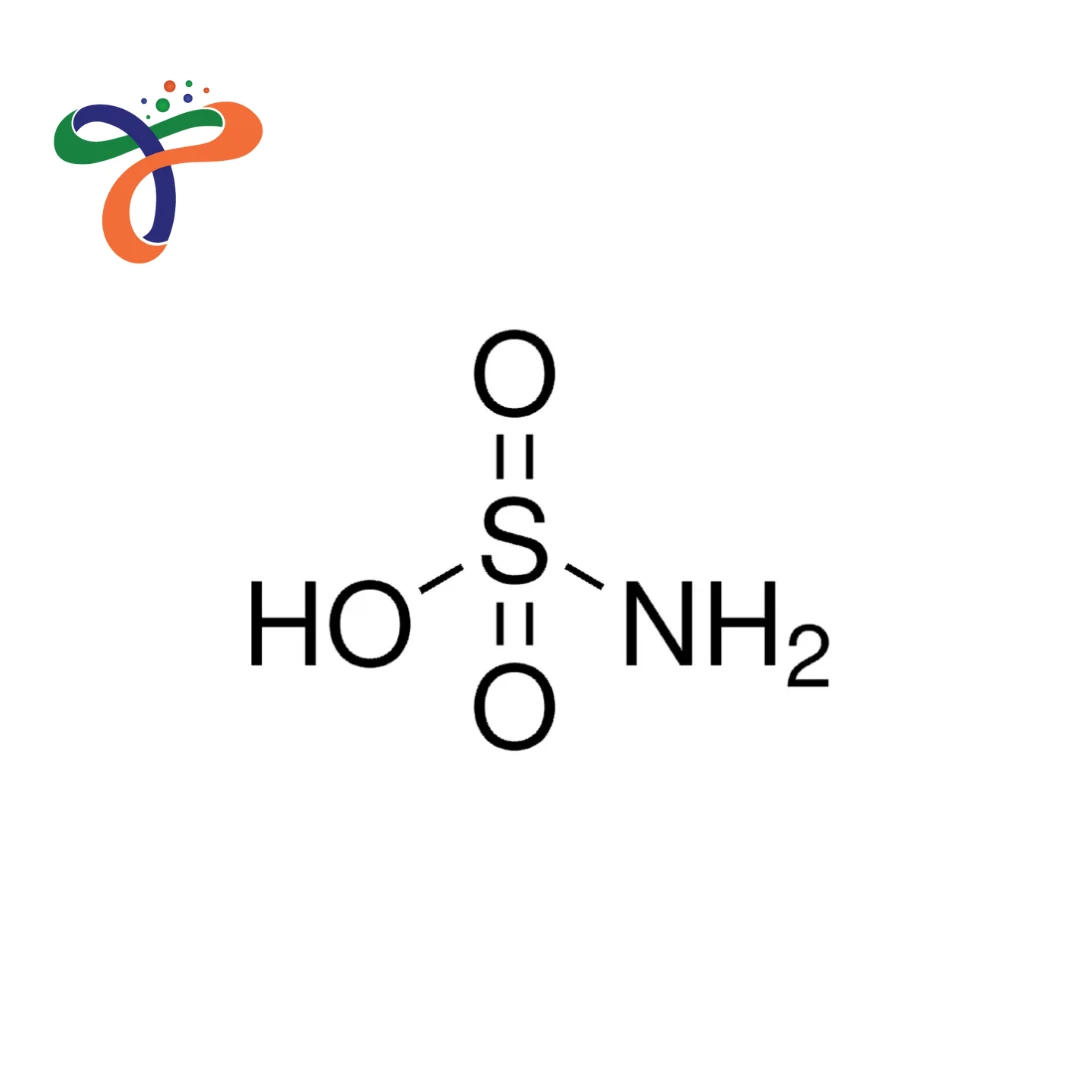
H3NO3S
Boiling Point :
210 °c
Melting Point :
178 °c
Flash Point :
250 °c
Solubility :
Soluble In Water; Soluble In Ethanol; Insoluble In Non-polar Solvents
Description :
Overview of Sulfamic Acid
Sulfamic Acid is a strong inorganic acid widely used in descaling, cleaning, electroplating, dyes, pigments, and speciality industrial chemical manufacturing. Chemically, the sulfamic acid formula is NH₂SO₃H, and it is valued for its high acidity, non-volatile nature, and excellent thermal stability compared to other mineral acids.
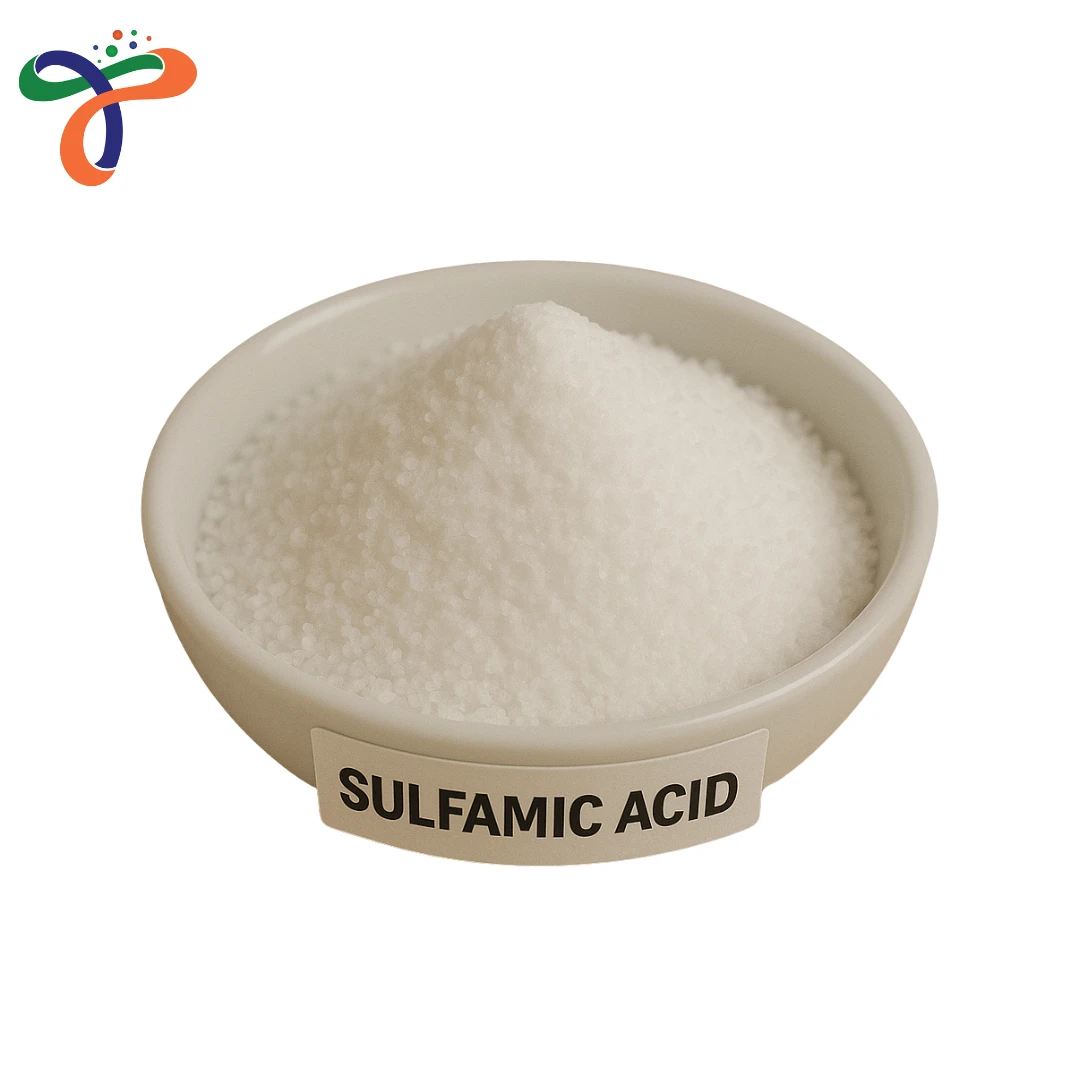
From a physical perspective, Sulfamic Acid appears as a white crystalline powder that is highly soluble in water. Unlike many mineral acids, it does not fume and is easier to handle under industrial conditions. It does not have a true sulfamic acid boiling point, as it decomposes on heating rather than boiling. The compound is identified in industrial documentation by the sulfamic acid CAS no 5329-14-6.
Due to its effective cleaning and descaling performance, sulfamic acid uses are primarily industrial. ChemicalBull supplies high-purity Sulfamic Acid with controlled particle size, consistent chemical composition, and reliable batch-to-batch performance. Each shipment is supported with complete documentation, including sulfamic acid MSDS, COA, and technical data sheets.
As a trusted chemical supplier and reliable distributor, ChemicalBull ensures an uninterrupted supply for industrial customers. You may also like Citric Acid, Phosphoric Acid, Hydrochloric Acid, and Oxalic Acid for related industrial cleaning, descaling, and acid-based applications available on our site.
Applications of Sulfamic Acid
Descaling & Industrial Cleaning
-
Used for the removal of limescale and mineral deposits
-
Applied in boilers, heat exchangers, and pipelines
-
An effective alternative to hydrochloric acid
Electroplating & Metal Treatment
-
Used in electroplating baths
-
Supports metal surface cleaning and preparation
-
Applied in controlled industrial plating operations
Dyes, Pigments & Chemical Manufacturing
-
Used in dye and pigment synthesis
-
Acts as a sulfonating and pH-controlling agent
-
Applied in speciality chemical processing
Water Treatment & Maintenance
-
Used in the cleaning of water systems
-
Helps remove scale without excessive corrosion
-
Applied as industrial water treatment chemicals
Safety & Handling Guidelines
-
Handle using gloves, goggles, and appropriate PPE
-
Avoid inhalation of dust and prolonged skin contact
-
Use in well-ventilated industrial environments
-
Store in tightly sealed containers away from moisture
-
Follow sulfamic acid MSDS and standard industrial safety practices
Where to Buy Sulfamic Acid?
Sulfamic Acid Manufacturer
ChemicalBull supplies industrial-grade Sulfamic Acid suitable for descaling, electroplating, and speciality chemical manufacturing.
Sulfamic Acid Supplier & Distributor
-
Bulk and customised industrial packaging options
-
Export-grade quality with COA, TDS & MSDS
-
Reliable supply across India and international markets
-
Trusted chemical supplier for industrial acids and cleaning chemicals
Sulfamic Acid MSDS
The sulfamic acid MSDS provides essential information on safe handling, storage conditions, exposure limits, spill management, and emergency procedures. Always review the MSDS before bulk handling or industrial use.
Frequently Asked Questions (FAQs)
-
What is the chemical formula of Sulfamic Acid?
The sulfamic acid formula is NH₂SO₃H. -
What are the main sulfamic acid uses?
Key sulfamic acid uses include industrial descaling, electroplating, dye manufacturing, and water system cleaning. -
Does Sulfamic Acid have a boiling point?
No, the sulfamic acid boiling point is not defined because it decomposes on heating rather than boiling. -
What is the CAS number of Sulfamic Acid?
The sulfamic acid CAS no is 5329-14-6, used for industrial and regulatory identification. -
Is Sulfamic Acid safer to handle than other mineral acids?
Yes, it is non-volatile and non-fuming, making it easier to handle under controlled industrial conditions.
ChemicalBull supplies Sulfamic Acid across India, serving customers in Andhra Pradesh, Arunachal Pradesh, Assam, Bihar, Chhattisgarh, Goa, Gujarat, Haryana, Himachal Pradesh, Jharkhand, Karnataka, Kerala, Madhya Pradesh, Maharashtra, Manipur, Meghalaya, Mizoram, Nagaland, Odisha, Punjab, Rajasthan, Sikkim, Tamil Nadu, Telangana, Tripura, Uttar Pradesh, Uttarakhand, and West Bengal, as well as the Union Territories of Andaman & Nicobar Islands, Chandigarh, Dadra & Nagar Haveli and Daman & Diu, Delhi, Jammu & Kashmir, Ladakh, Lakshadweep, and Puducherry. We serve pharmaceutical, chemical, research, academic, laboratory, manufacturing, and industrial customers with reliable nationwide delivery.