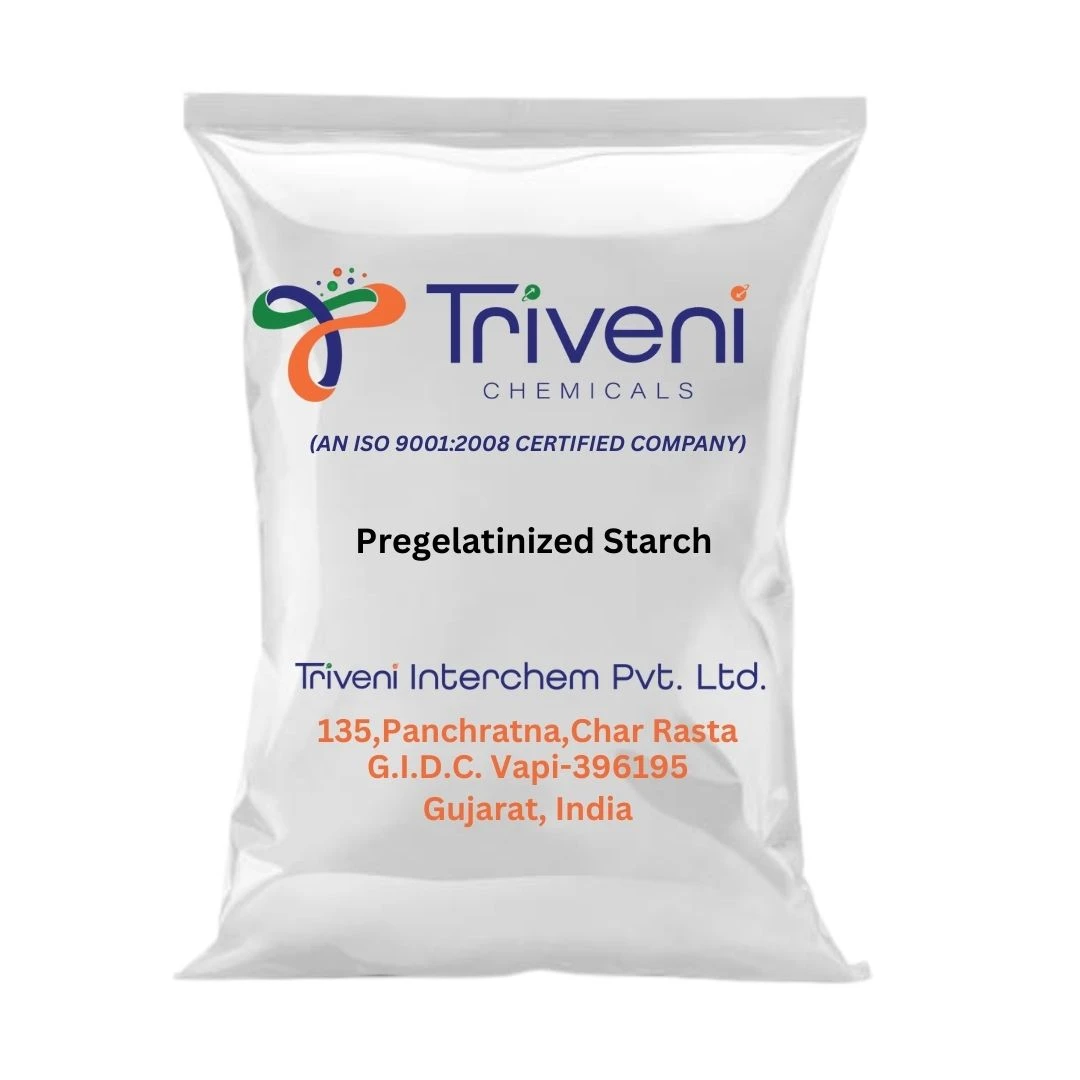
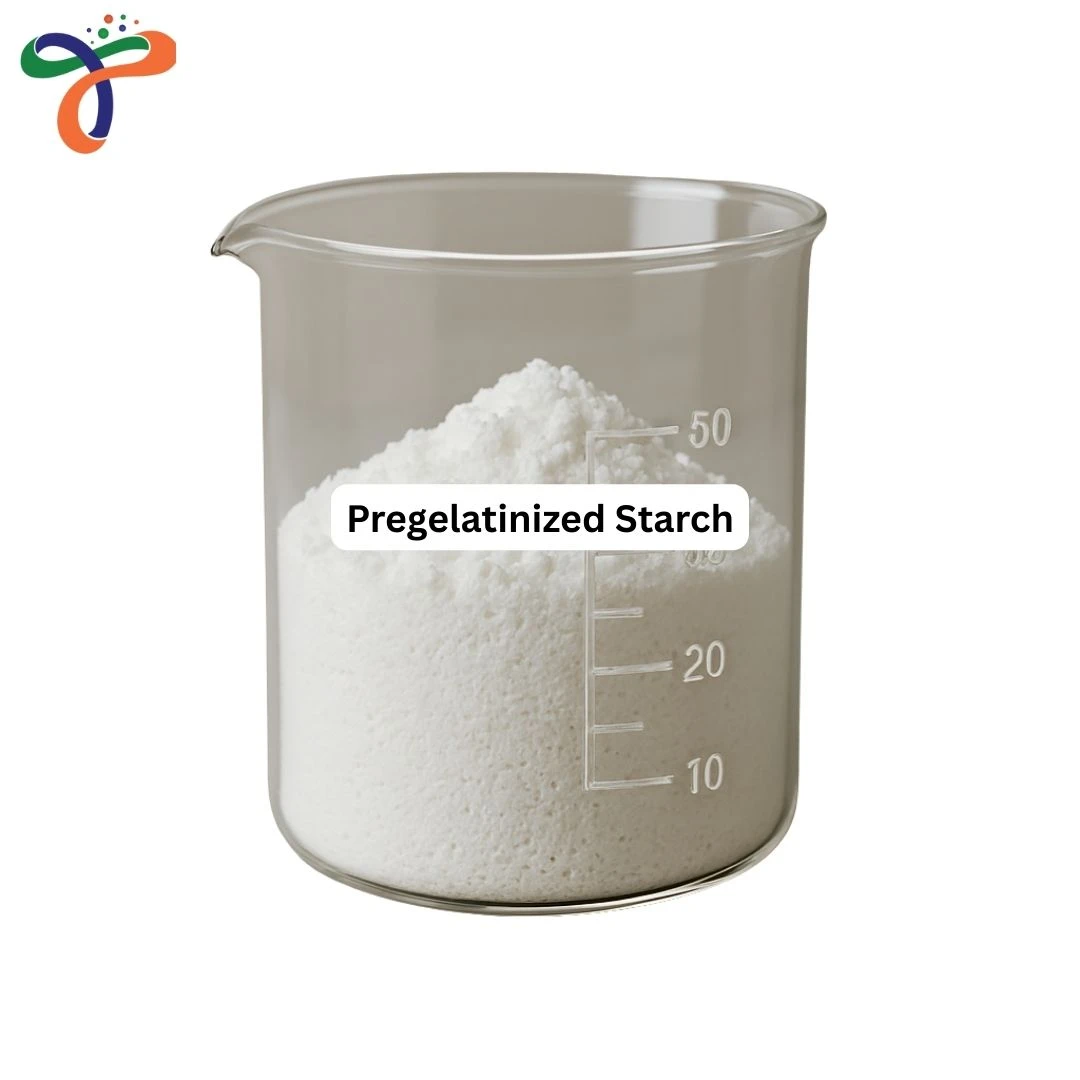
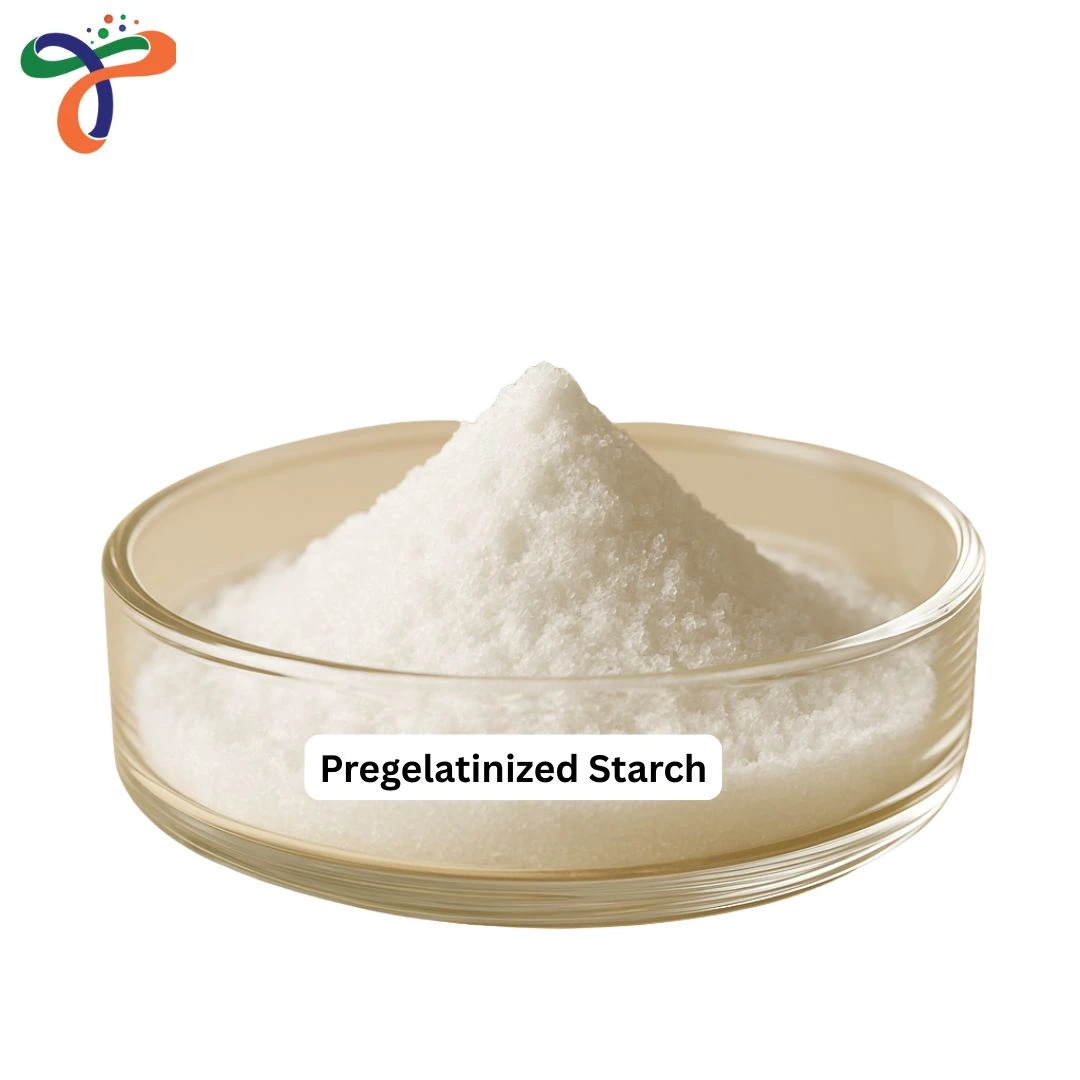
Pregelatinized Starch
Form :
Powder
Molecular Weight :
1000000 G/mol
Boiling Point :
100 °c
Melting Point :
260 °c
Flash Point :
300 °c
Solubility :
Soluble In Water
Description :
Overview of Pregelatinized Starch
Pregelatinized Starch (CAS: 9005-25-8) is a chemically modified starch widely used in food, pharmaceutical, paper, textile, and industrial chemical applications. It appears as a fine, off-white powder and is valued for its instant water solubility, excellent binding properties, and thickening ability.
This starch is pre-cooked and dried, allowing it to dissolve in cold or hot water without cooking, making it ideal for instant foods, tablet formulations, adhesives, and industrial products. Its versatility as a binder, stabilizer, and viscosity enhancer makes it essential in both laboratory and industrial processes. Related products such as Modified Starch, Corn Starch, and Tapioca Starch are also used in food, pharmaceutical, and industrial applications.
Applications of Pregelatinized Starch
Food Industry
-
Used as a thickener, stabilizer, and binder in sauces, soups, and instant foods
-
Enhances texture, viscosity, and mouthfeel
-
Applied in ready-to-eat products and beverage formulations
Pharmaceutical & Nutraceutical Applications
-
Acts as a binder and disintegrant in tablet formulations
-
Supports capsule and granule manufacturing
-
Improves tablet hardness, stability, and dissolution rate
Paper, Textile & Adhesive Industry
-
Used as a coating, sizing, and adhesive agent
-
Enhances paper surface finish, printability, and fabric strength
-
Applied in industrial adhesives, pastes, and specialty coatings
Industrial Chemical Applications
-
Serves as a thickening and stabilizing agent in chemical formulations
-
Used in cosmetics, paints, and specialty chemical production
-
Supports emulsion stability and viscosity control in industrial processes
Laboratory & Research Applications
-
Widely used in R&D laboratories for formulation testing
-
Supports development of novel starch-based products
-
Applied in physical and chemical property optimization studies
Safety & Handling Guidelines
-
Generally safe and non-toxic
-
Avoid inhalation of dust; use mask and protective clothing if handling in bulk
-
Store in dry, cool, and well-ventilated areas
-
Keep away from moisture and contaminants
-
Follow COA and MSDS instructions for industrial use
Where to Buy Pregelatinized Starch?
Pregelatinized Starch Manufacturer
ChemicalBull supplies high-purity Pregelatinized Starch suitable for food, pharmaceutical, and industrial applications.
Pregelatinized Starch Supplier & Distributor
-
Available in bulk and laboratory-scale packaging
-
Ideal for tablet formulation, food processing, adhesives, and industrial chemical applications
-
COA, MSDS, and detailed technical specifications provided
Pregelatinized Starch MSDS
-
May cause mild irritation to eyes or respiratory tract if inhaled as dust
-
Non-flammable under standard conditions
-
Handle in dry and clean environments
-
Refer to full MSDS for spill response and emergency procedures
Frequently Asked Questions (FAQs)
-
What is the molecular formula of Pregelatinized Starch?
Molecular Formula: (C₆H₁₀O₅)ₙ
Molecular Weight: Variable, depending on polymerization degree -
What is Pregelatinized Starch used for?
Used primarily as a binder, thickener, stabilizer, and viscosity enhancer in food, pharmaceutical, paper, textile, and chemical industries. -
Is Pregelatinized Starch safe?
Yes. It is generally recognized as safe (GRAS) for food and pharmaceutical applications. Avoid inhalation of dust in industrial use. -
Which industries commonly use Pregelatinized Starch?
Used in food processing, pharmaceutical tablet manufacturing, adhesives, paper coating, textile finishing, and specialty chemical formulations. -
Why is it preferred over native starch?
It dissolves in cold water, provides instant viscosity, and enhances formulation stability without cooking, making it convenient for industrial and laboratory applications.
ChemicalBull supplies Pregelatinized Starch across India, serving customers in Andhra Pradesh, Arunachal Pradesh, Assam, Bihar, Chhattisgarh, Goa, Gujarat, Haryana, Himachal Pradesh, Jharkhand, Karnataka, Kerala, Madhya Pradesh, Maharashtra, Manipur, Meghalaya, Mizoram, Nagaland, Odisha, Punjab, Rajasthan, Sikkim, Tamil Nadu, Telangana, Tripura, Uttar Pradesh, Uttarakhand, and West Bengal, as well as the Union Territories of Andaman & Nicobar Islands, Chandigarh, Dadra & Nagar Haveli and Daman & Diu, Delhi, Jammu & Kashmir, Ladakh, Lakshadweep, and Puducherry. We serve pharmaceutical, chemical, research, academic, laboratory, manufacturing, and industrial customers with reliable nationwide delivery.