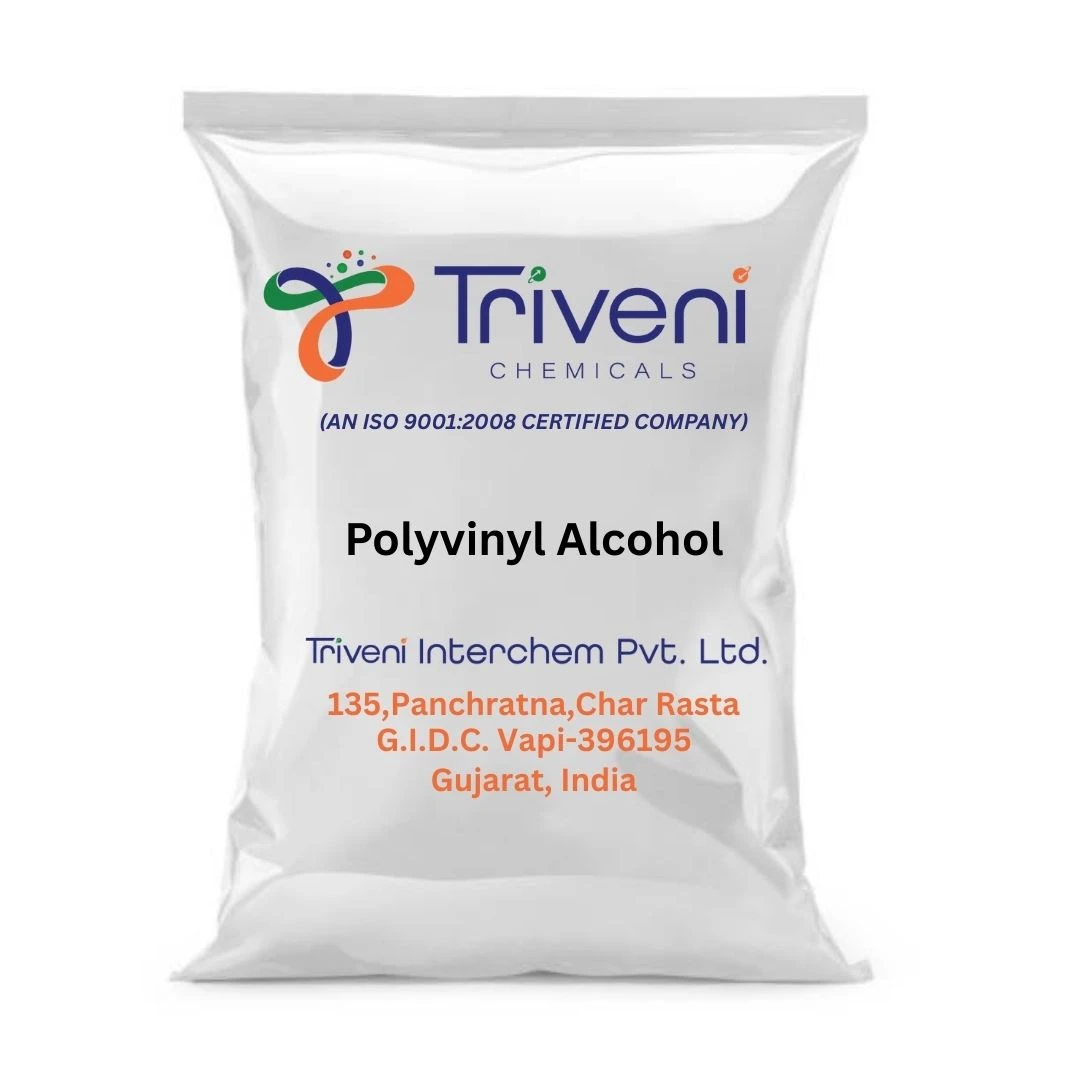
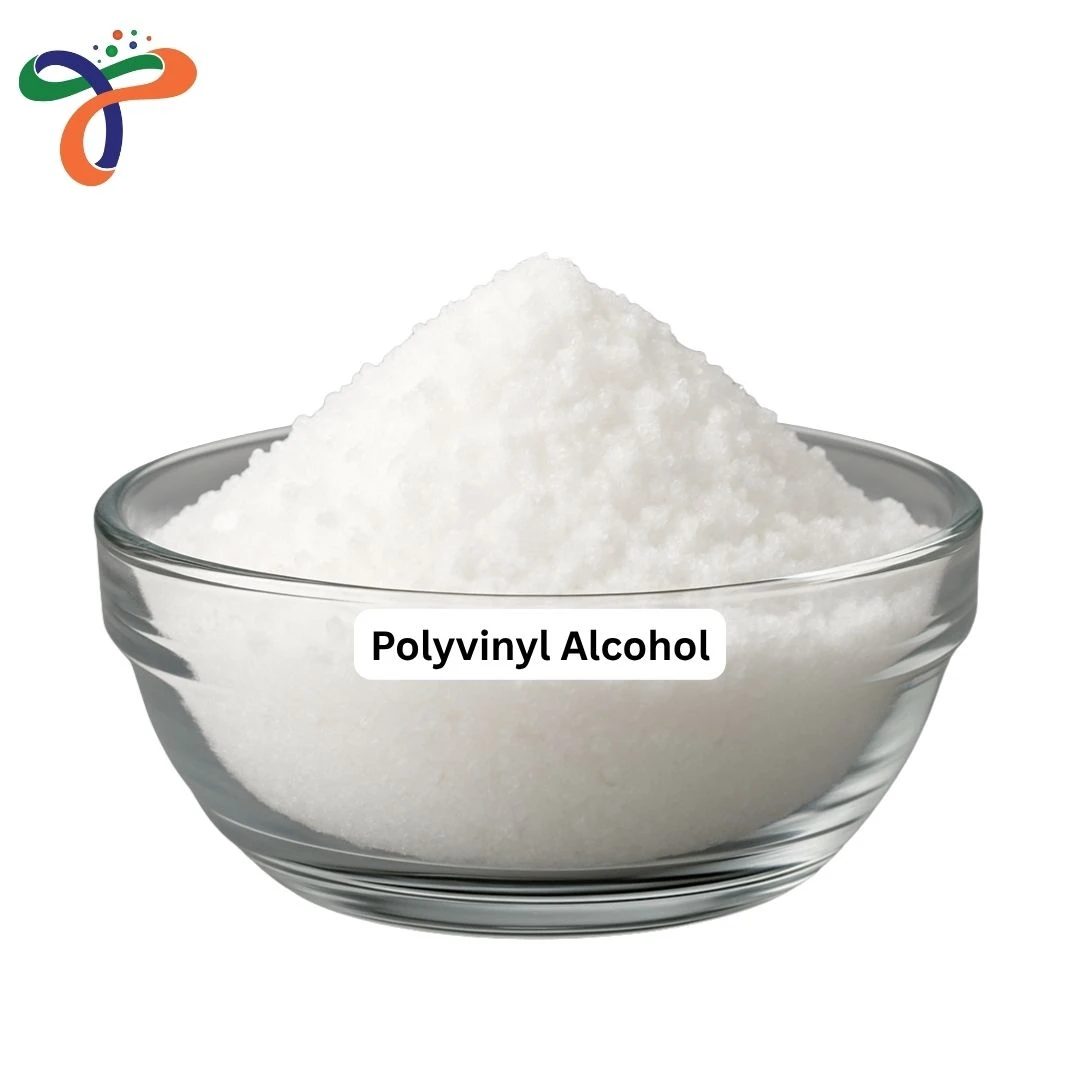
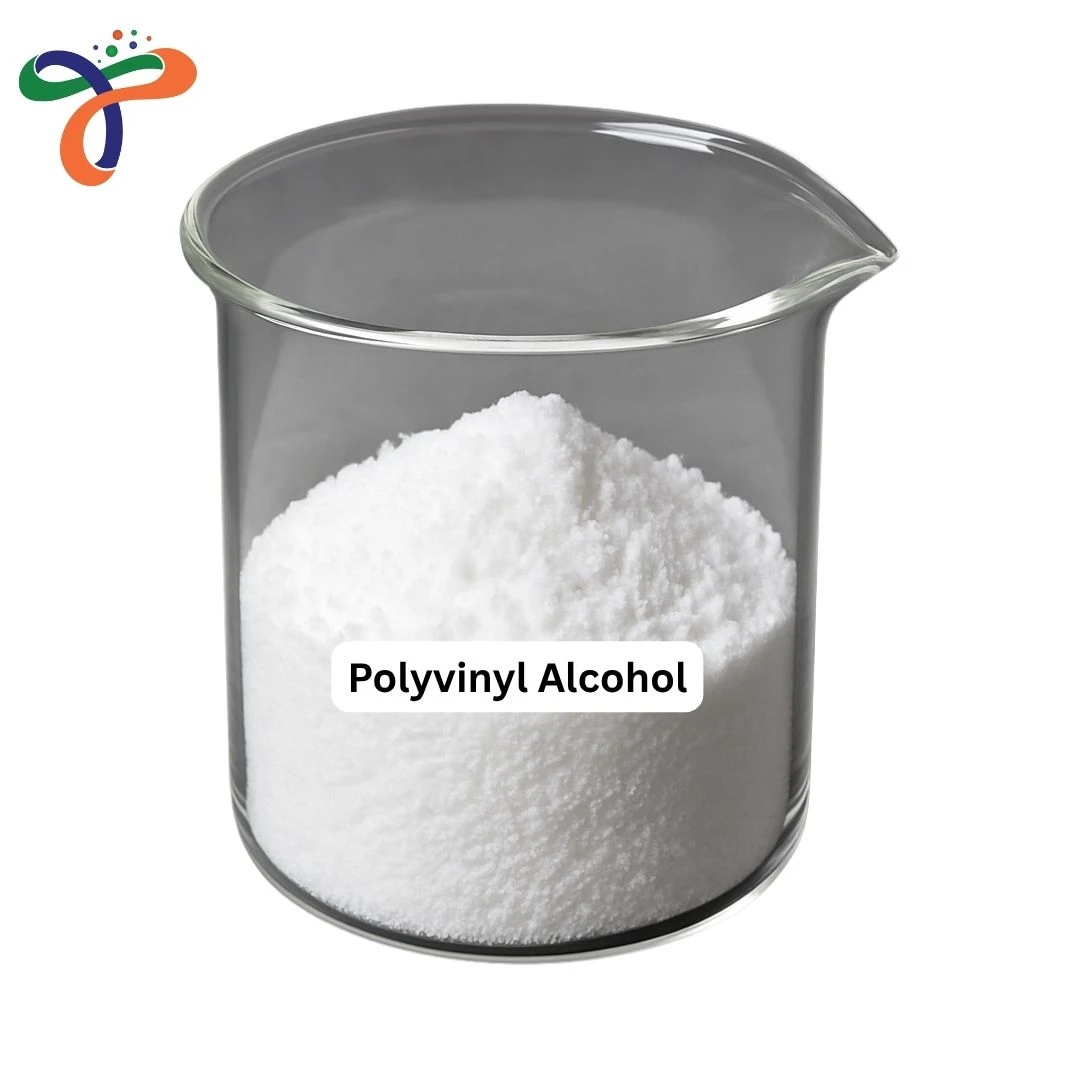
Polyvinyl Alcohol | 9002-89-5
Cas No :
9002-89-5
Synonyms :
Form :
Powder
Molecular Weight :
125000 G/mol
Boiling Point :
230 °c
Melting Point :
180 °c
Flash Point :
230 °c
Solubility :
Water-soluble
Description :
Polyvinyl Alcohol Manufacturers & Suppliers in India
Chemical Bull is one of the leading Polyvinyl Alcohol manufacturers and suppliers in India, offering CAS 9002-89-5 in bulk with competitive pricing and reliable delivery.
Polyvinyl Alcohol (PVA) is a water-soluble synthetic polymer known for its excellent film-forming, emulsifying, and adhesive properties. It is widely used in industrial applications such as adhesives, coatings, and textiles.
It has unique properties that make it highly versatile, including its ability to form films, excellent adhesive properties, and water solubility. Polyvinyl Alcohol is particularly valued for its ability to create strong, flexible films and is used in a variety of applications across different sectors.
The polyvinyl alcohol formula is generally represented as (C₂H₄O)n, where "n" indicates the number of repeating units in the polymer chain. PVA is a synthetic polymer derived from vinyl acetate through hydrolysis.
Applications of Polyvinyl Alcohol
Polyvinyl Alcohol Uses in Textiles
Polyvinyl Alcohol is used extensively in the textile industry for its excellent film-forming properties, making it a great choice for sizing agents, textile coatings, and adhesives. It provides fabric with better strength and durability.
Polyvinyl Alcohol in Paper Manufacturing
In paper manufacturing, PVA is used as a binder to improve paper strength and increase its resistance to water, oil, and other solvents. Its water solubility also allows for easy application.
Polyvinyl Alcohol in Adhesives
Polyvinyl Alcohol is a key ingredient in many types of adhesives, especially those used in packaging, due to its excellent bonding properties and film-forming ability. It is also used in the formulation of glues for paper and textiles.
Polyvinyl Alcohol in Pharmaceuticals
In the pharmaceutical industry, Polyvinyl Alcohol is used in the preparation of drug delivery systems, particularly in controlled-release formulations, where it helps in forming coatings for tablets and capsules.
Safety & Handling
Due to its polymer form and fine particle nature, professional handling is recommended:
-
Protective Gear: Wear standard safety goggles and gloves to prevent contact with eyes and skin.
-
Inhalation Prevention: Use a dust mask (N95) during bulk handling to avoid respiratory irritation from fine airborne particles.
-
Slip Hazard: Be cautious of spills; PVA becomes extremely slippery when wet. Clean up dry powder immediately.
-
Hygiene: Maintain good industrial hygiene; wash hands thoroughly after handling the material.
-
Ventilation: Operate in a well-ventilated area to minimize dust accumulation in the workspace.
Related Products
-
Polyvinyl Acetate (PVAc) – The precursor used in the manufacturing of PVA and a common wood glue base.
-
Fumed Silica – Often used as a rheology modifier in PVA-based adhesive formulations.
-
Sodium Gluconate Manufacturer – Utilized as a high-performance stabilizer in various polymer blends.
-
Citric Acid – Sometimes used as a cross-linking agent or pH adjuster in PVA solutions.
-
Vinyl Acetate Monomer (VAM) – The essential raw material for producing the vinyl acetate polymers.
Why Choose ChemicalBull as your Polyvinyl Alcohol Manufacturer & Supplier in India?
Polyvinyl Alcohol Suppliers
We are a leading Polyvinyl Alcohol supplier, providing high-quality PVA for various industrial applications. Whether you need small quantities or bulk orders, we offer reliable delivery options and excellent customer service.
Polyvinyl Alcohol Manufacturers in India
As one of the top Polyvinyl Alcohol manufacturers in India, we ensure high standards of production, providing premium quality PVA for use in textiles, paper manufacturing, pharmaceuticals, and other industries.
MSDS for Polyvinyl Alcohol
The MSDS for Polyvinyl Alcohol provides important information on safe handling, storage, and emergency procedures. Always refer to the MSDS to ensure safety during handling and application.
Frequently Asked Questions (FAQs)
-
What is the formula of Polyvinyl Alcohol?
The chemical formula of Polyvinyl Alcohol is (C2H4O)n. -
What is the molecular weight of Polyvinyl Alcohol?
The molecular weight of Polyvinyl Alcohol ranges from 30,000 to 100,000 g/mol, depending on the polymer’s degree of polymerization. -
Why is Polyvinyl Alcohol soluble in water?
Polyvinyl Alcohol is soluble in water because its polymer chains have hydroxyl groups that form hydrogen bonds with water molecules.
ChemicalBull supplies Polyvinyl Alcohol across India, serving customers in Andhra Pradesh, Arunachal Pradesh, Assam, Bihar, Chhattisgarh, Goa, Gujarat, Haryana, Himachal Pradesh, Jharkhand, Karnataka, Kerala, Madhya Pradesh, Maharashtra, Manipur, Meghalaya, Mizoram, Nagaland, Odisha, Punjab, Rajasthan, Sikkim, Tamil Nadu, Telangana, Tripura, Uttar Pradesh, Uttarakhand, and West Bengal, as well as the Union Territories of Andaman & Nicobar Islands, Chandigarh, Dadra & Nagar Haveli and Daman & Diu, Delhi, Jammu & Kashmir, Ladakh, Lakshadweep, and Puducherry. We serve pharmaceutical, chemical, research, academic, laboratory, manufacturing, and industrial customers with reliable nationwide delivery.