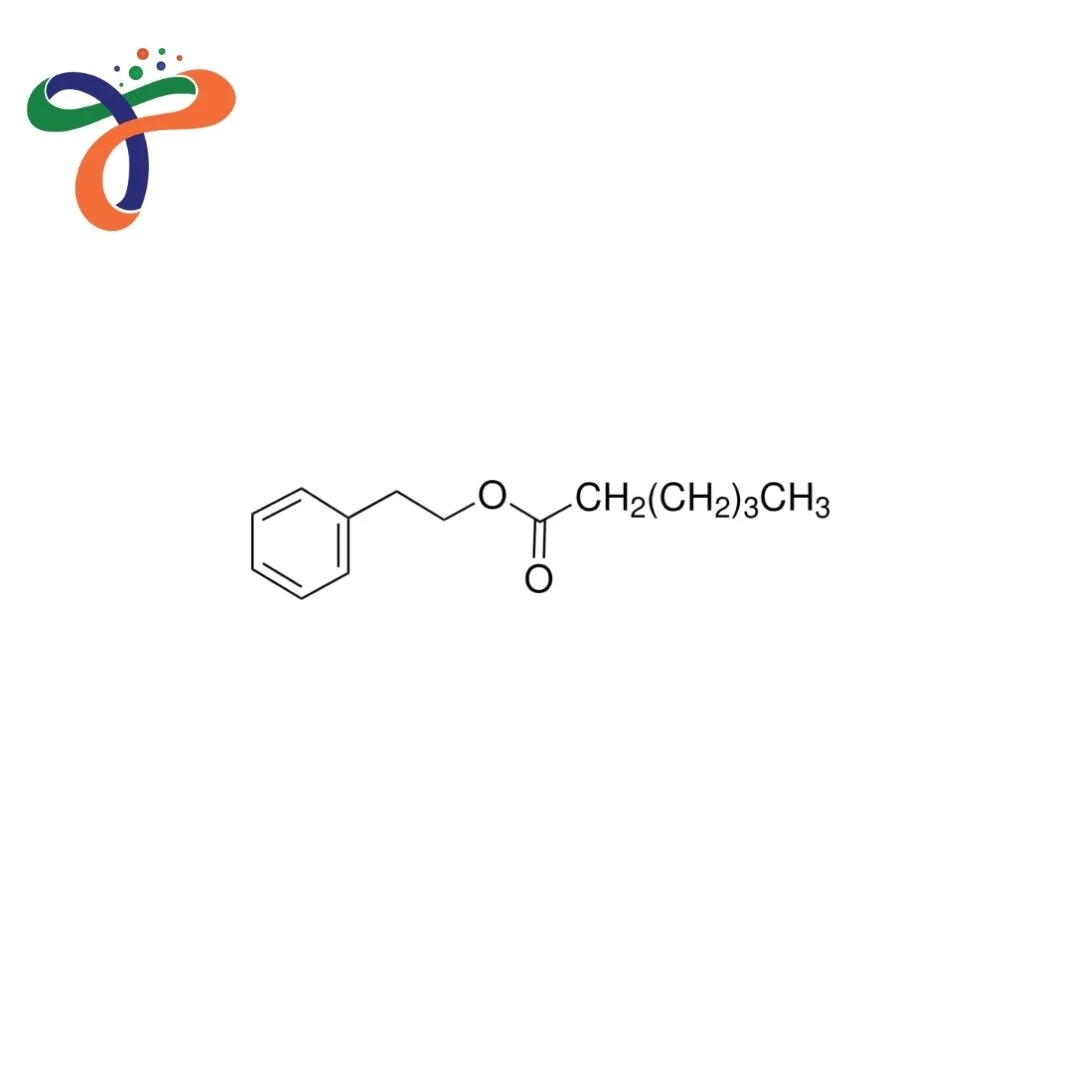
Phenylethyl Caproate | 6290-37-5
Cas No :
6290-37-5
Form :
Liquid
Molecular Weight :
220.31 G/mol
Boiling Point :
312 °c
Melting Point :
-22 °c
Flash Point :
92 °c
Solubility :
Practically Insoluble In Water; Soluble In Organic Solvents
Description :
Phenylethyl Caproate | CAS No. 6290-37-5
Looking for a sophisticated, high-impact floral-fruity ester for your premium fragrance or flavour formulations? As a leading manufacturer and supplier of specialty aroma chemicals, Chemicalbull provides high-purity Phenylethyl Caproate. Engineered for delicate aromatic clarity and excellent fixative properties, our product is the ideal choice for developers seeking a sweet, rose-like floral note with a pleasant, waxy-fruity undertone.
Overview of Phenylethyl Caproate
Phenylethyl Caproate (CAS NO- 6290-37-5) is an ester widely valued in the Aroma Chemicals sector for its soft, floral, and slightly honey-like character. It is a preferred ingredient for creating naturalistic, well-rounded floral compositions. At Chemicalbull, we ensure stringent quality control and high-purity distillation, helping you streamline your procurement through a trusted, direct-from-factory supply chain.
Applications & Formulation Synergy
Phenylethyl Caproate acts as a versatile functional ingredient. For advanced formulation development, it is highly compatible with other high-potency ingredients found in our diverse catalog:
-
Fine Perfumery: Used as a sophisticated heart note to impart depth to floral bouquets. It provides a smooth, sweet-honeyed transition when blended with the rosy character of Phenyl Acetaldehyde Di Citronellyl Acetal.
-
Personal Care: Enhances the sensory profile of soaps and body lotions. Its delicate fragrance is effectively stabilized and delivered when formulated alongside high-grade PEG-400.
-
Flavour Industry: Used in creating authentic fruity flavours for beverages. It works in perfect synergy with the bright intensity of Isopropyl 2-Methylbutyrate to provide a more complex, juicy profile.
-
Home Care: Utilized in premium laundry and surface care products. Its performance and longevity are significantly enhanced when paired with fixatives like Benzyl Laurate.
-
Specialized Floral Blends: Its ability to add "body" to floral notes makes it a perfect complement to the green-floral nuances of Phenylacetaldehyde Diisobutyl Acetal.
Safety & Handling Guidelines
-
Storage: Store in a cool, dry, and well-ventilated area away from direct light and heat. Keep containers tightly sealed to maintain the ester's delicate aromatic profile.
-
Safety: Use standard industrial personal protective equipment (PPE), including gloves and safety goggles. Handle with care as it is a concentrated aroma chemical.
-
Documentation: Every batch is supplied with a detailed COA and MSDS to ensure your technical team has the necessary compliance data for fragrance safety and quality audits.
Where to Buy Phenylethyl Caproate?
Leading Phenylethyl Caproate Manufacturer
Chemicalbull is a recognized Phenylethyl Caproate manufacturer and supplier. Our state-of-the-art facility ensures high-purity output, guaranteeing that your fragrance or personal care formulations maintain consistent performance from batch to batch.
Trusted Phenylethyl Caproate Wholesaler & Distributor
We act as a reliable Phenylethyl Caproate wholesaler and distributor, supporting both boutique perfumery houses and large-scale FMCG manufacturers globally. We ensure competitive pricing and secure, traceable supply chains for all your high-value chemical requirements.
Phenylethyl Caproate MSDS
Need Technical Data for Your Quality Audit? We understand that compliance and purity are critical for fragrance and personal care manufacturing. We provide complete, up-to-date documentation to ensure your technical team has all the necessary information for safe handling and formulation development.
Frequently Asked Questions (FAQs)
-
What is the primary odour profile of Phenylethyl Caproate?
It features a soft, sweet, floral odour reminiscent of roses and honey, with a distinct waxy-fruity undertone that adds depth to floral compositions. -
In which fragrance families is it most commonly used?
It is most frequently found in floral, rose, and oriental fragrance families, where it adds a natural "rounded" sweetness to the heart of the scent. -
Is it suitable for skin-contact products?
Yes, it is a common ingredient in fine fragrances, lotions, and creams. As with all aroma chemicals, it should be used in accordance with IFRA guidelines.
ChemicalBull supplies Phenylethyl Caproate across India, serving customers in Andhra Pradesh, Arunachal Pradesh, Assam, Bihar, Chhattisgarh, Goa, Gujarat, Haryana, Himachal Pradesh, Jharkhand, Karnataka, Kerala, Madhya Pradesh, Maharashtra, Manipur, Meghalaya, Mizoram, Nagaland, Odisha, Punjab, Rajasthan, Sikkim, Tamil Nadu, Telangana, Tripura, Uttar Pradesh, Uttarakhand, and West Bengal, as well as the Union Territories of Andaman & Nicobar Islands, Chandigarh, Dadra & Nagar Haveli and Daman & Diu, Delhi, Jammu & Kashmir, Ladakh, Lakshadweep, and Puducherry. We serve pharmaceutical, chemical, research, academic, laboratory, manufacturing, and industrial customers with reliable nationwide delivery.