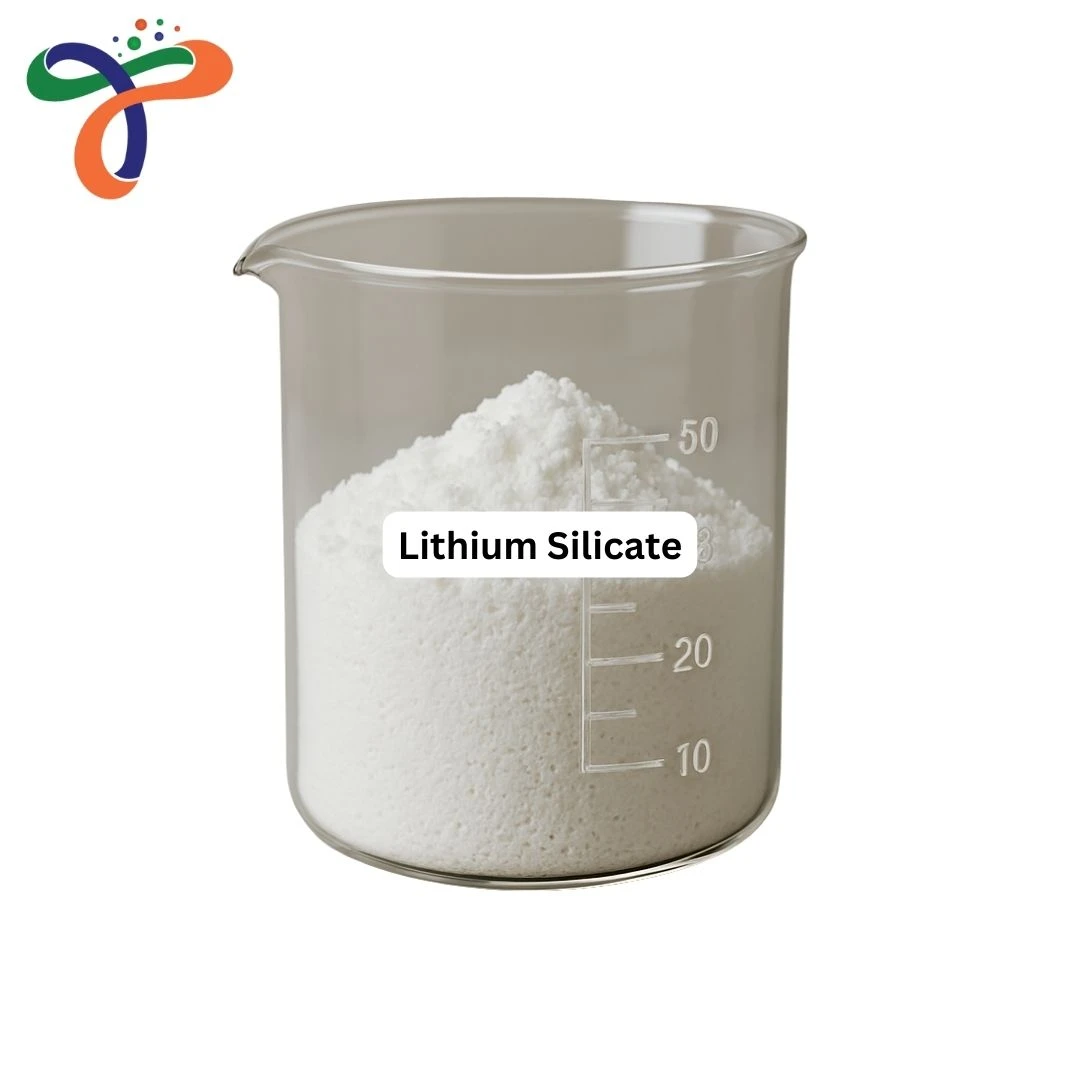
Lithium Silicate | 10102-24-6
Cas No :
10102-24-6
Form :
Powder
Molecular Weight :
89.96 G/mol
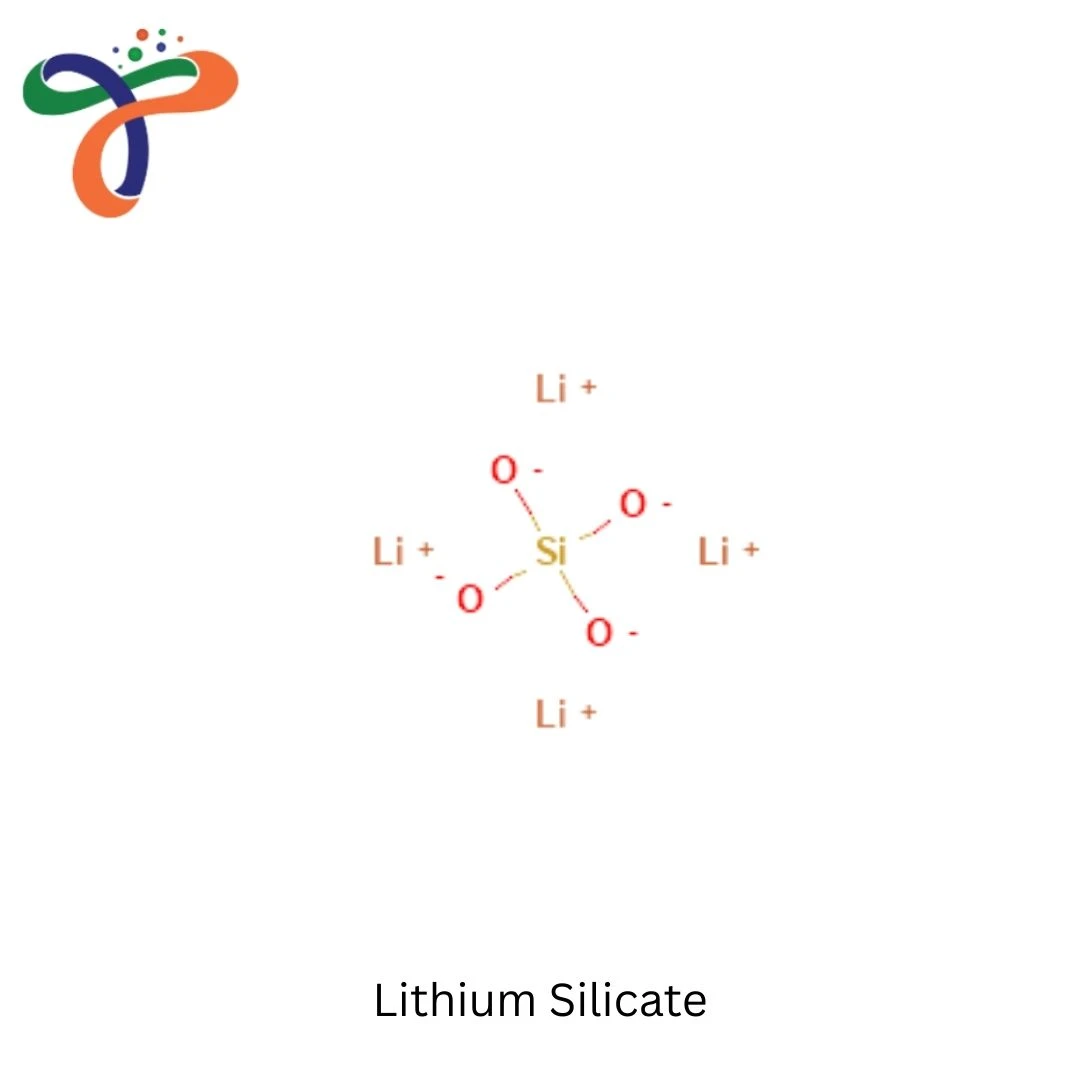
Molecular Formula :
LI4O4SI
Boiling Point :
1800 °c
Melting Point :
1110 °c
Flash Point :
1000 °c
Solubility :
Insoluble In Water
Description :
Overview of Lithium Silicate
Lithium Silicate is an industrial chemicals that is utilized for manufacturing and surface treatment applications where silicate-based performance is needed. It is typically utilized to increase the hardness of surfaces while also enhancing durability. It is also used for ensuring solid bonding in industrial processing systems. Lithium silicate is a preferred choice in applications where controlled penetration, constant performance, and stability over time are essential for the production output.
Lithium silicate vs sodium silicate is often compared in industry because lithium silicate generally offers better penetration and stable performance in certain industrial surface treatment applications.
Applications of Lithium Silicate
Concrete Densification & Polishing
Lithium Silicate is the industry standard for concrete hardening.
-
Reaction: It reacts with free calcium hydroxide in the concrete to form Calcium Silicate Hydrate (CSH) crystals.
-
Advantage: Unlike Sodium Silicate, Lithium Silicate does not contribute to Alkali-Silica Reaction (ASR) or surface "bloom" (efflorescence). It penetrates deeper, resulting in a dust-proof, abrasion-resistant finish.
Industrial Coatings & Processing Support
Lithium Silicate is used in industrial coatings and processing applications where stable bonding and consistent surface performance are required. It supports smooth application and reliable output quality in industrial manufacturing systems. It is often handled with Calcium Oxide depending on processing requirements.
Zinc-Rich Anti-Corrosive Primers
It serves as an exceptional inorganic binder for zinc-rich coatings used on bridges, offshore rigs, and steel structures.
-
Self-Curing: It provides a faster "dry-to-touch" time.
-
Water Resistance: Once cured, it creates a water-insoluble film that protects steel from extreme salt-spray environments.
Specialty Ceramics & Refractories
Used as a high-temperature adhesive and glaze component, Lithium Silicate provides excellent thermal shock resistance and a low coefficient of thermal expansion.
Safety & Handling Guidelines
-
Store in a cool, dry, and well-ventilated area
-
Keep containers tightly sealed and protected from contamination
-
Avoid direct contact with skin and eyes
-
Avoid inhalation of mist or dust during handling
-
Use protective gloves, goggles, and suitable clothing
-
Wash hands properly after handling
-
Dispose of packaging as per local guidelines
Where to Buy Lithium Silicate?
Lithium Silicate Manufacturer
Lithium Silicate is manufactured for industrial applications where consistent quality and stable performance are required for surface treatment and processing systems.
Lithium Silicate Supplier & Distributor
Lithium Silicate is supplied in industrial-grade quantities for manufacturers who require steady supply and consistent quality. As a reliable supplier and distributor of chemicals, Chemicalbull Pvt. Ltd. supports customers with dependable sourcing, scalable volumes, and standard documentation for domestic and export requirements.
MSDS for Lithium Silicate
The MSDS for Lithium Silicate includes detailed information on safe handling the storage environment, exposure control First-aid measures, as well as emergency procedure for responding. Always read the MSDS before using.
Frequently Asked Questions (FAQs)
-
What is lithium silicate used for?
Lithium silicate is used for surface hardening, concrete treatment, industrial coatings, and silicate-based formulation applications. -
What is the formula for lithium silicate?
The formula for lithium silicate is commonly written as Li₂SiO₃. -
What is lithium silicate vs sodium silicate?
Lithium silicate is usually chosen for its superior permeation and a more stable surface and stability, while sodium silicate is typically employed in general silicate applications, based on the requirements of industrial applications.
ChemicalBull supplies Lithium Silicate across India, serving customers in Andhra Pradesh, Arunachal Pradesh, Assam, Bihar, Chhattisgarh, Goa, Gujarat, Haryana, Himachal Pradesh, Jharkhand, Karnataka, Kerala, Madhya Pradesh, Maharashtra, Manipur, Meghalaya, Mizoram, Nagaland, Odisha, Punjab, Rajasthan, Sikkim, Tamil Nadu, Telangana, Tripura, Uttar Pradesh, Uttarakhand, and West Bengal, as well as the Union Territories of Andaman & Nicobar Islands, Chandigarh, Dadra & Nagar Haveli and Daman & Diu, Delhi, Jammu & Kashmir, Ladakh, Lakshadweep, and Puducherry. We serve pharmaceutical, chemical, research, academic, laboratory, manufacturing, and industrial customers with reliable nationwide delivery.