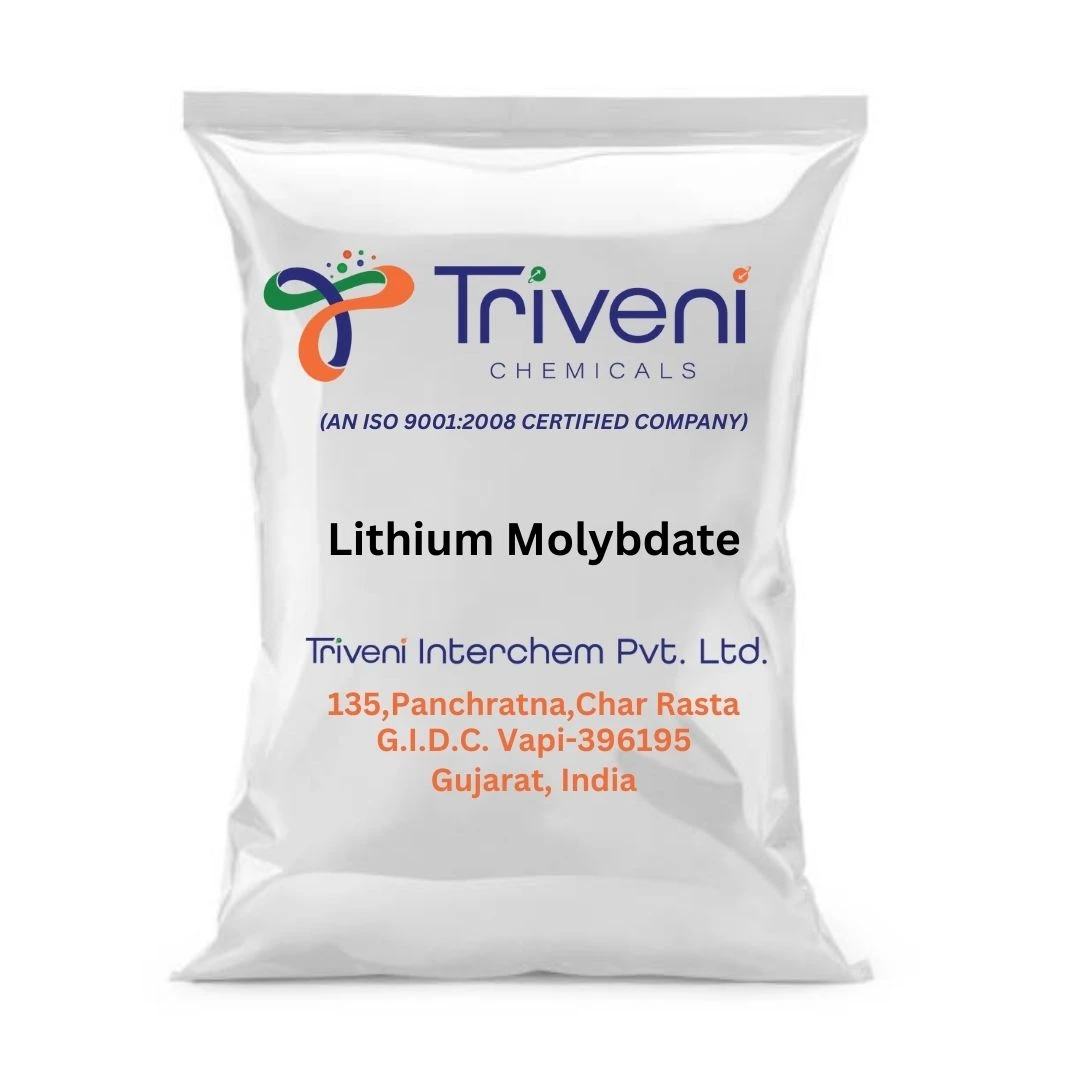
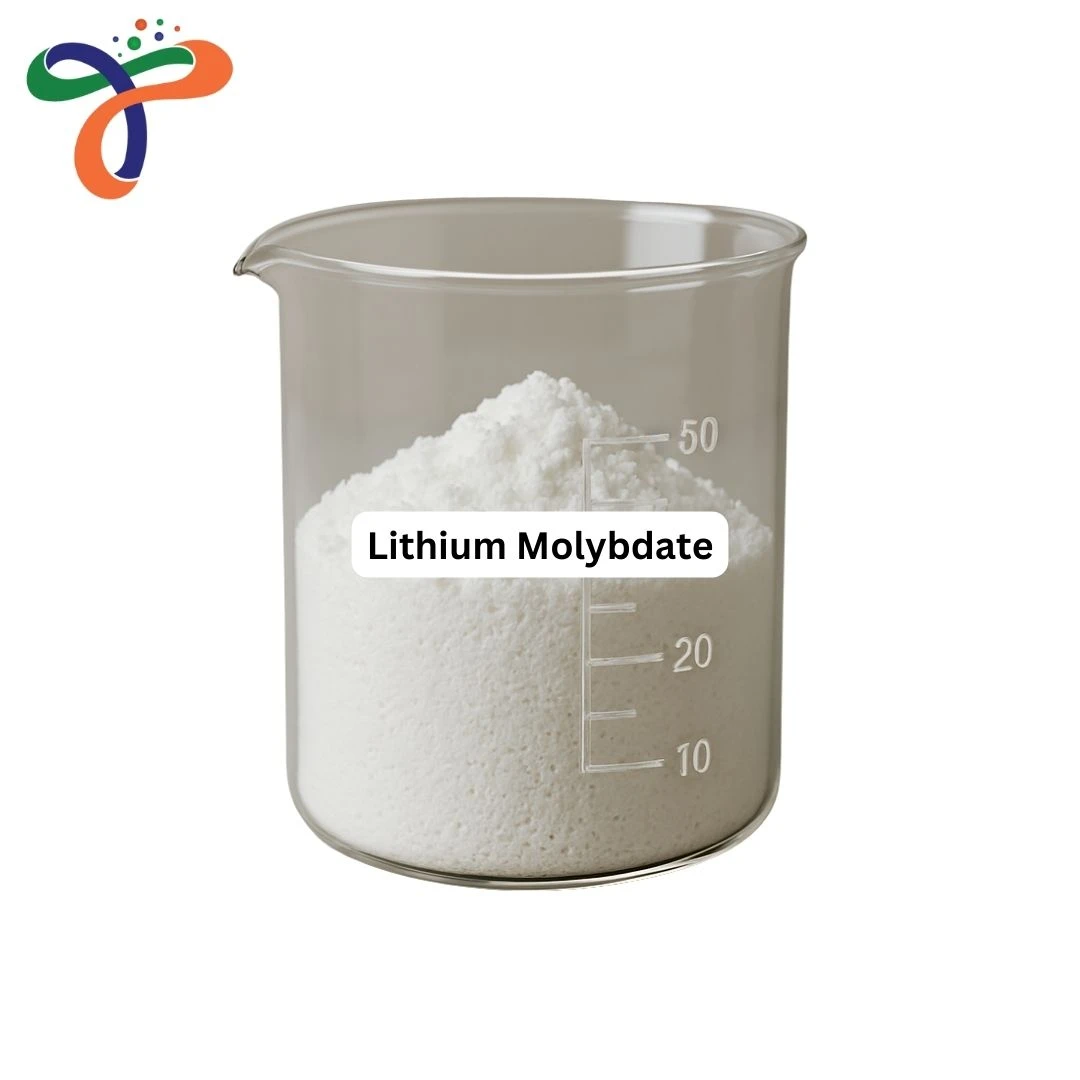
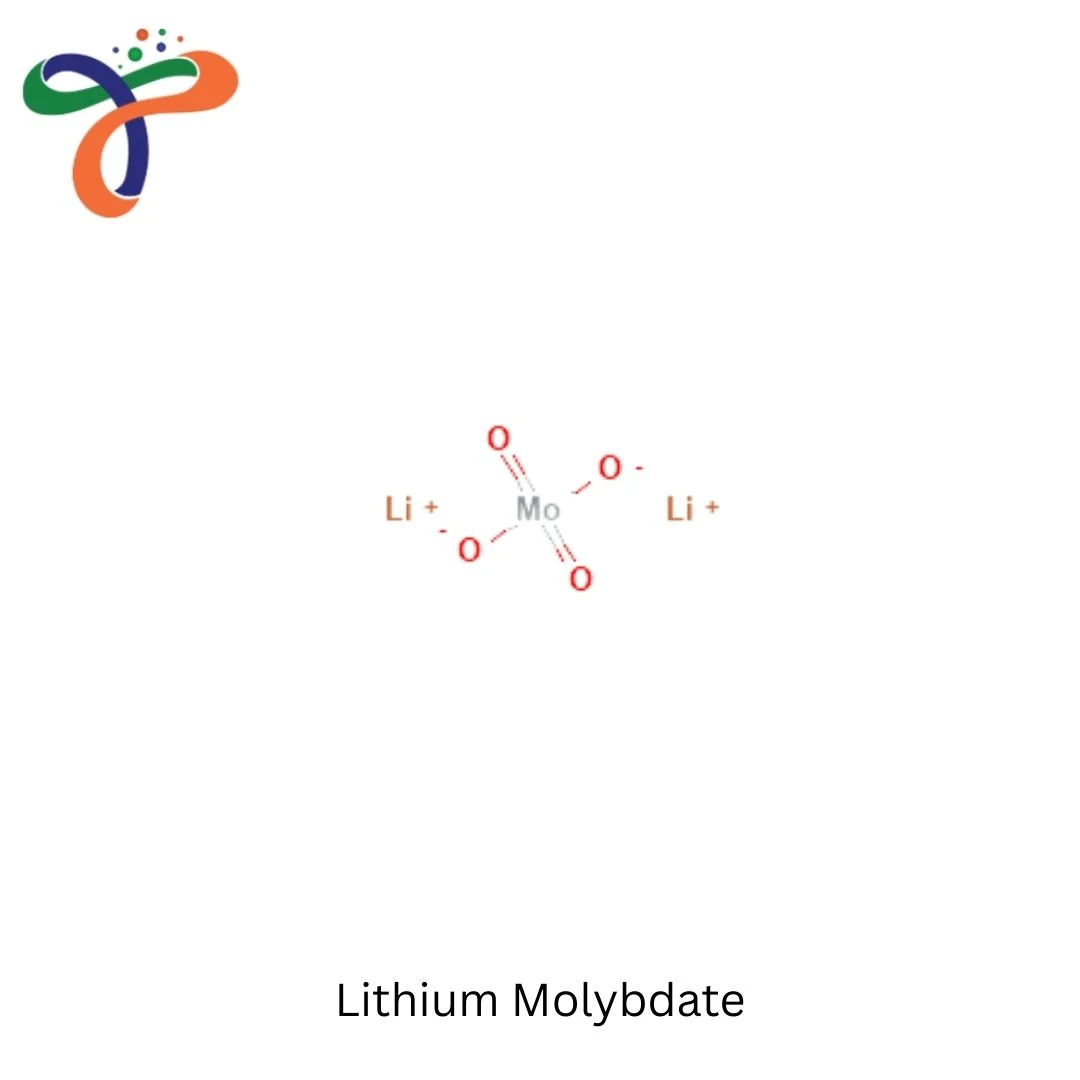
Lithium Molybdate | 13568-40-6
Cas No :
13568-40-6
Form :
Solid
Molecular Weight :
173.83 G/mol
Molecular Formula :
LI2MOO4
Boiling Point :
1700 °c
Melting Point :
700 °c
Flash Point :
400 °c
Solubility :
Soluble In Water
Description :
Overview of Lithium Molybdate
Lithium molybdate is a special inorganic compound that is used in industrial processing, where molybdate-based efficiency is required. It is frequently employed for corrosion prevention systems as well as industrial water treatment processes in which long-term stability and stable protection of equipment is essential. Because of its consistency in quality and reliable chemical behavior it is highly recommended for applications which require controlled performance and reliable outcomes.
Lithium molybdate from lithium hydroxide is part of manufacturing routes where lithium-based raw materials are used to produce molybdate compounds for industrial use.
Applications of Lithium Molybdate
Corrosion Inhibitor in Water Treatment
Lithium molybdate inhibitors are widely used in water treatment systems in which corrosion control and protection of equipment are essential. It helps ensure stability in closed-loop cooling water systems, as well as enhancing the long-term efficiency of operations. It is frequently used in conjunction with Hydroxyethylidene Diphosphonic Acid to provide scale and corrosion control.
Industrial Cooling & Closed-Loop Systems
Uses of lithium molybdate include closed-loop water systems where stable corrosion inhibition is required to protect pipelines and heat transfer equipment. It supports controlled water chemistry and reduces maintenance issues. It is often used with Nitrilotriacetic Acid for metal ion control and system stability.
Specialty Industrial Chemical Processing
Lithium molybdate can be found in special industrial chemical processing where molybdate chemicals provide stable performance and predictable results. It aids in maintaining steady output in manufacturing processes in industrial settings. It is typically handled with Lithium Hydroxide Anhydrous according to the requirements for processing.
Industrial Formulation Support
Lithium molybdate may also be employed in industrial formulations where stable inhibition performance, as well as controlled chemical behaviour, are essential for maintaining the same manufacturing output.
Safety & Handling Guidelines
-
Store in a cool, dry, and well-ventilated area
-
Keep containers tightly sealed and protected from moisture
-
Avoid inhalation of dust during handling
-
Avoid direct contact with skin and eyes
-
Use protective gloves, goggles, and suitable clothing
-
Wash your hands properly after handling
-
Dispose of packaging as per local guidelines
Where to Buy Lithium Molybdate?
Lithium Molybdate Manufacturer
Lithium molybdate is manufactured for industrial applications where consistent quality and stable inhibitor performance are required for water treatment and specialty processing systems.
Lithium Molybdate Supplier & Distributor
Lithium molybdate is supplied in industrial-grade quantities for manufacturers who require a steady supply and consistent quality. As a reliable supplier and distributor, Chemicalbull Pvt. Ltd. supports customers with dependable sourcing, scalable volumes, and standard documentation for domestic and export requirements.
MSDS for Lithium Molybdate
The MSDS for lithium molybdate offers complete information about safe handling, storage environment, exposure control, first-aid measures, as well as emergency procedures for responding. Always check the MSDS prior to use.
Frequently Asked Questions (FAQs)
-
What is lithium molybdate used for?
Lithium molybdate is used as a corrosion inhibitor in industrial water treatment and closed-loop cooling systems. -
What are the uses of lithium molybdate in industry?
Uses of lithium molybdate include corrosion control, equipment protection, and water chemistry stability in industrial processing systems. -
What is lithium molybdate vs lithium bromide?
Lithium molybdate is mainly used for corrosion inhibition, while lithium bromide is used in different industrial applications such as absorption systems and specialty processing.
ChemicalBull supplies Lithium Molybdate across India, serving customers in Andhra Pradesh, Arunachal Pradesh, Assam, Bihar, Chhattisgarh, Goa, Gujarat, Haryana, Himachal Pradesh, Jharkhand, Karnataka, Kerala, Madhya Pradesh, Maharashtra, Manipur, Meghalaya, Mizoram, Nagaland, Odisha, Punjab, Rajasthan, Sikkim, Tamil Nadu, Telangana, Tripura, Uttar Pradesh, Uttarakhand, and West Bengal, as well as the Union Territories of Andaman & Nicobar Islands, Chandigarh, Dadra & Nagar Haveli and Daman & Diu, Delhi, Jammu & Kashmir, Ladakh, Lakshadweep, and Puducherry. We serve pharmaceutical, chemical, research, academic, laboratory, manufacturing, and industrial customers with reliable nationwide delivery.