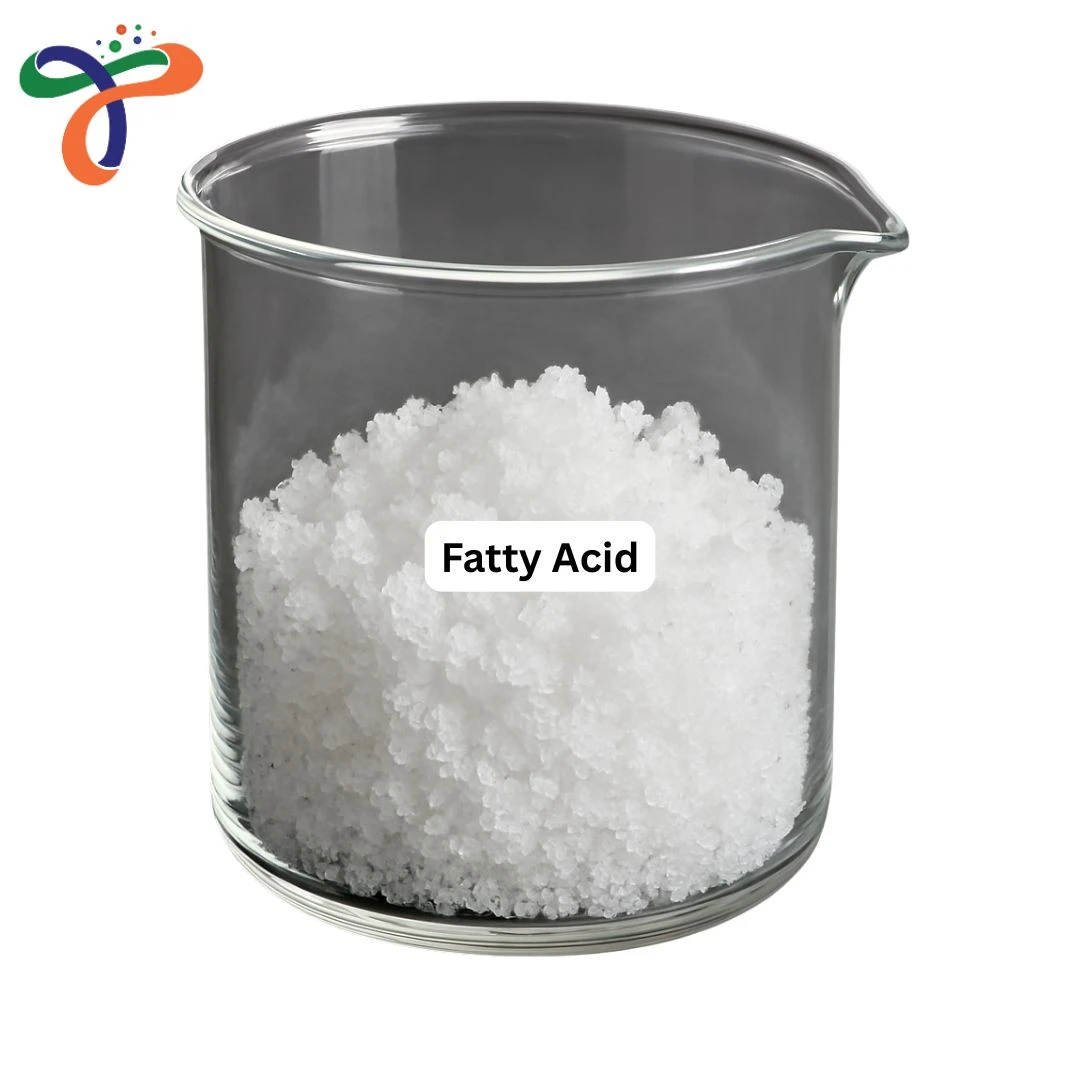
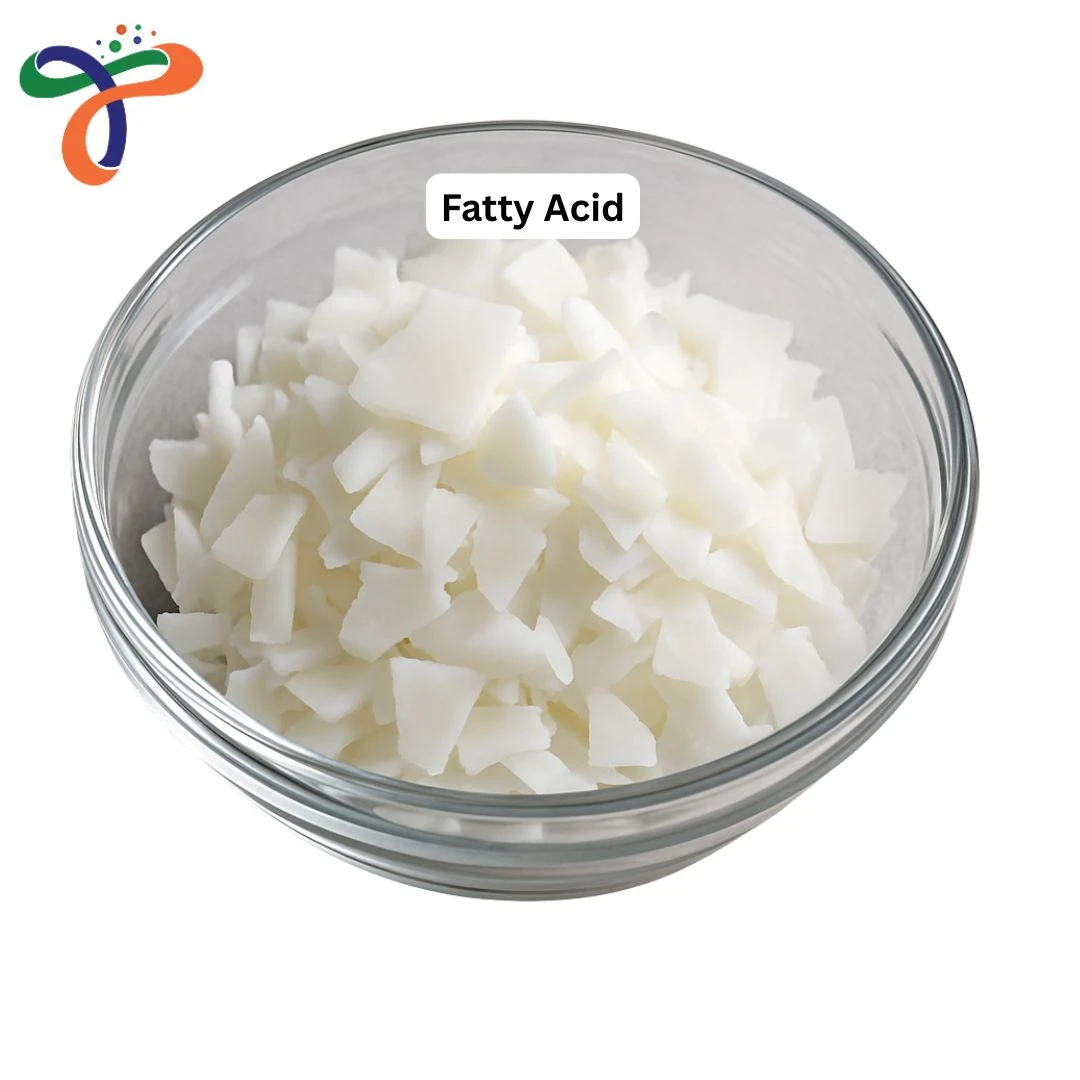
Fatty Acid
Form :
Solid
Molecular Weight :
256.42 G/mol
Boiling Point :
360 °c
Flash Point :
216 °c
Solubility :
Practically Insoluble In Water; Soluble In Chloroform, Benzene, Diethyl Ether; Slightly Soluble In Ethanol
Description :
Overview of Fatty Acid
“Fatty Acid” refers to a class of organic compounds characterised by a long aliphatic hydrocarbon chain and a terminal carboxyl group (–COOH).
Fatty acids occur naturally (in animal fats, plant oils, waxes) or as purified commercial grades and serve as fundamental building blocks (esters, soaps, surfactants, and more) in a wide range of industries.
Depending on the chain length and the presence or absence of carbon-carbon double bonds, fatty acids may be saturated or unsaturated. This structural difference influences their physical properties (melting point, fluidity) and suitability for various applications.
Application of Fatty Acid
Soaps, Detergents & Surfactants
Fatty acids remain key raw materials for soap and detergent manufacture. Their salts (soaps) or derivatives form the cleansing and emulsifying components in soaps, shower gels, laundry detergents, and similar products.
Cosmetics & Personal Care Products
In creams, lotions, ointments, shampoos, and other personal care items, fatty acids (or their esters/salts) act as emollients, thickeners, stabilisers, and emulsion-forming agents. They contribute to skin feel, texture, spreadability, and product stability.
Industrial Uses — Lubricants, Plastics, Coatings & More
Fatty acids and their derivatives are used in lubricants, greases for machinery, plasticisers, metal-working fluids, coatings, inks, and rubber/plastic manufacturing.
Food, Feed & Nutritional Uses
Some fatty acids — especially those from edible oils — are used in food processing, as components of edible fats/oils, or as feed ingredients, where regulatory and purity standards apply.
Chemical & Surfactant Intermediates
Fatty acids serve as precursors to fatty alcohols, fatty amines, esters, surfactants, and other oleochemicals. Through chemical reactions (esterification, ethoxylation, neutralisation), they are transformed into a wide range of useful downstream products.
Related Products for
When offering “Fatty Acid” on your website, you may link or cross-reference the following derivatives or related chemicals:
-
Fatty Alcohols (e.g. Cetyl Alcohol, Stearyl Alcohol)
-
Lubricants and Plasticisers based on fatty acid chemistry
-
Oleochemicals are used in personal care, detergents, coatings, etc.
Safety and Handling Guidelines
-
Store fatty acids in a cool, dry place, protected from moisture and contamination.
-
Keep containers tightly closed to prevent oxidation or rancidity (for unsaturated acids).
-
Avoid contact with the eyes and prolonged contact with the skin when handling concentrated or pure acid grades. Use appropriate PPE (gloves, goggles) during bulk handling.
-
Ensure stable, well-ventilated storage to minimise degradation or hazard risk.
Where to Buy Fatty Acids?
Fatty Acid Manufacturer
Fatty acids are produced by chemical and oleochemical companies through refining of fats/oils, followed by fractionation, purification, and quality-control to deliver grades suitable for cosmetics, industrial, and speciality applications.
Fatty Acid Supplier & Distributor
As a chemical trading company, Triveni Chemicals offers a range of high-quality fatty acids (various chain-lengths and saturation levels) for detergent manufacturers, cosmetic formulators, industrial lubricant & plasticiser producers, and more. Our supply includes bulk packaging, quality certification, and documentation support for safe handling and compliance.
Fatty Acids MSDS
It is available on request for safe handling and regulatory compliance.
Frequently Asked Questions (FAQs)
-
What is a fatty acid?
A fatty acid is a molecule composed of a long hydrocarbon chain and a terminal carboxyl group (–COOH); they are basic building blocks of fats, oils, and lipids. -
What are common types of fatty acids?
Common fatty acids include palmitic acid, stearic acid, and oleic acid, among others, differing by chain length and degree of saturation. -
Why are fatty acids important in soaps and detergents?
Because their salts form soaps that help emulsify oils and grease, allowing water-based cleaning to remove dirt and oils effectively. -
Can fatty acids be used in cosmetics and skin care?
Yes — many fatty acids and their derivatives act as emollients, stabilisers, and texture enhancers, helping create creams, lotions, and emulsions with desirable skin feel and stability. -
Are fatty acids used in industry beyond soaps and cosmetics?
Yes — they are used in lubricants, plasticisers, rubber/plastic production, coatings, metal-working fluids, and as chemical intermediates for surfactants and oleochemicals.
ChemicalBull supplies Fatty Acid across India, serving customers in Andhra Pradesh, Arunachal Pradesh, Assam, Bihar, Chhattisgarh, Goa, Gujarat, Haryana, Himachal Pradesh, Jharkhand, Karnataka, Kerala, Madhya Pradesh, Maharashtra, Manipur, Meghalaya, Mizoram, Nagaland, Odisha, Punjab, Rajasthan, Sikkim, Tamil Nadu, Telangana, Tripura, Uttar Pradesh, Uttarakhand, and West Bengal, as well as the Union Territories of Andaman & Nicobar Islands, Chandigarh, Dadra & Nagar Haveli and Daman & Diu, Delhi, Jammu & Kashmir, Ladakh, Lakshadweep, and Puducherry. We serve pharmaceutical, chemical, research, academic, laboratory, manufacturing, and industrial customers with reliable nationwide delivery.