Copper Gluconate | 0527-09-03
Cas No :
0527-09-03
Form :
Powder
Molecular Weight :
453.84 G/mol
Molecular Formula :
C12H22CUO14
Boiling Point :
500 °c
Melting Point :
170 °c
Flash Point :
270 °c
Solubility :
Soluble In Water
Description :
Overview of Copper Gluconate
Copper Gluconate is a high-quality pharmaceutical organic copper salt made from copper as well as gluconic acid. It is used extensively in nutraceutical and pharmaceutical formulations as a bioavailable source of copper to perform enzyme and metabolic functions.
In pharmaceutical manufacturing, Copper Gluconate is valued for its defined chemical composition, good stability, and compatibility with oral solid dosage forms. It is produced under controlled conditions to meet pharmacopeial standards for purity, copper content, and impurity limits.
As a pharma chemical, Copper Gluconate is commonly used in trace-element supplementation and mineral-based formulations.
Applications of Copper Gluconate
Pharmaceutical & Nutritional Formulations
Copper Gluconate is used in pharmaceutical and nutritional formulations where controlled copper supplementation is required. Its organic salt form supports consistent absorption and formulation stability in tablets and capsules.
In mineral-based products, it is often evaluated alongside Zinc Gluconate for balanced trace-element formulation.
Pharmaceutical Chemistry & Functional Characteristics
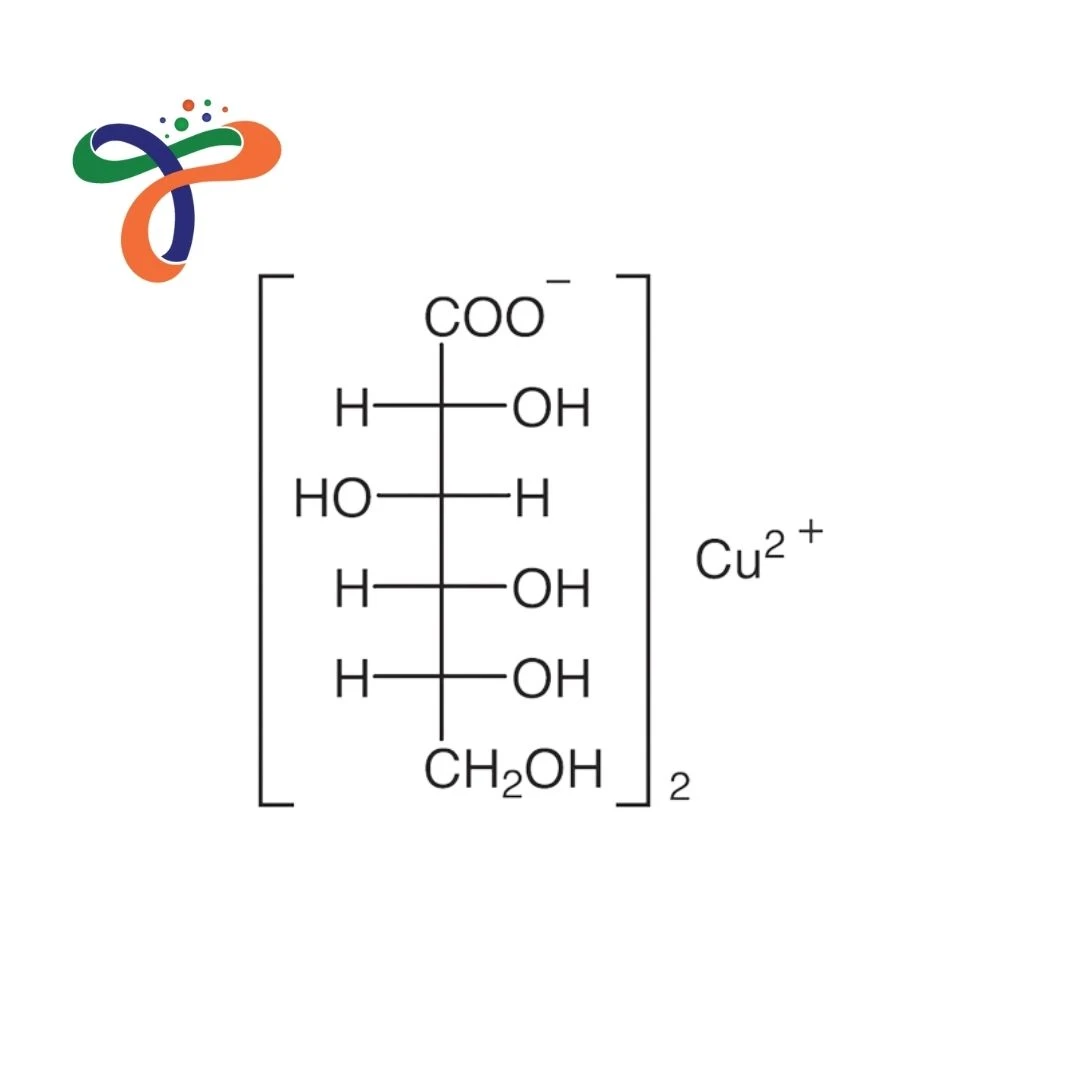
From a chemistry standpoint, for pharmaceuticals, Copper Gluconate consists of divalent copper that is bonded to the gluconate ligands. These enhance bioavailability and solubility in comparison with organic copper salts.
Its physicochemical properties make it suitable for multivitamin and mineral formulations requiring precise trace-element dosing.
Industrial & Regulated Manufacturing Use
Copper Gluconate is produced as a pure pharmaceutical raw material, with the strictest control of copper assays and heavy metal impurities. It remains stable in normal pharmaceutical manufacturing and storage environments.
In trace-mineral formulation development, it may be referenced alongside compounds such as Copper Sulphate and Zinc Bisglycinate, depending on formulation design.
Safety & Handling Guidelines
- Store in a cool, clean, controlled space
- Guard against contamination and moisture
- Make sure containers are tightly sealed and clearly labeled
- Avoid inhalation of dust during handling
- Wear appropriate personal protective equipment
- Controlled pharmaceutical manufacturing conditions
- Waste disposal is governed by the regulations.
Where to Buy Copper Gluconate?
Copper Gluconate Manufacturer
Copper Gluconate is manufactured for pharmaceutical and nutraceutical applications where controlled composition, consistent copper content, and regulatory compliance are required.
Copper Gluconate Supplier & Distributor
High-quality pharmaceutical Copper Gluconate is supplied in the right packaging for formulation producers. As a supplier of pharmaceutical chemicals and distributor, Chemicalbull Pvt. Ltd. ensures solid sourcing and standardization of documentation.
MSDS for Copper Gluconate
The MSDS for Copper Gluconate provides information on handling precautions, storage conditions, exposure controls, and emergency measures. It should be reviewed before use in pharmaceutical manufacturing.
Frequently Asked Questions (FAQs)
-
What is Copper Gluconate used for?
Copper Gluconate is used in pharmaceutical and nutritional formulations to provide a bioavailable source of copper for metabolic and enzymatic functions. -
What are the benefits of Copper Gluconate?
Copper gluconate benefits include good bioavailability, compatibility with formulations, and suitability for trace-element supplementation. -
What is the chemical formula of Copper Gluconate?
The copper gluconate formula is C₁₂H₂₂CuO₁₄. -
What are the side effects of Copper Gluconate?
Copper gluconate side effects are uncommon when used within recommended pharmaceutical and nutritional limits. -
What is the difference between Copper Gluconate and Copper Glycinate?
Copper Gluconate is an organic acid salt, while copper glycinate is an amino-acid chelate; selection depends on formulation and bioavailability requirements.
ChemicalBull supplies Copper Gluconate across India, serving customers in Andhra Pradesh, Arunachal Pradesh, Assam, Bihar, Chhattisgarh, Goa, Gujarat, Haryana, Himachal Pradesh, Jharkhand, Karnataka, Kerala, Madhya Pradesh, Maharashtra, Manipur, Meghalaya, Mizoram, Nagaland, Odisha, Punjab, Rajasthan, Sikkim, Tamil Nadu, Telangana, Tripura, Uttar Pradesh, Uttarakhand, and West Bengal, as well as the Union Territories of Andaman & Nicobar Islands, Chandigarh, Dadra & Nagar Haveli and Daman & Diu, Delhi, Jammu & Kashmir, Ladakh, Lakshadweep, and Puducherry. We serve pharmaceutical, chemical, research, academic, laboratory, manufacturing, and industrial customers with reliable nationwide delivery.