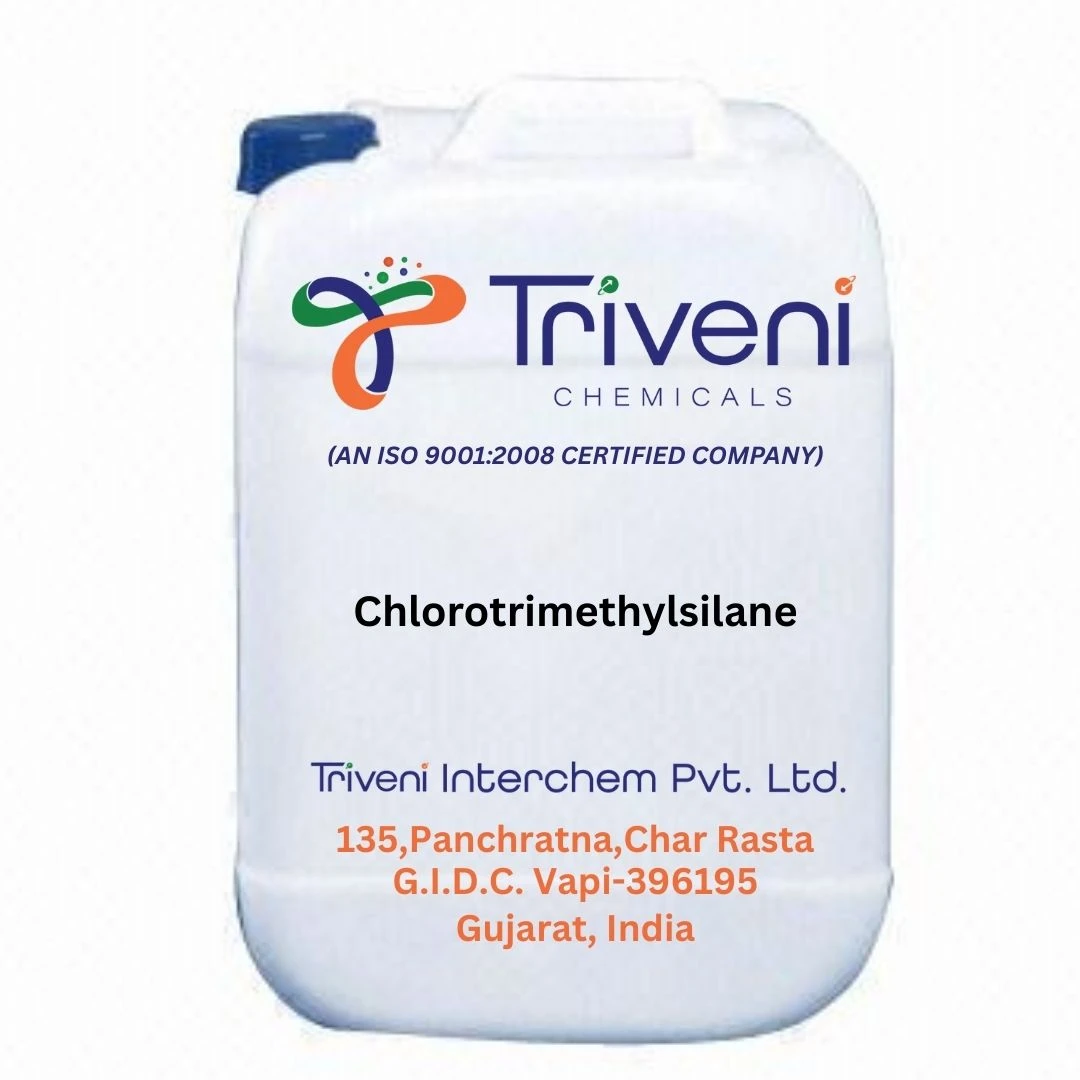
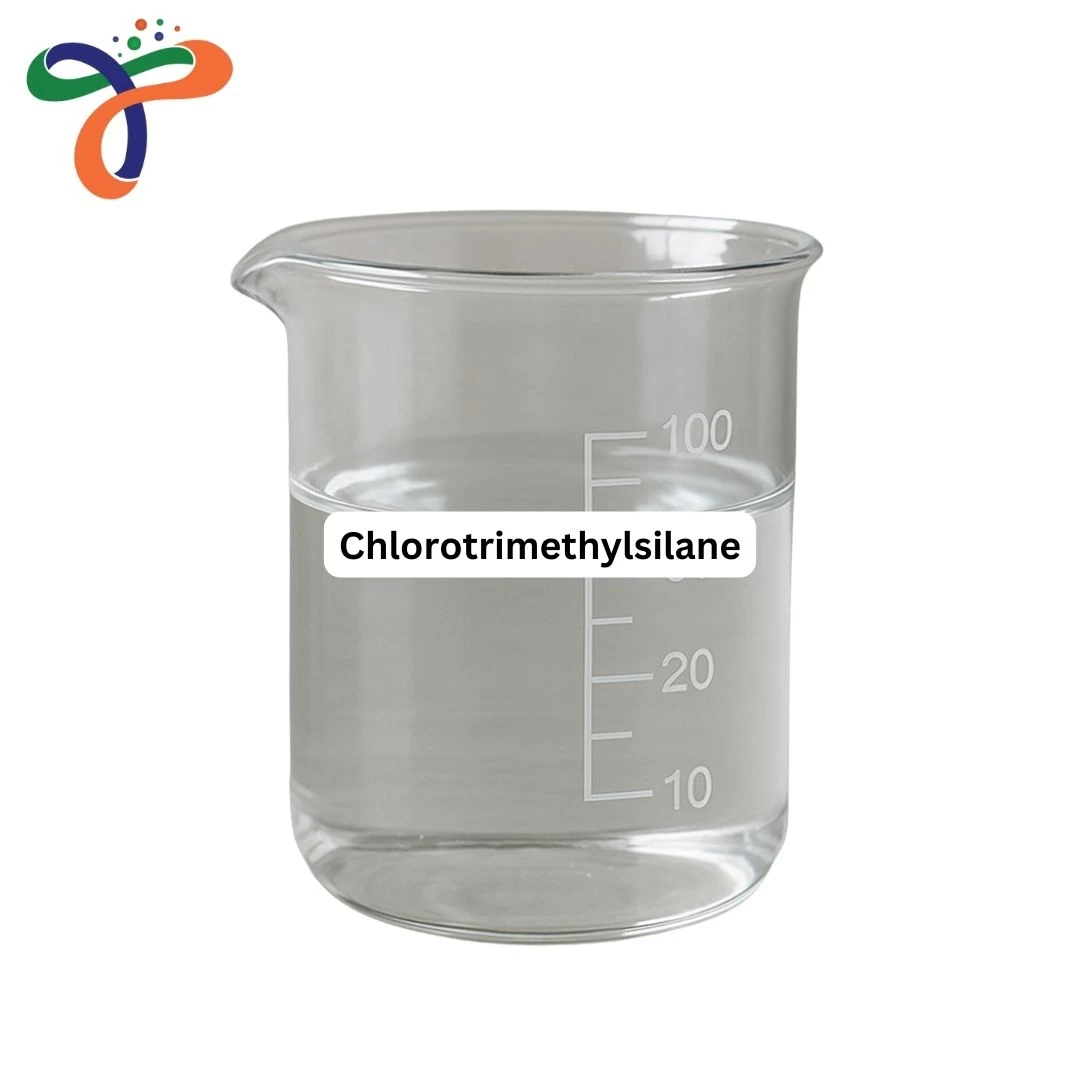
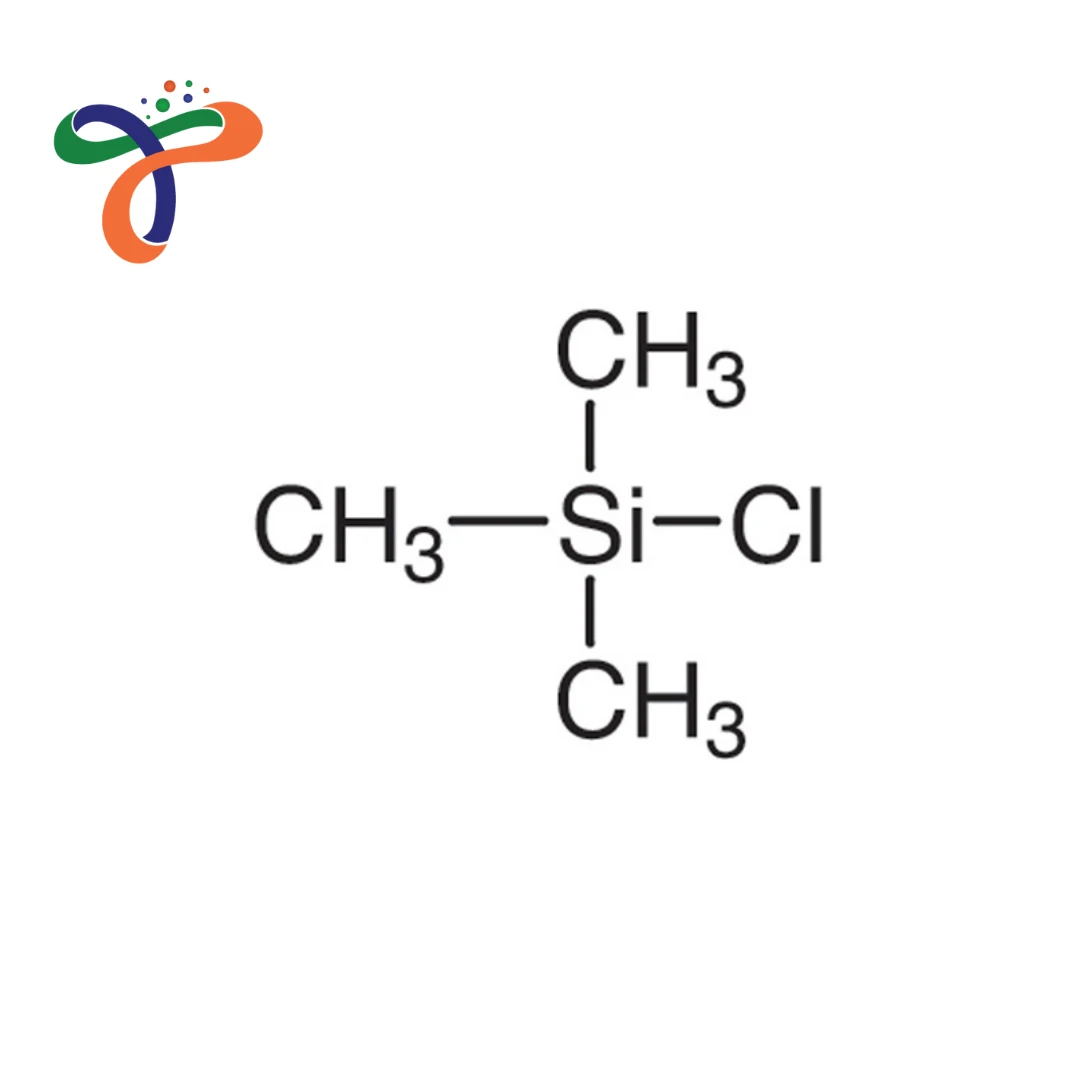
Chlorotrimethylsilane | 75-77-4
Cas No :
75-77-4
Synonyms :
Form :
Liquid
Molecular Weight :
108.64 G/mol
Molecular Formula :
C3H9CLSI
Boiling Point :
56 °c
Melting Point :
-90 °c
Flash Point :
-12 °c
Solubility :
Reacts With Water; Soluble In Organic Solvents (e.g., Toluene, Dichloromethane)
Description :
Overview of Chlorotrimethylsilane
Chlorotrimethylsilane is an organosilicon compound widely used in chemical synthesis and industrial processing applications. It is valued for its high reactivity, moisture sensitivity, and effectiveness as a silylating and derivatising agent in organic chemistry.
Both Chlorotrimethylsilane and Trimethylchlorosilane refer to the same chemical product and are used interchangeably in technical documentation, safety data sheets, and commercial trade. As an industrial reagent, Chlorotrimethylsilane / Trimethylchlorosilane plays an important role in pharmaceutical synthesis, silicone chemistry, and specialty chemical manufacturing.
Applications of Chlorotrimethylsilane
Pharmaceutical & Organic Synthesis
Chlorotrimethylsilane is widely used as a silylating agent in organic and pharmaceutical synthesis. It is used to protect functional groups and improve reaction selectivity and is often used alongside Hexamethyldisilazane (HMDS) and Trimethylsilyl Chloride Alternatives in synthesis routes.
Silicone & Polymer Chemistry
Trimethylchlorosilane is used in silicone chemistry for the modification of surfaces and polymers. It contributes to improved hydrophobicity and compatibility and complements materials such as Dimethyldichlorosilane and Methyltrimethoxysilane in silane-based systems.
Chemical Manufacturing & Industrial Processing
Chlorotrimethylsilane is used in chemical processing as a reagent for derivatisation and moisture-sensitive reactions. It supports controlled processing in speciality chemical manufacturing.
Laboratory & Speciality Applications
The compound is also widely used in laboratory-scale synthesis and analytical chemistry, where silylation and derivatisation are required.
Safety & Handling Guidelines
-
Store in a cool, dry, and well-ventilated area
-
Protect from moisture and humidity
-
Keep containers tightly sealed
-
Avoid inhalation of vapours
-
Prevent contact with skin and eyes
-
Use appropriate PPE, including gloves, goggles, and protective clothing
-
Handle and dispose of material according to regulatory guidelines
Where to Buy Chlorotrimethylsilane?
Chlorotrimethylsilane Manufacturer
Chlorotrimethylsilane is manufactured for industrial applications requiring controlled purity, high reactivity, and reliable performance in synthesis and processing systems.
Chlorotrimethylsilane Supplier & Distributor
Chlorotrimethylsilane / Trimethylchlorosilane is supplied in bulk and industrial packaging formats for pharmaceutical, chemical, and silicone manufacturers. As a trusted chemical supplier and reliable distributor, Chemicalbull Pvt. Ltd. supports customers with dependable sourcing, documentation, and compliant logistics across a wide silane product portfolio.
MSDS for Chlorotrimethylsilane
The MSDS for Chlorotrimethylsilane provides detailed information on hazards, safe handling procedures, storage conditions, exposure controls, first-aid measures, and emergency response guidelines. Always review the MSDS before industrial use.
Frequently Asked Questions (FAQs)
-
Are Chlorotrimethylsilane and Trimethylchlorosilane the same product?
Yes, both names refer to the same chemical compound and are used interchangeably. -
What is Chlorotrimethylsilane mainly used for?
It is mainly used as a silylating agent in organic synthesis and pharmaceutical manufacturing. -
Is Chlorotrimethylsilane moisture sensitive?
Yes, it reacts with moisture and should be handled under dry conditions. -
Is Chlorotrimethylsilane hazardous?
It can be corrosive and reactive if mishandled. Proper PPE and MSDS guidelines are essential. -
In what form is Chlorotrimethylsilane supplied?
It is supplied as a clear, colourless liquid suitable for industrial and laboratory use. -
Can Chlorotrimethylsilane be used in silicone chemistry?
Yes, it is commonly used in silicone modification and surface treatment applications.
ChemicalBull supplies Chlorotrimethylsilane across India, serving customers in Andhra Pradesh, Arunachal Pradesh, Assam, Bihar, Chhattisgarh, Goa, Gujarat, Haryana, Himachal Pradesh, Jharkhand, Karnataka, Kerala, Madhya Pradesh, Maharashtra, Manipur, Meghalaya, Mizoram, Nagaland, Odisha, Punjab, Rajasthan, Sikkim, Tamil Nadu, Telangana, Tripura, Uttar Pradesh, Uttarakhand, and West Bengal, as well as the Union Territories of Andaman & Nicobar Islands, Chandigarh, Dadra & Nagar Haveli and Daman & Diu, Delhi, Jammu & Kashmir, Ladakh, Lakshadweep, and Puducherry. We serve pharmaceutical, chemical, research, academic, laboratory, manufacturing, and industrial customers with reliable nationwide delivery.