Chlormequat Chloride
Description :
Overview of Chlormequat Chloride
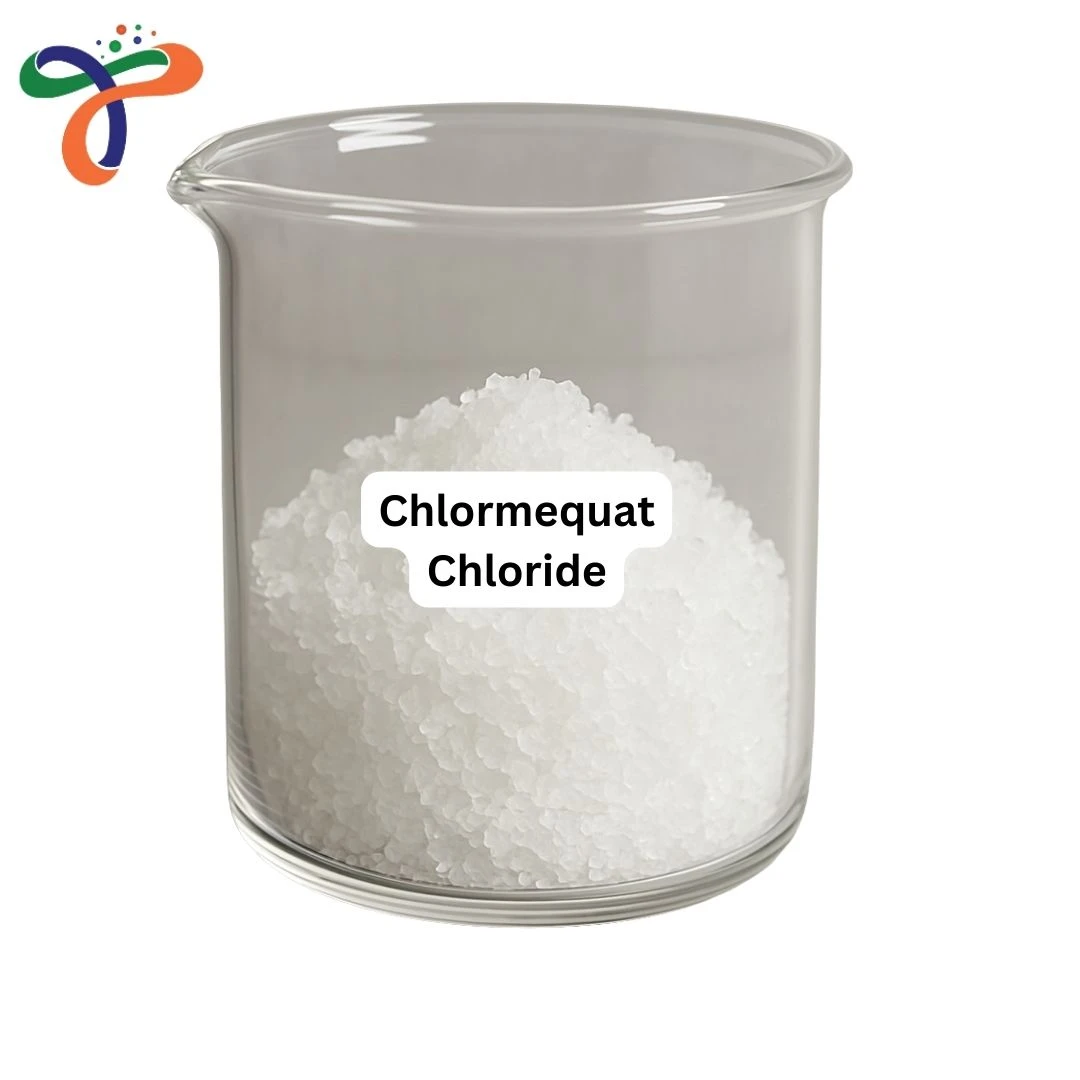
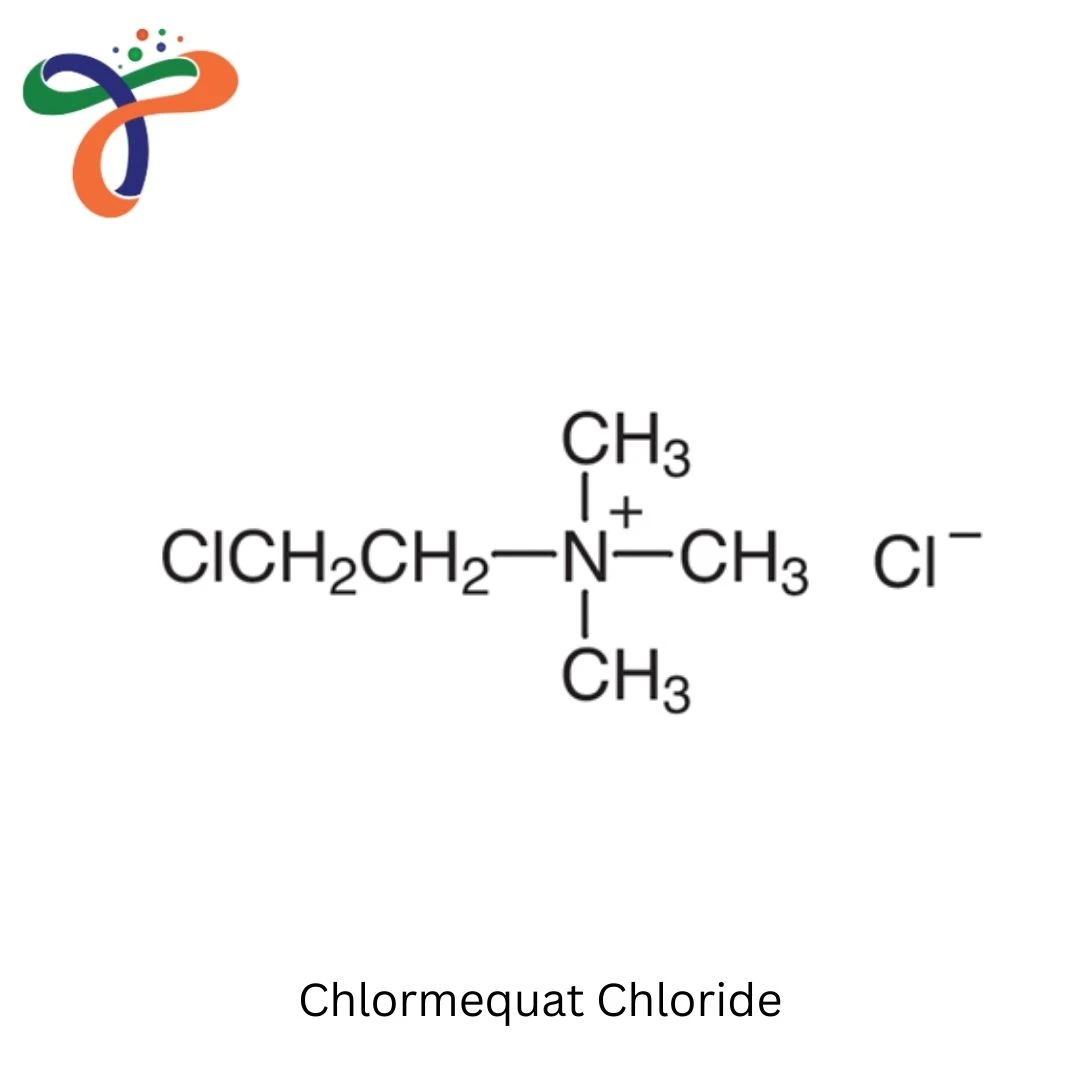
Chlormequat Chloride (CCC) is a plant growth regulator that shortens stems and strengthens crops by blocking gibberellin production. It is available as a white crystalline powder or a 50% soluble liquid. Farmers use it to prevent lodging in cereals, control cotton height, and shape ornamental plants.
Simply put, Chlormequat Chloride makes plants shorter and sturdier, preventing lodging while improving yield quality at chemicalbull.com.
Applications of Chlormequat Chloride
Cereal Lodging Prevention
Chlormequat Chloride shortens the stems of wheat, rice, and barley so they can better withstand wind and rain.
- Apply it during the tillering to boot stage to reduce plant height by 10 to 20 centimeters.
- Essential for Agriculture Industry high-yield farming.
- Complements Tebuconazole disease control programs.
Cotton Growth Regulation
It controls vegetative growth, helps retain more bolls, and ensures the crop matures at the same time.
- It reduces plant height by 20 to 30 centimeters, making harvesting easier.
- Works with Tricyclazole rice systems.
- Supports Metribuzin weed management rotations.
Ornamental Plant Shaping
Chlormequat Chloride helps pot plants and chrysanthemums grow more compact and bushy.
- It is a standard product for controlling plant height in floriculture.
- Essential for Fertilizer Industry supported ornamentals.
- It also helps plants last longer and stay stable during transport.
Fruit Tree & Vegetable Regulation
It shortens the distance between leaves and helps control overly vigorous growth.
- This improves how much light reaches the fruit and can lead to better fruit quality.
- It is safe to use on tomatoes, cucumbers, and peppers grown in greenhouses or other protected environments.
Safety & Handling Guidelines
Handle Chlormequat Chloride with the same safety precautions you use for other plant growth regulators.
- Store the product in a cool, dry place, away from strong alkalis and oxidizers.
- Wear gloves, goggles, protective clothing, and a respirator when applying the product.
- Keep Chlormequat Chloride away from food, children, and pesticides that are alkaline.
- Be sure to follow the recommended pre-harvest interval, which is 21 to 30 days for cereals.
- Refer to the Material Safety Data Sheet (MSDS) for detailed safety instructions.
Chlormequat Chloride MSDS
The MSDS for Chlormequat Chloride provides detailed information on how it inhibits gibberellin, possible phytotoxicity symptoms, safe handling, tank mix compatibility, residue limits, and when to apply it. This information is especially useful for agronomists and crop consultants.
ChemicalBull includes the MSDS, growth stage charts, and varietal response data with every order.
Chlormequat Chloride Manufacturer, Supplier & Distributor
Chlormequat Chloride Manufacturer
Chlormequat Chloride is manufactured for lodging prevention and growth regulation in cereals, cotton, and ornamentals within the Agriculture Industry.
Chlormequat Chloride Supplier & Distributor
ChemicalBull is a trusted manufacturer, supplier, and distributor of Chlormequat Chloride. You can find it at chemicalbull.com in 50% SL, 80% WP, and technical powder formulations.
- It is available in different concentrations for foliar spraying, seed treatment, and soil drenching.
- Bulk drums are available for commercial farms, while smaller packs are offered for horticulture use.
- Every order includes complete documentation, such as a Certificate of Analysis (COA).
Frequently Asked Questions (FAQs)
-
When to apply Chlormequat Chloride on wheat?
Apply Chlormequat Chloride at the tillering stage (GS 21-30) or jointing stage (GS 31) using 400 to 800 ml per hectare to prevent lodging in high-fertility varieties. -
What is the effect of Chlormequat Chloride on cotton?
Chlormequat Chloride reduces plant height by 20 to 30 centimeters, thickens stems, helps retain bolls, and ensures the crop matures together for easier mechanical harvesting. -
Can Chlormequat Chloride be tank-mixed?
Chlormequat Chloride can be mixed with Tebuconazole, Tricyclazole, and Metribuzin. This combination improves disease control and weed management. -
Does Chlormequat Chloride affect yield?
Chlormequat Chloride can increase yield by 5 to 15 percent by improving light interception, reducing lodging, and enhancing grain quality in responsive varieties. -
Is Chlormequat Chloride safe for organic farming?
No, Chlormequat Chloride is a synthetic plant growth regulator. For organic certification, use natural alternatives such as seaweed extracts.
ChemicalBull supplies Chlormequat Chloride across India, serving customers in Andhra Pradesh, Arunachal Pradesh, Assam, Bihar, Chhattisgarh, Goa, Gujarat, Haryana, Himachal Pradesh, Jharkhand, Karnataka, Kerala, Madhya Pradesh, Maharashtra, Manipur, Meghalaya, Mizoram, Nagaland, Odisha, Punjab, Rajasthan, Sikkim, Tamil Nadu, Telangana, Tripura, Uttar Pradesh, Uttarakhand, and West Bengal, as well as the Union Territories of Andaman & Nicobar Islands, Chandigarh, Dadra & Nagar Haveli and Daman & Diu, Delhi, Jammu & Kashmir, Ladakh, Lakshadweep, and Puducherry. We serve pharmaceutical, chemical, research, academic, laboratory, manufacturing, and industrial customers with reliable nationwide delivery.