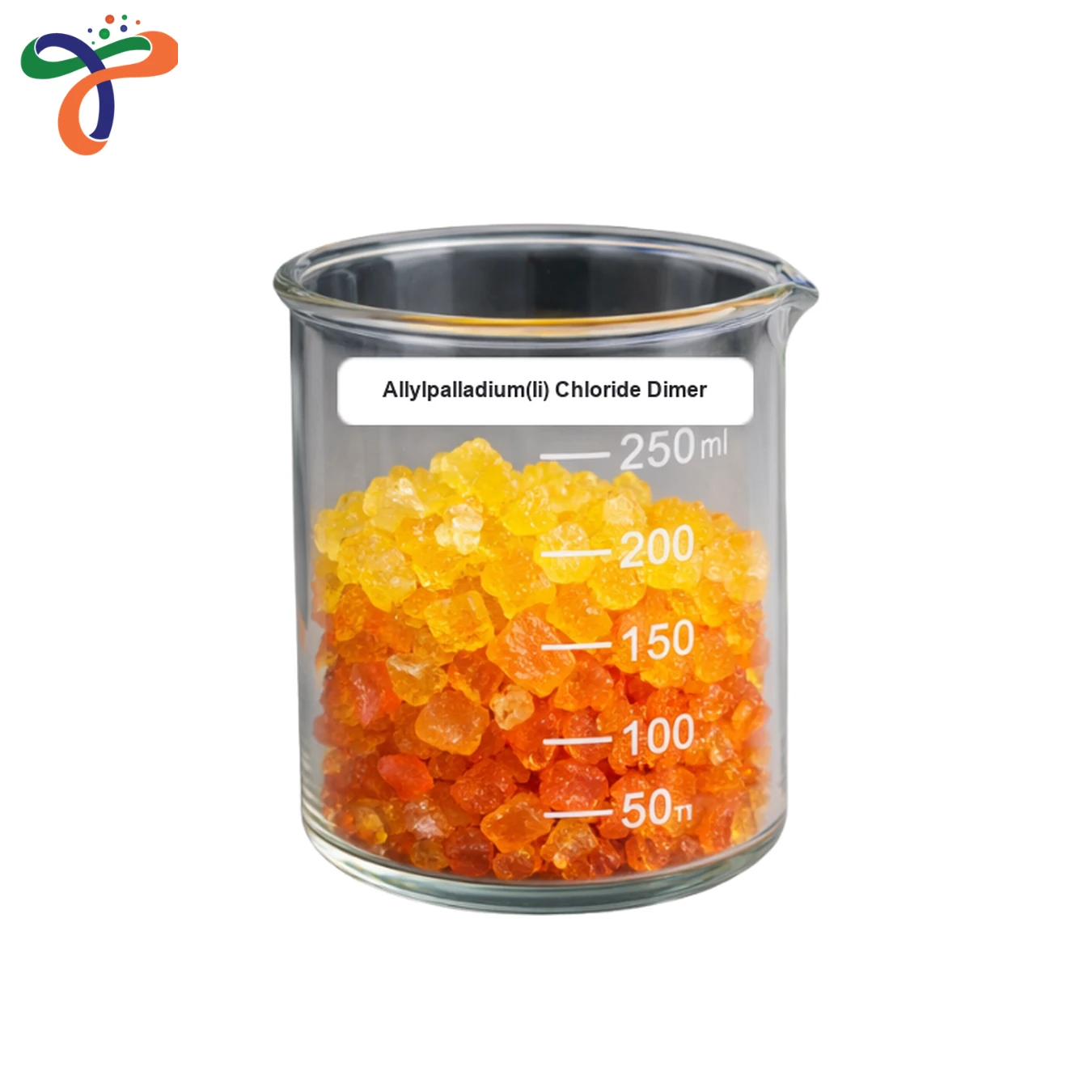
Allylpalladium(Ii) Chloride Dimer | 12012-95-2
Cas No :
12012-95-2
Form :
Solid
Molecular Weight :
365.88 g/mol
Molecular Formula :
C6H10CL2PD2
Boiling Point :
260 °C
Melting Point :
85 °C
Flash Point :
95 °C
Solubility :
Insoluble in water, soluble in acetone and dichloromethane
Description :
Allylpalladium(II) Chloride Dimer Supplier & Distributor In India
Chemical Bull is an Allylpalladium(II) Chloride Dimer supplier, distributor, and exporter in India, supporting sourcing enquiries from fine chemical manufacturers, pharmaceutical intermediate producers, catalyst developers, organic synthesis laboratories, distributors, and global B2B buyers.
Allylpalladium(II) Chloride Dimer, CAS 12012-95-2, is an organopalladium complex used as a catalyst or catalyst precursor in selected organic transformations. Buyers can request specifications, COA, TDS, MSDS or SDS, packing details, and commercial pricing.
Overview of Allylpalladium(II) Chloride Dimer
Allylpalladium(II) Chloride Dimer is also known as Allylpalladium Chloride Dimer, Bis(allyl)dichlorodipalladium(II), or Di-μ-chlorobis[(η3-allyl)palladium(II)]. Its abbreviated formula is [(η3-C3H5)PdCl]2.
The compound has the molecular formula C6H10Cl2Pd2 and a molecular weight of approximately 365.89 g/mol. Its dimeric structure contains two palladium(II) centres, coordinated allyl groups, and bridging chloride ligands.
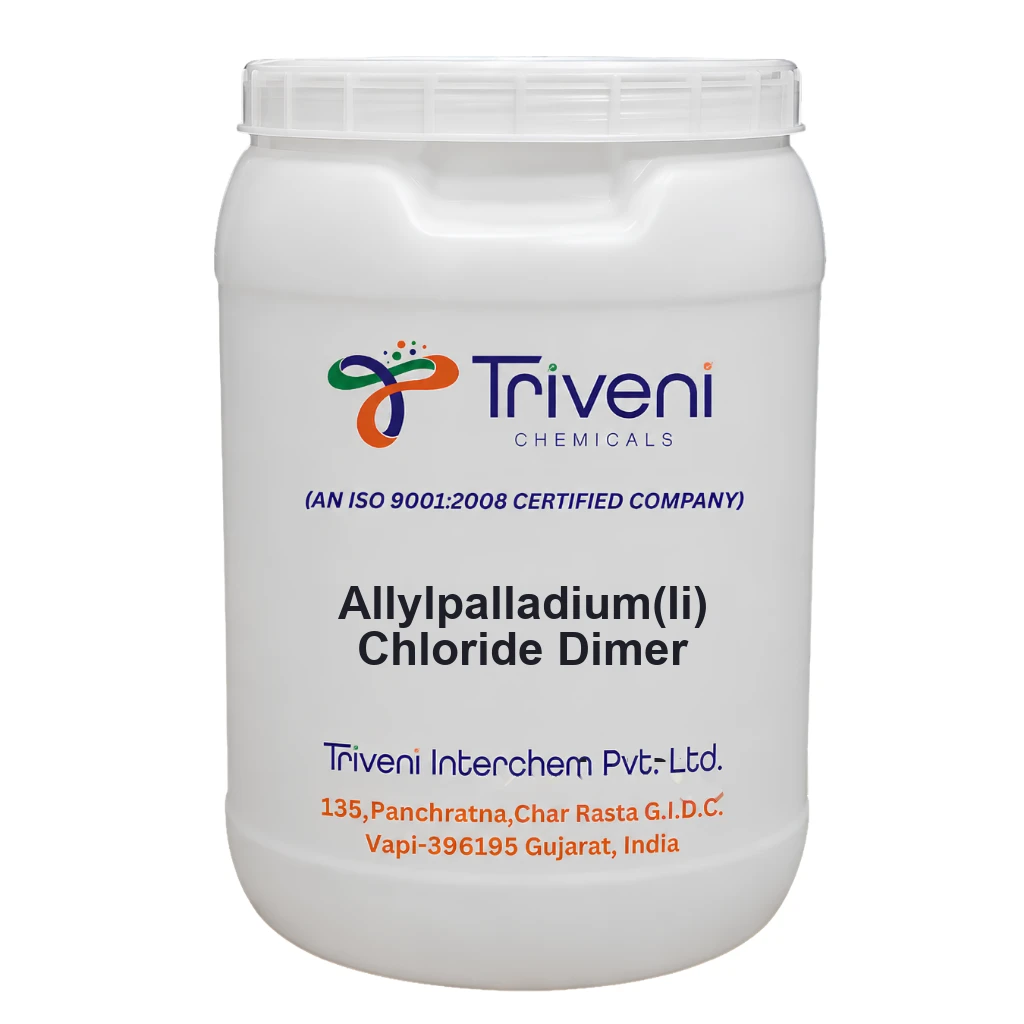
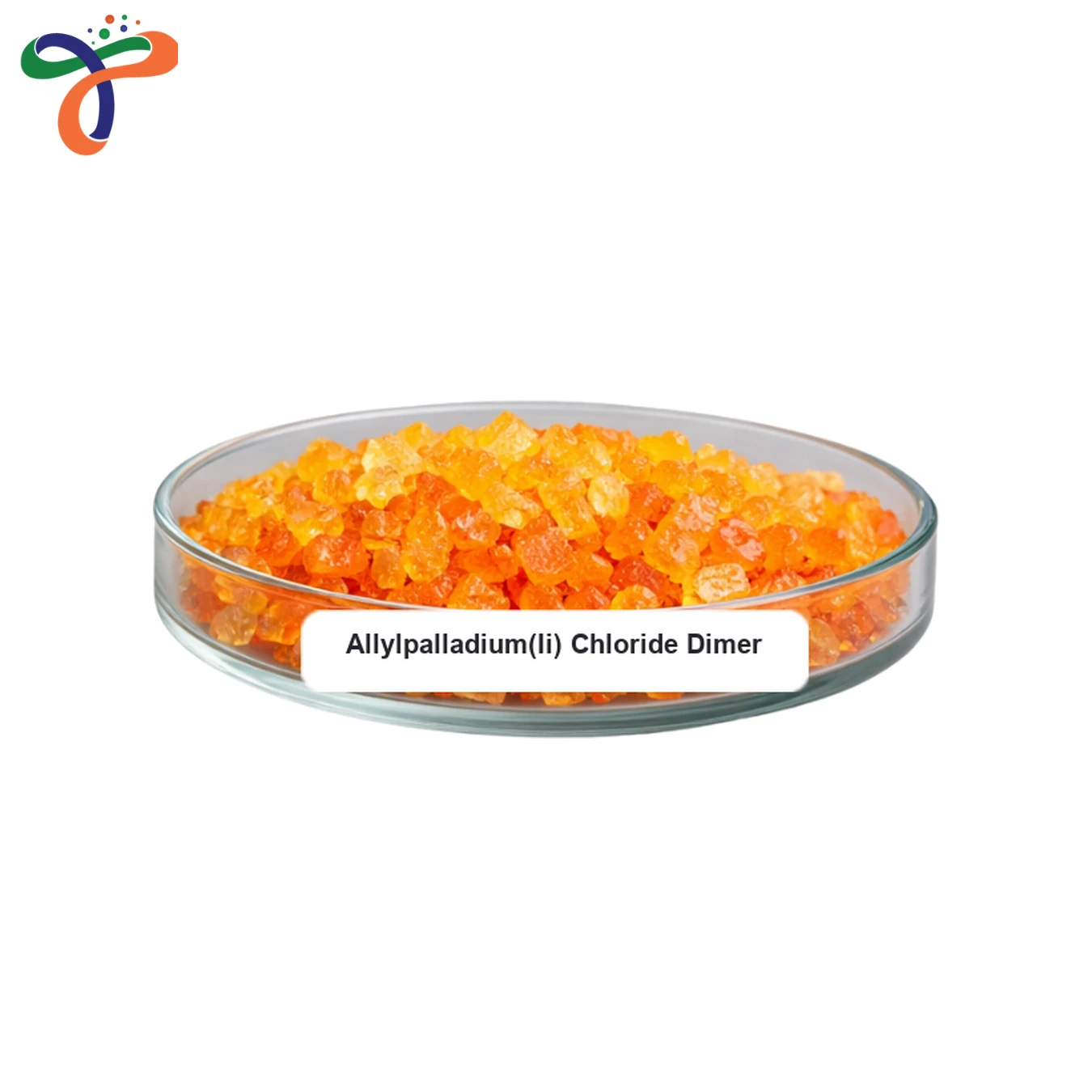
Commercial grades are supplied as powder or crystals, with appearance varying from light yellow or amber to dark green. The material is sensitive to light and moisture. Confirm appearance, analytical specifications, and storage requirements for the offered grade.
Applications of Allylpalladium(II) Chloride Dimer
Heck Reaction Catalyst Systems
Allylpalladium(II) Chloride Dimer has documented applications in Heck chemistry, including the preparation of cationic palladium catalysts. Performance depends on the ligand system, substrates, and reaction conditions.
Suzuki–Miyaura Catalyst Development
The compound is used to prepare N-heterocyclic carbene palladium allyl complexes evaluated in Suzuki–Miyaura cross-coupling. It provides a precursor for developing defined palladium catalyst systems.
Buchwald–Hartwig Coupling
Published applications include its use in selected Buchwald–Hartwig coupling systems. Researchers should evaluate ligand compatibility, conversion, selectivity, and impurity formation for the intended synthesis.
Organopalladium & Fine Chemical Research
Synthesis laboratories use the dimer in organopalladium complex preparation and catalytic reaction development. Process teams should assess reproducibility, palladium recovery, and residual metal requirements before production adoption.
Specifications To Check Before Procurement
Buyers should confirm CAS 12012-95-2, structural identity, appearance, compound assay, analytical method, palladium content where specified, residual solvents, and relevant impurity limits.
Compound assay and palladium content are different measurements. Compare specifications using the same reporting basis. Share any requirements for moisture, residual dichloromethane, or other process-relevant contaminants when requesting a quotation.
Confirm packaging integrity, storage conditions, and handling requirements. A catalyst precursor should be approved against the intended reaction system rather than selected by metal content alone.
Allylpalladium(II) Chloride Dimer Price & Supply Support
Allylpalladium(II) Chloride Dimer price depends on the specification, source, quantity, precious-metal pricing, packaging, and delivery destination. Recurring buyers can share consumption forecasts and procurement schedules.
Chemical Bull supports specification reviews, bulk and repeat procurement enquiries, technical-document requests, domestic dispatch planning, and export coordination. Buyers can request COA, TDS, MSDS or SDS, and packing information for the offered grade. Availability, lead time, and commercial terms are confirmed during quotation.
Allylpalladium(II) Chloride Dimer MSDS & Handling
Chemical Bull provides Allylpalladium(II) Chloride Dimer MSDS or SDS on request for the offered grade. Supplier SDS classifications include skin and eye irritation; some supplied grades also carry a cancer hazard classification. Review the exact product SDS, including residual-solvent information, before handling.
Avoid inhaling dust and prevent direct skin or eye contact. Use suitable containment or local exhaust ventilation, chemical-resistant gloves, protective clothing, and eye protection according to the SDS and workplace assessment.
Keep containers tightly closed under the specified inert atmosphere. Protect from moisture and light, and follow the supplier’s storage temperature instructions. Collect palladium-containing residues for appropriate metal recovery or authorised disposal and prevent discharge to drains.
Related Products
Buyers developing catalytic synthesis routes may also enquire about related palladium reagents and ligands from Chemical Bull.
Request a Quote for Allylpalladium(II) Chloride Dimer
Need Allylpalladium(II) Chloride Dimer for catalyst preparation, cross-coupling development, or fine chemical synthesis?
Send your required quantity, assay specification, analytical requirements, residual-solvent limits, packing requirements, and delivery location. Chemical Bull will discuss offered specifications, pricing, availability, and documentation.
Contact Chemical Bull for an Allylpalladium(II) Chloride Dimer Supply Quote
Frequently Asked Questions
-
What is Allylpalladium(II) Chloride Dimer?
It is a dimeric organopalladium complex containing allyl groups and bridging chloride ligands. It is used as a catalyst or catalyst precursor in selected organic synthesis applications.
-
What is its CAS number and molecular formula?
Its CAS number is 12012-95-2, molecular formula is C6H10Cl2Pd2, and molecular weight is approximately 365.89 g/mol.
-
What is Allylpalladium(II) Chloride Dimer used for?
Documented uses include Heck chemistry, preparation of catalyst complexes for Suzuki–Miyaura coupling, selected Buchwald–Hartwig systems, and organopalladium research.
-
How should Allylpalladium(II) Chloride Dimer be stored?
Keep it tightly sealed under the specified inert atmosphere, protected from moisture and light. Follow the offered grade’s storage temperature and compatibility instructions.
-
Where can I request pricing and Allylpalladium(II) Chloride Dimer MSDS in India?
Contact Chemical Bull with your quantity, specification, packing requirements, and delivery location to request pricing, availability, COA, TDS, and MSDS or SDS for the offered grade.
ChemicalBull supplies Allylpalladium(Ii) Chloride Dimer across India, serving customers in Andhra Pradesh, Arunachal Pradesh, Assam, Bihar, Chhattisgarh, Goa, Gujarat, Haryana, Himachal Pradesh, Jharkhand, Karnataka, Kerala, Madhya Pradesh, Maharashtra, Manipur, Meghalaya, Mizoram, Nagaland, Odisha, Punjab, Rajasthan, Sikkim, Tamil Nadu, Telangana, Tripura, Uttar Pradesh, Uttarakhand, and West Bengal, as well as the Union Territories of Andaman & Nicobar Islands, Chandigarh, Dadra & Nagar Haveli and Daman & Diu, Delhi, Jammu & Kashmir, Ladakh, Lakshadweep, and Puducherry. We serve pharmaceutical, chemical, research, academic, laboratory, manufacturing, and industrial customers with reliable nationwide delivery.