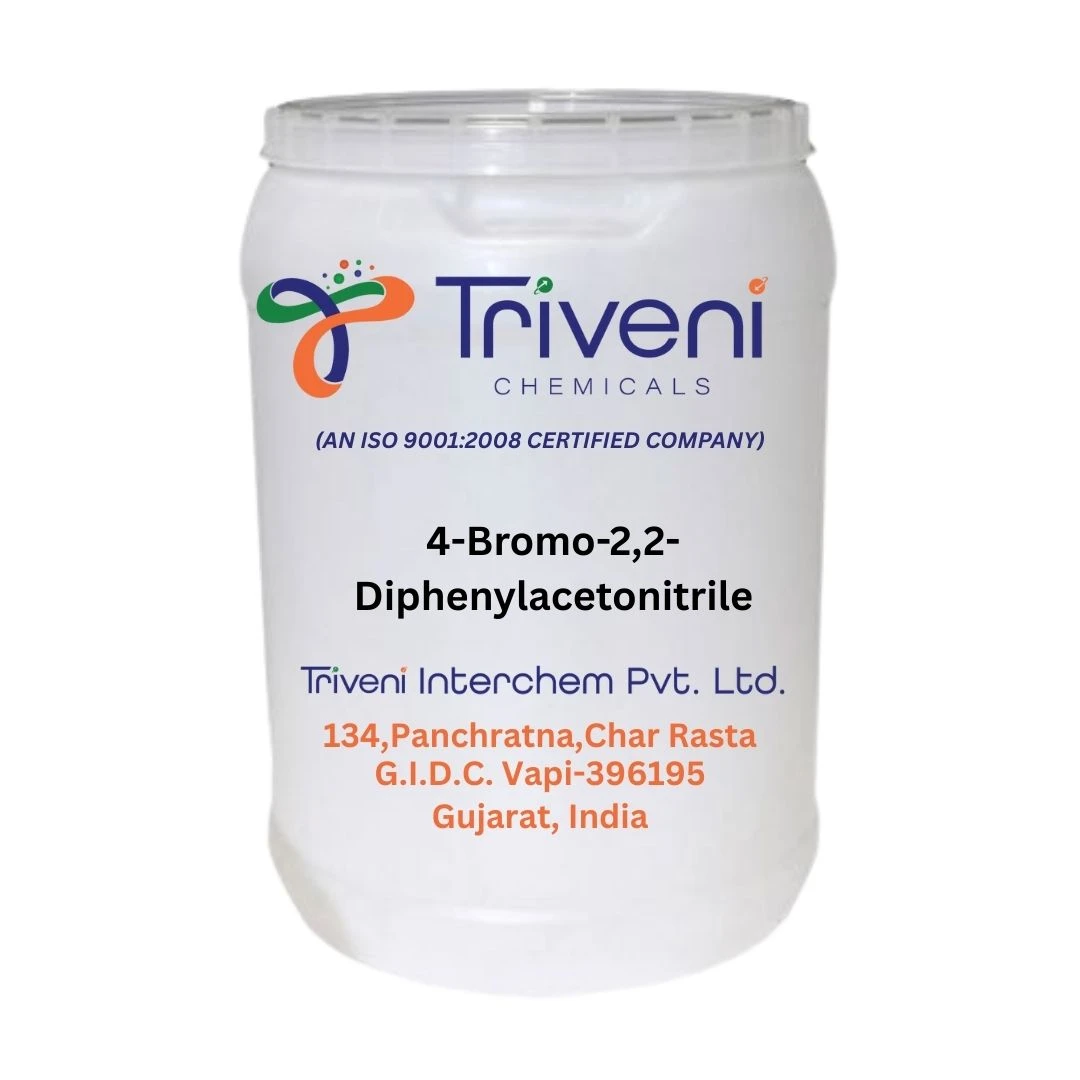
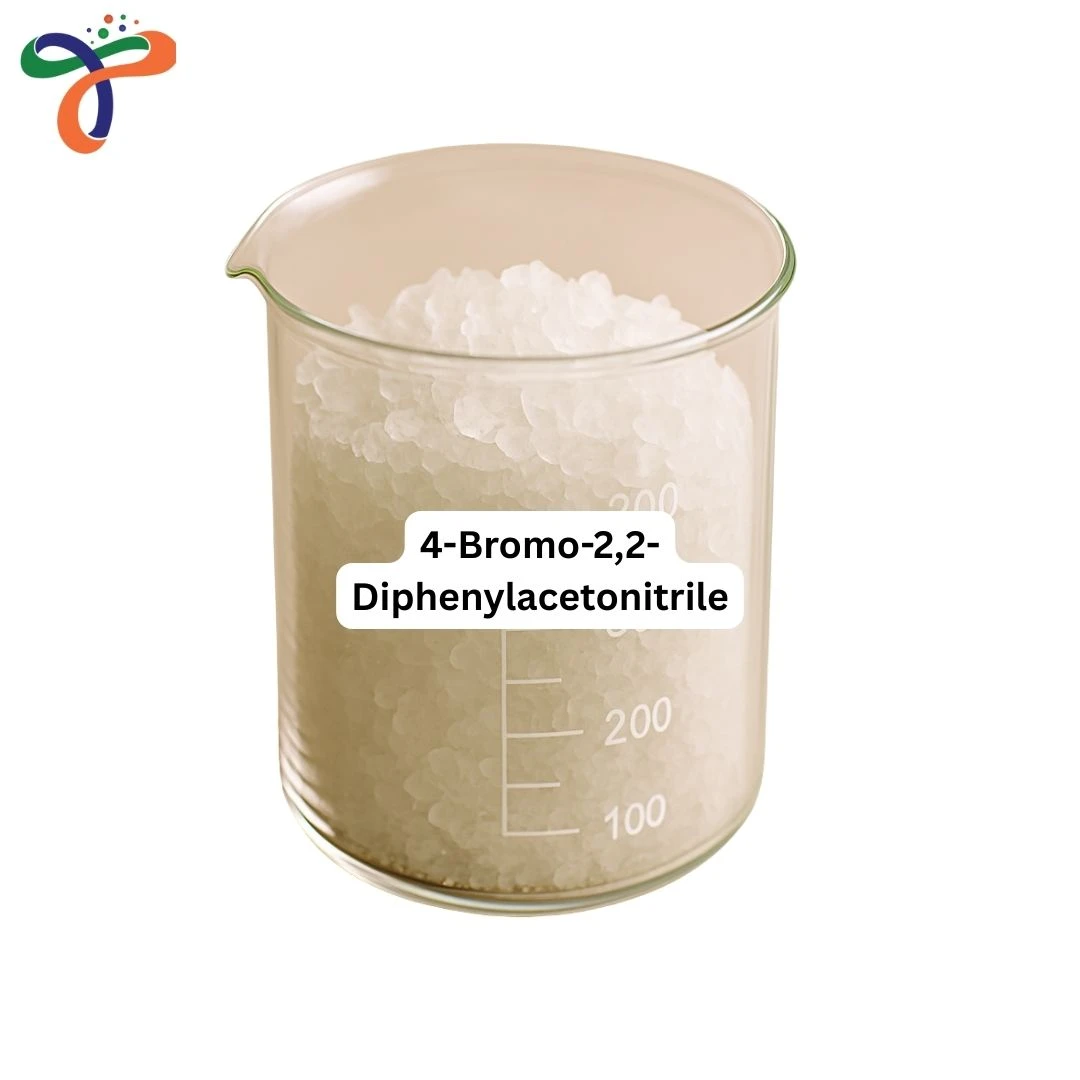
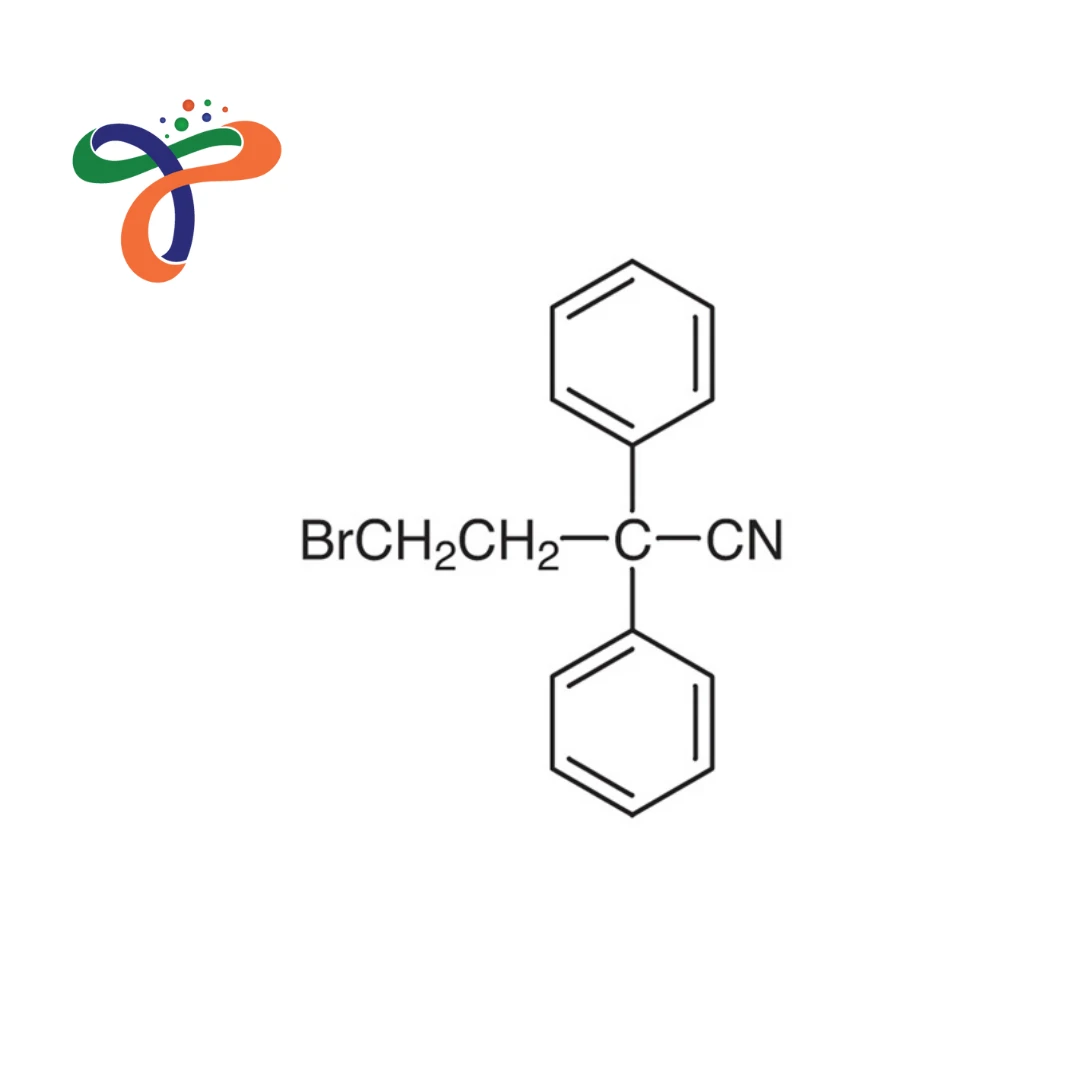
4-bromo-2,2-diphenylacetonitrile | 39186-58-8
Cas No :
39186-58-8
Synonyms :
Form :
Solid
Molecular Weight :
271.12 G/mol
Molecular Formula :
C16H14BRN
Boiling Point :
320 °c
Melting Point :
135 °c
Flash Point :
140 °c
Solubility :
Soluble In Organic Solvents (chloroform, Acetone, Ethyl Acetate); Insoluble In Water
Description :
Overview of 4-Bromo-2,2-Diphenylacetonitrile
4-Bromo-2,2-Diphenylacetonitrile (CAS: 5581-06-8) is a halogenated aromatic nitrile compound widely used in organic synthesis, pharmaceutical intermediates, specialty chemicals, and fine chemical manufacturing. It appears as a pale yellow crystalline solid and is valued for its reactivity in nucleophilic substitution, condensation, and coupling reactions.
This compound serves as a key building block for complex organic molecules, active pharmaceutical intermediates, and specialty chemical reagents. Its bromine functional group and stabilized diphenyl structure make it suitable for high-performance synthesis and industrial-scale chemical reactions.
In industrial applications, related brominated nitriles such as 2-Bromo-2-phenylacetonitrile, 4-Bromobenzonitrile, and 1-Bromo-3-Chloropropane are also used for pharmaceutical intermediates, agrochemical synthesis, and specialty organic reactions.
Applications of 4-Bromo-2,2-Diphenylacetonitrile
Pharmaceutical & Fine Chemical Synthesis
-
Used as an intermediate in the synthesis of active pharmaceutical ingredients (APIs)
-
Supports construction of bioactive aromatic and heterocyclic molecules
-
Applied in medicinal chemistry and specialty chemical research
Organic Synthesis & Specialty Chemicals
-
Serves as a building block for nucleophilic substitution and condensation reactions
-
Suitable for preparing intermediates in dyes, polymers, and advanced organics
-
Applied in academic and industrial R&D laboratories
Agrochemical Applications
-
Functions as a key intermediate in the synthesis of brominated agrochemicals
-
Supports production of herbicides, fungicides, and pesticide intermediates
-
Useful for industrial-scale specialty chemical manufacturing
Laboratory & Research Applications
-
Used in chemical research and organic synthesis studies
-
Supports development of novel chemical scaffolds and intermediates
-
Applied in functionalization of aromatic and nitrile-containing compounds
Safety & Handling Guidelines
-
Avoid direct contact with skin, eyes, and clothing
-
Use gloves, goggles, and protective clothing
-
Handle in well-ventilated areas or fume hoods
-
Store in tightly sealed containers away from heat, moisture, and oxidizers
-
Follow COA and MSDS instructions carefully
Where to Buy 4-Bromo-2,2-Diphenylacetonitrile?
4-Bromo-2,2-Diphenylacetonitrile Manufacturer
ChemicalBull supplies high-purity 4-Bromo-2,2-Diphenylacetonitrile suitable for pharmaceutical synthesis, organic intermediates, and specialty chemical manufacturing.
4-Bromo-2,2-Diphenylacetonitrile Supplier & Distributor
-
Available in bulk and laboratory-scale packaging
-
Ideal for organic synthesis, fine chemical production, and R&D applications
-
COA, MSDS, and detailed technical specifications provided
4-Bromo-2,2-Diphenylacetonitrile MSDS
-
May cause skin, eye, and respiratory irritation
-
Flammable under certain conditions—avoid sparks and heat
-
Avoid inhalation of dust or vapors
-
Store in cool, dry, ventilated environments
-
Refer to full MSDS for spill response and emergency procedures
Frequently Asked Questions (FAQs)
-
What is the molecular formula of 4-Bromo-2,2-Diphenylacetonitrile?
Molecular Formula: C₁₅H₁₂BrN
Molecular Weight: 271.17 g/mol -
What is 4-Bromo-2,2-Diphenylacetonitrile used for?
Used as a building block for pharmaceutical intermediates, organic synthesis, and specialty chemical manufacturing. -
Which industries use 4-Bromo-2,2-Diphenylacetonitrile?
Common industries include pharmaceuticals, fine chemicals, agrochemical intermediates, and specialty chemical R&D. -
Is 4-Bromo-2,2-Diphenylacetonitrile hazardous?
Yes. It may cause irritation to skin, eyes, and respiratory system, and should be handled using proper PPE following MSDS guidelines. -
Why is it important in organic synthesis?
Its brominated aromatic nitrile structure allows for efficient nucleophilic substitution and condensation reactions, making it valuable for high-performance chemical and pharmaceutical synthesis.
ChemicalBull supplies 4-bromo-2,2-diphenylacetonitrile across India, serving customers in Andhra Pradesh, Arunachal Pradesh, Assam, Bihar, Chhattisgarh, Goa, Gujarat, Haryana, Himachal Pradesh, Jharkhand, Karnataka, Kerala, Madhya Pradesh, Maharashtra, Manipur, Meghalaya, Mizoram, Nagaland, Odisha, Punjab, Rajasthan, Sikkim, Tamil Nadu, Telangana, Tripura, Uttar Pradesh, Uttarakhand, and West Bengal, as well as the Union Territories of Andaman & Nicobar Islands, Chandigarh, Dadra & Nagar Haveli and Daman & Diu, Delhi, Jammu & Kashmir, Ladakh, Lakshadweep, and Puducherry. We serve pharmaceutical, chemical, research, academic, laboratory, manufacturing, and industrial customers with reliable nationwide delivery.