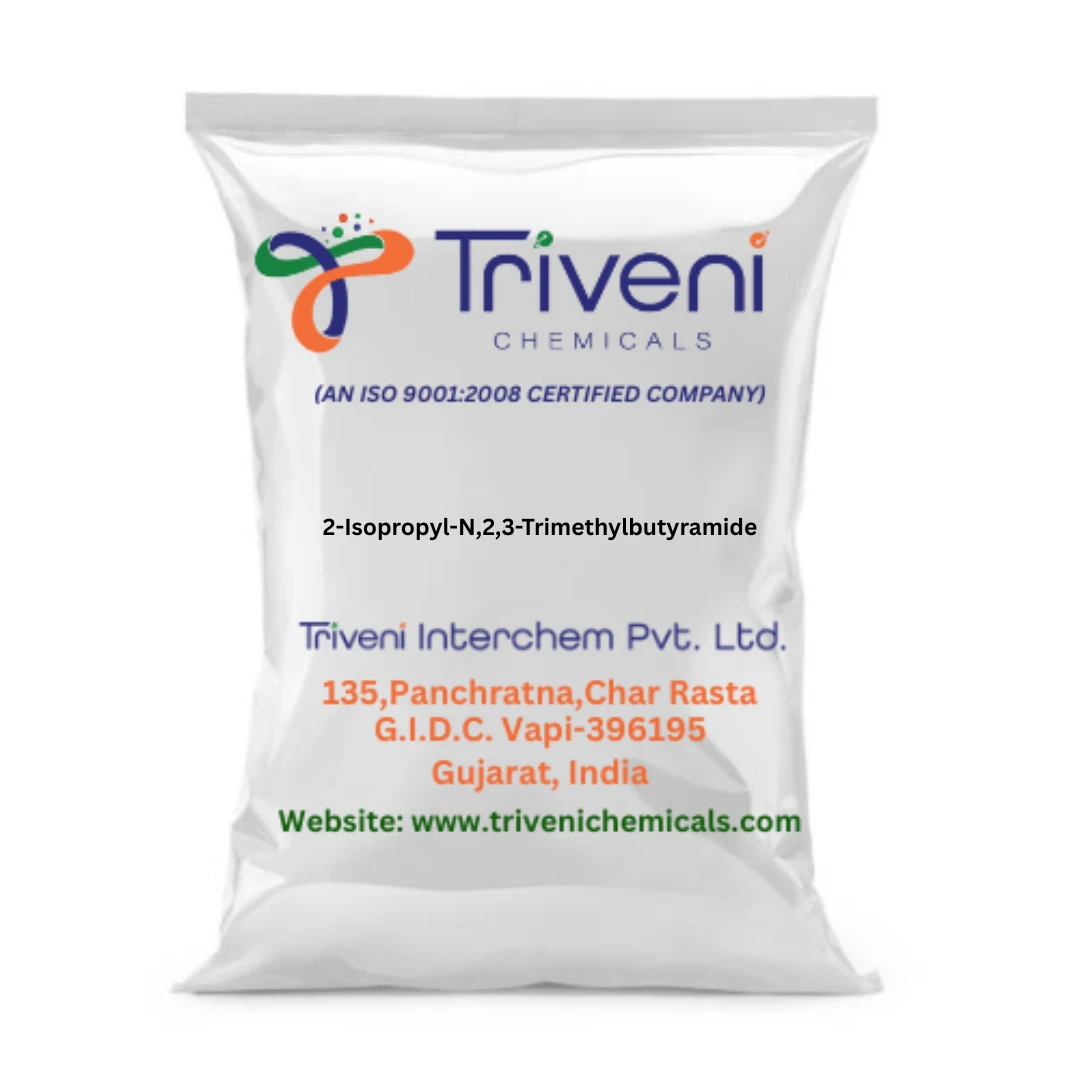
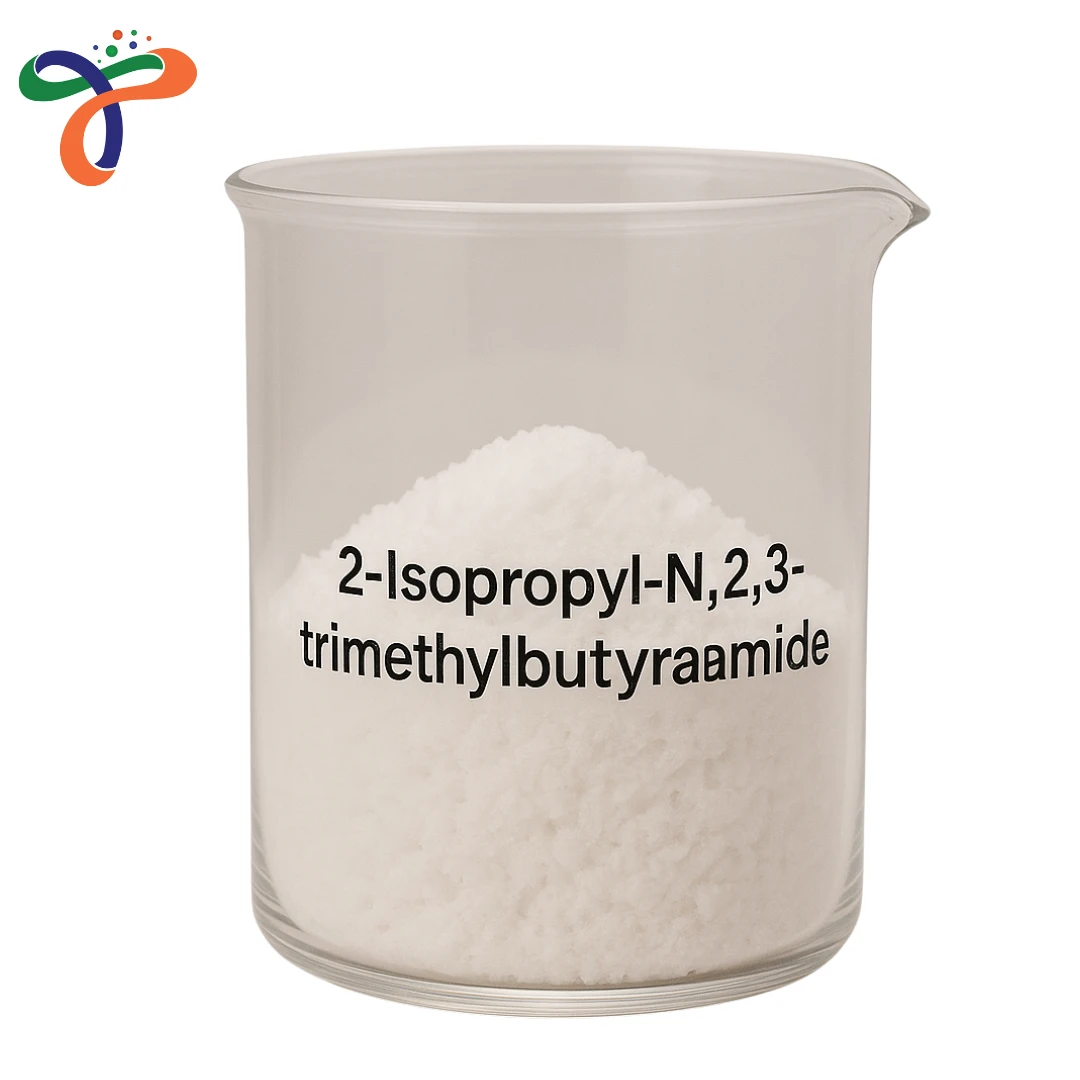
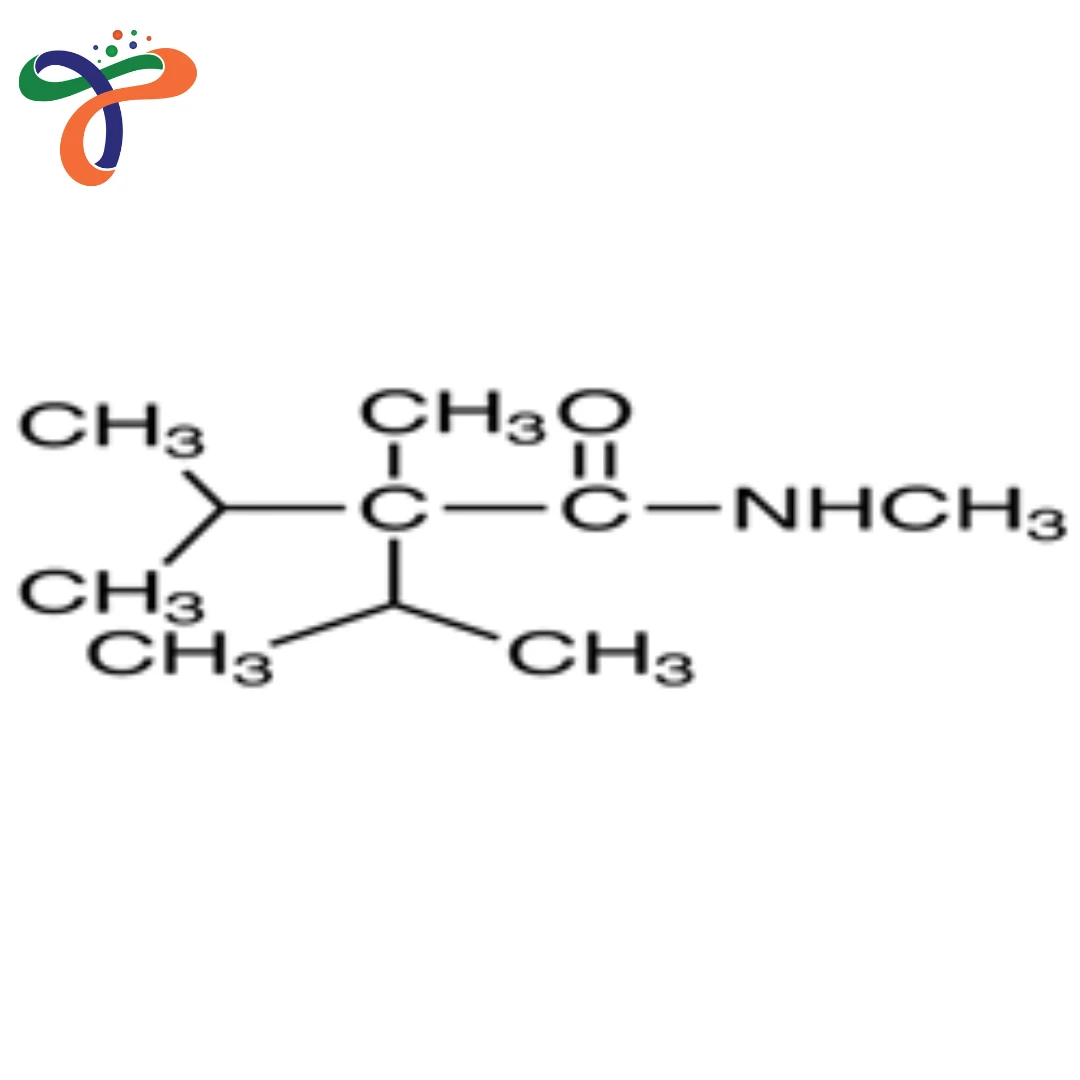
2-isopropyl-n,2,3-trimethylbutyramide | 51115-67-4
Cas No :
51115-67-4
Synonyms :
Form :
Solid
Molecular Weight :
171.28 G/mol
Molecular Formula :
C₁₀H₂₁NO
Boiling Point :
83-85°c
Melting Point :
58–61 °c
Flash Point :
58 °c
Solubility :
Soluble In Organic Solvents Like, Ethanol, Oils
Description :
Overview of 2-Isopropyl-N-(2,3-Trimethylbutyramide)
2-Isopropyl-N-(2,3-Trimethylbutyramide (CAS 51115-67-4) is a cooling agent aroma chemical known for its powerful, long-lasting cooling sensation and mild minty-camphoraceous odour. Unlike menthol, it delivers freshness without vigorous odour intensity, making it ideal for oral care, cosmetics, and pharmaceutical formulations.
This compound provides a clean, smooth cooling effect with excellent thermal stability and low volatility, ensuring consistent performance across product types. It is widely used in flavours, fragrances, balms, and topical formulations where sensory freshness and skin comfort are desired.
Often blended with Menthone Glycerin Acetal and Ethyl L-Lactate, this ingredient produces a balanced cooling profile suitable for modern, long-lasting freshness applications.
Applications of 2-Isopropyl-N-(2,3-Trimethylbutyramide)
Flavour & Fragrance Industry
Used as a sensory modifier and cooling enhancer, 2-Isopropyl-N-(2,3-Trimethylbutyramide) imparts a pleasant, refreshing sensation without strong mint character.
- Common in mint, citrus, and herbal flavours for candies, chewing gums, and beverages.
- Adds "clean freshness" to fragrance accords, especially in shower gels, aftershaves, and deodorants.
- Pairs effectively with Menthyl Acetate and Eucalyptol for balanced mint-herbal compositions.
Cosmetic & Personal Care
Highly popular in creams, lotions, deodorants, and oral-care products, this ingredient provides an instant yet enduring cooling effect.
- Ideal for after-sun, foot-care, or anti-irritation products.
- Compatible with water, alcohol, and oil-based systems, ensuring flexible formulation options.
Pharmaceutical & Functional Applications
In pharmaceuticals, 2-Isopropyl-N-(2,3-Trimethylbutyramide) serves as a sensory additive for topical pain-relief gels, throat sprays, and nasal inhalers.
- Reduces irritation in topical formulations while delivering refreshing comfort.
- Used in lozenges, cough drops, and mouthwashes for cool, soothing effects.
- Stable even at elevated process temperatures, maintaining efficacy in diverse systems.
Safety & Handling Guidelines
- Store in a cool, dry, well-ventilated area, away from direct sunlight and heat.
- Avoid direct contact with skin or eyes; wear appropriate gloves and goggles.
- Keep containers tightly closed to prevent evaporation or contamination.
- Refer to the Material Safety Data Sheet (MSDS) for detailed information on handling, toxicity, and disposal.
Where to Buy 2-Isopropyl-N-(2,3-Trimethylbutyramide)
2-Isopropyl-N-(2,3-Trimethylbutyramide) Manufacturer
Chemicalbull Pvt. Ltd. supplies high-purity cooling agents, including 2-Isopropyl-N-(2,3-Trimethylbutyramide), manufactured under controlled conditions for flavour, fragrance, cosmetic, and pharmaceutical industries.
Distributor & Supplier
Available in bulk and small-pack quantities, Chemicalbull provides technical assistance, safe packaging, and prompt delivery across Vapi, Gujarat, and global markets.
2-Isopropyl-N-(2,3-Trimethylbutyramide) MSDS
The MSDS for this product is available upon request. It includes comprehensive information on chemical composition, exposure limits, first-aid measures, and waste handling to ensure safety and compliance.
Frequently Asked Questions
What is 2-Isopropyl-N-(2,3-Trimethylbutyramide) used for?
It's used as a cooling agent in oral care, skincare, fragrance, and pharmaceutical formulations to deliver a clean, long-lasting freshness.How does it differ from Menthol?
It provides a similar cooling sensation without menthol's strong odour or potential irritation—ideal for mild or fragrance-neutral applications.Is it safe for cosmetic use?
Yes. It's safe within IFRA and cosmetic-regulation limits, offering sensory comfort without sensitisation when used as directed.
ChemicalBull supplies 2-isopropyl-n,2,3-trimethylbutyramide across India, serving customers in Andhra Pradesh, Arunachal Pradesh, Assam, Bihar, Chhattisgarh, Goa, Gujarat, Haryana, Himachal Pradesh, Jharkhand, Karnataka, Kerala, Madhya Pradesh, Maharashtra, Manipur, Meghalaya, Mizoram, Nagaland, Odisha, Punjab, Rajasthan, Sikkim, Tamil Nadu, Telangana, Tripura, Uttar Pradesh, Uttarakhand, and West Bengal, as well as the Union Territories of Andaman & Nicobar Islands, Chandigarh, Dadra & Nagar Haveli and Daman & Diu, Delhi, Jammu & Kashmir, Ladakh, Lakshadweep, and Puducherry. We serve pharmaceutical, chemical, research, academic, laboratory, manufacturing, and industrial customers with reliable nationwide delivery.