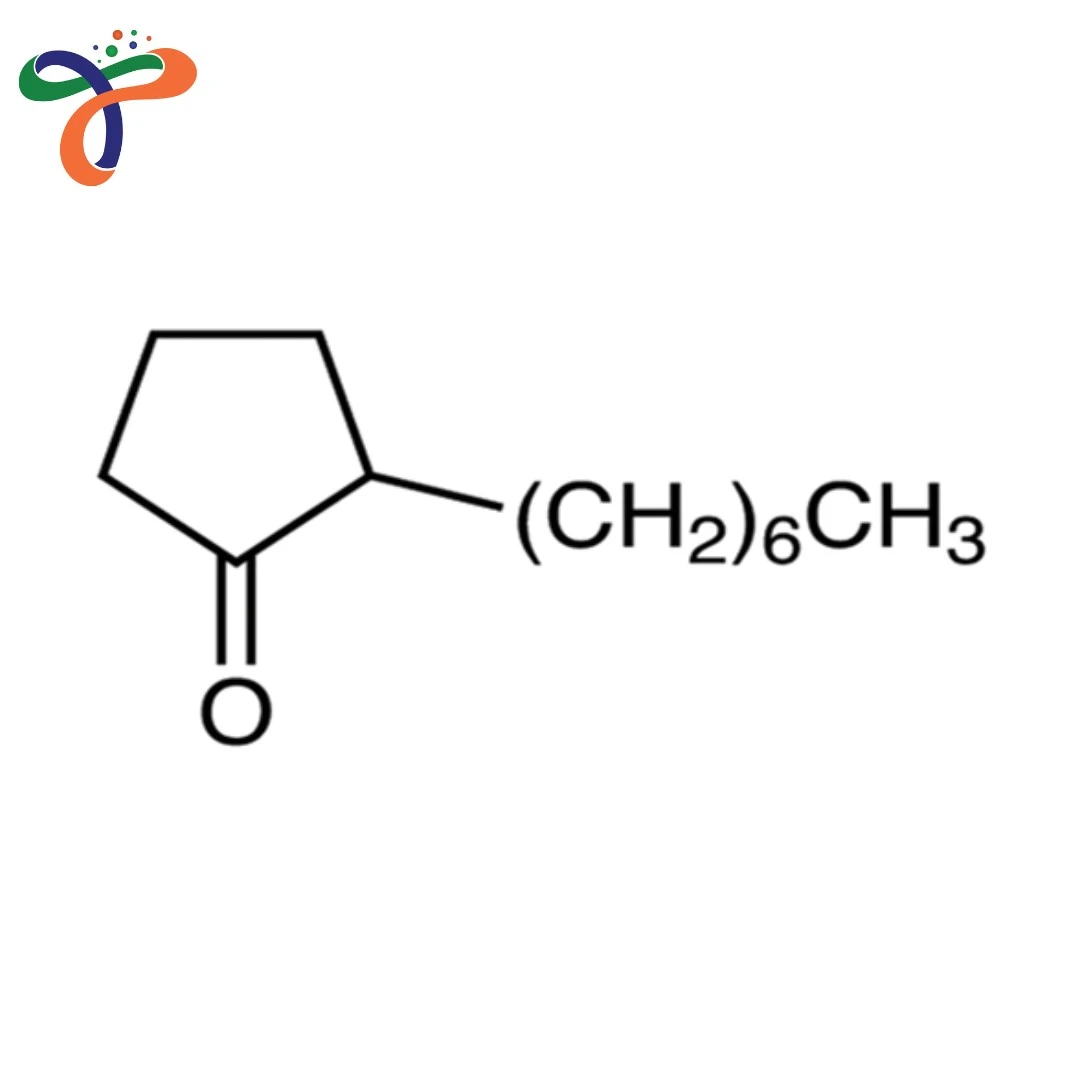
2-heptylcyclopentanone | 0137-03-01
Cas No :
0137-03-01
Form :
Liquid
Molecular Weight :
182.3 G/mol
Molecular Formula :
C12H22O
Boiling Point :
264 °c
Flash Point :
99 °c
Solubility :
Practically Insoluble In Water; Soluble In Alcohol And Oils
Description :
Overview of 2-Heptylcyclopentanone
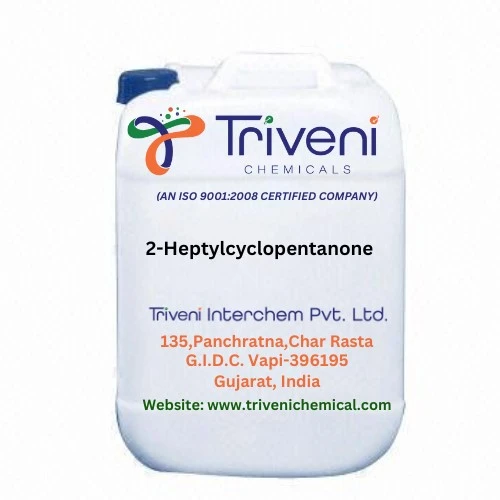
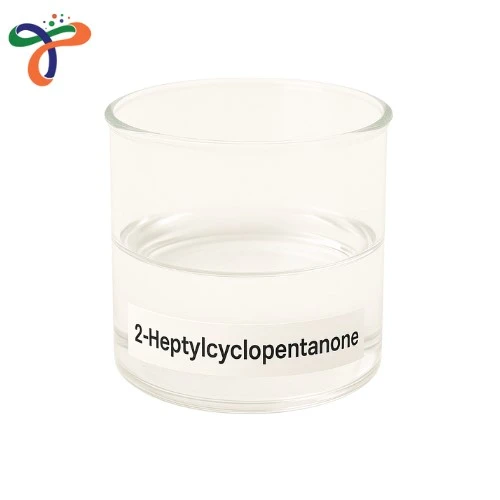
2-Heptylcyclopentanone is a cyclic ketone with a mild, fatty, and slightly fruity aroma, widely used in fragrance, flavor, and chemical synthesis applications. 2-Heptylcyclopentanone molecular formula is C12H22O. The compound is a pale to colorless liquid that's insoluble in water, but it can be dissolved in organic solvents like ethanol or diethyl ether. 2-Heptylcyclopentanone is a versatile intermediate in aroma chemical synthesis, used for creating musky, fruity, and floral notes in perfumes and personal care products. The stability, blend flexibility, and scent profile of this chemical are valued by industrial fragrance formulators. It's similar to Muskolide or Cedryl Acetate.
Applications of 2-Heptylcyclopentanone
Fragrance & Perfumery
2-Heptylcyclopentanone is primarily used to enhance musky, fruity, and floral notes in perfumes, colognes, soaps, and body care products. It blends effectively with Geranyl Caproate, Alpha-Hexylcinnamaldehyde, and Amyl Phenyl Acetate to create complex, balanced, and long-lasting fragrance compositions.
Flavor & Food Applications
Used in flavor R&D, it provides creamy, musky, and slightly fruity notes in laboratory formulations. It is often combined with 2,3,5-Trimethylpyrazine and 3-Methyl-2-Buten-1-Ol to simulate natural fruit or creamy flavors in beverages and confectionery research.
Industrial & Laboratory Applications
2-Heptylcyclopentanone is a chemical intermediate in the synthesis of esters, ketones, and aroma compounds. It is commonly used in R&D labs and industrial fragrance manufacturing alongside Methyl Nonyl Ketone and Undecavertol to develop new aroma chemicals and fine chemical derivatives.
Cosmetic & Personal Care
In personal care formulations, it contributes to long-lasting musky and floral notes in lotions, deodorants, creams, and hair products. Pairing with Amyl Salicylate and Gamma-Terpineol enhances fragrance depth and skin retention.
Safety & Handling Guidelines for 2-Heptylcyclopentanone
-
Store in a cool, dry, well-ventilated area, away from sunlight and strong oxidizing agents.
-
Wear gloves, goggles, and protective clothing while handling.
-
Avoid inhalation, ingestion, and prolonged skin contact.
-
Keep containers tightly closed to prevent contamination and maintain chemical purity.
Where to Buy 2-Heptylcyclopentanone
2-Heptylcyclopentanone Manufacturer in India
Available from ISO-certified suppliers, ensuring high-purity, analytical-grade products with full documentation for fragrance, flavor, and industrial applications.
2-Heptylcyclopentanone Distributor & Supplier Surat
ChemicalBull provides global shipping and bulk supply of 2-Heptylcyclopentanone, supporting fragrance, cosmetic, and chemical industries.
2-Heptylcyclopentanone MSDS
Request the Material Safety Data Sheet (MSDS) from ChemicalBull for detailed handling, safety, and toxicology information.
Frequently Asked Questions
-
What does 2-Heptylcyclopentanone smell like?
It has a mild, fatty, and slightly fruity aroma, making it ideal as a base or fixative note in perfumes and personal care products. -
Can 2-Heptylcyclopentanone be used in food flavoring?
While primarily used in fragrance, it can be applied in flavor research labs to simulate creamy or fruity notes, but it is not a direct food additive. -
How is 2-Heptylcyclopentanone used in perfumery?
It acts as a musky and fruity base note, often blended with chemicals like Muskolide and Amyl Phenyl Acetate to enhance scent longevity and complexity. -
Is 2-Heptylcyclopentanone safe to handle in the lab?
Yes, with proper PPE, handling in a ventilated area is safe. Avoid direct skin contact and inhalation of vapors. -
What solvents dissolve 2-Heptylcyclopentanone?
It is soluble in organic solvents such as ethanol, diethyl ether, and acetone, but insoluble in water.
ChemicalBull supplies 2-heptylcyclopentanone across India, serving customers in Andhra Pradesh, Arunachal Pradesh, Assam, Bihar, Chhattisgarh, Goa, Gujarat, Haryana, Himachal Pradesh, Jharkhand, Karnataka, Kerala, Madhya Pradesh, Maharashtra, Manipur, Meghalaya, Mizoram, Nagaland, Odisha, Punjab, Rajasthan, Sikkim, Tamil Nadu, Telangana, Tripura, Uttar Pradesh, Uttarakhand, and West Bengal, as well as the Union Territories of Andaman & Nicobar Islands, Chandigarh, Dadra & Nagar Haveli and Daman & Diu, Delhi, Jammu & Kashmir, Ladakh, Lakshadweep, and Puducherry. We serve pharmaceutical, chemical, research, academic, laboratory, manufacturing, and industrial customers with reliable nationwide delivery.