Chemical Bull
773
24-Jun-2026
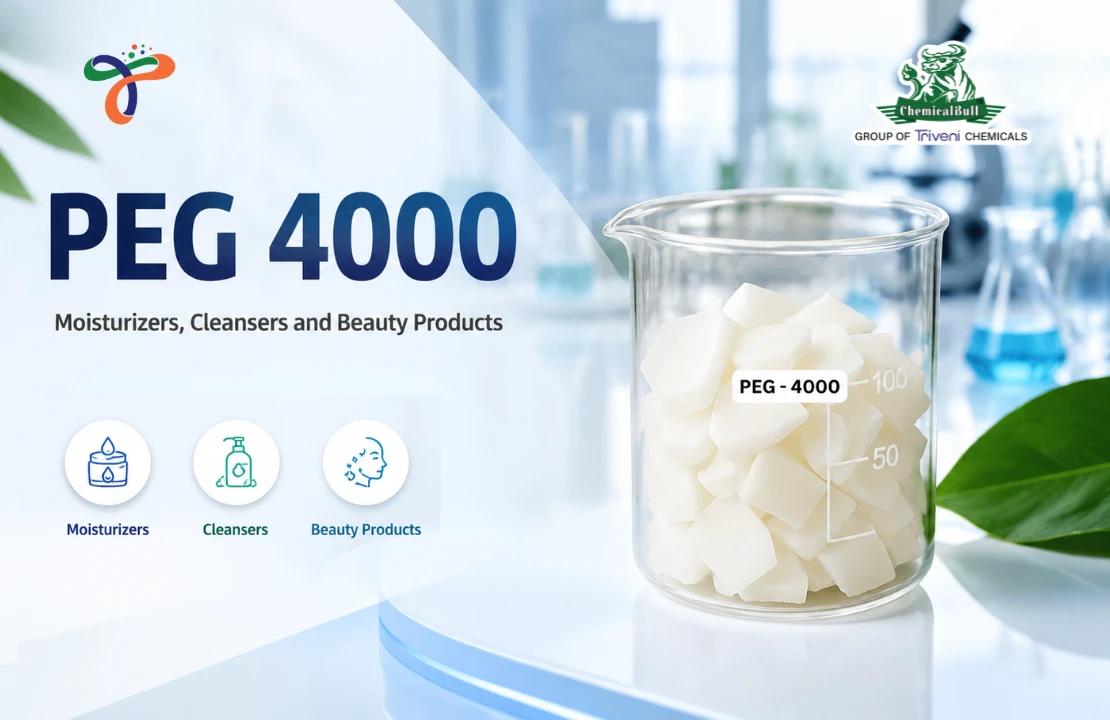
Polyethylene Glycol 4000 — commonly written as PEG 4000 — is a high molecular weight, water-soluble polymer widely used as a functional ingredient across the personal care and beauty industry. While lower molecular weight PEGs such as PEG 400 are well known in pharmaceutical formulation science, PEG 4000 occupies a distinct and valuable role in cosmetic product development — contributing to texture, consistency, skin feel, and formulation stability in moisturizers, facial cleansers, creams, exfoliants, and a broad range of beauty product formats.
If you are a cosmetic formulator, product developer, or personal care brand looking to understand how PEG 4000 performs in beauty formulations, this guide covers everything — from its identity and physical properties to its specific functions across product types, recommended usage levels, and skin compatibility.
Looking for a reliable supply of cosmetic-grade PEG 4000 with full documentation?
ChemicalBull is a trusted PEG 4000 manufacturer supplying personal care and cosmetic manufacturers across India and international markets — reach out for bulk pricing and sample requests.
What Is PEG 4000? Identity and Basic Properties
PEG 4000 is a member of the polyethylene glycol family, produced by the polymerization of ethylene oxide to an average molecular weight of approximately 4000 g/mol. At room temperature, it exists as a white to off-white waxy solid — distinctly different from liquid PEG grades such as PEG 400 — and melts at approximately 53–59°C, making it easy to incorporate into both hot-process and melt-based cosmetic formulations.
|
Property |
Details |
|
INCI Name |
PEG-75 (cosmetics); or listed as PEG-4000 |
|
Chemical Name |
Polyethylene Glycol 4000 |
|
CAS Number |
25322-68-3 |
|
Molecular Weight |
~4000 g/mol |
|
Physical Form |
White waxy solid / flakes at 25°C |
|
Melting Point |
~53–59°C |
|
Solubility |
Freely soluble in water; dispersible in most cosmetic solvents |
|
Ingredient Class |
Non-ionic polymer / humectant / texture agent |
|
Regulatory Status |
Permitted cosmetic ingredient (EU CosIng, US FDA, India BIS) |
The "4000" designation refers to the average molecular weight. In the INCI nomenclature system used on cosmetic product labels, PEG 4000 may appear as PEG-75 (indicating approximately 75 ethylene oxide units in the polymer chain).
Why PEG 4000 Is Used in Beauty Formulations
Unlike its lower molecular weight counterparts, PEG 4000's higher chain length gives it specific functional advantages in cosmetic formulations that lower-grade PEGs cannot deliver as effectively. Its solid physical form, high water solubility, and film-forming tendency make it particularly suited to texture-focused personal care applications.
Core reasons PEG 4000 is chosen by cosmetic formulators:
- It dissolves readily in water without leaving a greasy or oily residue — critical for rinse-off cleansing products.
- Its solid form at room temperature allows it to contribute body and structure to semi-solid cosmetic systems without synthetic waxes or silicones.
- It acts as a mild humectant, drawing moisture to the skin surface from the environment.
- It is non-irritating, non-comedogenic at standard usage levels, and broadly compatible with sensitive skin formulations.
- It is compatible with a wide range of cosmetic active ingredients, preservatives, and co-formulants
- It provides a smooth, non-tacky skin feel — particularly valued in cleansers and lightweight moisturizers.
PEG 4000 Functions in Specific Beauty Product Categories
1. Moisturizers and Hydrating Creams
In moisturizer formulations, PEG 4000 serves as a humectant and texture modifier. Its water-binding capacity helps attract and retain moisture at the skin surface, contributing to improved skin hydration over time. At the same time, its solid waxy form at room temperature adds body and a smooth, non-greasy consistency to moisturizing creams and lotions when incorporated into the emulsion structure.
In emulsified moisturizers (oil-in-water systems), PEG 4000 is typically added to the water phase after it has been dissolved at elevated temperature, contributing to the overall viscosity and skin feel of the finished product. In richer cream formats, it can be part of a wax-and-emollient blend that defines the product's texture and spreadability profile.
Typical usage level in moisturizers: 0.5% – 3%
2. Facial Cleansers and Wash-Off Products
PEG 4000 is particularly well-suited to facial cleanser and rinse-off product formulations because of its high water solubility and its ability to modify the texture of cleansing systems without leaving residue on the skin post-rinse.
In cleansers, PEG 4000 performs the following roles:
- Texture and consistency agent: It thickens aqueous cleansing bases and gel cleansers without the use of salt-thickened surfactant systems, allowing formulators greater flexibility in surfactant choice.
- Skin-feel improver: During the application of a cleanser, PEG 4000 contributes to a smooth, non-drying slip that reduces the harsh sensation often associated with high-surfactant formulations.
- Foam modifier: PEG 4000 can help moderate the foaming behaviour of surfactant-based cleansers, contributing to a creamier, more controlled foam texture — valued in premium facial cleansing products.
- Rinse-off compatibility: Because PEG 4000 is water-soluble, it rinses cleanly from the skin without leaving a residue, making it ideal for wash-off formats including foaming cleansers, micellar gels, cleansing bars, and pre-cleanse balms.
Typical usage level in cleansers: 1% – 5%
3. Exfoliating Scrubs and Physical Exfoliants
PEG 4000 is used in physical exfoliant formulations as a binder and base matrix for exfoliating scrub particles. Its waxy solid form allows it to hold scrub granules (sugar, salt, cellulose beads, or biodegradable alternatives) in a stable suspension within a gel or cream base.
It also softens the skin feel of the exfoliant product — the smooth texture of melted PEG 4000 in a warm application helps lubricate the skin during scrubbing, reducing abrasion without diminishing exfoliation efficacy.
Typical usage level in scrubs: 2% – 8%
4. Eye Creams and Targeted Treatment Products
In the sensitive eye area, non-irritating, ophthalmologist-tested ingredients are critical. PEG 4000's non-ionic nature and well-established safety record make it a suitable texture contributor in eye creams and eye contour gels, where it helps build a smooth, lightweight consistency without the heaviness of heavier emollient waxes.
Typical usage level in eye creams: 0.5% – 2%
5. Lip Care Products
In lip balms, lip masks, and overnight lip treatments, PEG 4000 contributes to the waxy matrix of the product as a structuring agent. It blends well with other lip-care waxes (carnauba, candelilla, beeswax) and emollients to create a smooth, non-sticky application with good adhesion to the lip surface.
Its humectant properties also support moisture retention on the lip surface over time — relevant for long-wear and conditioning lip care claims.
Typical usage level in lip care: 1% – 6%
6. Makeup and Colour Cosmetics
In makeup formulations, PEG 4000 serves as a binder and texture modifier in:
- Pressed powder compacts — where it improves cohesion and payoff
- Mascara formulas — contributing to film-forming properties and smooth brush application
- Eyeliners and brow products — as a texture and consistency agent in gel and pencil formats
- BB creams and tinted moisturizers — as a skin-feel and emulsion texture contributor
Its water solubility also makes it useful in waterproof makeup removers and micellar cleansing waters, where it aids in the solubilization of makeup residues.
Skin Compatibility and Safety Profile
PEG 4000 has a well-documented safety profile for cosmetic use, assessed by the Cosmetic Ingredient Review (CIR) Expert Panel and listed as a permitted ingredient in the EU Cosmetics Regulation (Regulation EC No. 1223/2009) and the US FDA cosmetic ingredient guidelines.
Key safety attributes for cosmetic formulators:
- Non-ionic — among the mildest ingredient classes; does not carry a charge that could disrupt the skin's natural acid mantle.
- Non-irritating at standard cosmetic usage levels — suitable for sensitive skin formulations
- Non-comedogenic at typical usage levels — does not block pores under normal formulation conditions.
- Broad pH compatibility — stable and functionally effective across the cosmetic pH range of 4.5–8.0
- No known sensitization — not a recognized contact allergen in cosmetic use
- Vegan status — PEG 4000 is synthetically derived and contains no animal-origin raw materials; however, vegan certification from the supplier should be confirmed for brand compliance purposes.
Usage Levels Summary
|
Product Type |
Recommended Usage Level |
|
Moisturizing creams and lotions |
0.5% – 3% |
|
Facial cleansers and gel washes |
1% – 5% |
|
Exfoliating scrubs |
2% – 8% |
|
Eye creams and contour gels |
0.5% – 2% |
|
Lip balms and lip treatments |
1% – 6% |
|
Makeup and colour cosmetics |
1% – 5% |
These ranges are indicative. Final usage levels should be determined through bench formulation, stability testing, and consumer perception trials specific to the finished product.
Formulation Tips for Working with PEG 4000 in Cosmetics
-
Dissolve in the water phase at elevated temperature:
PEG 4000 has a melting point of 53–59°C. Always add it to the heated water phase (70–80°C) and stir until fully dissolved before combining with other phases. -
Avoid prolonged exposure to high temperatures:
While PEG 4000 is thermally stable, extended heating above 85°C can degrade the polymer chain. Process at the minimum effective temperature. -
Test for crystallization on cooling:
In some formulations, PEG 4000 can recrystallize on cooling, affecting product aesthetics. Confirm finished product appearance through temperature cycling stability testing (freeze-thaw and 4°C/40°C cycles). -
Confirm compatibility with active ingredients:
PEG 4000 is broadly compatible but should be tested with any oxidative, acidic, or highly reactive actives before committing to a formula. -
Specify cosmetic grade on purchase orders:
Request material with a Certificate of Analysis (COA) confirming heavy metals, moisture, average molecular weight, and microbiological quality relevant to your product category.
Frequently Asked Questions
1. What is PEG 4000 used for in cosmetics?
PEG 4000 is used as a humectant, texture modifier, and consistency agent in moisturizers, cleansers, scrubs, lip care, and makeup products. It improves skin feel, adds structure to semi-solid formulations, and rinses off cleanly in wash-off products.
2. What is the INCI name for PEG 4000?
In cosmetic labelling, PEG 4000 may appear as PEG-75 under the INCI nomenclature system, referring to the approximate number of ethylene oxide repeat units in the polymer chain.
3. Is PEG 4000 safe for sensitive skin?
Yes. PEG 4000 is non-ionic, non-irritating, and non-comedogenic at standard usage levels. It is widely used in formulations targeting sensitive, dry, and mature skin types and is listed as a permitted ingredient under EU and US cosmetic regulations.
4. What is the difference between PEG 4000 and PEG 400 in cosmetics?
PEG 400 is a liquid at room temperature and is primarily used as a solvent and co-solvent, while PEG 4000 is a waxy solid used as a texture agent, humectant, and structural ingredient. They serve different formulation roles and are not interchangeable.
5. What is the recommended usage level of PEG 4000 in a face cream?
Typical usage in face creams and moisturizers is 0.5% to 3% by weight. The exact level depends on the target viscosity, skin-feel objective, and the other texture-building ingredients in the formula.
6. How is PEG 4000 added in a cosmetic formulation process?
PEG 4000 is added to the heated water phase at 70–80°C and stirred until completely dissolved before being combined with other formulation phases during standard hot-process emulsification.
Conclusion
PEG 4000 is a well-established, multifunctional cosmetic ingredient that delivers genuine formulation value across moisturizers, cleansers, exfoliants, lip care, eye creams, and colour cosmetics. Its high water solubility, safe non-ionic profile, waxy solid texture, and humectant properties make it a reliable choice for personal care formulators seeking texture, consistency, and skin-feel performance without silicones or synthetic waxes.
For cosmetic-grade PEG 4000 with full COA, TDS, SDS, and regulatory documentation, contact ChemicalBull — a trusted PEG 4000 manufacturer for personal care and beauty product manufacturers across India and global markets.

Comment Section