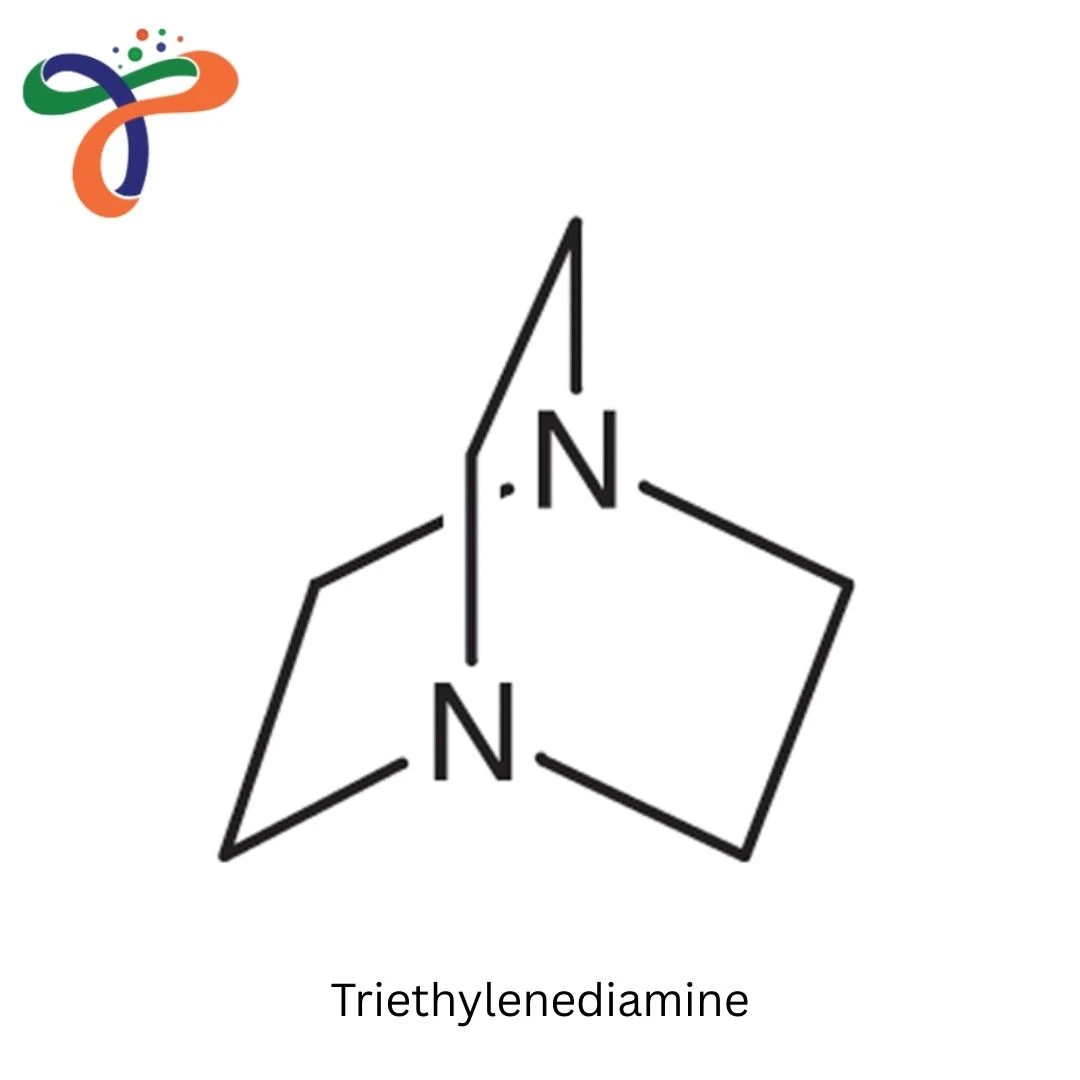
Triethylenediamine | 280-57-9
Cas No :
280-57-9
Synonyms :
Form :
Liquid
Molecular Weight :
118.17 g/mol
Molecular Formula :
C6H12N2
Boiling Point :
195 °C
Flash Point :
95 °C
Solubility :
Soluble in water; soluble in alcohols; miscible with water
Description :
Triethylenediamine Supplier and Exporter for the USA
Chemical Bull is a trusted Triethylenediamine supplier, distributor, wholesaler, and exporter for the USA, offering commercial-grade material under its Plastic & Rubber Chemicals range. We support polyurethane foam producers, polymer processors, coating companies, adhesive formulators, elastomer manufacturers, and specialty chemical buyers with samples, commercial quantities, COA, SDS, suitable packaging, and shipment coordination.
Triethylenediamine, commonly known as TEDA, is a tertiary amine catalyst primarily used in polyurethane production. It promotes controlled gelling and curing reactions in flexible, semi-rigid, rigid, and microcellular polyurethane systems.
Quick Answer
Triethylenediamine, CAS 280-57-9, is a high-activity polyurethane catalyst used in flexible foam, rigid foam, elastomers, coatings, adhesives, sealants, and molded polyurethane products. Submit a bulk enquiry with your required grade, quantity, application, and USA delivery destination.
Applications of Triethylenediamine
Flexible Polyurethane Foam
Triethylenediamine is used in flexible slabstock and molded foam formulations. It promotes polyurethane gelling reactions and helps control curing, foam structure, demolding, and production consistency.
Typical end uses include furniture cushioning, mattresses, automotive seating, acoustic materials, and specialty molded foam.
Rigid Polyurethane Foam
TEDA-based catalysts are used in rigid foam systems for insulation panels, appliance insulation, pipe insulation, construction products, and other thermal-insulation applications.
The selected catalyst concentration should balance cream time, rise profile, curing speed, density, and dimensional stability.
Semi-Rigid and Integral-Skin Foam
Triethylenediamine may be used in semi-rigid and integral-skin polyurethane systems requiring controlled surface formation and internal foam development.
Applications may include automotive components, armrests, protective parts, equipment padding, and molded industrial products.
Microcellular Foam and Footwear
TEDA solutions are used in microcellular polyurethane foam production, including selected footwear and shoe-sole systems. They help control reaction speed, cell formation, curing, and demolding performance.
Polyurethane Elastomers
Triethylenediamine is used in cast and processed polyurethane elastomers where controlled gelling and crosslinking are required.
Potential applications include rollers, wheels, seals, industrial components, protective parts, and engineering elastomer products.
Coatings, Adhesives, and Sealants
TEDA may be used as a catalyst in polyurethane coatings, adhesives, sealants, and related CASE applications. It can support curing speed, resin development, bonding performance, and production efficiency.
Why Polyurethane Manufacturers Use TEDA
Strong Catalytic Activity
Triethylenediamine provides effective gelling activity in polyurethane reactions and can support controlled curing at relatively low addition levels.
Broad Polyurethane Compatibility
It is used across flexible foam, rigid foam, semi-rigid foam, microcellular foam, coatings, elastomers, adhesives, and sealants.
Improved Production Control
Correct catalyst selection can help manufacturers manage reaction time, foam rise, curing, demolding, and finished-product consistency.
Solid and Solution Grades
TEDA may be used as a solid catalyst or supplied in carrier-based solutions for easier dosing and formulation handling.
Commercial Grade and Supply Support
USA buyers should specify whether they require solid Triethylenediamine or a formulated TEDA solution. The enquiry should include the polyurethane application, required concentration, order quantity, preferred packaging, and expected delivery schedule.
Chemical Bull supports evaluation quantities, production requirements, and recurring commercial supply. Buyers may request available COA, SDS, product specifications, packaging information, and shipment details before approval.
Quality Approval Before Bulk Purchase
Before approving Triethylenediamine, buyers should evaluate the material in their complete polyurethane formulation. Important parameters may include purity, appearance, moisture, catalyst activity, carrier type, dosage compatibility, reaction profile, and finished-product performance.
Final purchasing approval should be based on the offered specification, batch documentation, and production trial results.
Request Triethylenediamine Pricing for the USA
Source Triethylenediamine for polyurethane foam, elastomers, coatings, adhesives, sealants, and specialty polymer applications.
Request a commercial quotation by sharing your required TEDA grade, application, order volume, packaging preference, and USA delivery destination.
Frequently Asked Questions
-
What is Triethylenediamine used for?
Triethylenediamine is mainly used as a catalyst in flexible foam, rigid foam, microcellular foam, polyurethane elastomers, coatings, adhesives, and sealants. -
What is the CAS number of Triethylenediamine?
The CAS number of Triethylenediamine is 280-57-9. -
Is Triethylenediamine the same as TEDA?
Yes. TEDA is the commonly used abbreviation for Triethylenediamine. -
Is TEDA available as a solid or solution?
Triethylenediamine may be supplied as a solid or as a formulated solution in a compatible carrier. Availability depends on the required application and grade. -
Can Chemical Bull support bulk TEDA requirements in the USA?
Yes. Chemical Bull supports samples, commercial orders, and recurring bulk requirements for polyurethane foam producers, coating companies, adhesive formulators, elastomer manufacturers, distributors, and industrial buyers.