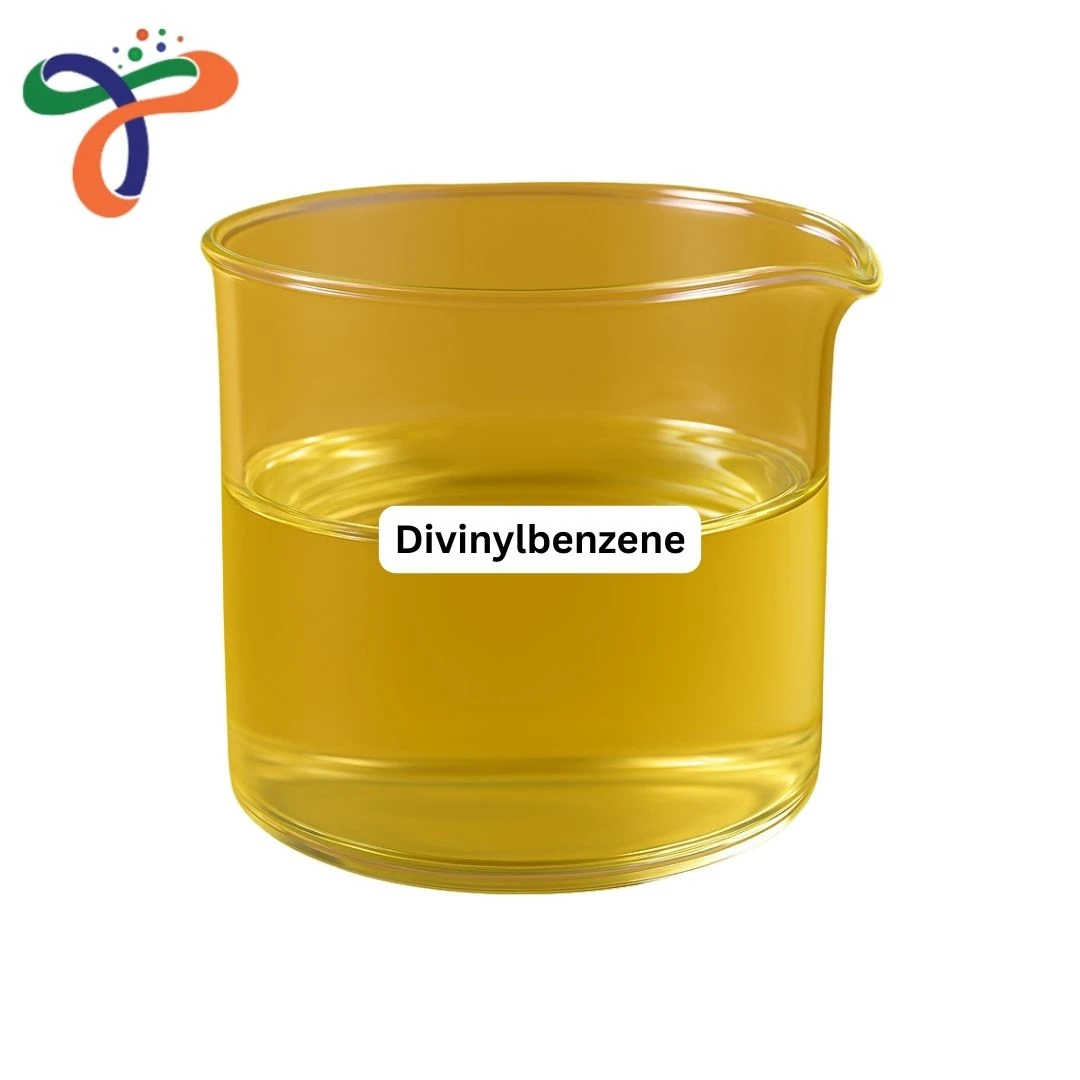
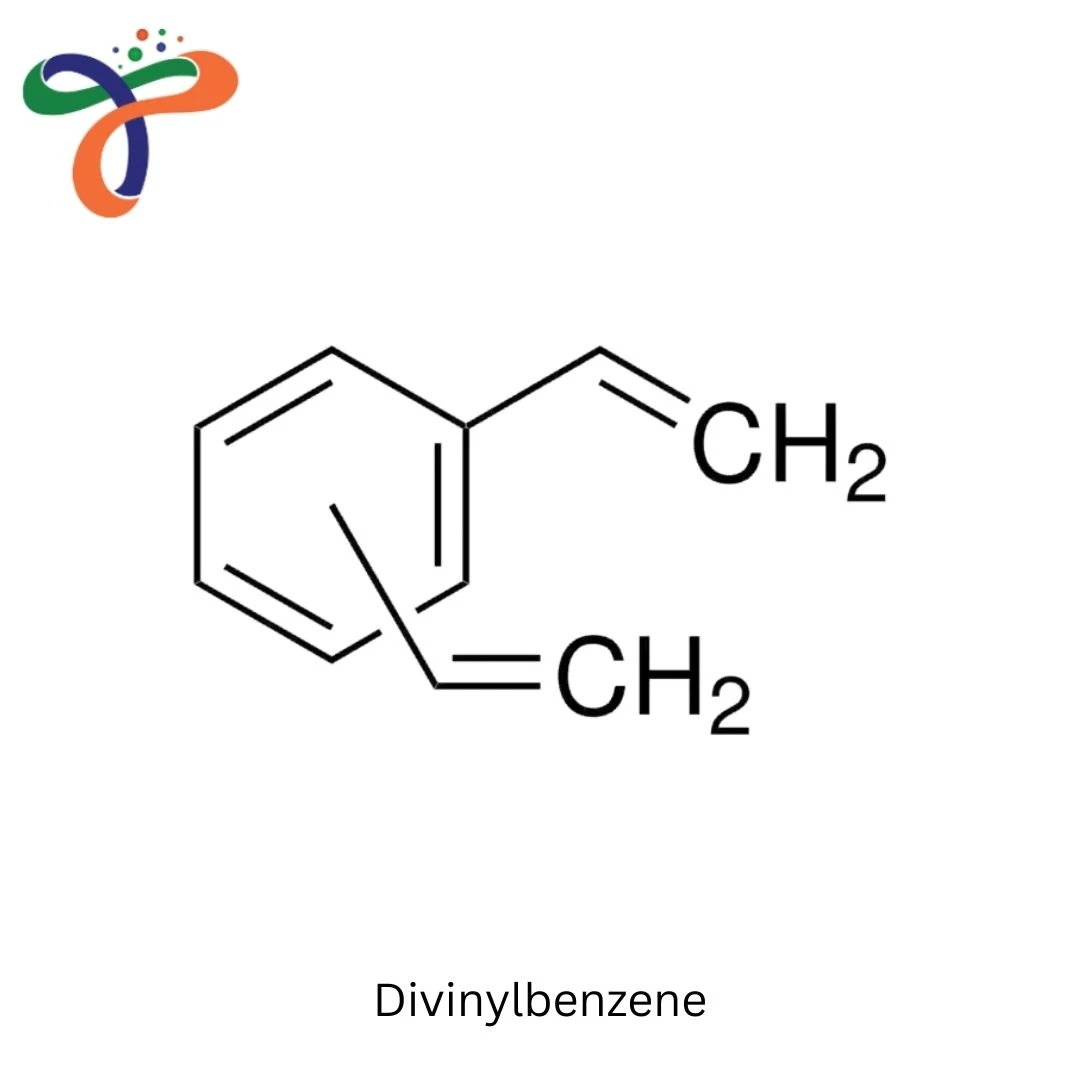
Divinylbenzene | 1321-74-0
Cas No :
1321-74-0
Form :
Liquid
Molecular Weight :
130.19 G/mol
Molecular Formula :
C10H10
Boiling Point :
164 °c
Melting Point :
-50 °c
Flash Point :
30 °c
Solubility :
Insoluble In Water; Soluble In Organic Solvents Such As Benzene, Toluene, Chloroform
Description :
Divinylbenzene Supplier and Exporter for the USA
Chemical Bull is a trusted Divinylbenzene supplier, distributor, wholesaler, and exporter for the USA, supplying commercial requirements for crosslinked polymers, ion-exchange resins, styrenic resins, specialty beads, coatings, adhesives, and polymer modification.
Divinylbenzene, commonly abbreviated as DVB, is an aromatic difunctional monomer used mainly as a crosslinking agent in polymer and resin manufacturing. USA manufacturers commonly evaluate DVB based on active content, isomer composition, purity, inhibitor level, color, moisture, polymerization behavior, packaging, COA, SDS, and batch consistency.
Quick Answer
Divinylbenzene is mainly used in ion-exchange resins, crosslinked polystyrene, adsorbent resins, polymer beads, specialty copolymers, coatings, adhesives, and resin modification.
Submit a bulk enquiry with your required grade, active content, quantity, application, packaging, and USA delivery destination to receive availability and commercial pricing.
What Is Divinylbenzene?
Divinylbenzene is an aromatic monomer containing two vinyl groups attached to a benzene ring.
Its difunctional structure allows it to form crosslinks between polymer chains, making it useful where manufacturers require higher rigidity, solvent resistance, dimensional stability, porosity, or controlled network formation.
Divinylbenzene is commonly sourced by ion-exchange resin manufacturers, styrenic polymer producers, specialty resin companies, adsorbent manufacturers, coating formulators, adhesive businesses, distributors, and industrial procurement teams.
Divinylbenzene Product Information
Product Name: Divinylbenzene
Common Abbreviation: DVB
Chemical Type: Aromatic Difunctional Vinyl Monomer
Primary Functions: Crosslinking agent, reactive comonomer, resin modifier, network-forming monomer, and specialty polymer intermediate
Main Industries: Ion-exchange resins, styrenic polymers, adsorbents, specialty resins, coatings, adhesives, and polymer materials
Commercial specifications can vary according to active DVB content, isomer composition, purity, inhibitor level, color, moisture, and intended polymerization process. Buyers should review the supplied COA, SDS, and technical specification before commercial approval.
Divinylbenzene Applications for Industrial Manufacturing
Ion-Exchange Resin Manufacturing
Divinylbenzene is widely used as a crosslinking monomer in ion-exchange resin manufacturing.
The crosslink density can influence resin strength, swelling behavior, porosity, ion-exchange performance, and resistance to chemical and mechanical stress.
Crosslinked Polystyrene
DVB is commonly used with styrene in selected crosslinked polystyrene systems.
Its difunctional structure helps create a three-dimensional polymer network with improved dimensional stability and solvent resistance.
Adsorbent and Porous Resins
Divinylbenzene is used in selected adsorbent, porous polymer, and separation-resin systems.
Manufacturers can adjust the crosslinking level and polymerization conditions to tailor porosity, surface characteristics, swelling, and mechanical strength.
Polymer Beads
DVB is used in selected polymer bead and microsphere manufacturing.
It is relevant where controlled crosslink density, particle integrity, porosity, and resistance to solvents or processing conditions are required.
Specialty Copolymers
Divinylbenzene may be used as a reactive comonomer in specialty copolymer systems.
Its presence can help increase crosslink density and modify hardness, thermal behavior, chemical resistance, and mechanical properties.
Coatings and Resin Systems
DVB may be used in selected coating and specialty resin formulations where additional crosslinking or network formation is required.
Formulators should evaluate resin compatibility, cure chemistry, inhibitor level, viscosity, and finished-film performance before use.
Adhesive Polymer Systems
Divinylbenzene may be used in selected adhesive and functional polymer systems.
Its crosslinking function can influence cohesion, solvent resistance, dimensional stability, and final polymer properties.
Specialty Polymer Modification
DVB is also used in selected reactive polymer modification and specialty material manufacturing.
The required grade should be matched to active content, isomer composition, inhibitor level, polymerization route, and final performance requirements.
Why Manufacturers Source Divinylbenzene
Effective Crosslinking Monomer
Divinylbenzene is widely used where polymer manufacturers require controlled crosslinking and three-dimensional network formation.
Important for Ion-Exchange Resins
DVB is a key raw material in many styrenic ion-exchange resin systems, where it helps control structure, strength, and swelling behavior.
Useful for Porous Polymer Systems
Its crosslinking function makes it relevant to adsorbent resins, polymer beads, and other porous materials.
Supports Polymer Property Modification
DVB can help manufacturers tailor rigidity, solvent resistance, dimensional stability, and network density in compatible polymer systems.
Suitable for Bulk Procurement
Divinylbenzene can be sourced in commercial and recurring quantities for resin manufacturers, polymer producers, formulators, distributors, and industrial procurement teams.
Divinylbenzene Supplier for USA Manufacturers
When comparing a Divinylbenzene supplier for the USA, procurement teams should review active DVB content, isomer composition, purity, inhibitor level, color, moisture, polymerization behavior, batch consistency, COA, SDS availability, packaging, lead time, and recurring supply capability.
Chemical Bull supports commercial requirements for ion-exchange resin manufacturers, styrenic polymer producers, adsorbent resin companies, specialty polymer businesses, coating and adhesive formulators, distributors, and procurement teams across the United States.
Related Polymer and Crosslinking Chemicals
Manufacturers sourcing Divinylbenzene for polymerization and crosslinking applications may also explore Alpha-Methylstyrene, Dodecyl Mercaptan, AIBN, and Glycidyl Methacrylate.
These related materials are commonly used across styrenic polymers, acrylic polymers, crosslinking systems, polymerization control, resin modification, and specialty polymer manufacturing.
Divinylbenzene SDS and Documentation
Divinylbenzene is a reactive monomer and should be handled according to the latest supplier-issued Divinylbenzene SDS and applicable workplace, storage, and transportation requirements.
Chemical Bull can provide available COA, SDS, product specifications, and technical documentation with commercial supply enquiries.
Buyers should confirm active content, isomer composition, inhibitor level, purity, moisture, storage requirements, polymerization controls, and application-specific specifications before commercial approval.
Buy Divinylbenzene in Bulk for the USA
Chemical Bull supports bulk Divinylbenzene requirements for ion-exchange resin manufacturers, polymer producers, adsorbent companies, specialty resin manufacturers, coating and adhesive businesses, distributors, and industrial procurement teams.
Share your required grade, active DVB content, application, quantity, packaging preference, documentation requirements, and USA delivery destination to receive availability and a customized quotation.
Frequently Asked Questions
-
What is Divinylbenzene?
Divinylbenzene, commonly abbreviated as DVB, is an aromatic difunctional vinyl monomer used mainly as a crosslinking agent in polymer and resin manufacturing.
-
What is Divinylbenzene used for?
DVB is mainly used in ion-exchange resins, crosslinked polystyrene, adsorbent resins, polymer beads, specialty copolymers, coatings, adhesives, and polymer modification.
-
Why is Divinylbenzene used in ion-exchange resins?
Divinylbenzene provides crosslinking within the polymer structure, helping control resin strength, swelling, porosity, dimensional stability, and ion-exchange performance.
-
What should buyers check before purchasing Divinylbenzene?
Buyers should review active DVB content, isomer composition, purity, inhibitor level, color, moisture, polymerization behavior, COA, SDS, packaging, storage requirements, and batch consistency.
-
Can Chemical Bull support bulk Divinylbenzene supply in the USA?
Yes. Chemical Bull supports commercial and recurring DVB requirements for ion-exchange resin, styrenic polymer, adsorbent, specialty resin, coating, and adhesive manufacturers across the United States.