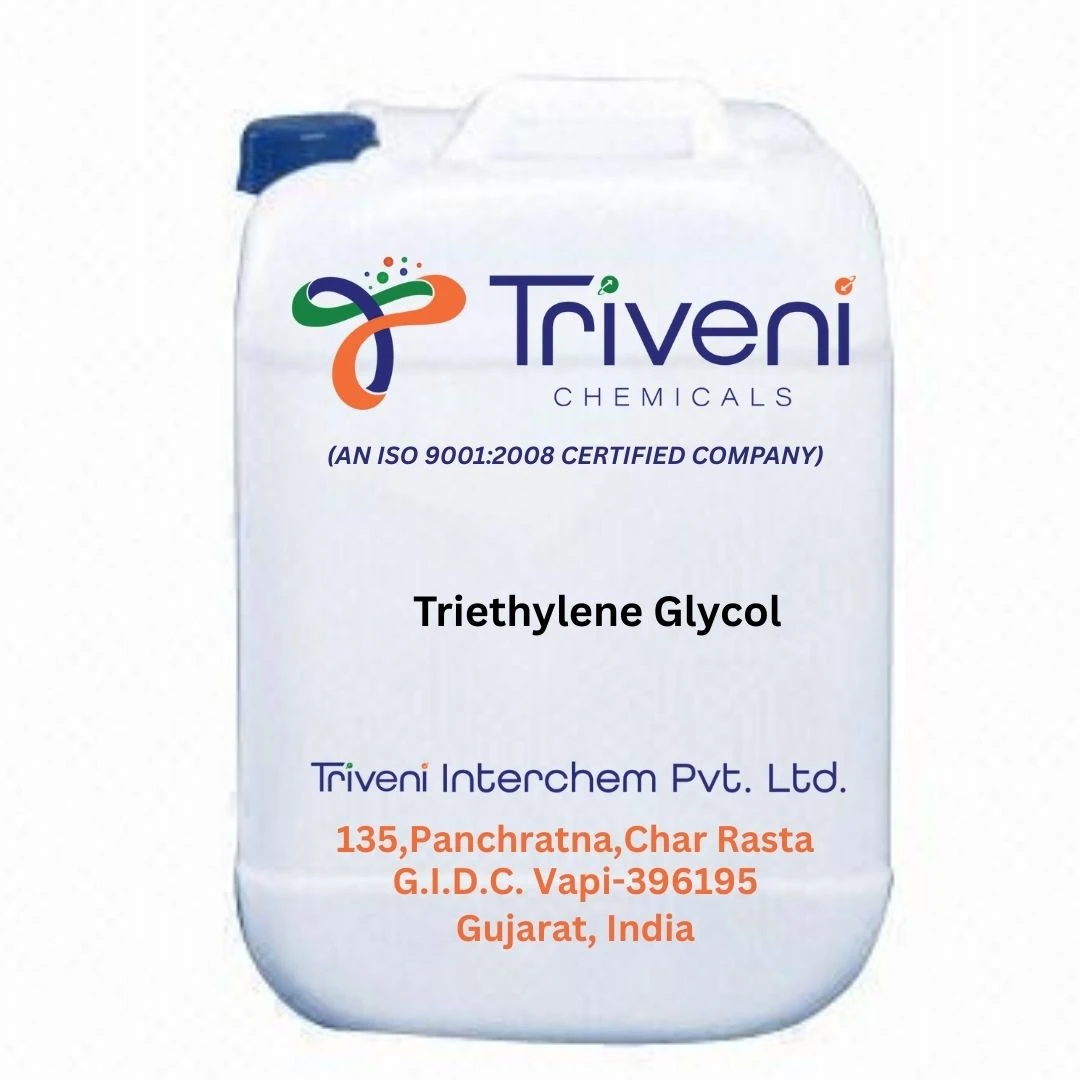

Triethylene Glycol | 112-27-6
Cas No :
112-27-6
Form :
Liquid
Molecular Weight :
150.17 G/mol
Molecular Formula :
C6H14O4
Boiling Point :
285 °c
Melting Point :
-7 °c
Flash Point :
170 °c
Solubility :
Miscible With Water
Description :
Triethylene Glycol Supplier and Exporter for the UK
Chemical Bull supports Triethylene Glycol sourcing for UK buyers, serving coating producers, chemical processors and industrial formulation businesses. Share your required grade, specification and order quantity to request a supply quotation. Our role is to coordinate the offered material and commercial details against your purchasing requirements.
What Is Triethylene Glycol?
Triethylene glycol, commonly shortened to TEG, is a higher glycol used in industrial solvent, dehydration and synthesis applications. It should be distinguished from ethylene glycol and diethylene glycol.
CAS number: 112-27-6. Confirm this identity against the documentation for the supplied material.
Triethylene Glycol Uses and Industrial Applications
Gas dehydration
Qualified TEG grades are used in designed gas-dehydration processes. Water content and degradation products influence operating performance.
Resin and ester manufacture
Its hydroxyl groups make it a reactant in selected polyester and ester routes. Feedstock composition should match the reaction specification.
Industrial formulation
The liquid is used as a carrier or humectant ingredient in selected technical systems. Check water contribution and compatibility with the complete formulation.
Choosing the Right Triethylene Glycol Grade
For bulk Triethylene Glycol procurement, specify assay, water, acidity, colour and glycol impurities. Where the manufacturer uses a trade grade or a particular test method, include that reference in your enquiry. The offered specification should match the material you intend to approve for production.
Select the solvent against its solvency, evaporation behaviour and compatibility with the other components. Water, acidity and trace contaminants can affect reactive systems or sensitive applications. Define the chemical identity fully because related glycols, ethers and esters may have similar names but different properties. Compare the complete specification with your current approved material. Where a special grade is needed for flavour, food or pharmaceutical use, establish that requirement separately from the general technical specification.
Production Trials and Quality Checks
Evaluate the material in the actual process rather than judging it only by its neat appearance. In formulations, check drying, clarity, film formation and stability as relevant. In chemical processing, include the downstream purity and separation requirements in the approval criteria.
For repeat supply, agree the acceptance limits and document requirements before the first commercial order. Review the batch Certificate of Analysis against that specification, and keep a retained sample where your quality procedure requires it. If a test method differs between sources, resolve that difference before treating the results as equivalent.
When comparing an alternative source, record the original manufacturer grade, the candidate specification and the results of your own evaluation. This gives purchasing and production teams a clear basis for approval. A lower quoted unit price should be considered alongside the material delivered, processing behaviour and any additional testing needed for the change.
Storage and Handling
Review the product-specific SDS before agreeing storage, ventilation and transfer arrangements. Use compatible containers and prevent cross-contamination. Confirm any temperature or moisture controls stated in the technical documentation. A general description such as solvent or glycol is insufficient to determine the appropriate handling procedure.
Triethylene Glycol MSDS, SDS and Technical Documentation
Request the current Triethylene Glycol MSDS or Safety Data Sheet (SDS) for the exact offered grade. The document covers hazard identification, handling, storage, exposure controls and transport information. Ask separately for the product specification, Technical Data Sheet where available, and a batch Certificate of Analysis. An SDS supports safe-use assessment; it does not replace a quality specification or demonstrate finished-product approval.
Triethylene Glycol Price and Bulk Supply for UK Buyers
The Triethylene Glycol price for UK delivery depends on the grade, quantity, packaging, source and agreed delivery terms. Include your delivery postcode, required date and purchasing frequency when requesting a quotation. State whether the destination is in Great Britain or Northern Ireland so the relevant supply arrangements can be reviewed. Availability, freight and any import responsibilities should be confirmed in the quotation before an order is placed.
Frequently Asked Questions
1. What is Triethylene Glycol?
Triethylene glycol, commonly shortened to TEG, is a higher glycol used in industrial solvent, dehydration and synthesis applications. The CAS number is 112-27-6.
2. What is Triethylene Glycol used for?
Applications include gas dehydration, resin and ester manufacture, industrial formulation. The required grade and finished-product suitability depend on the actual formulation or process.
3. Is triethylene glycol interchangeable with diethylene glycol?
No. Their physical properties and molecular masses differ. Confirm the intended process and specification before considering a substitution.
4. How can I request a bulk Triethylene Glycol price for the UK?
Send the product name, approved specification, required quantity, packaging preference and UK delivery postcode. Include your target date and documentation requirements for a relevant quotation.
5. Can I request a Triethylene Glycol MSDS?
Yes. Ask for the current SDS/MSDS for the offered grade, together with the product specification and available COA or TDS. Review the documents before approving the material.
Request a Triethylene Glycol Quotation
To buy Triethylene Glycol for a UK business requirement, contact Chemical Bull. Share your specification, quantity and delivery details. Our team can review your enquiry and confirm the offered grade, available documentation and commercial supply terms.