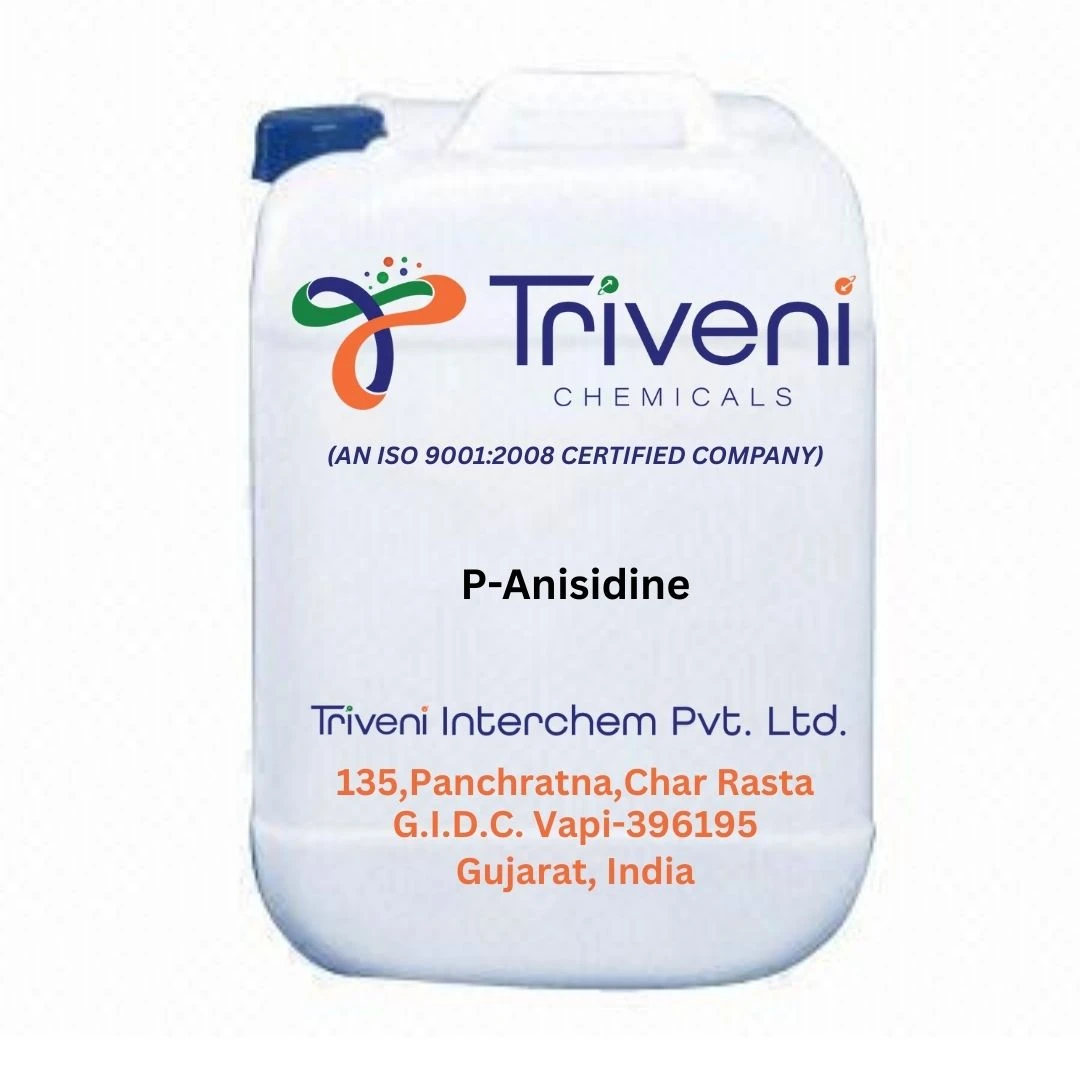
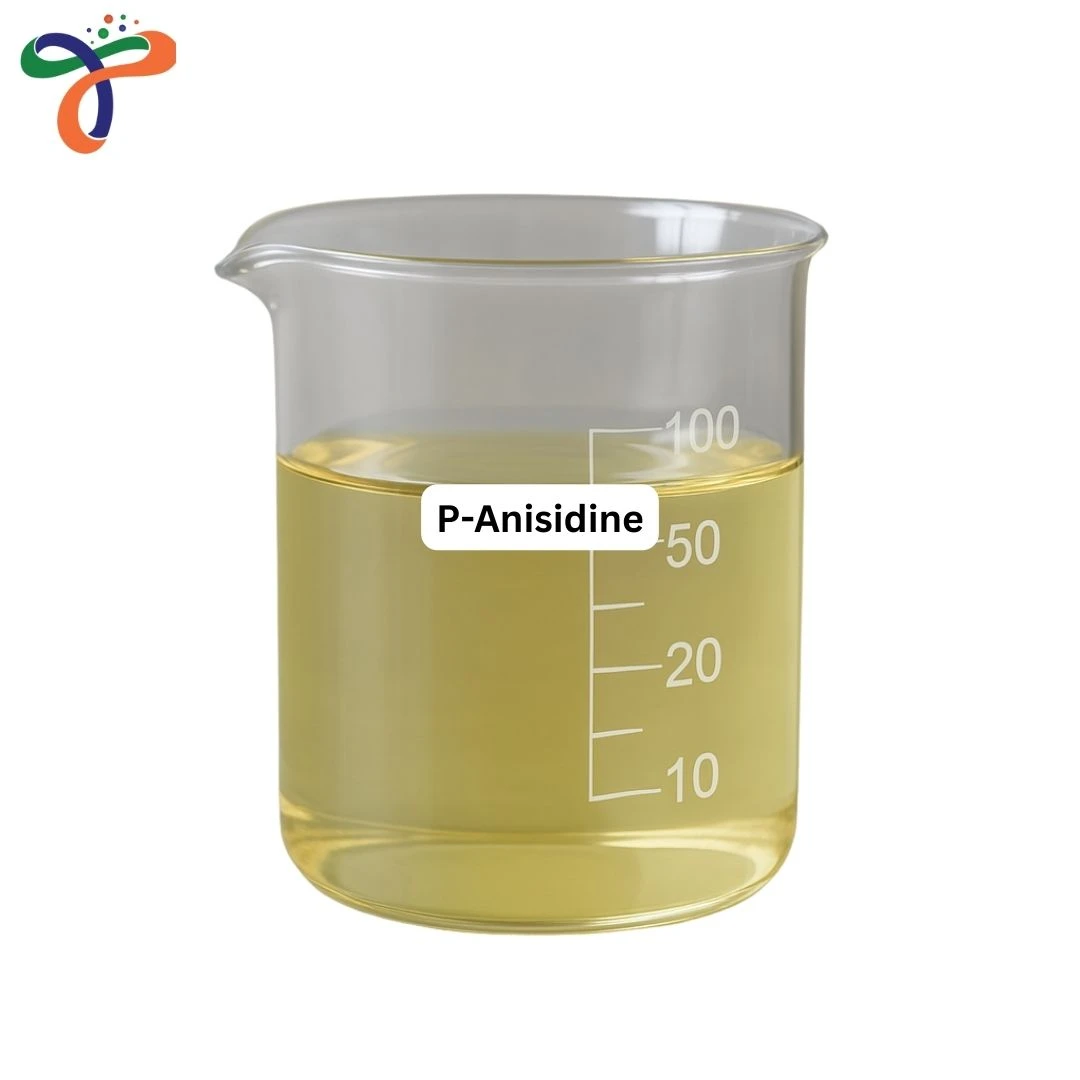
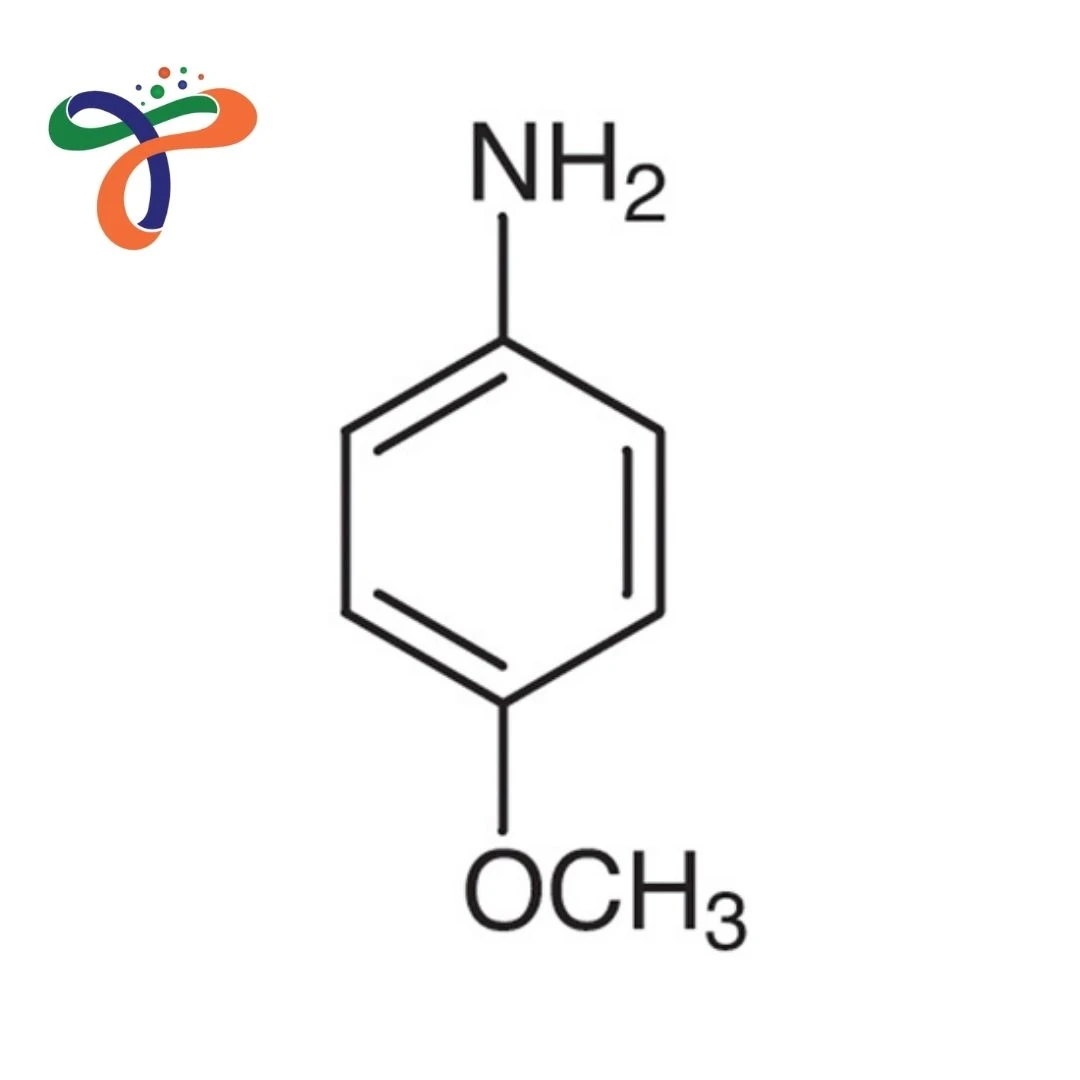
P-anisidine | 104-94-9
Cas No :
104-94-9
Synonyms :
Form :
Solid
Molecular Weight :
123.16
Molecular Formula :
C7H9NO
Boiling Point :
240 - 243 °c
Melting Point :
56 - 59 °c
Flash Point :
122 °c
Solubility :
Chloroform (slightly), Ethyl Acetate (slightly), Methanol (slightly)
Description :
P-Anisidine Supplier and Exporter for the UK
Chemical Bull supports P-Anisidine sourcing for UK buyers, serving chemical synthesis businesses, pharmaceutical raw material buyers and fine chemical distributors. Share your required grade, specification and order quantity to request a supply quotation. Our role is to coordinate the offered material and commercial details against your purchasing requirements.
What Is P-Anisidine?
p-Anisidine, also known as 4-methoxyaniline, is an aromatic amine intermediate. Its amino and methoxy groups make it relevant to selected dye, pigment and fine chemical synthesis routes.
CAS number: 104-94-9. Confirm this identity against the documentation for the supplied material.
P-Anisidine Uses and Industrial Applications
Dye intermediate manufacture
The aromatic amine group is used within defined synthesis schemes. Colour and trace impurities can be important when downstream products have tight appearance requirements.
Fine chemical synthesis
Development teams use the molecule as a substituted aromatic building block. Confirm whether the route needs additional controls on positional isomers or related amines.
Analytical reagent applications
Specially qualified reagent grades are used in analytical methods, including anisidine value testing. Industrial material should not be assumed to meet analytical reagent specifications.
Choosing the Right P-Anisidine Grade
For bulk P-Anisidine procurement, specify assay, colour, melting range, moisture and related aromatic amines. Where the manufacturer uses a trade grade or a particular test method, include that reference in your enquiry. The offered specification should match the material you intend to approve for production.
Start with the reaction route and the impurities that could carry through to the next intermediate. A high headline assay may still be insufficient if the process is sensitive to a particular related substance, metal or water level. Share your approved analytical methods where comparison between suppliers depends on the test method. For pharmaceutical supply chains, establish whether the material is being purchased as a starting material, intermediate, excipient or active substance; these roles require different qualification evidence.
Production Trials and Quality Checks
For a new source, assess a representative batch in the actual reaction and downstream purification. Compare yield, impurity formation and product appearance with the approved reference. Establish acceptance limits before a production order, particularly when an alternative manufacturing route could introduce a different impurity pattern.
For repeat supply, agree the acceptance limits and document requirements before the first commercial order. Review the batch Certificate of Analysis against that specification, and keep a retained sample where your quality procedure requires it. If a test method differs between sources, resolve that difference before treating the results as equivalent.
Storage and Handling
Plan receipt, sampling and charging around the physical form and the current SDS. Avoid relying on a generic description of the chemical family. Your site assessment should address exposure, incompatible materials and the conditions needed to maintain the specified quality. Confirm whether opened packaging can be resealed and how storage history will be controlled.
P-Anisidine MSDS, SDS and Technical Documentation
Request the current P-Anisidine MSDS or Safety Data Sheet (SDS) for the exact offered grade. The document covers hazard identification, handling, storage, exposure controls and transport information. Ask separately for the product specification, Technical Data Sheet where available, and a batch Certificate of Analysis. An SDS supports safe-use assessment; it does not replace a quality specification or demonstrate finished-product approval.
P-Anisidine Price and Bulk Supply for UK Buyers
The P-Anisidine price for UK delivery depends on the grade, quantity, packaging, source and agreed delivery terms. Include your delivery postcode, required date and purchasing frequency when requesting a quotation. State whether the destination is in Great Britain or Northern Ireland so the relevant supply arrangements can be reviewed. Availability, freight and any import responsibilities should be confirmed in the quotation before an order is placed.
Frequently Asked Questions
1. What is P-Anisidine?
p-Anisidine, also known as 4-methoxyaniline, is an aromatic amine intermediate. The CAS number is 104-94-9.
2. What is P-Anisidine used for?
Applications include dye intermediate manufacture, fine chemical synthesis, analytical reagent applications. The required grade and finished-product suitability depend on the actual formulation or process.
3. Is p-anisidine anise fragrance?
No. It is an aromatic amine chemical intermediate. Its name should not be confused with anisic fragrance ingredients or used to imply flavour suitability.
4. How can I request a bulk P-Anisidine price for the UK?
Send the product name, approved specification, required quantity, packaging preference and UK delivery postcode. Include your target date and documentation requirements for a relevant quotation.
5. Can I request a P-Anisidine MSDS?
Yes. Ask for the current SDS/MSDS for the offered grade, together with the product specification and available COA or TDS. Review the documents before approving the material.
Request a P-Anisidine Quotation
To buy P-Anisidine for a UK business requirement, contact Chemical Bull. Share your specification, quantity and delivery details. Our team can review your enquiry and confirm the offered grade, available documentation and commercial supply terms.